This article may contain affiliate links. If you book through them, we may earn a small commission at no extra cost to you.
On this page
Introduction: The Hot Spring That Has Been Flowing Since Before History
The hot spring at Dogo Onsen (道後温泉) in Matsuyama, Ehime Prefecture, is documented in some of Japan's oldest written records. The Iyo-no-kuni Fudoki (伊予国風土記) — an 8th-century provincial gazetteer surviving in fragments — records Prince Shotoku visiting the spring in 596 CE. The Nihon Shoki (日本書紀) of 720 CE records that the Emperor Jomei visited and was healed. A poem in the Man'yōshū (万葉集) — the 8th-century poetry anthology — references the spring's reputation.
The claim that Dogo is Japan's oldest hot spring cannot be archaeologically verified with certainty — several springs make similar claims. What can be said is that Dogo Onsen's reputed history extends back some 3,000 years, with documented references reaching to the 8th century, that the building housing the main bath (Dogo Onsen Honkan / 道後温泉本館) is a registered National Important Cultural Property from 1894, and that it is the most historically and architecturally significant bathhouse building in Japan.
Matsuyama City: The Castle and the Haiku Poet
Matsuyama (松山) is the largest city in Shikoku, with a population of approximately 500,000. It has two cultural claims of national significance beyond Dogo Onsen:
Matsuyama Castle (松山城)
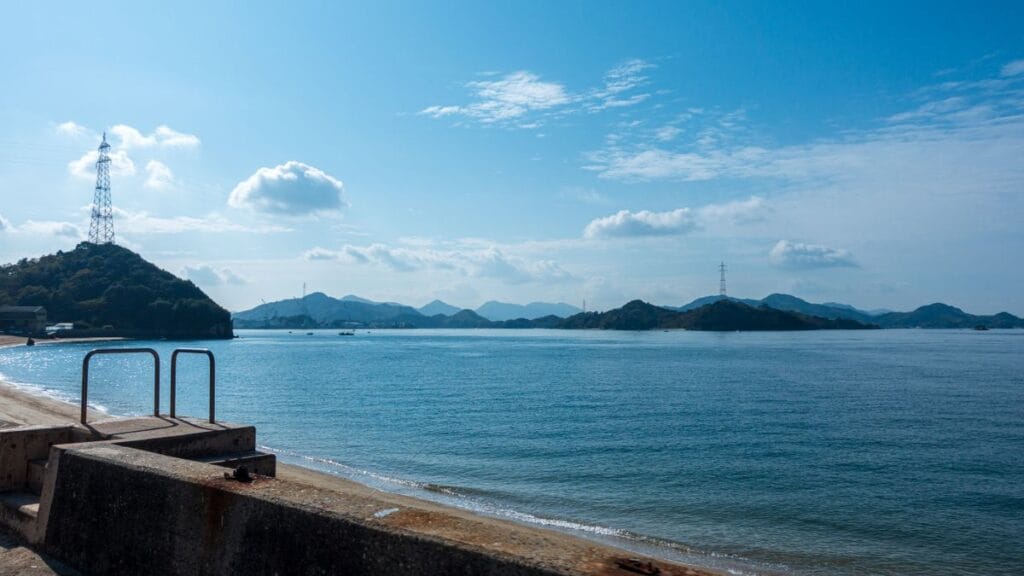
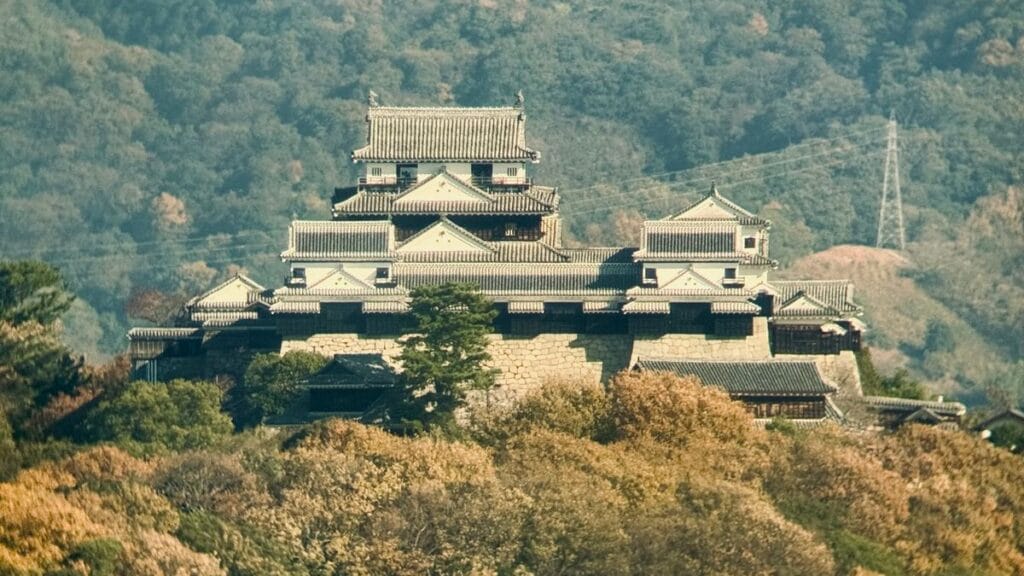
Matsuyama Castle sits on Katsuyama hill (勝山) in the center of the city — one of only twelve original Japanese castles remaining (not reconstructed) from the pre-Meiji era. The three-story main keep (tenshu), rebuilt after a lightning fire and completed in 1854, overlooks the city and provides a commanding view of the Seto Inland Sea on clear days.
The castle is accessible by ropeway or chairlift (¥270 one-way / ¥520 round trip, plus ¥520 castle admission — checked July 2026) or by walking up the mountain path (approximately 20 minutes). The approach is lined with cherry trees that make the castle one of Shikoku's finest spring destinations.
Shiki and Haiku Culture
Masaoka Shiki (正岡子規 / 1867–1902) — the poet who reformed Japanese haiku into its modern form — was born in Matsuyama and spent his childhood there before moving to Tokyo. His influence on Matsuyama's cultural identity is profound: the city has cultivated a haiku tradition around his memory that includes the Shiki Kinen Museum (子規記念博物館), the Shiki Hall poetry community, and the annual Matsuyama Haiku Festival.
Shiki is also, along with Natsume Sōseki, associated with Dogo Onsen — both writers bathed there and wrote about the experience. Sōseki's "Botchan" (坊っちゃん) — one of the most beloved novels in Japanese literature, set largely in Matsuyama — uses the hot spring town and its surrounding community as the setting for its sharp social comedy.
Dogo Onsen Honkan (道後温泉本館): The Bathhouse That Defined Japanese Bathing Culture
Dogo Onsen Honkan is a three-story wooden bathhouse built in 1894 in a style combining traditional Japanese architectural elements with Meiji-era Western influences. The building's layered roof structure, the Shinto ornament at the apex (振鷺閣) (a decorative tower topped with a white heron figure, housing a drum struck morning, noon and evening), and the elaborate wooden detailing of the exterior have made it one of the most recognizable buildings in Japan.
The building's connection to "Spirited Away" (千と千尋の神隠し) is widely discussed — Miyazaki acknowledged visiting Dogo Onsen before producing the film, and the Honkan's layered wooden exterior and the culture of gods and spirits visiting for bathing both contributed to the Aburaya (油屋, Yubaba's bathhouse) concept. Whether it is the primary model is debated, but the visual and conceptual connection is clear.
The Baths
Honkan bathing options (the 5½-year conservation work is finished — the whole building reopened on July 11, 2024):
Kami no Yu (神の湯 / "Bath of the Gods"): The most basic level — one of two bathing areas in the historic building, used by the gods according to legend. Entry ¥700 (checked July 2026).
Tama no Yu (霊の湯 / "Bath of the Spirits"): The premium level, with rental of a yukata and access to a rest room overlooking the building's interior. Entry ¥2,000 for the second-floor rest-room course (checked July 2026).
Asuka no Yu (飛鳥乃湯泉): The New Traditional Bathhouse
Opened in 2017 to relieve pressure on the Honkan during its renovation period, Asuka no Yu is a new bathhouse built in the style of an Asuka period (飛鳥時代) — 7th-century Japan — palace building. The style is deliberately ancient in inspiration, aiming to evoke the bath's 3,000-year history rather than the 19th-century Honkan architecture. Private bathing rooms (個室) available for premium visitors include some with outdoor baths.
The Dogo Onsen District: Hot Spring Town Walking
The streets surrounding Dogo Onsen Honkan constitute one of Japan's most complete surviving hot spring town (温泉街 / onsen-gai) environments: shotengai shopping streets, traditional confectionery shops, sake breweries, and ryokan all within walking distance of the main bath.
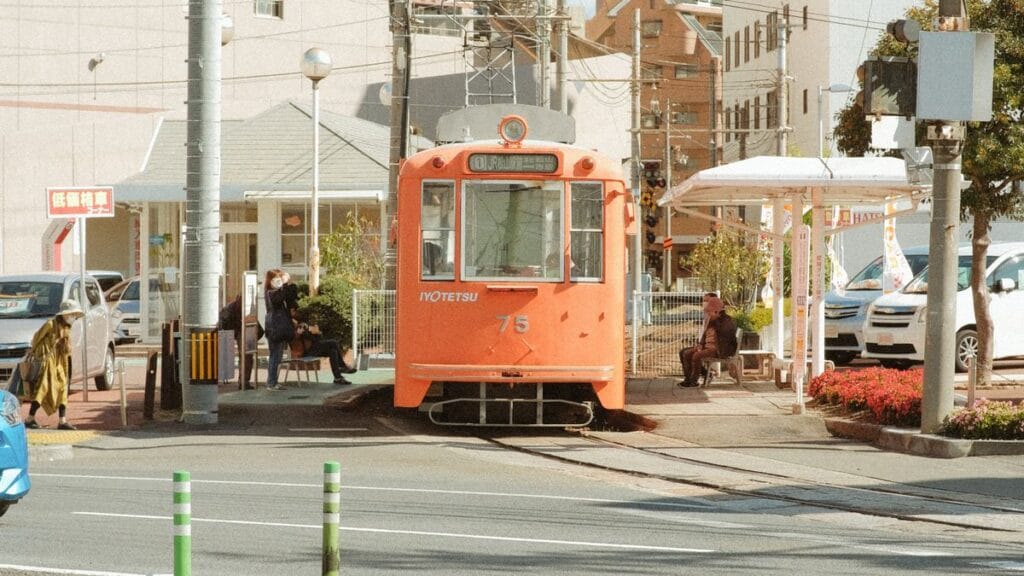
Botchan Train (坊っちゃん列車): A reproduction of the steam train that appeared in Sōseki's novel, operated as a tourist attraction between the central Matsuyama tram stop and Dogo Onsen. The small, coal-burning (now diesel-powered) replica train is charming and provides a slow, atmospheric approach to the onsen town from Matsuyama center.
Tsubaki no Yu (椿の湯): The most affordable of the Dogo Onsen bathing facilities — a simple public bath near the Honkan used primarily by local residents rather than tourists. Entry approximately ¥450. The experience of sharing a hot spring bath with the local neighborhood is arguably more authentic than the tourist-oriented Honkan experience.
Recommended Matsuyama Food
Jakoten (じゃこ天): Shikoku's signature fish cake — made from small local fish (hime kisu / ヒメキス) ground with the skin and bones and fried until crispy. The texture and flavor are completely unlike the refined fish cakes of central Japan — rougher, fishier, more robust. Available at stalls throughout the city.
Matsuyama Taimeshi (鯛めし): The Matsuyama version of sea bream rice is different from the Uwajima version (also called taimeshi) that is more well-known — in Matsuyama, the sea bream is steamed over rice in a pot rather than eaten raw over rice. Rich, aromatic, and distinctively local.
Recommended Base Hotels
Dōgo Kan (道後館) (Luxury / from ¥35,000 per person): The finest ryokan in Dogo Onsen, with private baths and proximity to the Honkan.
Funaya Ryokan (ふなや) (Mid-range / from ¥22,000 per person): Historic inn that has been operating since 1626, one of Japan's oldest ryokan.
- ANA Crowne Plaza Matsuyama (Mid-range / from ¥15,000): City center hotel, tram access to Dogo.
Planning where to stay in Shikoku? Browse our honest hotel picks and area guides.
🏨 Planning where to stay?
Every area guide on this site pairs with honest, station-by-station hotel picks. Start here: Ehime Hotel Guides →