This article may contain affiliate links. If you book through them, we may earn a small commission at no extra cost to you.
On this page
Introduction: The Survivor Species
Japan's game centers (ゲームセンター / gēsen) — public arcades — have survived the global collapse of arcade culture significantly better than their international equivalents, but they have not survived unchanged or without losses. The peak of approximately 26,000 game centers nationally in the late 1980s has contracted to approximately 4,000–5,000 by the mid-2020s — a contraction of over 80% representing a fundamental restructuring of what arcade spaces are and who uses them.
What remains is a specific, evolved form of the arcade — less focused on the video game cabinet experiences that defined the medium's golden age, more focused on the specific experiences that cannot be replicated at home: the rhythm game cabinet's physical interface, the crane game's three-dimensional manipulation, the face-to-face competition of head-to-head fighting game cabinets, and the increasingly rare but still-existing spaces dedicated to preserving vintage arcade hardware as a living museum.
What's Actually in Modern Game Centers
Rhythm Games (音楽ゲーム / Ongaku Game)
The category that most directly demonstrates the arcade's unique value proposition — physical experiences requiring specific hardware impossible to replicate at home:
Taiko no Tatsujin (太鼓の達人): The taiko drum arcade game — two large drum pads played with oversized drumsticks to J-pop, anime, and classical music patterns. The physical experience of playing with proper taiko-sized drums at full volume in a public space has no home equivalent.
maimai (まいまい) and maimai DX: A circular touch-screen game where players tap, slide, and swipe across a large circular screen to music patterns — the specific large-format circular interface is arcade-only.
beatmania IIDX (ビートマニア IIDX): The turntable-and-keys rhythm game with a specific controller configuration (one DJ-style turntable plus 7 keys) — the controller's quality and the cabinet's sound system create an experience significantly above what home versions provide.
Dance Dance Revolution (DDR): The floor-pad dancing game that pioneered public physical game performance — still operating in most large game centers decades after its 1998 debut.
Crane Games (クレーンゲーム / UFO Catcher)
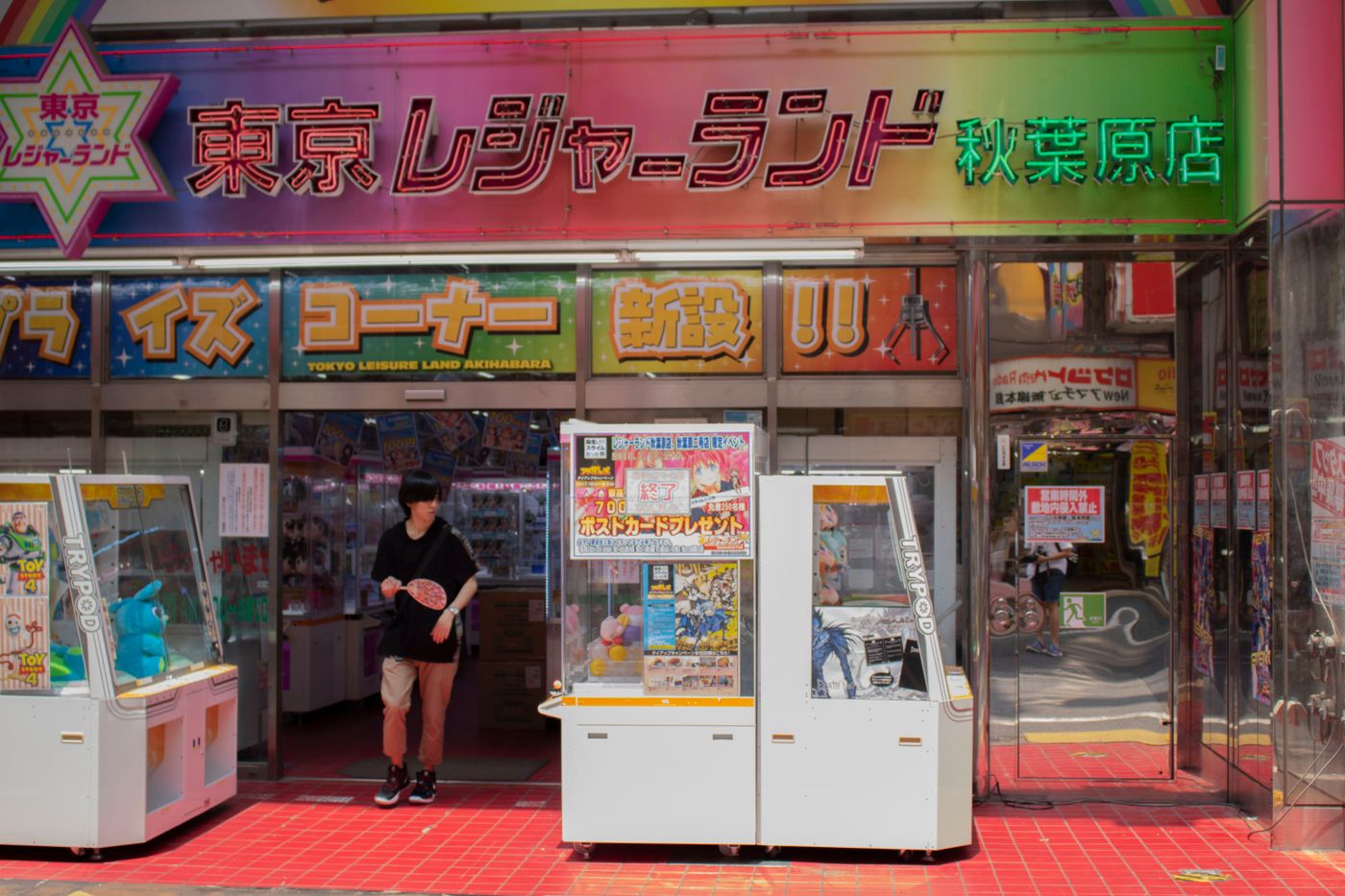
Named after the Sega UFO Catcher (UFOキャッチャー) brand that made the category famous in Japan — machines where players manipulate a crane to retrieve prizes (plush toys, figures, food items, branded goods). The crane game category has evolved significantly: most modern Japanese crane machines are not the simple prize-or-miss format but involve complex multi-step retrieval mechanisms requiring genuine skill and strategy.
The economic reality: Crane games are the primary revenue driver of most contemporary game centers — their operating cost is low, their revenue per play is consistent, and the prize inventory management is the primary operational skill for game center operators.
Card-Based Games (カードゲーム)
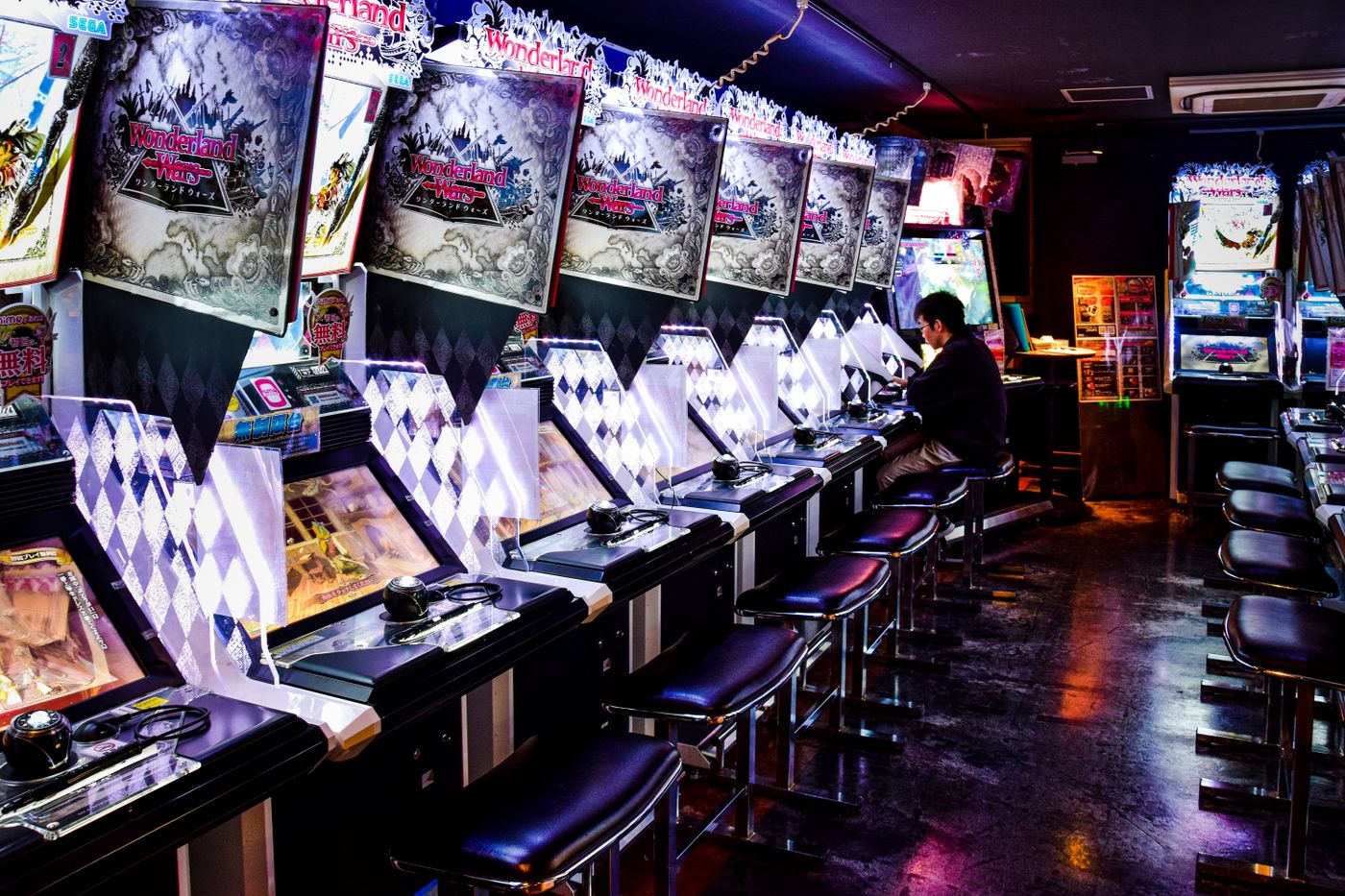
The Wangan Midnight Maximum Tune (湾岸ミッドナイト マキシマムチューン) and similar card-based racing/battle games — players use IC cards to store vehicle progression between sessions, creating a form of in-arcade persistent online play that builds long-term customer relationships specific to the arcade context.
Dedicated Retro Arcades: The Preservation Spaces
Hey (ヘイ), Akihabara
Hey — in Akihabara's core district — maintains one of the most comprehensive vintage arcade cabinet collections actively operating in Japan. Multiple floors of functioning classic machines, from mid-1970s vector graphics through the CPS2-era fighters of the mid-1990s, create an operational museum of arcade gaming history.
The specific appeal: Playing Street Fighter II, Metal Slug, or Dungeons & Dragons on the original cabinet hardware — with original monitor, original joystick weight and throw, original sound through original speakers — is a fundamentally different experience from emulation. The physical specificity of the original hardware is part of what is being preserved and experienced.
Mikado (ゲームセンター ミカド), Takadanobaba
Mikado in the Takadanobaba area (a student district northwest of Shinjuku) is the most community-oriented of Tokyo's classic game centers — a space that has maintained a dedicated fighting game community, organizes regular competitive events, and archives original hardware with the seriousness of institutional preservation.
Club Sega Akihabara (クラブセガ秋葉原)
The large multi-floor Sega (now Genda Sega Entertainment) arcade center in Akihabara — primarily contemporary rhythm and crane games, but with certain vintage Sega hardware maintained as historical reference.
Round One (ラウンドワン): The Survival Strategy
Round One — a large nationwide entertainment center chain — represents the successful adaptation strategy that has allowed multi-floor entertainment centers to survive where small neighborhood arcades have not: the combination of arcade games, bowling alleys, karaoke, billiards, and sports facilities under one roof creates a total entertainment destination that competes with multiple alternative leisure categories simultaneously.
Round One's SPORTS × AMUSEMENT format — the specific combination — has proven sufficiently resilient that the chain has expanded internationally (several Round One locations in the United States, specifically serving Japanese-American communities).
The Mahjong and Medal Game Spaces
A specific and often overlooked segment of the game center ecosystem — many smaller neighborhood game centers survive primarily on mahjong game (麻雀ゲーム) cabinets (electronic mahjong, playable solo against AI) and medal games (メダルゲーム) — casino-style slot and roulette machines using non-cash medal tokens that can be played but not legally cashed out. These spaces serve an older demographic (the arcade's original adult customers) with games that have maintained an audience independent of the console gaming culture that drew younger players away from arcades.
🏨 Planning where to stay?
Every area guide on this site pairs with honest, station-by-station hotel picks. Start here: Hotel Guides by Station →