This article may contain affiliate links. If you book through them, we may earn a small commission at no extra cost to you.
On this page
Introduction: The Buildings That Recorded Japan's Opening
Japan's Meiji-era Western architecture — the Western-style government buildings, banks, residences, hotels, and commercial structures built between approximately 1868 and 1930 — constitutes a specific and internationally underappreciated architectural heritage: the physical record of Japan's encounter with Western architectural forms, filtered through Japanese craft traditions and modified by the requirements of Japanese climate, social organization, and aesthetic preference.
The result is an architectural tradition that is neither purely Western nor traditionally Japanese but specifically Meiji — a synthesis that looks at its best in the treaty port cities of Yokohama and Kobe, where the density of Western-influenced building surviving from the period allows streetscape-level experience of this specific historical moment.
Yokohama's Western Architecture Heritage
The Kannai and Yamate Districts
The Kannai district (関内) — the original foreign settlement area of the treaty port — contains the highest surviving concentration of Meiji and Taisho-era Western-influenced public and commercial architecture in Japan.
Yokohama Customs House (横浜税関 / "Queen of the Port"): The 1934 Customs House building — a Renaissance-influenced structure with a distinctive Byzantine dome that has become a Yokohama skyline symbol — nicknamed the "Queen" as part of the Three Towers of Yokohama alongside the "King" (the Kanagawa Prefectural Government Building) and the "Jack" (the Yokohama Port Opening Memorial Hall).
Yokohama Port Opening Memorial Hall (横浜開港記念会館 / "Jack"): Built in 1917 to commemorate the 50th anniversary of the port's opening — a brick and granite structure with a Renaissance clock tower that represents the mature phase of Meiji Western-influenced civic architecture.
The Bund (バンド): Yokohama's waterfront — the surviving brick warehouse buildings along the harbor edge, several converted to commercial use as the Red Brick Warehouse (赤レンガ倉庫), represent the commercial architecture of the late Meiji and Taisho port economy.
The Yamate (山手 / Bluff) area: The hillside residential district where the foreign merchant community built their private houses — several preserved as the Yamate Western Houses open to public visitation. These domestic structures represent Western architectural forms (British Regency, Swiss chalet, American colonial) applied to Japanese hillside settings, often with specific adaptations like verandas and earthquake considerations.
Kobe's Western Architecture Heritage
Kobe's Western architectural heritage is concentrated in two specific districts:
Kitano (北野): The Foreign Residences
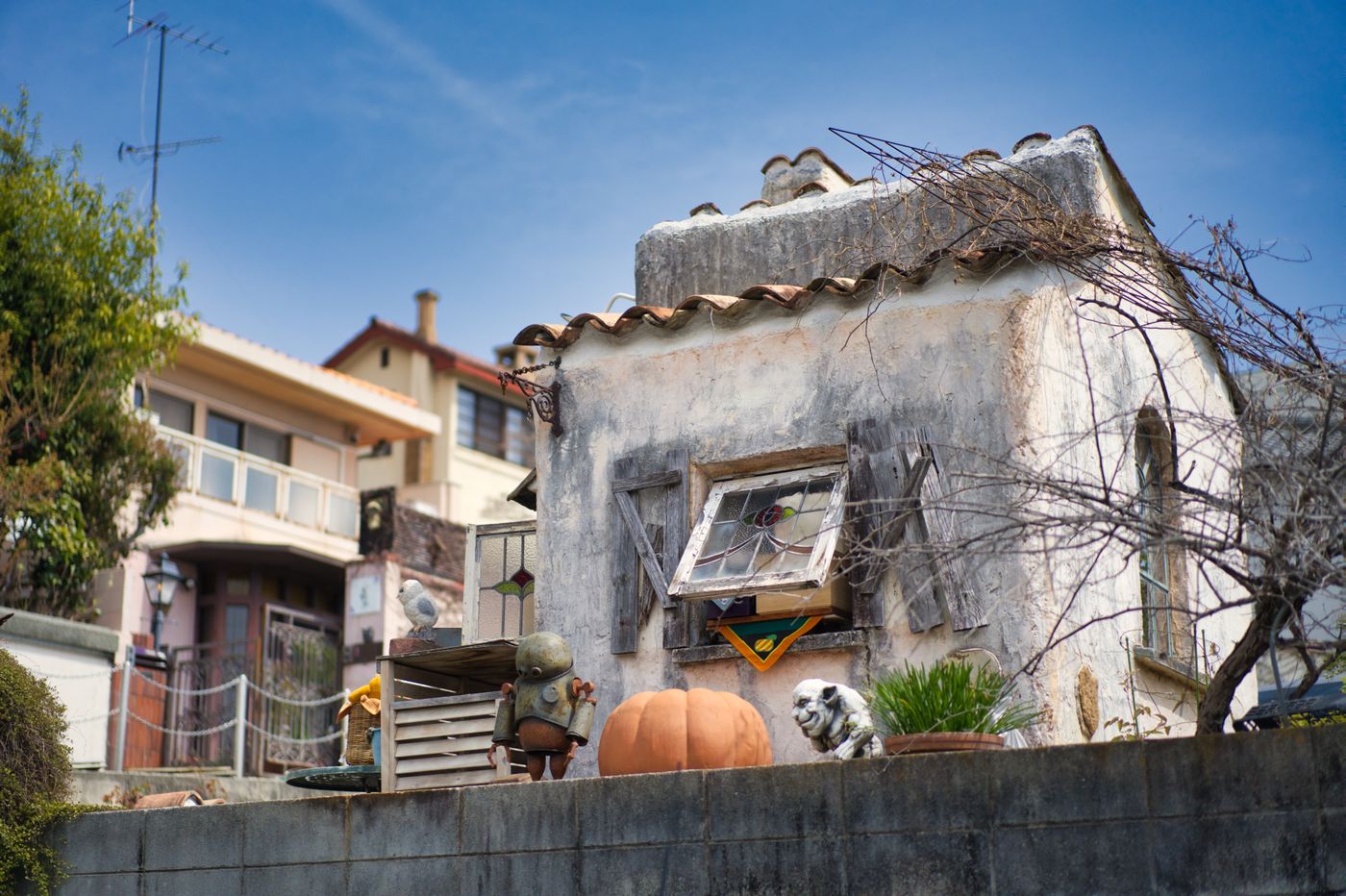
Kitano-cho (北野町) — the hillside district above Kobe's center where the foreign merchant community settled — preserves a concentration of ijinkan (異人館 / "foreigner's houses"): Western-style domestic buildings from the Meiji and Taisho periods that served as residences for the British, German, American, and other national communities who settled in the treaty port.
The Weathercock House (風見鶏の館): The most architecturally distinguished of the Kitano houses — a German trader’s villa built around 1909, crowned by its namesake weathervane rooster. After nearly two years of seismic strengthening it reopened to visitors in July 2025, its interiors preserved. (Checked July 17, 2026.) The brick construction and the steep-roofed northern European form represents one of the most specific national architectural types in the ijinkan collection.
The Moegi House (萌黄の館): The American consular style — a 1903 building of the American colonial form, painted distinctive light green, that represents the contrast between different national architectural traditions in the same neighborhood.
Meiji Mura (明治村): The Concentrated Alternative
For visitors unable to travel to both Yokohama and Kobe, Meiji Mura (明治村) — an open-air architectural museum in Inuyama, Aichi Prefecture, comparable in concept to the Edo-Tokyo Open Air Museum — preserves 67 relocated Meiji-era buildings in a single large site. The collection includes buildings of national significance that could not be preserved in their original locations, including the main lobby of Frank Lloyd Wright's 1919 Imperial Hotel (帝国ホテル), dismantled and relocated when the original building was demolished in 1968.
The Architectural Significance
What makes Meiji Western architecture significant beyond its historical interest is the specific evidence it provides of cultural translation — the way Japanese builders, working from European pattern books and the instruction of Western architects, interpreted the forms they were given:
The proportion adjustments: Meiji Western buildings frequently have proportions that differ subtly from their European models — slightly different window-to-wall ratios, slightly altered roof pitches, adaptations reflecting Japanese carpenters' hand-building traditions applied to Western-specified forms.
The material substitutions: Japanese builders substituted available Japanese materials where European originals were unavailable or impractical — the brick and tile traditions adapted to produce results that visually approximate European models while using Japanese technical knowledge.
The hybrid interiors: Many ijinkan and official buildings maintain Western exterior presentation with Japanese interior details — tatami rooms behind Western-style facades, Japanese craft joinery in Western-designed buildings.
Recommended Base Hotels
For Yokohama: Hotel New Grand (ホテルニューグランド) (Mid-range / from ¥18,000) — a 1927 building that is itself one of Yokohama's significant Meiji/Taisho period Western-influenced hotels, directly adjacent to Yamashita Park.
For Kobe: The b Kobe (Mid-range / from ¥12,000): Central Kobe, convenient for both Kitano and waterfront architecture.
Planning where to stay in Kansai? Browse our honest hotel picks and area guides.
🏨 Planning where to stay?
Every area guide on this site pairs with honest, station-by-station hotel picks. Start here: Kanagawa Hotel Guides →