This article may contain affiliate links. If you book through them, we may earn a small commission at no extra cost to you.
Tokyo Travel Guide · Japanese Gardens
Tokyo’s Hidden Edo Gardens:
The Deepest Cultural Experience in the City
Seven Gardens a Tokyo Native Actually Recommends — and Why They Matter More Than the Tourist Trail
🌿 7 Edo-period gardens
🍵 Matcha & wagashi inside the gardens
🌸 Cherry blossoms & autumn foliage
💴 Entry from ¥150
On this page
Introduction: What a Japanese Garden Actually Is
Most visitors to Tokyo put Senso-ji, Tokyo Tower, and Shibuya Crossing at the center of their itinerary. But when I’m asked what offers the deepest cultural experience in Tokyo, my answer is always the same: Japanese gardens.
A Japanese garden is not a park. It is a work of philosophy made physical. Every element — the shape of the pond, the placement of stones, the choice of trees, the angle of a bridge — has been deliberately composed to express a worldview. The central concept is shukei: the compression of natural landscapes into a single garden, so that a visitor walking its paths experiences mountains, rivers, and oceans in miniature.
Tokyo still contains several of the great gardens commissioned by Edo-period shoguns and lords. The fact that these spaces — designed centuries ago, built with extraordinary care — have survived inside a modern megalopolis is one of the most remarkable things about this city. Entry fees start at ¥150. Most visitors walk straight past them.
Three Garden Styles Worth Knowing
Kaiyushiki (Strolling Garden): Built around a central pond, designed to reveal a new composed view with each step around the perimeter. The dominant style in Edo-period daimyo gardens.
Karesansui (Dry Landscape): No water — rocks and raked sand represent rivers and seas. Deeply connected to Zen philosophy. More common in Kyoto temple gardens.
Shioiri (Tidal Garden): Seawater drawn in from Tokyo Bay, with the water level rising and falling with the tides. A style unique to gardens close to the bay — and one of the rarest in the world.
Seven Gardens Worth Your Time
1. Hamarikyu Gardens (Chuo Ward)
📍 7 min walk from Shiodome Station (Toei Oedo Line) · Open 9:00–17:00 daily · ¥300 entry
Of all Tokyo’s gardens, Hamarikyu is the one I most strongly recommend to foreign visitors. Established in 1654 as a garden for the Tokugawa shogunal family, it is built around a tidal pond — seawater drawn directly from Tokyo Bay, rising and falling with the tides. The garden’s appearance changes throughout the day as water levels shift. This is one of the rarest garden formats in the world.
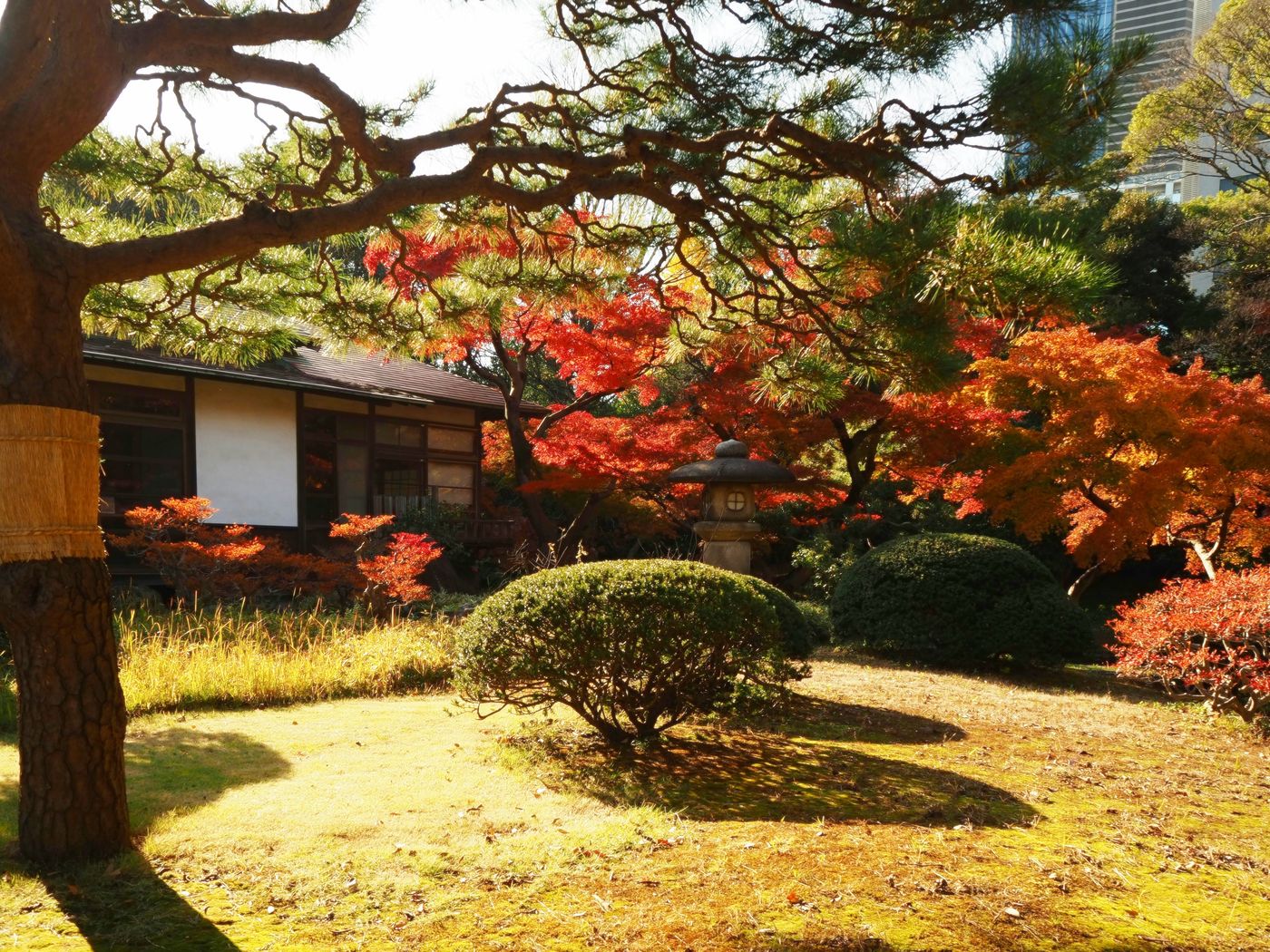
What makes Hamarikyu visually extraordinary is its contrast. Beyond the 300-year-old pines and the garden’s historic ponds, the skyscrapers of Shiodome rise like a different century entirely. Nowhere else on earth can you stand in an Edo-period garden and see a 21st-century skyline like this. The juxtaposition is not accidental — it is simply Tokyo.
Highlights: Nakajima Teahouse (matcha and wagashi on an island in the pond) · 300-year-old pine tree · Canola flower fields (winter–spring)
✦ Local tip: Walk from Shimbashi Station rather than Shiodome. The transition from red-lantern izakaya alleys directly into the garden’s gates makes the contrast even more dramatic.
2. Rikugien Garden (Bunkyo Ward)
📍 7 min walk from Komagome Station (JR Yamanote Line) · Open 9:00–17:00 daily · ¥300 entry
Rikugien is the garden I consider the purest expression of Japanese garden aesthetics in Tokyo. Completed in 1702 by Yanagisawa Yoshiyasu — a senior official to the fifth Tokugawa shogun — it was designed around 88 distinct scenic views, each composed to evoke a scene from classical Chinese and Japanese poetry. It is designated a Special Place of Scenic Beauty by the Japanese government, the highest cultural designation available.
The central pond, Daisen-sui, is encircled by a strolling path that reveals a new landscape composition with every turn. Visitors consistently report that it can be walked for hours without any sense of repetition — each view is complete in itself.
Highlights: Weeping cherry blossom (late March–early April, with evening illumination) · Autumn foliage illumination (late November–early December) · Fukiage Chaya teahouse
✦ Local tip: Arrive at opening (9:00am). The garden in early morning, before other visitors arrive, is an experience of silence and birdsong that Tokyo’s streets cannot offer.
3. Koishikawa Korakuen Garden (Bunkyo Ward)
📍 3 min walk from Korakuen Station (Tokyo Metro Marunouchi Line) · Open 9:00–17:00 daily · ¥300 entry
One of Tokyo’s oldest surviving daimyo gardens, Koishikawa Korakuen holds the rare distinction of being designated both a Special Historic Site and a Special Place of Scenic Beauty — a double designation almost unique in Japan. Construction began in 1629 under the first lord of the Mito Tokugawa domain; the second lord, Mitsukuni (known historically as “Mito Komon”), completed it.
What makes this garden conceptually unusual is its dual cultural reference: Japanese landscapes (Kyoto’s Togetsukyo bridge, Lake Biwa) and Chinese landscapes (the Su Causeway of West Lake in Hangzhou) are recreated side by side within a single garden. The result is a garden that embodies the cultural exchange between Japan and China in the Edo period.
Highlights: Central pond (Taisen-sui) · Togetsukyo bridge and Horai Island · Plum grove (February–March)
4. Kyu-Shiba-Rikyu Garden (Minato Ward)
📍 1 min walk from Hamamatsucho Station (JR Yamanote Line) · Open 9:00–17:00 daily · ¥150 entry
Kyu-Shiba-Rikyu stands out in one remarkable respect: its accessibility. One minute on foot from Hamamatsucho Station — one of the Yamanote Line’s most connected hubs — and the entry fee is just ¥150. Dating to 1678, this former lord’s garden features a tidal pond (like Hamarikyu) and a strolling circuit that distills early Edo garden design in a compact, unhurried space.
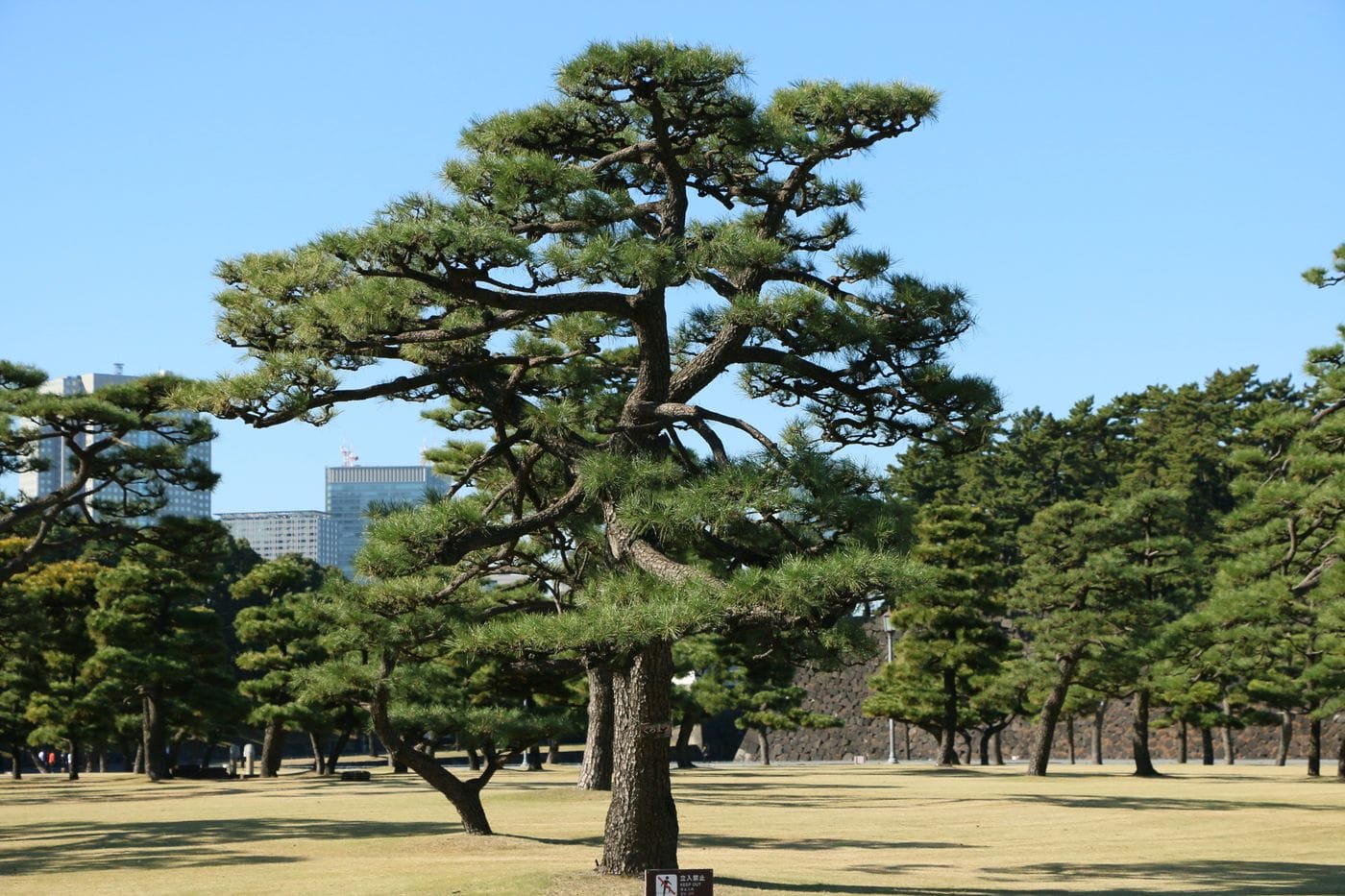
For travelers arriving or departing via Haneda Airport, Hamamatsucho is a natural gateway — making Kyu-Shiba-Rikyu the ideal garden for a first morning or a final afternoon in Tokyo.
Highlights: Central pond and island · Historic stone arrangements · Proximity to Hamarikyu (walkable)
✦ Local tip: Ideal for early risers with jet lag — the garden opens at 9:00am and is nearly empty before 10:00am.
5. Shinjuku Gyoen (Shinjuku Ward)
📍 5 min walk from Shinjuku-gyoenmae Station (Tokyo Metro Marunouchi Line) · Open 9:00–17:30, closed Mondays · ¥500 entry
At 580,000 square meters, Shinjuku Gyoen is the largest garden in Tokyo — a former imperial garden now open to the public. What makes it genuinely unique in the world is its layout: three entirely distinct garden styles coexist within a single site. A Japanese strolling garden, a French formal garden (recalling Versailles in its geometric symmetry), and an English landscape garden occupy adjacent spaces. Moving between them takes minutes; the aesthetic shift is complete each time.
Highlights: Cherry blossoms (65 varieties, ~1,000 trees, late March–mid April) · Greenhouse of tropical plants · Annual chrysanthemum exhibition (November)
✦ The cherry blossom period here extends 3–4 weeks due to the diversity of varieties — making it the most reliable blossom destination in Tokyo when timing is uncertain.
6. Kiyosumi Garden (Koto Ward)
📍 3 min walk from Kiyosumi-Shirakawa Station (Tokyo Metro Hanzomon Line) · Open 9:00–17:00 daily · ¥150 entry
Kiyosumi Garden occupies a special place in Tokyo’s garden landscape. Originally the site of a merchant’s estate in the Edo period, it was purchased and redesigned in the Meiji era by Iwasaki Yataro — founder of the Mitsubishi zaibatsu — who collected extraordinary stones from across Japan to create what is often called a “garden of stones.” Specimens of Iyo blue stone, Kishu blue stone, and Sado red agate are arranged throughout the garden with a collector’s precision.
The neighborhood of Kiyosumi-Shirakawa has become Tokyo’s specialty coffee district in recent years — Blue Bottle Coffee’s first Japan location opened here, followed by dozens of independent roasters. Combining a garden visit with café exploration is one of the most rewarding half-days available in this part of Tokyo.
Highlights: Stone-hopping across the central pond · Ryotei teahouse · Rare views of Mount Fuji on clear winter days
7. Former Iwasaki Estate Garden (Taito Ward)
📍 3 min walk from Yushima Station (Tokyo Metro Chiyoda Line) · Open 9:00–17:00 daily · ¥400 entry
Strictly speaking, this is not a traditional Japanese garden — but it cannot be omitted from any serious discussion of Tokyo’s garden culture. Built in 1896 as the private residence of the third head of the Mitsubishi family, the estate was designed by British architect Josiah Conder and places a Jacobean-style Western manor house, a traditional Japanese study hall, and a Swiss chalet-style billiard room on a single site. The result is a uniquely Meiji-era artifact: a garden that records, in architectural form, Japan’s ambivalent encounter with Western culture in the late 19th century.
Highlights: The Western mansion’s interior (extraordinary Meiji-era craftsmanship) · Billiard room (freestanding Swiss chalet-style building) · The lawn garden currently being restored to its original Japanese design
Seasonal Calendar: When to Visit Which Garden
| Season | What to See | Best Gardens |
|---|---|---|
| February–March | Plum blossoms | Koishikawa Korakuen, Shinjuku Gyoen |
| Late March–April | Cherry blossoms | Rikugien, Shinjuku Gyoen, Hamarikyu |
| May–June | Fresh greenery, irises | Kiyosumi, Koishikawa Korakuen |
| July–September | Lotus flowers, summer green | Hamarikyu, Kyu-Shiba-Rikyu |
| October–November | Autumn foliage | Rikugien, Shinjuku Gyoen, Kiyosumi |
| December–January | Winter scenery, Mount Fuji views | Kiyosumi, Hamarikyu |
Recommended Hotels by Garden Area
For Multiple Gardens (Best Base)
The Tokyo Station / Marunouchi area gives access to Hamarikyu, Kyu-Shiba-Rikyu, Koishikawa Korakuen, and Rikugien — all within 30 minutes by train.
Tokyo Station Hotel (Luxury / from approx. ¥55,000/night ~$365 USD) — Inside the historic red-brick station building. An exceptional base for garden touring.
Hotel Metropolitan Marunouchi (Upper Mid-Range / from approx. ¥28,000/night ~$185 USD) — 1 min walk from Tokyo Station, excellent access to all central garden locations.
For Shinjuku Gyoen
Hyatt Regency Tokyo (Luxury / from approx. ¥40,000/night ~$265 USD) — Within walking distance of Shinjuku Gyoen.
Hotel Gracery Shinjuku (Mid-Range / from approx. ¥20,000/night ~$133 USD) — Well-priced Shinjuku base, convenient for the garden.
For Hamarikyu & Kyu-Shiba-Rikyu
Conrad Tokyo (Luxury / from approx. ¥55,000/night ~$365 USD) — In Shiodome, walking distance from Hamarikyu.
Toyoko Inn Shimbashi (Economy / from approx. ¥8,000/night ~$53 USD) — Budget-friendly base, 15 min walk to Hamarikyu.
Note: All prices are approximate and vary significantly by season. Check current rates on booking sites.
Why Tokyo’s Gardens Are Worth Your Time
At Shibuya Crossing, you feel Tokyo’s speed. From the Skytree, you feel its scale. But in Tokyo’s Japanese gardens, you feel its depth — centuries of care, still alive, still open, for ¥150.
✔ Cultural depth seekers
✔ Cherry blossom & autumn foliage visitors
✔ Photography enthusiasts
✔ Travelers wanting peace from the city
✔ Anyone who thinks Tokyo has no history
🏨 Planning where to stay?
Every area guide on this site pairs with honest, station-by-station hotel picks. Start here: Tokyo Hotel Guides →