This article may contain affiliate links. If you book through them, we may earn a small commission at no extra cost to you.
Tokyo Travel Guide · Harajuku
Harajuku Station: Where Ancient Forest
Meets Tokyo’s Most Electric Street Culture
Meiji Shrine · Takeshita Street · Omotesando · Yoyogi Park · Kawaii Fashion
⛩️ Meiji Shrine — 5 min walk
🎀 Takeshita Street kawaii culture
🛍️ Omotesando luxury shopping
🌿 Yoyogi Park — one of central Tokyo's largest
On this page
- What Kind of Area is Harajuku? A Local’s Honest Take
- Getting Around from Harajuku: Central & Well-Connected
- Sightseeing Near Harajuku: Two Tokyos, One Neighbourhood
- Food & Drink Near Harajuku
- Top 3 Recommended Hotels Near Harajuku Station
- Overall Rating: Harajuku Station Area
- Who Should Stay Near Harajuku?
- Keep exploring
What Kind of Area is Harajuku? A Local’s Honest Take
Harajuku presents Tokyo’s most dramatic duality — two entirely different worlds separated by just a few minutes of walking. On one side of the station, Meiji Shrine stands within 70 hectares of ancient forested grounds, one of the most serene and spiritually significant spaces in the country. On the other side, Takeshita Street erupts in color, noise, and the full intensity of Japanese youth fashion culture — crepes, candy floss, cosplay, and street style that has influenced designers worldwide.
Between these two poles runs Omotesando — Tokyo’s answer to the Champs-Élysées, lined with the flagship stores of every major luxury brand and architecturally distinctive buildings commissioned from architects including Tadao Ando, Herzog & de Meuron, and SANAA. For visitors interested in contemporary architecture as much as shopping, Omotesando is one of the world’s most concentrated outdoor architecture galleries.
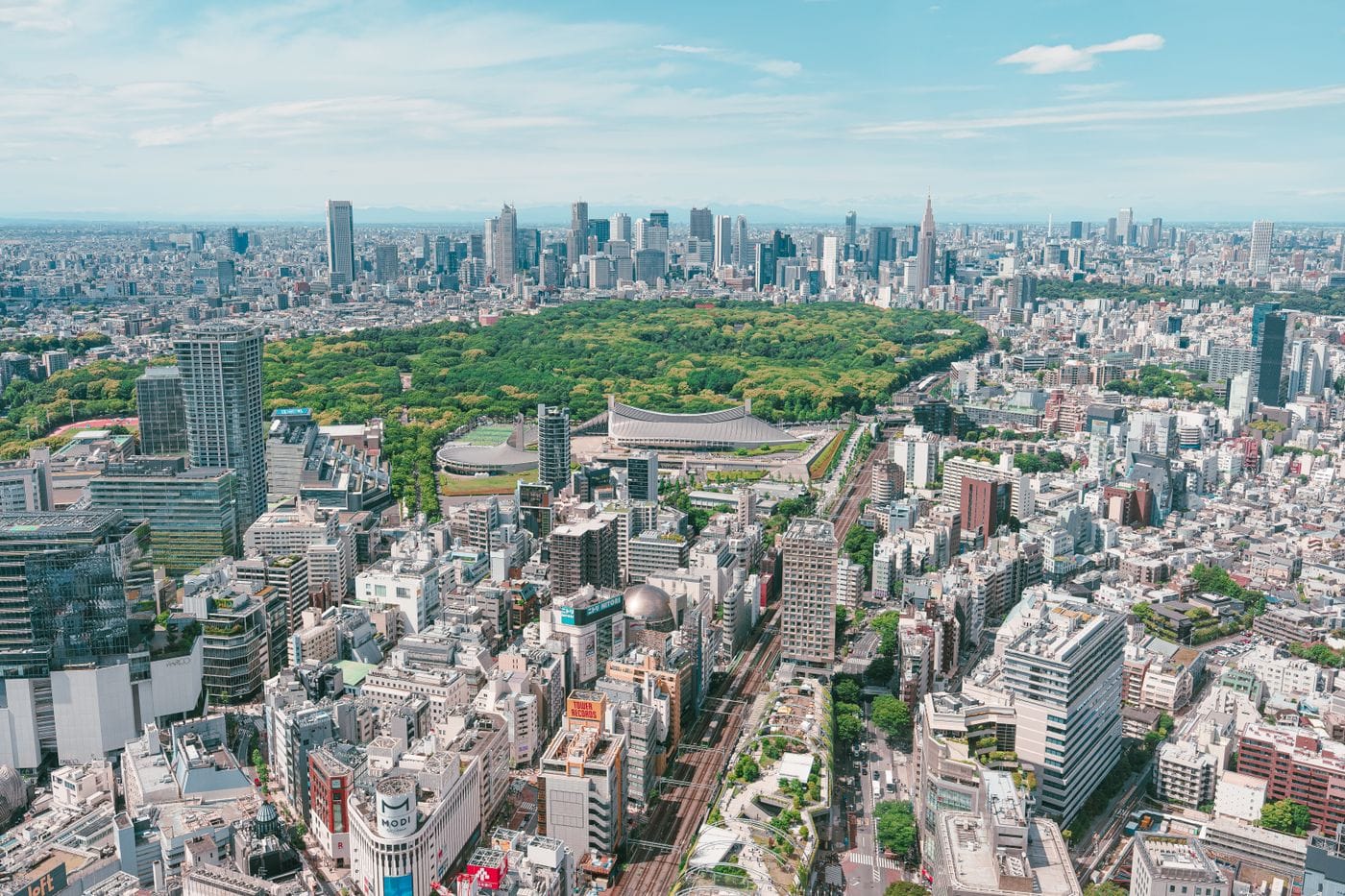
To the west, Yoyogi Park — Tokyo’s largest central park — offers open lawns, cycling paths, and weekend gatherings that reveal a side of the city’s social culture rarely visible to short-stay visitors. In cherry blossom season, the park is extraordinary.
Harajuku is one of the few places in Tokyo where ancient Japan and contemporary Japan are genuinely side by side — not as a museum exhibit, but as a living reality. Walk through Meiji Shrine’s forest at 7am, then walk to Takeshita Street at 10am. The contrast is one of the city’s defining experiences.
Getting Around from Harajuku: Central & Well-Connected
Harajuku sits on the Yamanote Line between Shibuya and Shinjuku — two of Tokyo’s major hubs — giving excellent access in both directions.
✈️ To Haneda Airport
Yamanote Line to Shinagawa (~15 min), then Keikyu Line to Haneda — approximately 30–35 minutes total. Or the airport limousine bus from Shinjuku (one stop away).
🛬 To Narita Airport
Yamanote Line to Shinjuku (~5 min), then Narita Express (NEX) direct to Narita — approximately 85 minutes total. One of the most comfortable Narita connections available.
🚄 Shinkansen Access
Shinagawa (Tokaido/Sanyo) ~15 min; Tokyo Station (all lines) ~20 min by Yamanote. Also accessible via the Tokyo Metro Chiyoda Line from Meiji-Jingumae station.
Sightseeing Near Harajuku: Two Tokyos, One Neighbourhood
⛩️ Meiji Shrine
Dedicated to Emperor Meiji and Empress Shoken, this Shinto shrine set within 70 hectares of forested grounds is one of Japan’s most visited and spiritually significant sacred sites. The 12-metre torii gate at the forest entrance, the gravel approach through ancient cedars, and the main shrine compound create a transition from urban noise to genuine stillness that takes less than ten minutes on foot from the station. Visit at dawn for the most affecting experience.
🎀 Takeshita Street
The 350-metre pedestrian street that has been the global epicentre of Japanese street fashion and kawaii culture since the 1980s. Rainbow crepes, cosplay shops, vintage fashion, and independently designed clothing fill every available space. The energy is unlike anywhere else in the city — deliberately maximalist, joyful, and consistently surprising. Come on a weekday morning for a more navigable experience; weekend afternoons are genuinely crowded.
🏛️ Omotesando — Outdoor Architecture Gallery
The zelkova-lined boulevard connecting Harajuku to Aoyama is simultaneously Tokyo’s premier luxury shopping street and one of the world’s most concentrated collections of contemporary architecture. The Prada building (Herzog & de Meuron), Omotesando Hills (Tadao Ando), Tod’s (Toyo Ito), and the Louis Vuitton flagship are within minutes of each other.
🌿 Yoyogi Park
Adjacent to Meiji Shrine, Yoyogi Park is Tokyo’s largest central green space — open lawns, cycling circuits, weekend musicians, and family gatherings that reveal how Tokyo’s residents use their city when given space to spread out. Cherry blossom season here is among the best in the city. Free to enter at all hours.
Food & Drink Near Harajuku
Harajuku’s food scene ranges from the deliberately theatrical to the quietly excellent — often within the same block.
🍦 Takeshita Street Food
Rainbow-layered crepes, fairy floss in elaborate formations, and novelty soft-serve — Takeshita Street’s food is part of the visual experience. The crepes in particular are genuinely good alongside their photogenic presentation.
☕ Omotesando Cafés
The side streets off Omotesando contain some of Tokyo’s most carefully designed cafés and specialty coffee shops. The quality of the coffee culture here is serious; the interiors are exceptional.
🍽️ Ura-Harajuku Restaurants
The residential backstreets between Takeshita and Omotesando contain independent restaurants of consistently high quality at prices significantly below Omotesando’s front-row establishments. Exploration rewards patience.
Top 3 Recommended Hotels Near Harajuku Station
Harajuku’s hotel options sit between Shibuya and Shinjuku — strategically well-placed for the whole of western Tokyo.
⛩️ Hyatt Regency Tokyo (1 stop, Shinjuku)
LUXURY
From approx. ¥40,000 / night · Shinjuku Station (1 stop from Harajuku)
For travelers basing themselves in the Harajuku area who want a luxury property, the Hyatt Regency in adjacent Shinjuku is one stop away on the Yamanote Line and offers consistent five-star standards alongside skyline views. Meiji Shrine, Takeshita Street, and Omotesando are all reachable within 15 minutes.
✦ Best for: Luxury travelers, Shinjuku + Harajuku combination itineraries
🎀 sequence MIYASHITA PARK (Design Pick)
MID-RANGE
From approx. ¥18,000 / night
For travelers drawn to Harajuku for its design and fashion culture, this design-led hotel above the Miyashita Park complex (a 10-minute walk toward Shibuya) delivers interiors with genuine visual personality at mid-range prices. The social spaces are well-considered and the rooms compact but thoughtfully designed. A good match for the creative energy of the neighbourhood.
✦ Best for: Design-conscious travelers, fashion & culture visitors, younger travelers
🌿 Tokyu Stay Harajuku
MID-RANGE
From approx. ¥16,000 / night · Walking distance from Harajuku Station
Larger-than-average rooms with washer-dryers make this a practical base — after a full day of Meiji Shrine, Takeshita Street, and Omotesando, having proper space to spread out is genuinely restorative. Consistently well-reviewed at this price point.
✦ Best for: Longer stays, value travelers, heavy sightseeing days
Overall Rating: Harajuku Station Area
| Category | Rating | Notes |
|---|---|---|
| Haneda Airport Access | ★★★★☆ | Shinagawa transfer, ~30–35 min |
| Narita Airport Access | ★★★☆☆ | Shinjuku NEX, ~85 min total |
| West Japan Shinkansen | ★★★☆☆ | Shinagawa ~15 min on Yamanote |
| North Japan Shinkansen | ★★★☆☆ | Tokyo Station ~20 min on Yamanote |
| Local Neighbourhood Feel | ★★★★★ | Unmatched duality — shrine forest & street fashion |
| Sightseeing Density | ★★★★★ | Meiji, Takeshita, Omotesando, Yoyogi all walkable |
Who Should Stay Near Harajuku?
✔ First-time Tokyo visitors
✔ Fashion & street culture enthusiasts
✔ Meiji Shrine visitors
✔ Architecture lovers (Omotesando)
✔ Cherry blossom season visitors
✔ Shibuya & Shinjuku day-trippers