This article may contain affiliate links. If you book through them, we may earn a small commission at no extra cost to you.
On this page
Introduction: The Rule That Feels Wrong but Is Correct
The no-tipping rule in Japan is one of the first things international visitors learn and one of the last things that feels natural. For visitors from tipping cultures (particularly American visitors for whom voluntary gratuities are embedded in the ethics of service worker compensation), not tipping can feel actively rude — as if withholding something deserved.
Understanding why Japan's service culture operates differently — and what the correct expressions of appreciation are — transforms the rule from an uncomfortable prohibition into a coherent cultural logic.
Why Tipping Doesn't Exist in Japan
Japan's service culture is built on the concept of omotenashi (おもてなし) — a philosophy of wholehearted hospitality given without expectation of additional reward. Under this philosophy, excellent service is the definition of the job, not a performance meriting extra compensation. A service worker who accepts a tip may experience it as an implication that their standard service would have been lesser without the financial incentive — an uncomfortable framing rather than a compliment.
Japanese service workers are also, in most cases, paid fair wages that make tips unnecessary as supplementation — the structure of service compensation in Japan does not have the American model's subminimum wage for tipped workers.
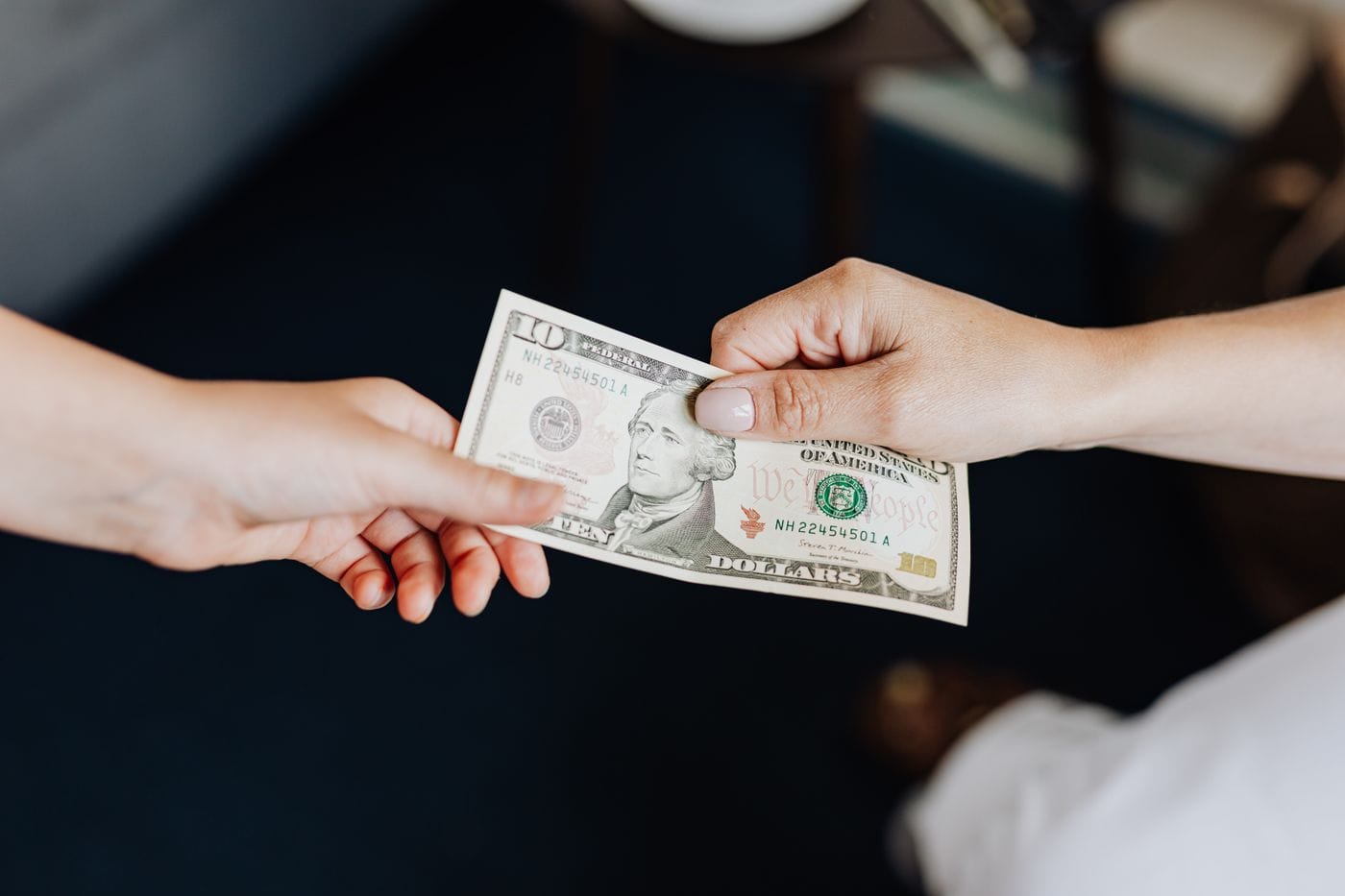
What happens if you tip: In most cases, service staff will politely refuse, perhaps following you to return the money. In some tourist-oriented establishments the staff may accept it without discussion, but the experience is uncomfortable for them regardless. The correct behavior is to not tip.
What to Do Instead
Express Gratitude Verbally
"Arigatou gozaimasu (ありがとうございます)" — "Thank you very much" — is the standard expression. At restaurants, "oishikatta desu (おいしかったです)" — "It was delicious" — is appreciated and culturally appropriate. These verbal expressions carry the intent that a tip would in other contexts.
The Omiyage Tradition
Omiyage (お土産 / souvenir gifts) — a highly developed gift-giving culture in Japan — is the appropriate mechanism for expressing gratitude beyond a basic transaction:
For a ryokan proprietor, guide, or someone who has provided exceptional extended service, bringing a small gift (a boxed sweet from a famous confectioner, a regional specialty) is the culturally appropriate expression of extended appreciation. Omiyage is a social technology with its own careful etiquette (presentation matters, the gift should be appropriate to the relationship level) but it is the correct channel for what a large tip would address.
Online Reviews
The most practically effective alternative to tipping for tourist-facing businesses: a positive review on Google Maps (グーグルマップ), TripAdvisor, or Tabelog (for restaurants) has concrete commercial value to small operators and is the anonymous, no-cash-awkwardness equivalent of recognition.
Exceptions and Edge Cases
Some international hotels: A small number of internationally managed luxury hotels (particularly those with significant foreign staff and management) operate in a more internationally normalized way regarding gratuities — the specific context will be apparent.
Guided tours specifically designed for international visitors: Some guides working with international tourist groups have adapted to tip-accepting behavior, particularly those who have worked extensively with American tour groups. Read the tour operator's specific guidance.
Porters at traditional ryokan: The specific service of nakai-san (仲居さん) — the room attendant at a traditional ryokan — who provides personalized room service throughout your stay is the one context where a small gift placed in an pochibukuro (ぽち袋 / small envelope) at departure is sometimes given by Japanese guests. This is optional, not expected, and falls into the omiyage category rather than tipping.

How to Use a Japanese Squat Toilet — and the High-Tech Bidet Toilet
Introduction: The Two Extremes of Japanese Bathroom Technology
Japan's bathroom culture contains one of the world's most interesting contrasts: the squat toilet (和式トイレ / washiki toire) — a floor-level ceramic basin requiring a full squat posture — and the high-tech washlet toilet (ウォシュレット / washlet) — an electronically controlled throne with heated seat, bidet wash functions, air dryer, and sometimes sound generators. Both can appear in the same country; both require brief instruction for first-time users.
The Squat Toilet (和式トイレ)
What It Looks Like
A squat toilet is a ceramic basin set into the floor, typically with a raised hood at one end (the front, toward which you face) and a drain beneath. There is no seat, no raised bowl — you squat directly over the basin.
How to Use It
Which direction to face: Face the raised hood (the end with the ceramic guard that rises slightly). This means your back is toward the door if the door is at the near end of the stall.
The squat: Squat deeply — feet flat on the floor (or on raised foot platforms in some models), knees bent past 90 degrees, body lowered over the basin. The posture is natural once practiced but requires ankle and hip flexibility that some visitors find unexpectedly challenging.
Clothing management: Pull pants/trousers down and fold forward over your thighs rather than letting them drop to the floor — keeping clothing away from the basin floor is important in this format.
Flushing: A flush handle or button is typically on the hood end or on the wall — the mechanism is straightforward.
Who Will Encounter Them
Squat toilets appear most frequently in older buildings, traditional restaurants, some train stations, and rural locations. Major city train stations, hotels, and modern facilities are predominantly or entirely western-style — the squat toilet is encountered less frequently than a decade ago but is still common enough to warrant preparation.
The High-Tech Washlet Toilet (ウォシュレット)
The Toto Washlet (TOTOウォシュレット) — the brand that invented the category and whose name is used generically — is the world's most sophisticated domestic toilet: a western-style toilet with a heated seat and an electronically controlled bidet/shower function built into the toilet itself.
The Control Panel
This is the element that confuses most foreign visitors. The control panel (usually on the wall to the right or on an arm extending from the toilet seat) includes:
おしり / Oshiri (rear wash): The bidet function — warm water spray cleaning the rear. Press and a nozzle extends from beneath the seat and delivers a gentle spray.
- ビデ / Bide (bidet): Front wash function — the feminine hygiene function.
- おしり強 / Oshiri-kyō: Stronger rear wash.
- 止 / Yame or Stop button: Stops the water spray — pressing this is the most important button to know.
- 乾燥 / Kansō (dryer): Warm air drying function (where present).
音姫 / Otohime ("Sound Princess"): A sound generator that plays flushing sounds to mask bathroom sounds — important in a country where bathroom privacy is culturally significant. Often a separate small device on the wall.
- 流す / Nagasu or レバー / lever: The actual flush — sometimes a separate lever rather than a button.
Temperature Controls
Most washlets allow adjustment of water temperature and seat temperature — the controls are clearly labeled with warm/cool indicators.
What Not to Do
Pressing buttons without reading them can result in unexpected water at unexpected times. The first time, locate the stop button before pressing anything else.
Practical Notes
- Toilet paper is always provided in Japan — the bidet function supplements rather than replaces paper.
Slippers in traditional settings: Many Japanese homes and some traditional facilities provide toilet slippers (トイレスリッパ) to be worn only in the toilet area — remember to remove them when exiting.
🏨 Planning where to stay?
Every area guide on this site pairs with honest, station-by-station hotel picks. Start here: Hotel Guides by Station →