This article may contain affiliate links. If you book through them, we may earn a small commission at no extra cost to you.
On this page
Introduction: Japan's Oldest Pilgrimage
While the Shikoku 88 Temple Pilgrimage is better known internationally, the Saigoku Kannon Pilgrimage (西国三十三所) — a circuit of 33 Buddhist temples in the Kinki (Kansai) region — is Japan's oldest established pilgrimage route, traditionally said to have been founded in the 8th century CE by the priest Tokudō Shōnin and revived as a formal 33-temple circuit in the late 10th century by the retired Emperor Kazan.
The 33 temples — all dedicated to Kannon Bosatsu (観音菩薩), the Bodhisattva of Compassion — are distributed across the six prefectures of Osaka, Kyoto, Hyogo, Shiga, Nara, and Wakayama, connected by routes that combine historical mountain paths, modern roads, and the specific quality of sustained spiritual practice that makes pilgrimage different from sightseeing.
Unlike the Shikoku pilgrimage (which is typically done over 30–60 days on foot), the Saigoku circuit is more commonly completed in sections — a few temples per visit, over multiple trips, across months or years. This episodic approach suits the modern visitor, and the proximity to major Kansai cities (many temples are within day-trip range of Kyoto or Osaka) makes the Saigoku accessible to visitors without extensive time.
- The Pilgrimage Logic: Why 33?
The number 33 is not arbitrary. Buddhist tradition holds that Kannon appears in 33 different forms to aid beings according to their specific needs — the warrior, the monk, the merchant, the child, the widow. The 33 temples of the Saigoku circuit collectively represent these 33 manifestations, and completing the circuit is understood as receiving the protection and compassion of Kannon in all its expressions.
The ennichi (縁日 / day of connection) system — specific dates when the principal Kannon image at each temple is the most auspicious to visit — traditionally guided the timing of pilgrimage.
Selected Key Temples
Temple 1: Seigan-ji (青岸渡寺), Nachi, Wakayama
The pilgrimage's first temple — and by some counts its most atmospherically powerful — stands on a mountain above Nachi Falls (那智の滝), Japan's tallest single-drop waterfall (133 meters). The combination of the ancient temple, the forested mountain, the cascading water below, and the connection to the broader Kumano Kodo pilgrimage network gives the starting point of the Saigoku pilgrimage a quality of arrival rather than beginning.
- Access: Bus from Shingu Station (JR Kisei Main Line).
Temple 3: Kimii-dera (紀三井寺), Wakayama City
Kimii-dera — accessible by a 231-step stone staircase from the road below — is famous for its early cherry blossoms (historically among the first in the Kansai region) and its Kannon hall, which contains one of the Kansai's finest examples of Kamakura-period sculptural work. The view from the top of the stairs over Wakayama city and the sea is exceptional.
Temple 16: Kiyomizudera (清水寺), Kyoto
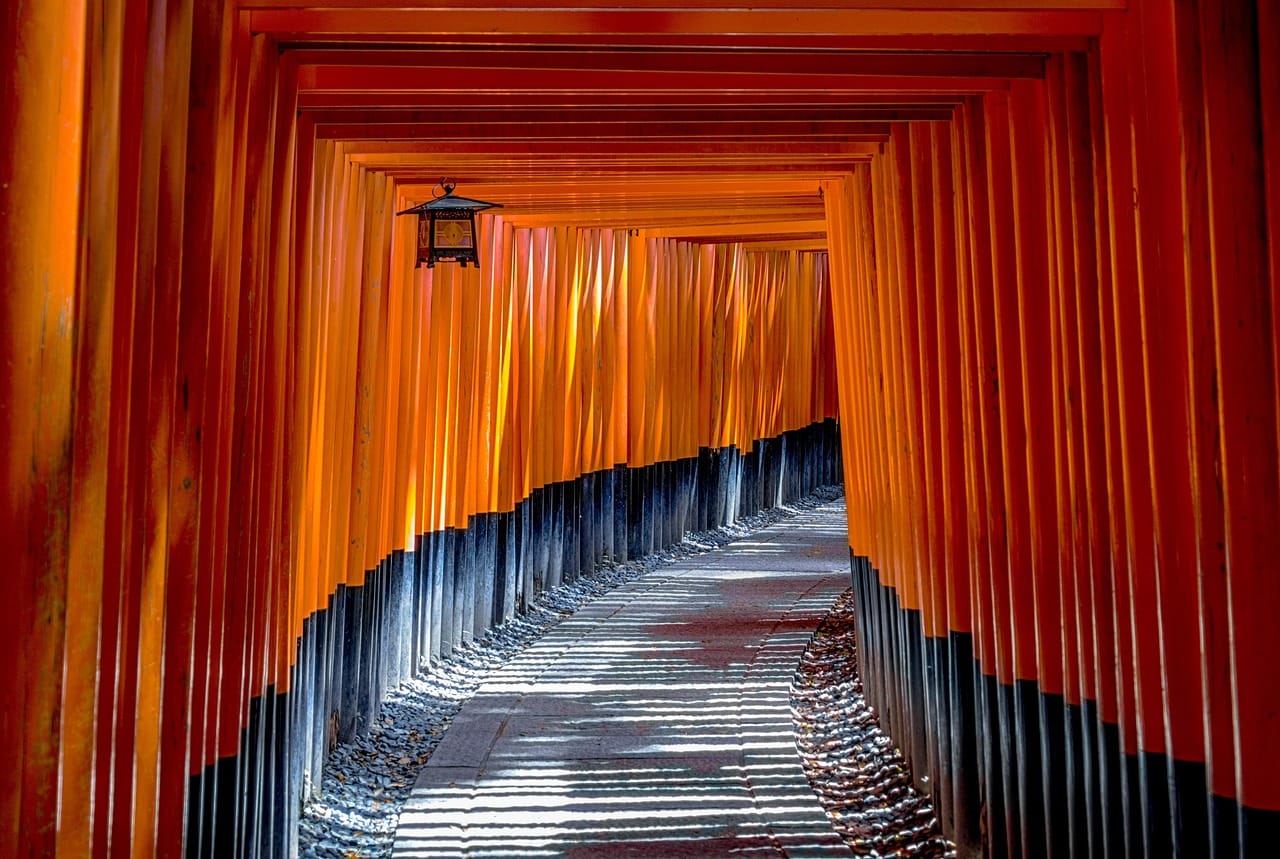
Kiyomizudera in Kyoto is both the Saigoku pilgrimage's most visited temple and Japan's most visited temple overall. Its position in the pilgrimage — the 16th of 33 — places it at the approximate midpoint of the circuit, and the awareness that one is at the journey's center rather than simply visiting the famous site changes the quality of the visit.
Temple 18: Rokkakudo (六角堂), Kyoto
A small, surprisingly urban temple at the center of Kyoto's Karasuma shopping district — surrounded by contemporary commercial buildings, its hexagonal main hall preserved within this 21st-century context. The contrast gives Rokkakudo an unusual character: ancient practice within the contemporary city, the pilgrimage path crossing the shopping street.
Temple 22: Sefuku-ji (総持寺), Ibaraki, Osaka
One of the most historically significant temples in the circuit — the specific Kannon legend here involves the capture of a turtle (the temple's symbol) whose release by the founder produced a miraculous recovery of a family member. The turtle motif appears throughout the temple's decorative program.
Temple 33: Tani-dera / Kegon-ji (谷汲山 華厳寺), Gifu
The circuit's final temple — located in the mountains of Gifu Prefecture, requiring a longer journey than most of the circuit's temples — gives the completion of the Saigoku a quality of genuine arrival. The approach through the mountain forested valley, the final staircase to the main hall, and the stamp received in the pilgrim's book complete the record of the circuit.
Doing the Pilgrimage as a Visitor
The Saigoku is genuinely accessible to foreign visitors who want to do a portion rather than the complete circuit:
The Kyoto cluster (Temples 11–19): Seven temples within or immediately adjacent to Kyoto City, walkable or accessible by bus between them, covering some of the most significant sites in the circuit. A 2–3 day Kyoto pilgrimage section is possible without any additional transport beyond the standard Kyoto network.
The Nara cluster (Temples 6–9): Four temples in the Nara mountains, accessible by bus from Nara City, giving a mountain pilgrimage experience through Yoshino and the Yamato Highlands (大和高原).
The stamp book (御朱印帳 / go-shuin-cho): Available at the first temple you visit, the stamp book records each temple's unique stamp (御朱印 / go-shuin) in red ink with black calligraphy. The accumulation of stamps across visits — whether completing the full circuit or a partial one — is a physical record of pilgrimage that has its own aesthetic and documentary value.
Recommended Base Hotels
- Kyoto Station area hotels: For the Kyoto cluster.
- Nara Hotel (Luxury / from ¥30,000): For the Nara mountain temples.
- Shirahama Onsen ryokan: For the Wakayama coast temples (Temples 1–3).
Planning where to stay in Kansai? Browse our honest hotel picks and area guides.
🏨 Planning where to stay?
Every area guide on this site pairs with honest, station-by-station hotel picks. Start here: Hotel Guides by Station →