This article may contain affiliate links. If you book through them, we may earn a small commission at no extra cost to you.
Few figures in Japanese culture are as recognized—or as misunderstood—as the geisha. The white makeup, the silk kimono, the lacquered hair ornaments: the image is world-famous, while the reality behind it remains largely hidden behind the wooden lattices of Kyoto’s teahouses. As a Japanese writer, I’d like to introduce you to who these women actually are, clear up the persistent myths, and show you how to encounter this living tradition respectfully—which has become a genuine issue in Kyoto in recent years.
On this page
Who Are Geisha, Really?
The word geisha (芸者) means “person of the arts”—and that is precisely what they are: elite professional entertainers trained for years in classical dance, singing, shamisen (three-stringed lute), tea ceremony, poetry, and the equally demanding art of conversation. Their work is performing at exclusive banquets (ozashiki), where they entertain guests with music, dance, drinking games, and witty company.
Let’s address the biggest myth directly: geisha are not courtesans. The confusion stems partly from the separate, now-vanished courtesan class (oiran) of the Edo period, and partly from postwar misunderstandings. Geisha sell artistry and atmosphere, nothing else—the profession’s strict etiquette and the astronomical training investment exist to protect exactly that distinction.
Geiko and Maiko: Kyoto’s Terminology
In Kyoto—the heartland of the tradition—the preferred word is not geisha but geiko (芸妓, “woman of art”). Their apprentices are maiko (舞妓, “dancing girl”), and telling them apart is a connoisseur’s pleasure:
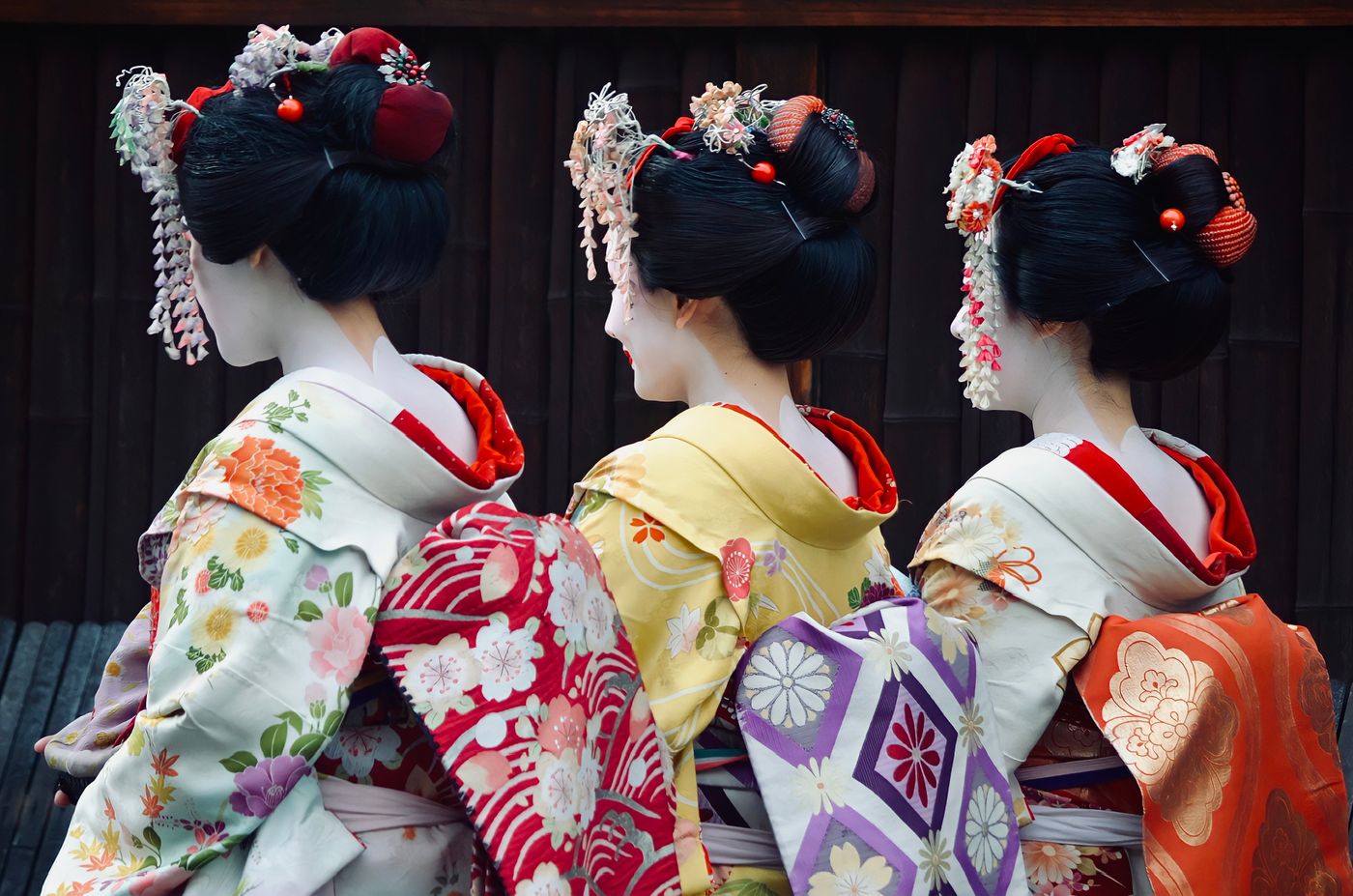
- Maiko – typically aged 15–20; wear spectacular long-sleeved kimono with a long trailing obi, tall wooden clogs (okobo), elaborate seasonal hair ornaments (kanzashi) in their own real hair, and paint only their lower lip in their first year.
- Geiko – full professionals; wear more subdued, elegant kimono, a shorter obi, wigs rather than styled natural hair, and both lips painted. The restraint is the point: a geiko’s refinement no longer needs ornament.
An apprenticeship takes about five years of daily lessons while living in an okiya (lodging house) under the care of a “mother” who invests heavily in the maiko’s training and wardrobe—a single formal kimono ensemble can cost as much as a car.
The Hanamachi: Kyoto’s Flower Towns
Kyoto has five geiko districts, called hanamachi (“flower towns”), each with its own crest, dance school, and annual public performances:
- Gion Kobu – the largest and most famous, home to the Miyako Odori spring dances.
- Gion Higashi – smaller and quieter, east of Yasaka Shrine.
- Pontocho – a lantern-lit alley along the Kamo River, impossibly atmospheric at dusk.
- Kamishichiken – the oldest district, near Kitano Tenmangu Shrine; wonderfully untouristed.
- Miyagawacho – south of Gion, known for its strong dance tradition.
Together they support a community of a few hundred geiko and maiko—a fraction of the tens of thousands who worked a century ago, which makes every encounter with the tradition today genuinely precious.
How to Experience Geisha Culture (Realistically)
1. The Public Dances: Best Value in Kyoto
Each hanamachi stages annual public performances where anyone can buy tickets—the single best way to see authentic geiko and maiko artistry. The most famous is the Miyako Odori (April, Gion Kobu), a lavish spring spectacle performed since 1872. Tickets start from a few thousand yen; some include a brief tea ceremony served by a maiko.
2. Gion Corner
A nightly one-hour digest of Kyoto’s traditional arts—including a maiko dance—designed for visitors. Not an ozashiki, but an accessible, honest introduction.
3. Banquets and Tourist Ozashiki
Traditional teahouses (ochaya) operate on an introduction-only basis—the famous “no first-time customers” rule (ichigensan okotowari)—so you cannot simply book one. However, several hotels, travel agencies, and cultural organizations now arrange legitimate maiko dinners for visitors, typically from around 30,000–50,000 yen per person. You’ll watch a dance, play the drinking game konpira fune fune, and discover that maiko are also skilled, funny conversationalists.
4. Spotting Geiko in the Streets—The Right Way
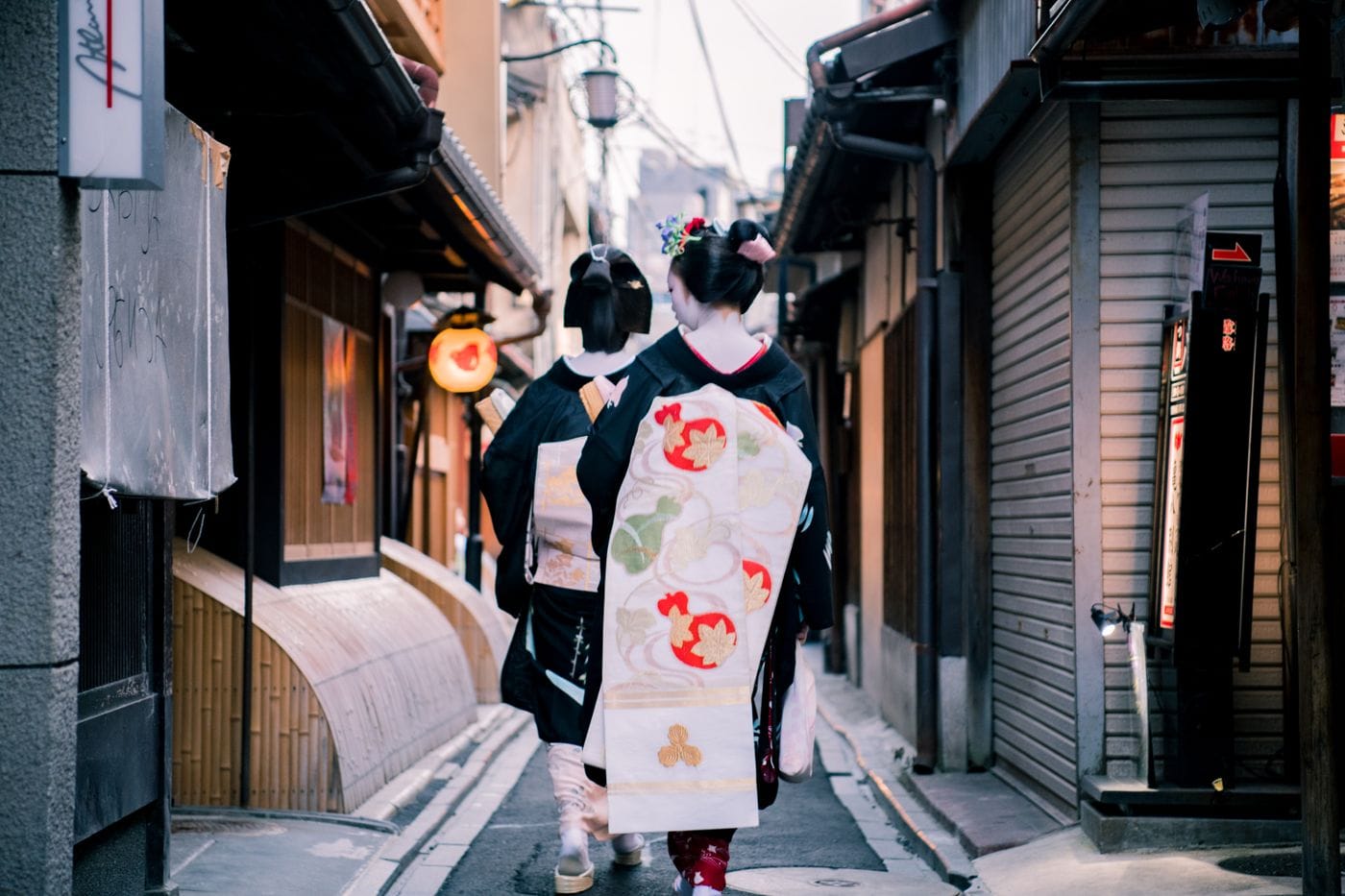
Around 5:45–6:00 PM, geiko and maiko walk from their okiya to evening appointments through Gion’s Hanamikoji Street and Pontocho. This has unfortunately produced “geisha paparazzi” behavior so aggressive that Gion’s local council has restricted photography on private lanes, with fines for violations. The respectful rules are simple:
- Never block, chase, touch, or grab a maiko—she is a working professional, often a teenager, heading to an appointment.
- Photograph only from a respectful distance on public streets, and never on the signposted private alleys.
- Note that most “maiko” you see in daytime are actually tourists in rental costumes; real maiko appear mainly in the evening, moving briskly.
5. Become the Maiko: Henshin Studios
Kyoto’s maiko henshin (transformation) studios offer full professional makeup, wig, and kimono styling with photo shoots—an unforgettable few hours and a respectful way to engage with the aesthetic (roughly 10,000–20,000 yen).
Geisha Culture Beyond Kyoto
Tokyo maintains its own geisha districts—Kagurazaka, Asakusa, and Akasaka—while Kanazawa’s beautifully preserved Higashi Chaya district offers teahouse visits and occasional public performances in a far calmer setting. Niigata’s Furumachi and Yamagata’s Sakata keep smaller traditions alive as well.
Where to Stay for Exploring Gion
Luxury: Park Hyatt Kyoto – draped along the Higashiyama hillside beside Ninenzaka, minutes from Gion.
Mid-range: Gion Ryokan Karaku – an intimate inn inside the Gion district itself; evening walks past lantern-lit ochaya start at your doorstep.
Budget: Gion Yoshima – simple guesthouse-style rooms in a machiya, remarkable value for the location.
Final Thoughts
Geisha culture survives because a small community of dedicated artists chose to keep a 300-year-old tradition breathing in the modern world. Meet it on its own terms—buy a ticket to the Miyako Odori, keep a courteous distance on Hanamikoji at dusk, perhaps splurge once on a maiko dinner—and you’ll come away understanding that the real mystery of the geisha was never behind the white makeup. It is the discipline of a lifetime devoted, entirely, to art.
🏨 Planning where to stay?
Every area guide on this site pairs with honest, station-by-station hotel picks. Start here: Kyoto Hotel Guides →