This article may contain affiliate links. If you book through them, we may earn a small commission at no extra cost to you.
Kyoto Guide · Fushimi Inari
Fushimi Inari at Dawn:
How to Have 10,000 Torii Gates to Yourself
10 Million Annual Visitors · The Photographs Are Real — Here’s How to Recreate Them
🦊 Open 24 hours / 365 days · Free entry
⏰ Arrive before 7:00 AM for solitude
🏔️ Full mountain loop: 4km · 2–3 hours
🚃 JR Nara Line · 5 min from Kyoto Station
On this page
The Most Photographed Shrine in Japan — and the Problem
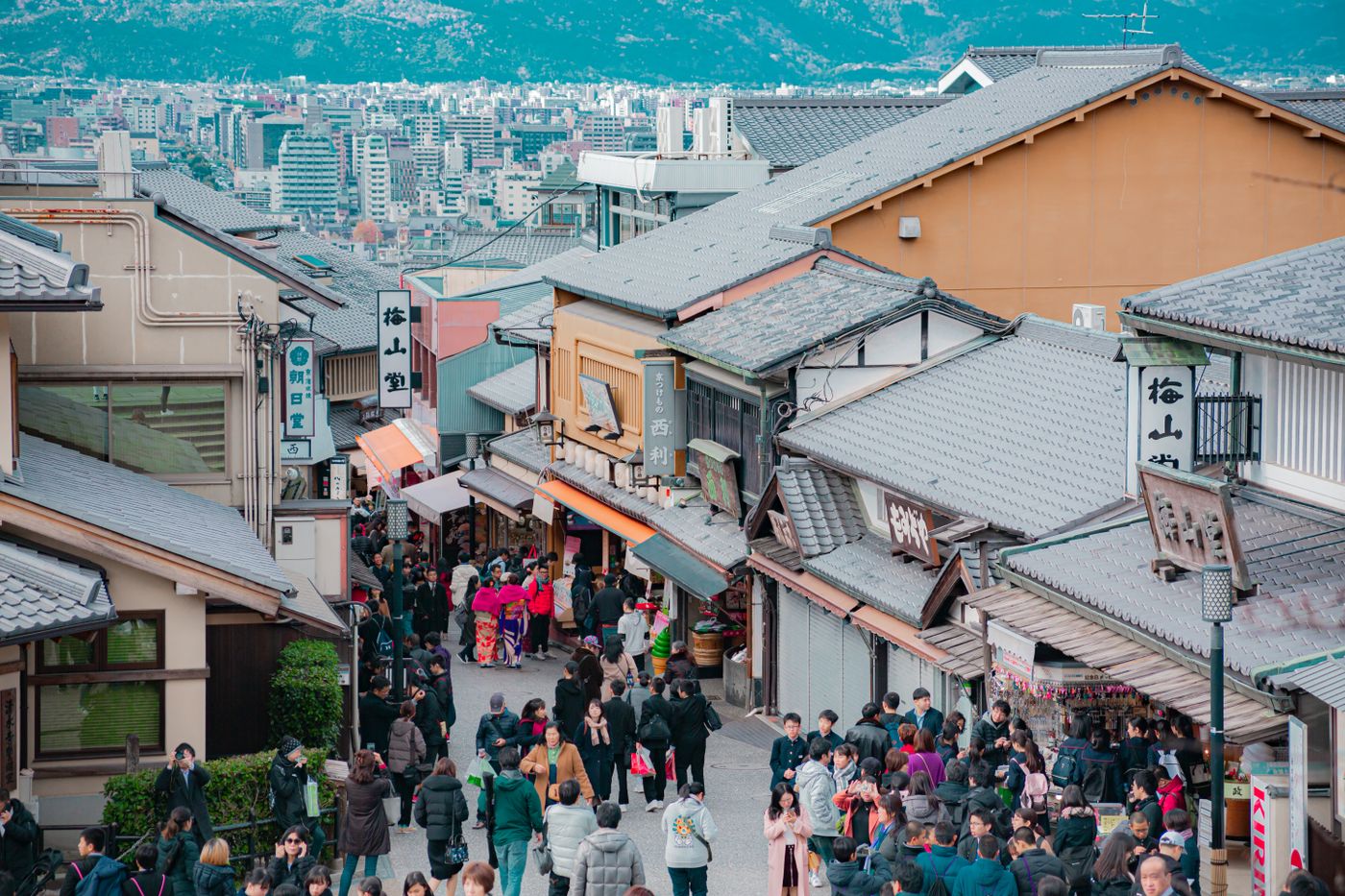
Fushimi Inari Taisha (伏見稲荷大社) — the head shrine of the god Inari — receives approximately 10 million visitors annually. Its 10,000 torii gates climbing the forested mountain have become one of the defining images of Japan. Those photographs were almost certainly taken before 8:00 AM, or are carefully cropped to exclude the thousands of people just outside the frame. The honest reality between 10:00 AM and 4:00 PM is very different.
Crowd Reality: When to Arrive
| Time | Crowd Level | Experience |
|---|---|---|
| 5:30–6:30 AM | Virtually empty | Local morning worshippers only — the real shrine |
| 6:30–7:30 AM | Beginning to fill | Still manageable — good photography possible |
| 7:30–9:00 AM | Noticeably busier | First tour buses arriving |
| 9:00 AM–5:00 PM | Full tourist volume | Peak: 11am–3pm very crowded |
| After 6:00 PM | Declining rapidly | Quiet again; night visits extraordinary |
Getting There at Dawn
JR Nara Line from Kyoto Station → Inari Station: First train approximately 5:30 AM · 5-minute journey. By taxi: ~¥1,500–¥2,000 from Gion area — avoids waiting for trains and may save time for groups. By bicycle: ~30 minutes from central Kyoto, excellent option if comfortable with city cycling at dawn.
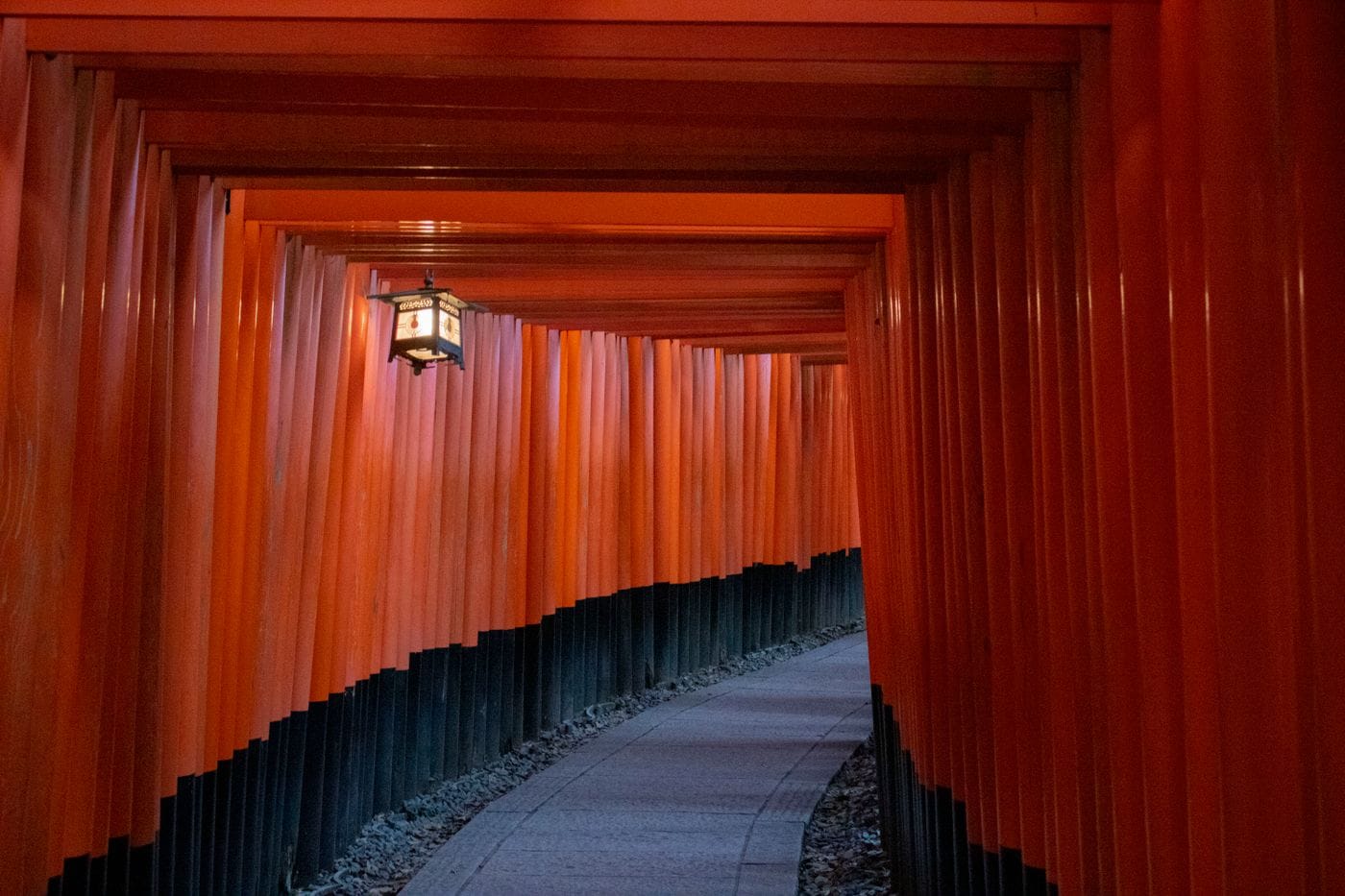
The Route
🎌 Senbon Torii — The Thousand Gates
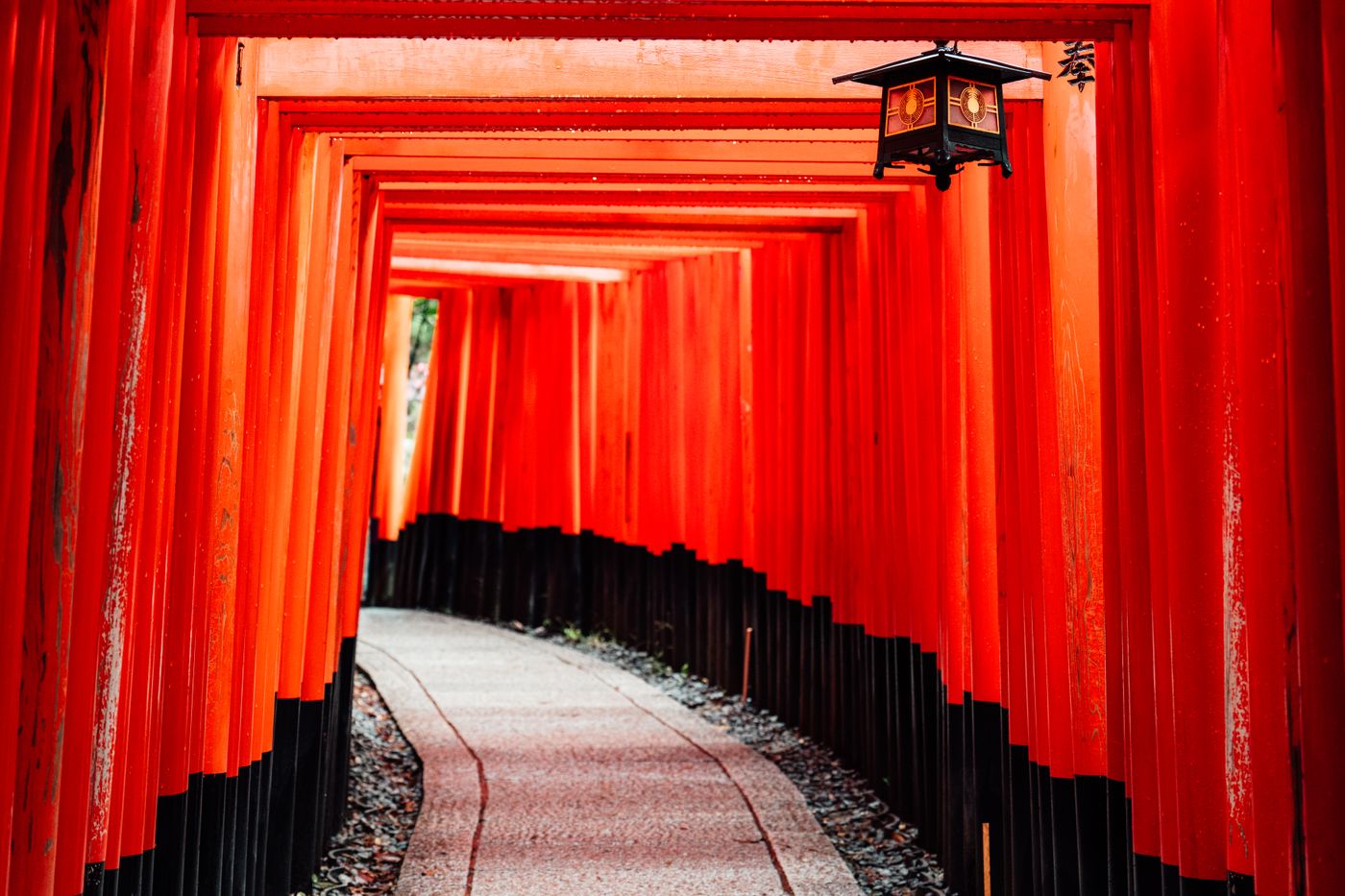
The path splits into two parallel channels (one ascending, one descending). At dawn you can walk slowly and observe details that mass-visiting doesn’t allow: inscriptions on each gate (names of donating businesses and individuals, the date), variations in size, patches of morning light between gates. Photography tip: Shoot one channel from inside the other for the receding perspective — at dawn, horizontal light creates the orange tunnel effect that disappears when the sun is high.
🏔️ Yotsutsuji Intersection (四辻) — First Viewpoint
30–40 minutes up from the main shrine — a clearing looking west across Kyoto toward the Nishiyama mountains. At dawn, the city below is still dark with patches of light, mountains emerging from blue shadow. Natural turning point for visitors who don’t continue to summit.
🌲 The Upper Mountain: Beyond the Crowds
Above Yotsutsuji, the trail continues through smaller sub-shrine complexes to the summit at 233m — a further 30–40 minutes. A fraction of visitors reach here. The atmosphere changes completely: quiet, forested, wind through the pines, intermittent shrine bells. The Ichi no Mine (一の峰) summit sub-shrine completes the full loop (~4km, 2–3 hours total). This is where Fushimi Inari reveals its character as a genuine sacred mountain — 1,300 years of human devotion accumulated in the forest.
✦ Fox statues (kitsune) throughout the mountain hold symbols in their mouths: keys to the rice granary (wealth), spiritual wisdom, divine protection. Understanding this transforms the experience: you are walking through a mountain that is simultaneously a commercial petition made physical and a living spiritual landscape.
Hotels
Hotel The Celestine Kyoto Gion (Mid-Range / from approx. ¥25,000 ~$167 USD) — best Gion location for early Fushimi access. ANA Crowne Plaza Kyoto (Mid-Range / from approx. ¥22,000 ~$147 USD) — near Kyoto Station, JR Nara Line to Inari is 5 minutes. Kyoto Tower Hotel (Mid-Range / from approx. ¥15,000 ~$100 USD) — Kyoto Station adjacent, earliest possible train access. All prices approximate.
Who Should Visit Fushimi Inari at Dawn
✔ Photographers wanting solitary gate shots
✔ Early risers staying near Kyoto Station
✔ Hikers wanting the complete mountain circuit
✔ Anyone who wants to understand what the shrine actually is
🏨 Planning where to stay?
Every area guide on this site pairs with honest, station-by-station hotel picks. Start here: Hotel Guides by Station →