This article may contain affiliate links. If you book through them, we may earn a small commission at no extra cost to you.
Japan Food Guide · Wagyu Beef
Wagyu Beef in Japan: Kobe, Matsusaka
& Omi — Japan’s Three Great Beef Brands
What Shimofuri Marbling Is · Where to Eat It · What to Pay · How to Order
🐄 A5 grade — the peak of Japanese beef
🔥 Teppanyaki · Shabu-shabu · Sukiyaki · Yakiniku
🏆 Wadakin — Japan’s most celebrated wagyu restaurant
💴 From ¥5,000 to ¥60,000+ per person
On this page
Why Japanese Beef Is Different
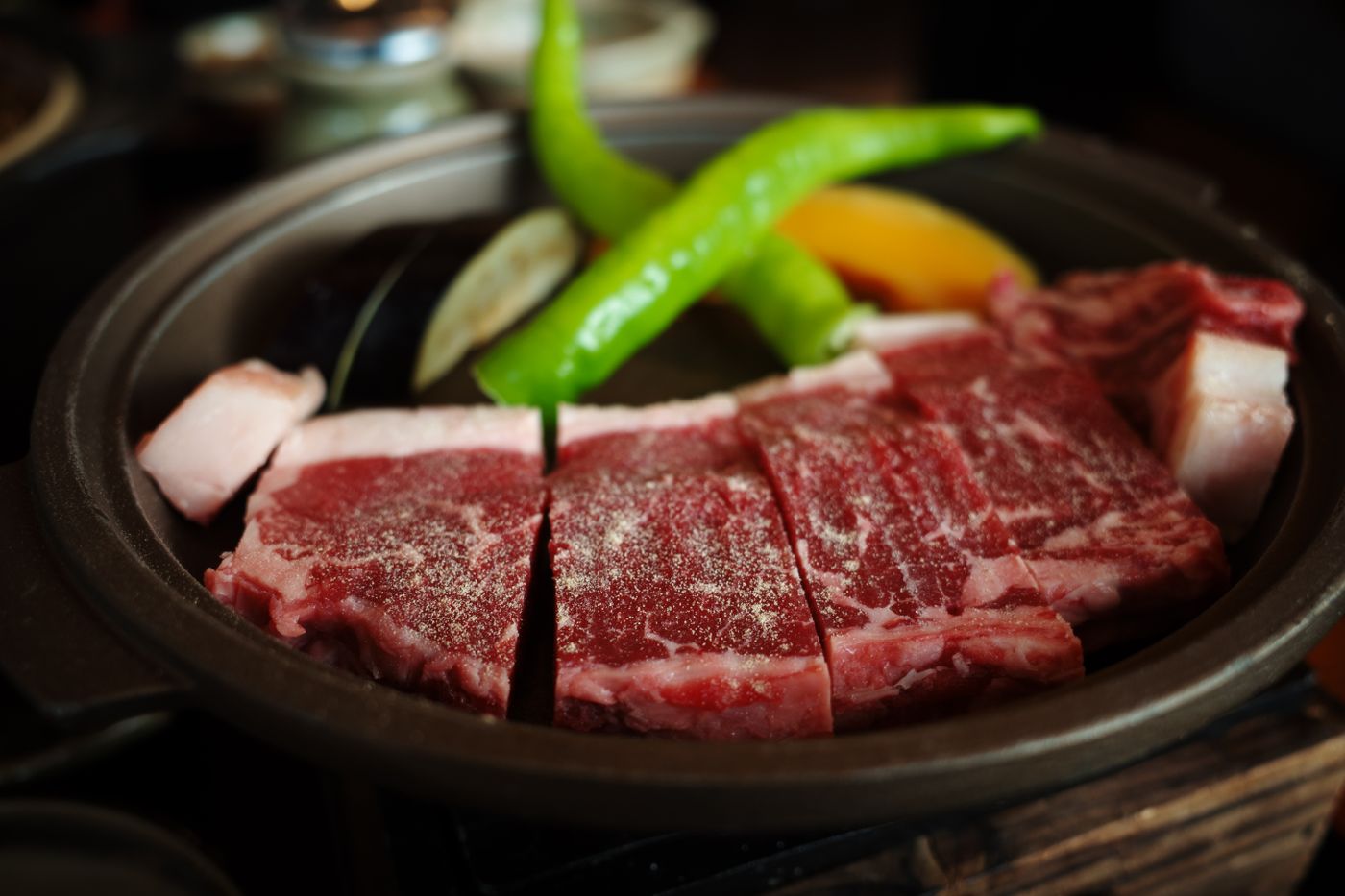
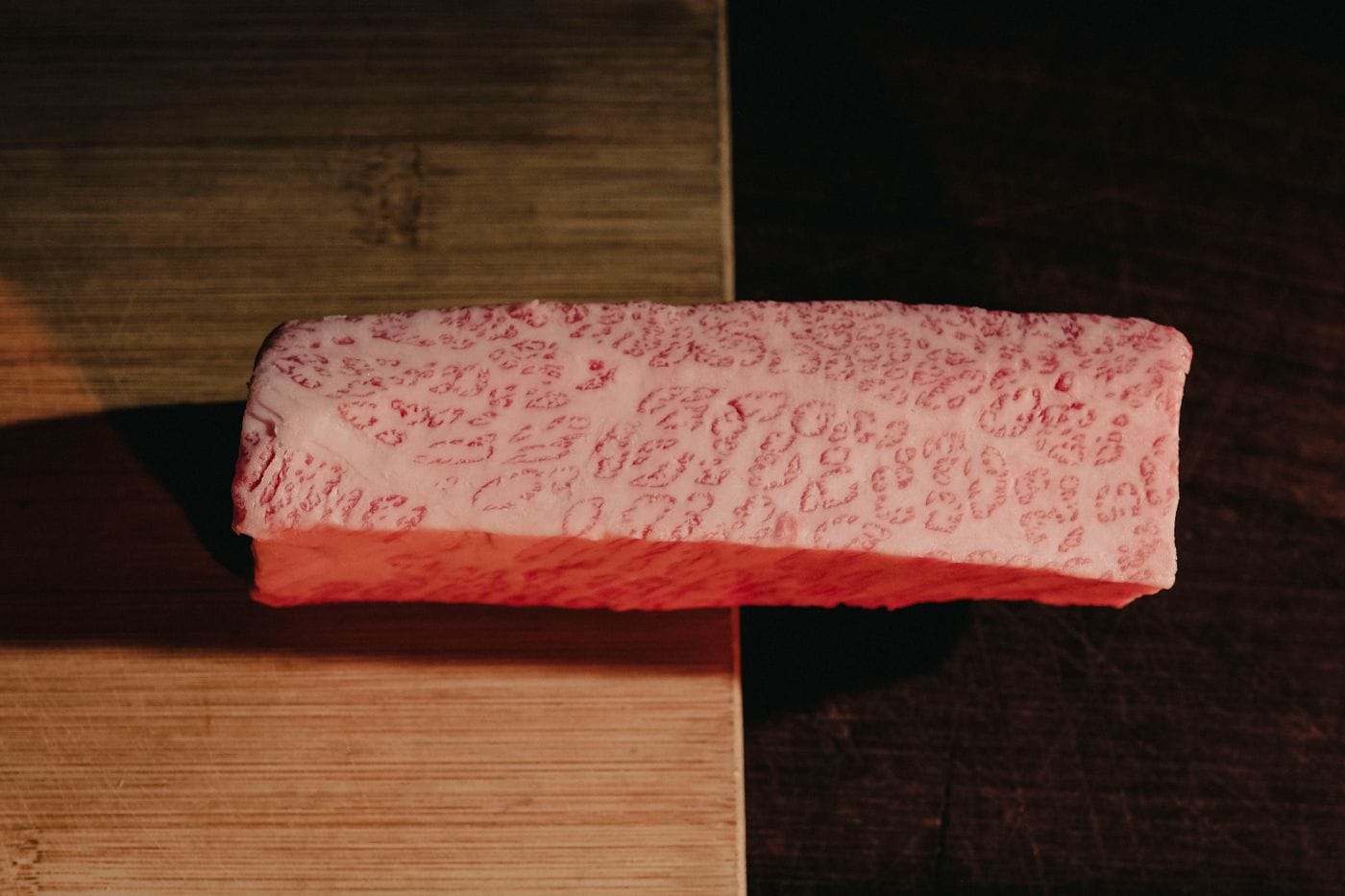
Wagyu (和牛 — “Japanese cow”) refers to beef from four specific Japanese cattle breeds (Kuroge Washu dominant) raised through methods that prioritize one specific quality: shimofuri (霜降り) — the intense marbling of fat within the muscle tissue. Rather than fat deposited around the muscle (conventional beef), wagyu fat deposits within the muscle fibers themselves, creating a web of creamy fat throughout. The result is a tenderness and sensation at body temperature that is unlike any other beef.
The Grading System
Yield Grade: A, B, or C (A = highest usable meat ratio). Quality Grade: 1–5 (5 = highest marbling, color, texture). Combined as A1–A5 — A5 is the peak, requiring a Beef Marbling Score of 8–12. The difference between A4 and A5 is perceptible. The difference between A5 from different producers is where connoisseurship begins.
The Three Great Wagyu Brands
🥩 Kobe Beef (神戸ビーフ)
WORLD’S MOST FAMOUS
Region: Hyogo Prefecture · Breed: Tajima (但馬) black cattle · ~3,000–4,000 certified cattle per year · Grade requirement: A4/A5, BMS 6+
The global reference point for premium beef. The Tajima cattle bloodline produces a pronounced sweetness and depth identifiably different from other wagyu. To qualify as Kobe Beef, cattle must be purebred Tajima, born and raised in Hyogo, and slaughtered at designated facilities.
Where to eat in Kobe: Kobe Plaisir (shabu-shabu, ¥15,000–¥30,000/person) · Mouriya (teppanyaki, ¥15,000–¥30,000) · Ishida teppanyaki (¥15,000–¥25,000). Access: 20 min from Osaka by JR, 2hrs 45min from Tokyo by Shinkansen.
🥩 Matsusaka Beef (松阪牛)
CONNOISSEUR’S CHOICE
Region: Matsusaka City, Mie Prefecture · Exclusively virgin heifers · Rearing period: up to 36 months
Among wagyu specialists, often considered the most intensely marbled and refined. Produced exclusively from virgin heifers (未経産牛) — female cattle that have never given birth, producing finer texture and more delicate flavor. Traditional feeding includes beer and sake lees. The cattle are brushed regularly — part of a stress-reduction philosophy.
Where to eat: Wadakin (和田金) — founded 1878, Japan’s most celebrated wagyu restaurant, raises its own cattle, nearly 150-year tradition. Reserve well in advance (¥20,000–¥50,000/person). Access: JR Kintetsu from Nagoya ~1.5 hrs.
🥩 Ōmi Beef (近江牛)
OLDEST HISTORY
Region: Shiga Prefecture (Lake Biwa area) · Records of presentation to the Tokugawa shogunate from the 17th century
Japan’s longest-documented wagyu brand — predating the fame of both Kobe and Matsusaka. The Lake Biwa basin’s high humidity, mild climate, and excellent water supply have consistently produced excellent cattle. Slightly less extreme marbling than Matsusaka at the very highest grades, but exceptional quality with a distinctive richness. Well-regarded in Osaka and Kyoto where it has a strong local following.
How to Eat Wagyu: The Main Styles
🔥 Teppanyaki (鉄板焼き)
Chef cooks on iron griddle before you. The Kobe hotel tradition that became Japan’s global image.
🫕 Shabu-Shabu (しゃぶしゃぶ)
Paper-thin slices swirled briefly in hot broth. Pure flavor — lightness lets the beef speak.
🍲 Sukiyaki (すき焼き)
Simmered in sweet soy broth with tofu and vegetables, dipped in raw egg. Highly marbled wagyu suits this perfectly.
🥩 Yakiniku (焼き肉)
Japanese BBQ — small pieces grilled over charcoal at the table. Most casual and interactive style.
Price Guide
| Category | Price Range | Notes |
|---|---|---|
| Budget wagyu (A4) — yakiniku/casual | ¥5,000–¥10,000/person | Good entry experience |
| Mid-range (A5) — restaurant | ¥10,000–¥20,000/person | Sweet spot for most visitors |
| High-end teppanyaki / shabu-shabu | ¥20,000–¥40,000/person | Full premium experience |
| Legendary (Wadakin, etc.) | ¥30,000–¥60,000/person | Once-in-a-lifetime |
Hotels
Kobe / Osaka: The b Kobe (Mid-Range / from approx. ¥12,000 ~$80 USD) — city center, convenient for Kobe Beef restaurants. Conrad Osaka (Luxury / from approx. ¥40,000 ~$267 USD) — access to both Kobe and Matsusaka.
Matsusaka (Mie): Daiwa Roynet Hotel Tsu (Mid-Range / from approx. ¥10,000 ~$67 USD) — convenient for Matsusaka day trips.
Omi / Shiga: Biwako Hotel (Mid-Range / from approx. ¥18,000 ~$120 USD) — Lake Biwa shores, convenient for Hikone’s Omi Beef restaurants.
All prices approximate. Verify on booking sites.
Who Should Eat Wagyu Beef in Japan
There is a moment — three or four seconds after the first bite, when the fat begins to melt at body temperature — that most people describe as unlike any beef experience they have had before. It is not violent. It is gentle and overwhelming simultaneously.
✔ Serious food travelers (this is worth the price)
✔ Those passing through Kobe or Mie on the Shinkansen
✔ Anyone who wants to understand why Japan is serious about beef
✔ Those celebrating a special occasion in Japan
🏨 Planning where to stay?
Every area guide on this site pairs with honest, station-by-station hotel picks. Start here: Hyogo Hotel Guides →