Ghibli Real Locations · Genre Guide

Ghibli’s Onsen Towns Are Real:
Japan’s Most Cinematic Bath Destinations

Dogo · Ginzan · Kinosaki · Yufuin — Ranked by Ghibli Connection & Experience Quality


In Spirited Away, Yubaba’s bathhouse is where the gods come to be restored. The concept is not invented — it reflects Japan’s actual relationship with hot spring bathing as a practice with spiritual as well as physical dimensions. “Kami no Yu” (God’s Bath) is what Dogo Onsen’s main bath has been called for centuries. These places are real.

Onsen TownGhibli ConnectionSignature ExperienceBest Time
Dogo Onsen, EhimeSpirited Away (strongest exterior model)1894 Honkan building; Kami no Yu bath; bath town evening walkYear-round
Ginzan Onsen, YamagataSpirited Away (night scene model)Gas-lit inn facades on river; winter snow; kaiseki dinnerDec–Feb (snow)
Kinosaki Onsen, HyogoGeneral Spirited Away atmosphere7 public baths; yukata street-walking culture; crab (winter)Winter (crab season)
Yufuin, OitaGeneral onsen atmosphereMt. Yufu backdrop; boutique inns; morning mist over Kinrin LakeAutumn
Edo Tokyo Museum (Kodakara-yu)Spirited Away (direct architectural model)1929 bathhouse building; Ghibli’s most direct design referenceYear-round

How to Experience Onsen Like Chihiro

Wear yukata. Most ryokan provide them; wearing yukata to walk the streets of Dogo or Kinosaki at night is the single action that collapses the distance between the visitor and the film’s world most completely.

Stay overnight. Day visitors see a beautiful old town. Overnight guests experience the transition — the point at dusk when gas lamps ignite, steam thickens, and the modern world retreats. That transition is what the film captures, and it requires presence.

Choose your bath time. Early morning (before 8am) and late night (after 9pm) are when public baths are quietest and the experience most intimate. Midday and early evening are peak hours at most facilities.


Ghibli Real Locations · Genre Guide

Ghibli’s Architecture Is Real:
The Buildings That Built the Films

Edo Tokyo Museum · Yokohama Yamate · Kurashiki · Kobe Kitano · Miyama · Manpei Hotel


Miyazaki has described buildings as containers of time — places where history is made physical and can be read by those attentive enough to look. The care in Ghibli’s architectural depictions reflects this belief. The buildings that appear in the films are based on real structures studied directly, and several of those structures still stand.

LocationFilmKey Building / FeatureAccess
Edo Tokyo Open Air MuseumSpirited AwayKodakara-yu bathhouse (1929); stationery shop counterMusashi-Koganei Station + bus
Yokohama YamateFrom Up on Poppy Hill8 Western mansions (Meiji–Taisho); harbor-view parkMotomachi-Chukagai Station
Kurashiki Bikan QuarterHowl’s Moving CastleEdo-era kura canal district; Ohara Museum (1930)Kurashiki Station
Kobe KitanoKiki’s Delivery ServiceForeign merchant mansions; hillside geometrySannomiya Station
Miyama Kayabuki VillageTale of Princess Kaguya50+ thatched farmhouses; living preservation districtBus from JR Kameoka
Manpei Hotel, KaruizawaThe Wind RisesEst. 1894; Tudor-style; John Lennon’s regular stayKaruizawa Station (Shinkansen)

Planning Note

The Edo Tokyo Open Air Architectural Museum and Yokohama’s Yamate district can be combined into a single Tokyo-area day: museum in the morning (Musashi-Koganei), Yokohama in the afternoon (30 min by train). This gives access to both the most direct Spirited Away architectural model and the most direct From Up on Poppy Hill setting in a single outing.


Ghibli Real Locations · Genre Guide

Ghibli’s Seas & Harbors Are Real:
Port Towns Across Japan

Tomonoura · Otaru · Kushiro · Kobe — Ghibli’s Waterfront Locations Ranked


Water in Ghibli films is rarely decorative. The sea in Ponyo is a living force with its own agenda. The marsh in Marnie is where the boundary between present and past dissolves. The canal in Howl’s world carries the weight of the city’s history. These are waterfront locations that carry similar weight.

LocationFilmWater FeatureBest Experience
Tomonoura, HiroshimaPonyoSeto Inland Sea; Edo harbor intact; joyato lighthouseDusk at the harbor
Otaru, HokkaidoKiki’s Delivery Service1923 canal; gas-lit warehouses; night walkEvening (gas lamps lit)
Kushiro, HokkaidoWhen Marnie Was ThereJapan’s largest marsh; crane habitat; quiet estuaryAutumn dawn (crane season)
Kobe HarborlandKiki’s Delivery ServicePort city harbor; Rokko mountain backdropNight view from Rokko
Yokohama BayFrom Up on Poppy HillHarbor from hilltop; signal flag geographyDusk from Yamate park

The Ghibli Waterfront Itinerary

For travelers building a trip around Ghibli waterfront locations: Yokohama + Tomonoura + Otaru covers three distinct port atmospheres (modern harbor city / ancient Edo fishing port / 19th-century trading post) representing Ghibli’s range of water settings. Yokohama is day-trippable from Tokyo; Tomonoura requires a side trip from Fukuyama on the Sanyo Shinkansen; Otaru is a day trip from Sapporo.

Ghibli Real Locations · Genre Guide

Ghibli’s Onsen Towns Are Real:
Japan’s Most Cinematic Bath Destinations

Dogo · Ginzan · Kinosaki · Yufuin — Ranked by Ghibli Connection & Experience Quality


In Spirited Away, Yubaba’s bathhouse is where the gods come to be restored. The concept is not invented — it reflects Japan’s actual relationship with hot spring bathing as a practice with spiritual as well as physical dimensions. “Kami no Yu” (God’s Bath) is what Dogo Onsen’s main bath has been called for centuries. These places are real.

Onsen TownGhibli ConnectionSignature ExperienceBest Time
Dogo Onsen, EhimeSpirited Away (strongest exterior model)1894 Honkan building; Kami no Yu bath; bath town evening walkYear-round
Ginzan Onsen, YamagataSpirited Away (night scene model)Gas-lit inn facades on river; winter snow; kaiseki dinnerDec–Feb (snow)
Kinosaki Onsen, HyogoGeneral Spirited Away atmosphere7 public baths; yukata street-walking culture; crab (winter)Winter (crab season)
Yufuin, OitaGeneral onsen atmosphereMt. Yufu backdrop; boutique inns; morning mist over Kinrin LakeAutumn
Edo Tokyo Museum (Kodakara-yu)Spirited Away (direct architectural model)1929 bathhouse building; Ghibli’s most direct design referenceYear-round

How to Experience Onsen Like Chihiro

Wear yukata. Most ryokan provide them; wearing yukata to walk the streets of Dogo or Kinosaki at night is the single action that collapses the distance between the visitor and the film’s world most completely.

Stay overnight. Day visitors see a beautiful old town. Overnight guests experience the transition — the point at dusk when gas lamps ignite, steam thickens, and the modern world retreats. That transition is what the film captures, and it requires presence.

Choose your bath time. Early morning (before 8am) and late night (after 9pm) are when public baths are quietest and the experience most intimate. Midday and early evening are peak hours at most facilities.


Ghibli Real Locations · Genre Guide

Ghibli’s Architecture Is Real:
The Buildings That Built the Films

Edo Tokyo Museum · Yokohama Yamate · Kurashiki · Kobe Kitano · Miyama · Manpei Hotel


Miyazaki has described buildings as containers of time — places where history is made physical and can be read by those attentive enough to look. The care in Ghibli’s architectural depictions reflects this belief. The buildings that appear in the films are based on real structures studied directly, and several of those structures still stand.

LocationFilmKey Building / FeatureAccess
Edo Tokyo Open Air MuseumSpirited AwayKodakara-yu bathhouse (1929); stationery shop counterMusashi-Koganei Station + bus
Yokohama YamateFrom Up on Poppy Hill8 Western mansions (Meiji–Taisho); harbor-view parkMotomachi-Chukagai Station
Kurashiki Bikan QuarterHowl’s Moving CastleEdo-era kura canal district; Ohara Museum (1930)Kurashiki Station
Kobe KitanoKiki’s Delivery ServiceForeign merchant mansions; hillside geometrySannomiya Station
Miyama Kayabuki VillageTale of Princess Kaguya50+ thatched farmhouses; living preservation districtBus from JR Kameoka
Manpei Hotel, KaruizawaThe Wind RisesEst. 1894; Tudor-style; John Lennon’s regular stayKaruizawa Station (Shinkansen)

Planning Note

The Edo Tokyo Open Air Architectural Museum and Yokohama’s Yamate district can be combined into a single Tokyo-area day: museum in the morning (Musashi-Koganei), Yokohama in the afternoon (30 min by train). This gives access to both the most direct Spirited Away architectural model and the most direct From Up on Poppy Hill setting in a single outing.


Ghibli Real Locations · Genre Guide

Ghibli’s Seas & Harbors Are Real:
Port Towns Across Japan

Tomonoura · Otaru · Kushiro · Kobe — Ghibli’s Waterfront Locations Ranked


Water in Ghibli films is rarely decorative. The sea in Ponyo is a living force with its own agenda. The marsh in Marnie is where the boundary between present and past dissolves. The canal in Howl’s world carries the weight of the city’s history. These are waterfront locations that carry similar weight.

LocationFilmWater FeatureBest Experience
Tomonoura, HiroshimaPonyoSeto Inland Sea; Edo harbor intact; joyato lighthouseDusk at the harbor
Otaru, HokkaidoKiki’s Delivery Service1923 canal; gas-lit warehouses; night walkEvening (gas lamps lit)
Kushiro, HokkaidoWhen Marnie Was ThereJapan’s largest marsh; crane habitat; quiet estuaryAutumn dawn (crane season)
Kobe HarborlandKiki’s Delivery ServicePort city harbor; Rokko mountain backdropNight view from Rokko
Yokohama BayFrom Up on Poppy HillHarbor from hilltop; signal flag geographyDusk from Yamate park

The Ghibli Waterfront Itinerary

For travelers building a trip around Ghibli waterfront locations: Yokohama + Tomonoura + Otaru covers three distinct port atmospheres (modern harbor city / ancient Edo fishing port / 19th-century trading post) representing Ghibli’s range of water settings. Yokohama is day-trippable from Tokyo; Tomonoura requires a side trip from Fukuyama on the Sanyo Shinkansen; Otaru is a day trip from Sapporo.

Ghibli Real Locations · Genre Guide

Ghibli’s Onsen Towns Are Real:
Japan’s Most Cinematic Bath Destinations

Dogo · Ginzan · Kinosaki · Yufuin — Ranked by Ghibli Connection & Experience Quality


In Spirited Away, Yubaba’s bathhouse is where the gods come to be restored. The concept is not invented — it reflects Japan’s actual relationship with hot spring bathing as a practice with spiritual as well as physical dimensions. “Kami no Yu” (God’s Bath) is what Dogo Onsen’s main bath has been called for centuries. These places are real.

Onsen TownGhibli ConnectionSignature ExperienceBest Time
Dogo Onsen, EhimeSpirited Away (strongest exterior model)1894 Honkan building; Kami no Yu bath; bath town evening walkYear-round
Ginzan Onsen, YamagataSpirited Away (night scene model)Gas-lit inn facades on river; winter snow; kaiseki dinnerDec–Feb (snow)
Kinosaki Onsen, HyogoGeneral Spirited Away atmosphere7 public baths; yukata street-walking culture; crab (winter)Winter (crab season)
Yufuin, OitaGeneral onsen atmosphereMt. Yufu backdrop; boutique inns; morning mist over Kinrin LakeAutumn
Edo Tokyo Museum (Kodakara-yu)Spirited Away (direct architectural model)1929 bathhouse building; Ghibli’s most direct design referenceYear-round

How to Experience Onsen Like Chihiro

Wear yukata. Most ryokan provide them; wearing yukata to walk the streets of Dogo or Kinosaki at night is the single action that collapses the distance between the visitor and the film’s world most completely.

Stay overnight. Day visitors see a beautiful old town. Overnight guests experience the transition — the point at dusk when gas lamps ignite, steam thickens, and the modern world retreats. That transition is what the film captures, and it requires presence.

Choose your bath time. Early morning (before 8am) and late night (after 9pm) are when public baths are quietest and the experience most intimate. Midday and early evening are peak hours at most facilities.


Ghibli Real Locations · Genre Guide

Ghibli’s Architecture Is Real:
The Buildings That Built the Films

Edo Tokyo Museum · Yokohama Yamate · Kurashiki · Kobe Kitano · Miyama · Manpei Hotel


Miyazaki has described buildings as containers of time — places where history is made physical and can be read by those attentive enough to look. The care in Ghibli’s architectural depictions reflects this belief. The buildings that appear in the films are based on real structures studied directly, and several of those structures still stand.

LocationFilmKey Building / FeatureAccess
Edo Tokyo Open Air MuseumSpirited AwayKodakara-yu bathhouse (1929); stationery shop counterMusashi-Koganei Station + bus
Yokohama YamateFrom Up on Poppy Hill8 Western mansions (Meiji–Taisho); harbor-view parkMotomachi-Chukagai Station
Kurashiki Bikan QuarterHowl’s Moving CastleEdo-era kura canal district; Ohara Museum (1930)Kurashiki Station
Kobe KitanoKiki’s Delivery ServiceForeign merchant mansions; hillside geometrySannomiya Station
Miyama Kayabuki VillageTale of Princess Kaguya50+ thatched farmhouses; living preservation districtBus from JR Kameoka
Manpei Hotel, KaruizawaThe Wind RisesEst. 1894; Tudor-style; John Lennon’s regular stayKaruizawa Station (Shinkansen)

Planning Note

The Edo Tokyo Open Air Architectural Museum and Yokohama’s Yamate district can be combined into a single Tokyo-area day: museum in the morning (Musashi-Koganei), Yokohama in the afternoon (30 min by train). This gives access to both the most direct Spirited Away architectural model and the most direct From Up on Poppy Hill setting in a single outing.


Ghibli Real Locations · Genre Guide

Ghibli’s Seas & Harbors Are Real:
Port Towns Across Japan

Tomonoura · Otaru · Kushiro · Kobe — Ghibli’s Waterfront Locations Ranked


Water in Ghibli films is rarely decorative. The sea in Ponyo is a living force with its own agenda. The marsh in Marnie is where the boundary between present and past dissolves. The canal in Howl’s world carries the weight of the city’s history. These are waterfront locations that carry similar weight.

LocationFilmWater FeatureBest Experience
Tomonoura, HiroshimaPonyoSeto Inland Sea; Edo harbor intact; joyato lighthouseDusk at the harbor
Otaru, HokkaidoKiki’s Delivery Service1923 canal; gas-lit warehouses; night walkEvening (gas lamps lit)
Kushiro, HokkaidoWhen Marnie Was ThereJapan’s largest marsh; crane habitat; quiet estuaryAutumn dawn (crane season)
Kobe HarborlandKiki’s Delivery ServicePort city harbor; Rokko mountain backdropNight view from Rokko
Yokohama BayFrom Up on Poppy HillHarbor from hilltop; signal flag geographyDusk from Yamate park

The Ghibli Waterfront Itinerary

For travelers building a trip around Ghibli waterfront locations: Yokohama + Tomonoura + Otaru covers three distinct port atmospheres (modern harbor city / ancient Edo fishing port / 19th-century trading post) representing Ghibli’s range of water settings. Yokohama is day-trippable from Tokyo; Tomonoura requires a side trip from Fukuyama on the Sanyo Shinkansen; Otaru is a day trip from Sapporo.

Ghibli Real Locations · Genre Guide

Ghibli’s Onsen Towns Are Real:
Japan’s Most Cinematic Bath Destinations

Dogo · Ginzan · Kinosaki · Yufuin — Ranked by Ghibli Connection & Experience Quality


In Spirited Away, Yubaba’s bathhouse is where the gods come to be restored. The concept is not invented — it reflects Japan’s actual relationship with hot spring bathing as a practice with spiritual as well as physical dimensions. “Kami no Yu” (God’s Bath) is what Dogo Onsen’s main bath has been called for centuries. These places are real.

Onsen TownGhibli ConnectionSignature ExperienceBest Time
Dogo Onsen, EhimeSpirited Away (strongest exterior model)1894 Honkan building; Kami no Yu bath; bath town evening walkYear-round
Ginzan Onsen, YamagataSpirited Away (night scene model)Gas-lit inn facades on river; winter snow; kaiseki dinnerDec–Feb (snow)
Kinosaki Onsen, HyogoGeneral Spirited Away atmosphere7 public baths; yukata street-walking culture; crab (winter)Winter (crab season)
Yufuin, OitaGeneral onsen atmosphereMt. Yufu backdrop; boutique inns; morning mist over Kinrin LakeAutumn
Edo Tokyo Museum (Kodakara-yu)Spirited Away (direct architectural model)1929 bathhouse building; Ghibli’s most direct design referenceYear-round

How to Experience Onsen Like Chihiro

Wear yukata. Most ryokan provide them; wearing yukata to walk the streets of Dogo or Kinosaki at night is the single action that collapses the distance between the visitor and the film’s world most completely.

Stay overnight. Day visitors see a beautiful old town. Overnight guests experience the transition — the point at dusk when gas lamps ignite, steam thickens, and the modern world retreats. That transition is what the film captures, and it requires presence.

Choose your bath time. Early morning (before 8am) and late night (after 9pm) are when public baths are quietest and the experience most intimate. Midday and early evening are peak hours at most facilities.


Ghibli Real Locations · Genre Guide

Ghibli’s Architecture Is Real:
The Buildings That Built the Films

Edo Tokyo Museum · Yokohama Yamate · Kurashiki · Kobe Kitano · Miyama · Manpei Hotel


Miyazaki has described buildings as containers of time — places where history is made physical and can be read by those attentive enough to look. The care in Ghibli’s architectural depictions reflects this belief. The buildings that appear in the films are based on real structures studied directly, and several of those structures still stand.

LocationFilmKey Building / FeatureAccess
Edo Tokyo Open Air MuseumSpirited AwayKodakara-yu bathhouse (1929); stationery shop counterMusashi-Koganei Station + bus
Yokohama YamateFrom Up on Poppy Hill8 Western mansions (Meiji–Taisho); harbor-view parkMotomachi-Chukagai Station
Kurashiki Bikan QuarterHowl’s Moving CastleEdo-era kura canal district; Ohara Museum (1930)Kurashiki Station
Kobe KitanoKiki’s Delivery ServiceForeign merchant mansions; hillside geometrySannomiya Station
Miyama Kayabuki VillageTale of Princess Kaguya50+ thatched farmhouses; living preservation districtBus from JR Kameoka
Manpei Hotel, KaruizawaThe Wind RisesEst. 1894; Tudor-style; John Lennon’s regular stayKaruizawa Station (Shinkansen)

Planning Note

The Edo Tokyo Open Air Architectural Museum and Yokohama’s Yamate district can be combined into a single Tokyo-area day: museum in the morning (Musashi-Koganei), Yokohama in the afternoon (30 min by train). This gives access to both the most direct Spirited Away architectural model and the most direct From Up on Poppy Hill setting in a single outing.


Ghibli Real Locations · Genre Guide

Ghibli’s Seas & Harbors Are Real:
Port Towns Across Japan

Tomonoura · Otaru · Kushiro · Kobe — Ghibli’s Waterfront Locations Ranked


Water in Ghibli films is rarely decorative. The sea in Ponyo is a living force with its own agenda. The marsh in Marnie is where the boundary between present and past dissolves. The canal in Howl’s world carries the weight of the city’s history. These are waterfront locations that carry similar weight.

LocationFilmWater FeatureBest Experience
Tomonoura, HiroshimaPonyoSeto Inland Sea; Edo harbor intact; joyato lighthouseDusk at the harbor
Otaru, HokkaidoKiki’s Delivery Service1923 canal; gas-lit warehouses; night walkEvening (gas lamps lit)
Kushiro, HokkaidoWhen Marnie Was ThereJapan’s largest marsh; crane habitat; quiet estuaryAutumn dawn (crane season)
Kobe HarborlandKiki’s Delivery ServicePort city harbor; Rokko mountain backdropNight view from Rokko
Yokohama BayFrom Up on Poppy HillHarbor from hilltop; signal flag geographyDusk from Yamate park

The Ghibli Waterfront Itinerary

For travelers building a trip around Ghibli waterfront locations: Yokohama + Tomonoura + Otaru covers three distinct port atmospheres (modern harbor city / ancient Edo fishing port / 19th-century trading post) representing Ghibli’s range of water settings. Yokohama is day-trippable from Tokyo; Tomonoura requires a side trip from Fukuyama on the Sanyo Shinkansen; Otaru is a day trip from Sapporo.

Ghibli Real Locations · Genre Guide

Ghibli’s Onsen Towns Are Real:
Japan’s Most Cinematic Bath Destinations

Dogo · Ginzan · Kinosaki · Yufuin — Ranked by Ghibli Connection & Experience Quality


In Spirited Away, Yubaba’s bathhouse is where the gods come to be restored. The concept is not invented — it reflects Japan’s actual relationship with hot spring bathing as a practice with spiritual as well as physical dimensions. “Kami no Yu” (God’s Bath) is what Dogo Onsen’s main bath has been called for centuries. These places are real.

Onsen TownGhibli ConnectionSignature ExperienceBest Time
Dogo Onsen, EhimeSpirited Away (strongest exterior model)1894 Honkan building; Kami no Yu bath; bath town evening walkYear-round
Ginzan Onsen, YamagataSpirited Away (night scene model)Gas-lit inn facades on river; winter snow; kaiseki dinnerDec–Feb (snow)
Kinosaki Onsen, HyogoGeneral Spirited Away atmosphere7 public baths; yukata street-walking culture; crab (winter)Winter (crab season)
Yufuin, OitaGeneral onsen atmosphereMt. Yufu backdrop; boutique inns; morning mist over Kinrin LakeAutumn
Edo Tokyo Museum (Kodakara-yu)Spirited Away (direct architectural model)1929 bathhouse building; Ghibli’s most direct design referenceYear-round

How to Experience Onsen Like Chihiro

Wear yukata. Most ryokan provide them; wearing yukata to walk the streets of Dogo or Kinosaki at night is the single action that collapses the distance between the visitor and the film’s world most completely.

Stay overnight. Day visitors see a beautiful old town. Overnight guests experience the transition — the point at dusk when gas lamps ignite, steam thickens, and the modern world retreats. That transition is what the film captures, and it requires presence.

Choose your bath time. Early morning (before 8am) and late night (after 9pm) are when public baths are quietest and the experience most intimate. Midday and early evening are peak hours at most facilities.


Ghibli Real Locations · Genre Guide

Ghibli’s Architecture Is Real:
The Buildings That Built the Films

Edo Tokyo Museum · Yokohama Yamate · Kurashiki · Kobe Kitano · Miyama · Manpei Hotel


Miyazaki has described buildings as containers of time — places where history is made physical and can be read by those attentive enough to look. The care in Ghibli’s architectural depictions reflects this belief. The buildings that appear in the films are based on real structures studied directly, and several of those structures still stand.

LocationFilmKey Building / FeatureAccess
Edo Tokyo Open Air MuseumSpirited AwayKodakara-yu bathhouse (1929); stationery shop counterMusashi-Koganei Station + bus
Yokohama YamateFrom Up on Poppy Hill8 Western mansions (Meiji–Taisho); harbor-view parkMotomachi-Chukagai Station
Kurashiki Bikan QuarterHowl’s Moving CastleEdo-era kura canal district; Ohara Museum (1930)Kurashiki Station
Kobe KitanoKiki’s Delivery ServiceForeign merchant mansions; hillside geometrySannomiya Station
Miyama Kayabuki VillageTale of Princess Kaguya50+ thatched farmhouses; living preservation districtBus from JR Kameoka
Manpei Hotel, KaruizawaThe Wind RisesEst. 1894; Tudor-style; John Lennon’s regular stayKaruizawa Station (Shinkansen)

Planning Note

The Edo Tokyo Open Air Architectural Museum and Yokohama’s Yamate district can be combined into a single Tokyo-area day: museum in the morning (Musashi-Koganei), Yokohama in the afternoon (30 min by train). This gives access to both the most direct Spirited Away architectural model and the most direct From Up on Poppy Hill setting in a single outing.


Ghibli Real Locations · Genre Guide

Ghibli’s Seas & Harbors Are Real:
Port Towns Across Japan

Tomonoura · Otaru · Kushiro · Kobe — Ghibli’s Waterfront Locations Ranked


Water in Ghibli films is rarely decorative. The sea in Ponyo is a living force with its own agenda. The marsh in Marnie is where the boundary between present and past dissolves. The canal in Howl’s world carries the weight of the city’s history. These are waterfront locations that carry similar weight.

LocationFilmWater FeatureBest Experience
Tomonoura, HiroshimaPonyoSeto Inland Sea; Edo harbor intact; joyato lighthouseDusk at the harbor
Otaru, HokkaidoKiki’s Delivery Service1923 canal; gas-lit warehouses; night walkEvening (gas lamps lit)
Kushiro, HokkaidoWhen Marnie Was ThereJapan’s largest marsh; crane habitat; quiet estuaryAutumn dawn (crane season)
Kobe HarborlandKiki’s Delivery ServicePort city harbor; Rokko mountain backdropNight view from Rokko
Yokohama BayFrom Up on Poppy HillHarbor from hilltop; signal flag geographyDusk from Yamate park

The Ghibli Waterfront Itinerary

For travelers building a trip around Ghibli waterfront locations: Yokohama + Tomonoura + Otaru covers three distinct port atmospheres (modern harbor city / ancient Edo fishing port / 19th-century trading post) representing Ghibli’s range of water settings. Yokohama is day-trippable from Tokyo; Tomonoura requires a side trip from Fukuyama on the Sanyo Shinkansen; Otaru is a day trip from Sapporo.

Ghibli Real Locations · Genre Guide

Ghibli’s Forests Are Real:
Complete Japan Nature Guide

Yakushima · Sayama Hills · Shirakami Sanchi · Sagano · Okutama — All Five, Ranked & Explained


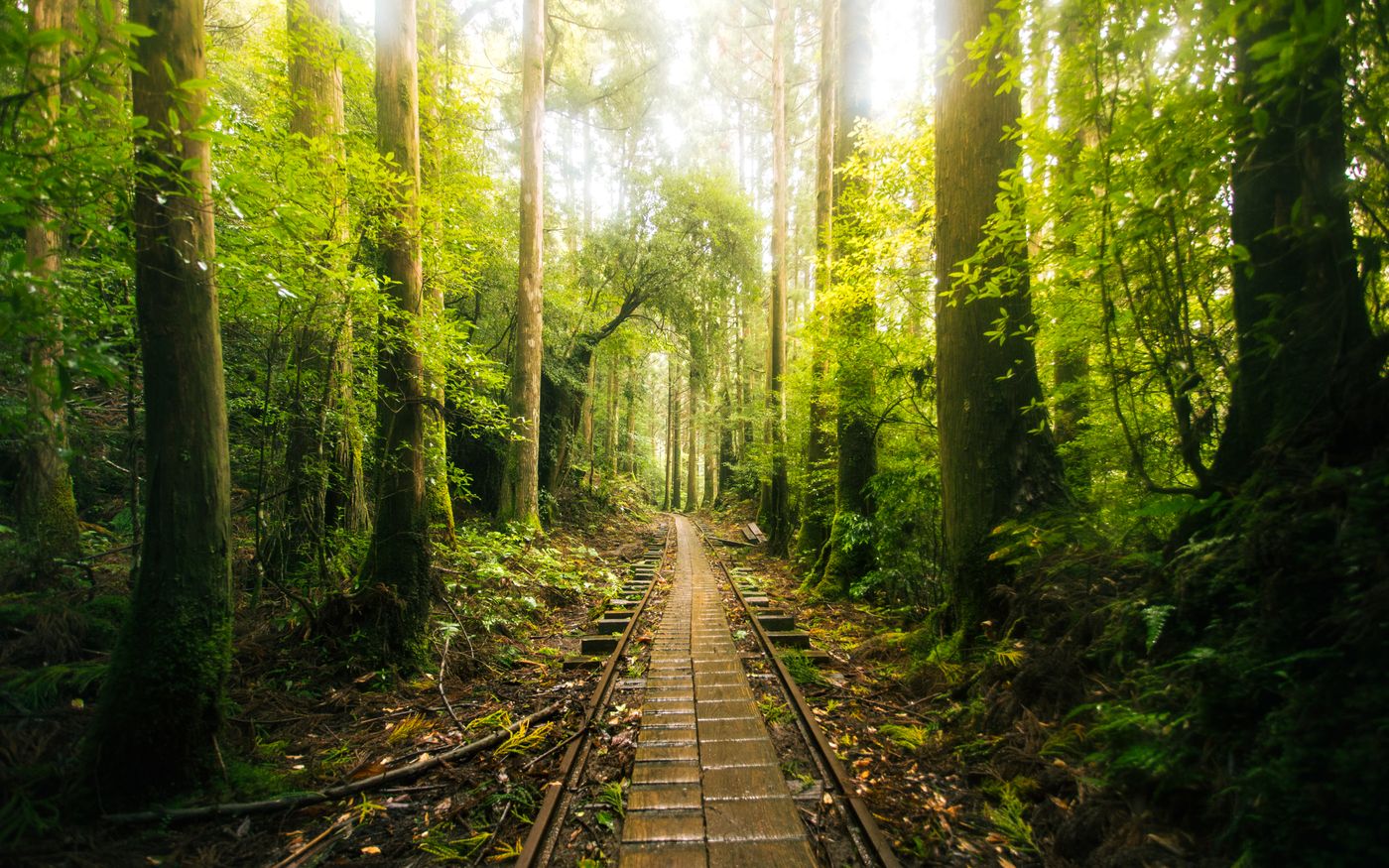
Ghibli’s films treat forests not as backgrounds but as presences — places with agency, memory, and inhabitants. From Totoro’s camphor tree to the Forest Spirit’s domain to the bamboo stand where Kaguya was born, the forest in Ghibli is always a place the human world has not yet fully claimed. These five Japanese forests carry that quality.

ForestFilm ConnectionWhat Makes It SpecialBest Season
Shiratani Unsuikyo, YakushimaPrincess MononokeProduction staff visited; moss, ancient cedar, kodama atmosphereMay–June, Oct–Nov
Sayama Hills, Tokyo/SaitamaMy Neighbor TotoroDirect model; Totoro Foundation protects 100+ hectaresMay (green) · Oct (acorns)
Shirakami Sanchi, Aomori/AkitaPrincess MononokeJapan’s largest primeval beech forest; UNESCO; Aoike blue pondJune–July, October
Sagano Bamboo Grove, KyotoTale of Princess KaguyaJapan’s most famous bamboo; arrive before 8amYear-round (early morning)
Okutama, TokyoGeneral Ghibli atmosphereDeep gorge forest 2 hrs from Shinjuku; Nippara CaveMay, Oct–Nov

How to Get the Ghibli Forest Experience

Go early. The quality of a forest is fundamentally altered by the presence of other people. The Sagano bamboo grove at 7am and at 11am are two entirely different places. Yakushima’s Shiratani at dawn, mist in the canopy, no voices — this is the forest Miyazaki responded to. Plan arrivals accordingly.
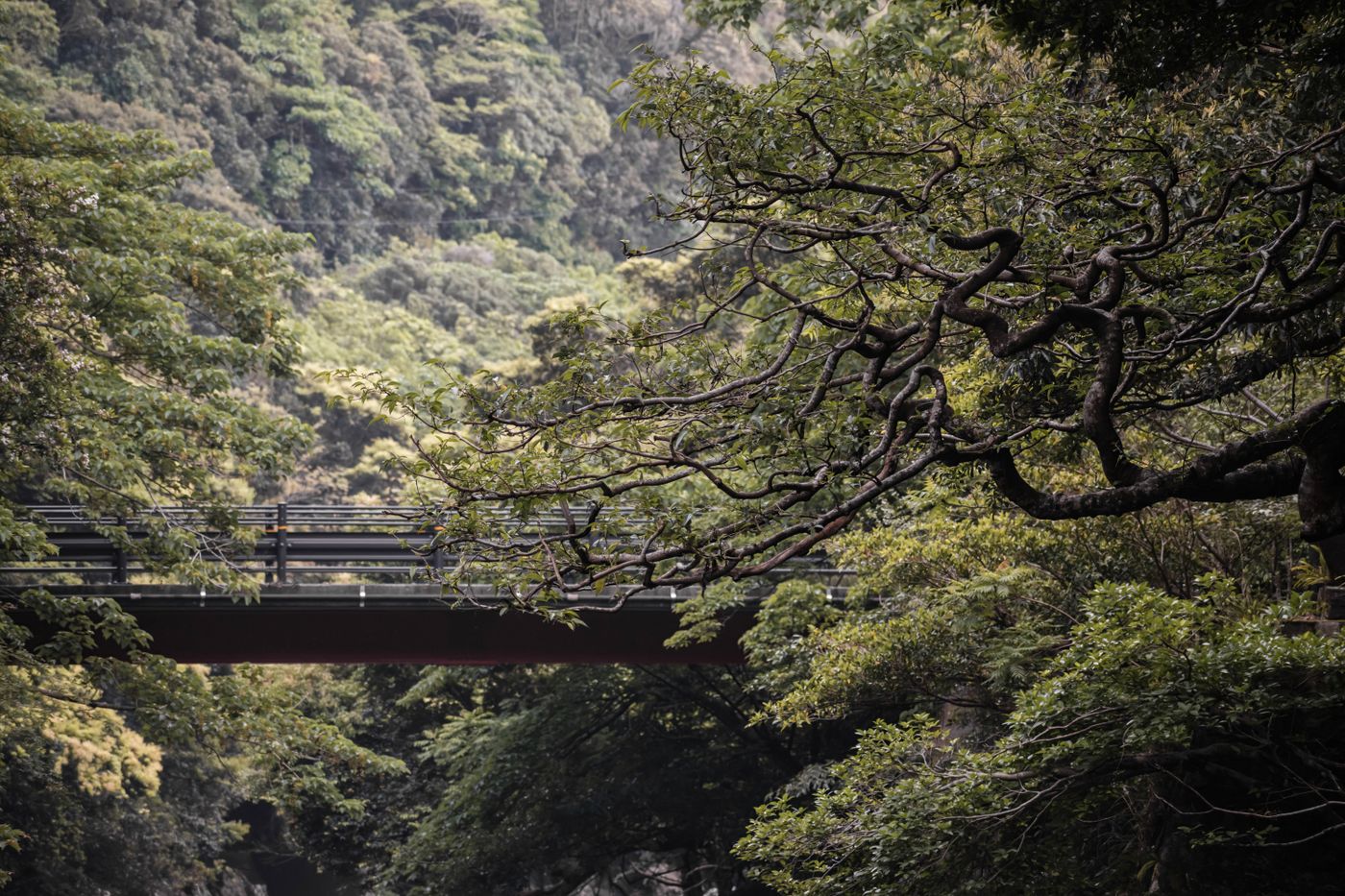
Go in rain. Yakushima receives among Japan’s highest rainfall — the moss only reaches its full luminous intensity when wet. Several veteran visitors describe rainy-day Shiratani as more beautiful than clear-day visits. Carry proper rain gear and reset expectations.

Go in the right season. New growth (May–June) and autumn color (October–November) represent Japanese forests at their most cinematically vivid. Winter offers something different — stripped-back structure, snow on branches, a clarity that the leafed-out seasons obscure.


Ghibli Real Locations · Genre Guide

Ghibli’s Onsen Towns Are Real:
Japan’s Most Cinematic Bath Destinations

Dogo · Ginzan · Kinosaki · Yufuin — Ranked by Ghibli Connection & Experience Quality


In Spirited Away, Yubaba’s bathhouse is where the gods come to be restored. The concept is not invented — it reflects Japan’s actual relationship with hot spring bathing as a practice with spiritual as well as physical dimensions. “Kami no Yu” (God’s Bath) is what Dogo Onsen’s main bath has been called for centuries. These places are real.

Onsen TownGhibli ConnectionSignature ExperienceBest Time
Dogo Onsen, EhimeSpirited Away (strongest exterior model)1894 Honkan building; Kami no Yu bath; bath town evening walkYear-round
Ginzan Onsen, YamagataSpirited Away (night scene model)Gas-lit inn facades on river; winter snow; kaiseki dinnerDec–Feb (snow)
Kinosaki Onsen, HyogoGeneral Spirited Away atmosphere7 public baths; yukata street-walking culture; crab (winter)Winter (crab season)
Yufuin, OitaGeneral onsen atmosphereMt. Yufu backdrop; boutique inns; morning mist over Kinrin LakeAutumn
Edo Tokyo Museum (Kodakara-yu)Spirited Away (direct architectural model)1929 bathhouse building; Ghibli’s most direct design referenceYear-round

How to Experience Onsen Like Chihiro

Wear yukata. Most ryokan provide them; wearing yukata to walk the streets of Dogo or Kinosaki at night is the single action that collapses the distance between the visitor and the film’s world most completely.

Stay overnight. Day visitors see a beautiful old town. Overnight guests experience the transition — the point at dusk when gas lamps ignite, steam thickens, and the modern world retreats. That transition is what the film captures, and it requires presence.

Choose your bath time. Early morning (before 8am) and late night (after 9pm) are when public baths are quietest and the experience most intimate. Midday and early evening are peak hours at most facilities.


Ghibli Real Locations · Genre Guide

Ghibli’s Architecture Is Real:
The Buildings That Built the Films

Edo Tokyo Museum · Yokohama Yamate · Kurashiki · Kobe Kitano · Miyama · Manpei Hotel


Miyazaki has described buildings as containers of time — places where history is made physical and can be read by those attentive enough to look. The care in Ghibli’s architectural depictions reflects this belief. The buildings that appear in the films are based on real structures studied directly, and several of those structures still stand.

LocationFilmKey Building / FeatureAccess
Edo Tokyo Open Air MuseumSpirited AwayKodakara-yu bathhouse (1929); stationery shop counterMusashi-Koganei Station + bus
Yokohama YamateFrom Up on Poppy Hill8 Western mansions (Meiji–Taisho); harbor-view parkMotomachi-Chukagai Station
Kurashiki Bikan QuarterHowl’s Moving CastleEdo-era kura canal district; Ohara Museum (1930)Kurashiki Station
Kobe KitanoKiki’s Delivery ServiceForeign merchant mansions; hillside geometrySannomiya Station
Miyama Kayabuki VillageTale of Princess Kaguya50+ thatched farmhouses; living preservation districtBus from JR Kameoka
Manpei Hotel, KaruizawaThe Wind RisesEst. 1894; Tudor-style; John Lennon’s regular stayKaruizawa Station (Shinkansen)

Planning Note

The Edo Tokyo Open Air Architectural Museum and Yokohama’s Yamate district can be combined into a single Tokyo-area day: museum in the morning (Musashi-Koganei), Yokohama in the afternoon (30 min by train). This gives access to both the most direct Spirited Away architectural model and the most direct From Up on Poppy Hill setting in a single outing.


Ghibli Real Locations · Genre Guide

Ghibli’s Seas & Harbors Are Real:
Port Towns Across Japan

Tomonoura · Otaru · Kushiro · Kobe — Ghibli’s Waterfront Locations Ranked


Water in Ghibli films is rarely decorative. The sea in Ponyo is a living force with its own agenda. The marsh in Marnie is where the boundary between present and past dissolves. The canal in Howl’s world carries the weight of the city’s history. These are waterfront locations that carry similar weight.

LocationFilmWater FeatureBest Experience
Tomonoura, HiroshimaPonyoSeto Inland Sea; Edo harbor intact; joyato lighthouseDusk at the harbor
Otaru, HokkaidoKiki’s Delivery Service1923 canal; gas-lit warehouses; night walkEvening (gas lamps lit)
Kushiro, HokkaidoWhen Marnie Was ThereJapan’s largest marsh; crane habitat; quiet estuaryAutumn dawn (crane season)
Kobe HarborlandKiki’s Delivery ServicePort city harbor; Rokko mountain backdropNight view from Rokko
Yokohama BayFrom Up on Poppy HillHarbor from hilltop; signal flag geographyDusk from Yamate park

The Ghibli Waterfront Itinerary

For travelers building a trip around Ghibli waterfront locations: Yokohama + Tomonoura + Otaru covers three distinct port atmospheres (modern harbor city / ancient Edo fishing port / 19th-century trading post) representing Ghibli’s range of water settings. Yokohama is day-trippable from Tokyo; Tomonoura requires a side trip from Fukuyama on the Sanyo Shinkansen; Otaru is a day trip from Sapporo.

Ghibli Real Locations · Genre Guide

Ghibli’s Onsen Towns Are Real:
Japan’s Most Cinematic Bath Destinations

Dogo · Ginzan · Kinosaki · Yufuin — Ranked by Ghibli Connection & Experience Quality


In Spirited Away, Yubaba’s bathhouse is where the gods come to be restored. The concept is not invented — it reflects Japan’s actual relationship with hot spring bathing as a practice with spiritual as well as physical dimensions. “Kami no Yu” (God’s Bath) is what Dogo Onsen’s main bath has been called for centuries. These places are real.

Onsen TownGhibli ConnectionSignature ExperienceBest Time
Dogo Onsen, EhimeSpirited Away (strongest exterior model)1894 Honkan building; Kami no Yu bath; bath town evening walkYear-round
Ginzan Onsen, YamagataSpirited Away (night scene model)Gas-lit inn facades on river; winter snow; kaiseki dinnerDec–Feb (snow)
Kinosaki Onsen, HyogoGeneral Spirited Away atmosphere7 public baths; yukata street-walking culture; crab (winter)Winter (crab season)
Yufuin, OitaGeneral onsen atmosphereMt. Yufu backdrop; boutique inns; morning mist over Kinrin LakeAutumn
Edo Tokyo Museum (Kodakara-yu)Spirited Away (direct architectural model)1929 bathhouse building; Ghibli’s most direct design referenceYear-round

How to Experience Onsen Like Chihiro

Wear yukata. Most ryokan provide them; wearing yukata to walk the streets of Dogo or Kinosaki at night is the single action that collapses the distance between the visitor and the film’s world most completely.

Stay overnight. Day visitors see a beautiful old town. Overnight guests experience the transition — the point at dusk when gas lamps ignite, steam thickens, and the modern world retreats. That transition is what the film captures, and it requires presence.

Choose your bath time. Early morning (before 8am) and late night (after 9pm) are when public baths are quietest and the experience most intimate. Midday and early evening are peak hours at most facilities.


Ghibli Real Locations · Genre Guide

Ghibli’s Architecture Is Real:
The Buildings That Built the Films

Edo Tokyo Museum · Yokohama Yamate · Kurashiki · Kobe Kitano · Miyama · Manpei Hotel


Miyazaki has described buildings as containers of time — places where history is made physical and can be read by those attentive enough to look. The care in Ghibli’s architectural depictions reflects this belief. The buildings that appear in the films are based on real structures studied directly, and several of those structures still stand.

LocationFilmKey Building / FeatureAccess
Edo Tokyo Open Air MuseumSpirited AwayKodakara-yu bathhouse (1929); stationery shop counterMusashi-Koganei Station + bus
Yokohama YamateFrom Up on Poppy Hill8 Western mansions (Meiji–Taisho); harbor-view parkMotomachi-Chukagai Station
Kurashiki Bikan QuarterHowl’s Moving CastleEdo-era kura canal district; Ohara Museum (1930)Kurashiki Station
Kobe KitanoKiki’s Delivery ServiceForeign merchant mansions; hillside geometrySannomiya Station
Miyama Kayabuki VillageTale of Princess Kaguya50+ thatched farmhouses; living preservation districtBus from JR Kameoka
Manpei Hotel, KaruizawaThe Wind RisesEst. 1894; Tudor-style; John Lennon’s regular stayKaruizawa Station (Shinkansen)

Planning Note

The Edo Tokyo Open Air Architectural Museum and Yokohama’s Yamate district can be combined into a single Tokyo-area day: museum in the morning (Musashi-Koganei), Yokohama in the afternoon (30 min by train). This gives access to both the most direct Spirited Away architectural model and the most direct From Up on Poppy Hill setting in a single outing.


Ghibli Real Locations · Genre Guide

Ghibli’s Seas & Harbors Are Real:
Port Towns Across Japan

Tomonoura · Otaru · Kushiro · Kobe — Ghibli’s Waterfront Locations Ranked


Water in Ghibli films is rarely decorative. The sea in Ponyo is a living force with its own agenda. The marsh in Marnie is where the boundary between present and past dissolves. The canal in Howl’s world carries the weight of the city’s history. These are waterfront locations that carry similar weight.

LocationFilmWater FeatureBest Experience
Tomonoura, HiroshimaPonyoSeto Inland Sea; Edo harbor intact; joyato lighthouseDusk at the harbor
Otaru, HokkaidoKiki’s Delivery Service1923 canal; gas-lit warehouses; night walkEvening (gas lamps lit)
Kushiro, HokkaidoWhen Marnie Was ThereJapan’s largest marsh; crane habitat; quiet estuaryAutumn dawn (crane season)
Kobe HarborlandKiki’s Delivery ServicePort city harbor; Rokko mountain backdropNight view from Rokko
Yokohama BayFrom Up on Poppy HillHarbor from hilltop; signal flag geographyDusk from Yamate park

The Ghibli Waterfront Itinerary

For travelers building a trip around Ghibli waterfront locations: Yokohama + Tomonoura + Otaru covers three distinct port atmospheres (modern harbor city / ancient Edo fishing port / 19th-century trading post) representing Ghibli’s range of water settings. Yokohama is day-trippable from Tokyo; Tomonoura requires a side trip from Fukuyama on the Sanyo Shinkansen; Otaru is a day trip from Sapporo.

Ghibli Real Locations · Genre Guide

Ghibli’s Forests Are Real:
Complete Japan Nature Guide

Yakushima · Sayama Hills · Shirakami Sanchi · Sagano · Okutama — All Five, Ranked & Explained


Ghibli’s films treat forests not as backgrounds but as presences — places with agency, memory, and inhabitants. From Totoro’s camphor tree to the Forest Spirit’s domain to the bamboo stand where Kaguya was born, the forest in Ghibli is always a place the human world has not yet fully claimed. These five Japanese forests carry that quality.

ForestFilm ConnectionWhat Makes It SpecialBest Season
Shiratani Unsuikyo, YakushimaPrincess MononokeProduction staff visited; moss, ancient cedar, kodama atmosphereMay–June, Oct–Nov
Sayama Hills, Tokyo/SaitamaMy Neighbor TotoroDirect model; Totoro Foundation protects 100+ hectaresMay (green) · Oct (acorns)
Shirakami Sanchi, Aomori/AkitaPrincess MononokeJapan’s largest primeval beech forest; UNESCO; Aoike blue pondJune–July, October
Sagano Bamboo Grove, KyotoTale of Princess KaguyaJapan’s most famous bamboo; arrive before 8amYear-round (early morning)
Okutama, TokyoGeneral Ghibli atmosphereDeep gorge forest 2 hrs from Shinjuku; Nippara CaveMay, Oct–Nov

How to Get the Ghibli Forest Experience

Go early. The quality of a forest is fundamentally altered by the presence of other people. The Sagano bamboo grove at 7am and at 11am are two entirely different places. Yakushima’s Shiratani at dawn, mist in the canopy, no voices — this is the forest Miyazaki responded to. Plan arrivals accordingly.

Go in rain. Yakushima receives among Japan’s highest rainfall — the moss only reaches its full luminous intensity when wet. Several veteran visitors describe rainy-day Shiratani as more beautiful than clear-day visits. Carry proper rain gear and reset expectations.

Go in the right season. New growth (May–June) and autumn color (October–November) represent Japanese forests at their most cinematically vivid. Winter offers something different — stripped-back structure, snow on branches, a clarity that the leafed-out seasons obscure.


Ghibli Real Locations · Genre Guide

Ghibli’s Onsen Towns Are Real:
Japan’s Most Cinematic Bath Destinations

Dogo · Ginzan · Kinosaki · Yufuin — Ranked by Ghibli Connection & Experience Quality


In Spirited Away, Yubaba’s bathhouse is where the gods come to be restored. The concept is not invented — it reflects Japan’s actual relationship with hot spring bathing as a practice with spiritual as well as physical dimensions. “Kami no Yu” (God’s Bath) is what Dogo Onsen’s main bath has been called for centuries. These places are real.

Onsen TownGhibli ConnectionSignature ExperienceBest Time
Dogo Onsen, EhimeSpirited Away (strongest exterior model)1894 Honkan building; Kami no Yu bath; bath town evening walkYear-round
Ginzan Onsen, YamagataSpirited Away (night scene model)Gas-lit inn facades on river; winter snow; kaiseki dinnerDec–Feb (snow)
Kinosaki Onsen, HyogoGeneral Spirited Away atmosphere7 public baths; yukata street-walking culture; crab (winter)Winter (crab season)
Yufuin, OitaGeneral onsen atmosphereMt. Yufu backdrop; boutique inns; morning mist over Kinrin LakeAutumn
Edo Tokyo Museum (Kodakara-yu)Spirited Away (direct architectural model)1929 bathhouse building; Ghibli’s most direct design referenceYear-round

How to Experience Onsen Like Chihiro

Wear yukata. Most ryokan provide them; wearing yukata to walk the streets of Dogo or Kinosaki at night is the single action that collapses the distance between the visitor and the film’s world most completely.

Stay overnight. Day visitors see a beautiful old town. Overnight guests experience the transition — the point at dusk when gas lamps ignite, steam thickens, and the modern world retreats. That transition is what the film captures, and it requires presence.

Choose your bath time. Early morning (before 8am) and late night (after 9pm) are when public baths are quietest and the experience most intimate. Midday and early evening are peak hours at most facilities.


Ghibli Real Locations · Genre Guide

Ghibli’s Architecture Is Real:
The Buildings That Built the Films

Edo Tokyo Museum · Yokohama Yamate · Kurashiki · Kobe Kitano · Miyama · Manpei Hotel


Miyazaki has described buildings as containers of time — places where history is made physical and can be read by those attentive enough to look. The care in Ghibli’s architectural depictions reflects this belief. The buildings that appear in the films are based on real structures studied directly, and several of those structures still stand.

LocationFilmKey Building / FeatureAccess
Edo Tokyo Open Air MuseumSpirited AwayKodakara-yu bathhouse (1929); stationery shop counterMusashi-Koganei Station + bus
Yokohama YamateFrom Up on Poppy Hill8 Western mansions (Meiji–Taisho); harbor-view parkMotomachi-Chukagai Station
Kurashiki Bikan QuarterHowl’s Moving CastleEdo-era kura canal district; Ohara Museum (1930)Kurashiki Station
Kobe KitanoKiki’s Delivery ServiceForeign merchant mansions; hillside geometrySannomiya Station
Miyama Kayabuki VillageTale of Princess Kaguya50+ thatched farmhouses; living preservation districtBus from JR Kameoka
Manpei Hotel, KaruizawaThe Wind RisesEst. 1894; Tudor-style; John Lennon’s regular stayKaruizawa Station (Shinkansen)

Planning Note

The Edo Tokyo Open Air Architectural Museum and Yokohama’s Yamate district can be combined into a single Tokyo-area day: museum in the morning (Musashi-Koganei), Yokohama in the afternoon (30 min by train). This gives access to both the most direct Spirited Away architectural model and the most direct From Up on Poppy Hill setting in a single outing.


Ghibli Real Locations · Genre Guide

Ghibli’s Seas & Harbors Are Real:
Port Towns Across Japan

Tomonoura · Otaru · Kushiro · Kobe — Ghibli’s Waterfront Locations Ranked


Water in Ghibli films is rarely decorative. The sea in Ponyo is a living force with its own agenda. The marsh in Marnie is where the boundary between present and past dissolves. The canal in Howl’s world carries the weight of the city’s history. These are waterfront locations that carry similar weight.

LocationFilmWater FeatureBest Experience
Tomonoura, HiroshimaPonyoSeto Inland Sea; Edo harbor intact; joyato lighthouseDusk at the harbor
Otaru, HokkaidoKiki’s Delivery Service1923 canal; gas-lit warehouses; night walkEvening (gas lamps lit)
Kushiro, HokkaidoWhen Marnie Was ThereJapan’s largest marsh; crane habitat; quiet estuaryAutumn dawn (crane season)
Kobe HarborlandKiki’s Delivery ServicePort city harbor; Rokko mountain backdropNight view from Rokko
Yokohama BayFrom Up on Poppy HillHarbor from hilltop; signal flag geographyDusk from Yamate park

The Ghibli Waterfront Itinerary

For travelers building a trip around Ghibli waterfront locations: Yokohama + Tomonoura + Otaru covers three distinct port atmospheres (modern harbor city / ancient Edo fishing port / 19th-century trading post) representing Ghibli’s range of water settings. Yokohama is day-trippable from Tokyo; Tomonoura requires a side trip from Fukuyama on the Sanyo Shinkansen; Otaru is a day trip from Sapporo.

Ghibli Real Locations · Genre Guide

Ghibli’s Architecture Is Real:
The Buildings That Built the Films

Edo Tokyo Museum · Yokohama Yamate · Kurashiki · Kobe Kitano · Miyama · Manpei Hotel


Miyazaki has described buildings as containers of time — places where history is made physical and can be read by those attentive enough to look. The care in Ghibli’s architectural depictions reflects this belief. The buildings that appear in the films are based on real structures studied directly, and several of those structures still stand.

LocationFilmKey Building / FeatureAccess
Edo Tokyo Open Air MuseumSpirited AwayKodakara-yu bathhouse (1929); stationery shop counterMusashi-Koganei Station + bus
Yokohama YamateFrom Up on Poppy Hill8 Western mansions (Meiji–Taisho); harbor-view parkMotomachi-Chukagai Station
Kurashiki Bikan QuarterHowl’s Moving CastleEdo-era kura canal district; Ohara Museum (1930)Kurashiki Station
Kobe KitanoKiki’s Delivery ServiceForeign merchant mansions; hillside geometrySannomiya Station
Miyama Kayabuki VillageTale of Princess Kaguya50+ thatched farmhouses; living preservation districtBus from JR Kameoka
Manpei Hotel, KaruizawaThe Wind RisesEst. 1894; Tudor-style; John Lennon’s regular stayKaruizawa Station (Shinkansen)

Planning Note

The Edo Tokyo Open Air Architectural Museum and Yokohama’s Yamate district can be combined into a single Tokyo-area day: museum in the morning (Musashi-Koganei), Yokohama in the afternoon (30 min by train). This gives access to both the most direct Spirited Away architectural model and the most direct From Up on Poppy Hill setting in a single outing.


Ghibli Real Locations · Genre Guide

Ghibli’s Seas & Harbors Are Real:
Port Towns Across Japan

Tomonoura · Otaru · Kushiro · Kobe — Ghibli’s Waterfront Locations Ranked


Water in Ghibli films is rarely decorative. The sea in Ponyo is a living force with its own agenda. The marsh in Marnie is where the boundary between present and past dissolves. The canal in Howl’s world carries the weight of the city’s history. These are waterfront locations that carry similar weight.

LocationFilmWater FeatureBest Experience
Tomonoura, HiroshimaPonyoSeto Inland Sea; Edo harbor intact; joyato lighthouseDusk at the harbor
Otaru, HokkaidoKiki’s Delivery Service1923 canal; gas-lit warehouses; night walkEvening (gas lamps lit)
Kushiro, HokkaidoWhen Marnie Was ThereJapan’s largest marsh; crane habitat; quiet estuaryAutumn dawn (crane season)
Kobe HarborlandKiki’s Delivery ServicePort city harbor; Rokko mountain backdropNight view from Rokko
Yokohama BayFrom Up on Poppy HillHarbor from hilltop; signal flag geographyDusk from Yamate park

The Ghibli Waterfront Itinerary

For travelers building a trip around Ghibli waterfront locations: Yokohama + Tomonoura + Otaru covers three distinct port atmospheres (modern harbor city / ancient Edo fishing port / 19th-century trading post) representing Ghibli’s range of water settings. Yokohama is day-trippable from Tokyo; Tomonoura requires a side trip from Fukuyama on the Sanyo Shinkansen; Otaru is a day trip from Sapporo.

Ghibli Real Locations · Genre Guide

Ghibli’s Onsen Towns Are Real:
Japan’s Most Cinematic Bath Destinations

Dogo · Ginzan · Kinosaki · Yufuin — Ranked by Ghibli Connection & Experience Quality


In Spirited Away, Yubaba’s bathhouse is where the gods come to be restored. The concept is not invented — it reflects Japan’s actual relationship with hot spring bathing as a practice with spiritual as well as physical dimensions. “Kami no Yu” (God’s Bath) is what Dogo Onsen’s main bath has been called for centuries. These places are real.

Onsen TownGhibli ConnectionSignature ExperienceBest Time
Dogo Onsen, EhimeSpirited Away (strongest exterior model)1894 Honkan building; Kami no Yu bath; bath town evening walkYear-round
Ginzan Onsen, YamagataSpirited Away (night scene model)Gas-lit inn facades on river; winter snow; kaiseki dinnerDec–Feb (snow)
Kinosaki Onsen, HyogoGeneral Spirited Away atmosphere7 public baths; yukata street-walking culture; crab (winter)Winter (crab season)
Yufuin, OitaGeneral onsen atmosphereMt. Yufu backdrop; boutique inns; morning mist over Kinrin LakeAutumn
Edo Tokyo Museum (Kodakara-yu)Spirited Away (direct architectural model)1929 bathhouse building; Ghibli’s most direct design referenceYear-round

How to Experience Onsen Like Chihiro

Wear yukata. Most ryokan provide them; wearing yukata to walk the streets of Dogo or Kinosaki at night is the single action that collapses the distance between the visitor and the film’s world most completely.

Stay overnight. Day visitors see a beautiful old town. Overnight guests experience the transition — the point at dusk when gas lamps ignite, steam thickens, and the modern world retreats. That transition is what the film captures, and it requires presence.

Choose your bath time. Early morning (before 8am) and late night (after 9pm) are when public baths are quietest and the experience most intimate. Midday and early evening are peak hours at most facilities.


Ghibli Real Locations · Genre Guide

Ghibli’s Architecture Is Real:
The Buildings That Built the Films

Edo Tokyo Museum · Yokohama Yamate · Kurashiki · Kobe Kitano · Miyama · Manpei Hotel


Miyazaki has described buildings as containers of time — places where history is made physical and can be read by those attentive enough to look. The care in Ghibli’s architectural depictions reflects this belief. The buildings that appear in the films are based on real structures studied directly, and several of those structures still stand.

LocationFilmKey Building / FeatureAccess
Edo Tokyo Open Air MuseumSpirited AwayKodakara-yu bathhouse (1929); stationery shop counterMusashi-Koganei Station + bus
Yokohama YamateFrom Up on Poppy Hill8 Western mansions (Meiji–Taisho); harbor-view parkMotomachi-Chukagai Station
Kurashiki Bikan QuarterHowl’s Moving CastleEdo-era kura canal district; Ohara Museum (1930)Kurashiki Station
Kobe KitanoKiki’s Delivery ServiceForeign merchant mansions; hillside geometrySannomiya Station
Miyama Kayabuki VillageTale of Princess Kaguya50+ thatched farmhouses; living preservation districtBus from JR Kameoka
Manpei Hotel, KaruizawaThe Wind RisesEst. 1894; Tudor-style; John Lennon’s regular stayKaruizawa Station (Shinkansen)

Planning Note

The Edo Tokyo Open Air Architectural Museum and Yokohama’s Yamate district can be combined into a single Tokyo-area day: museum in the morning (Musashi-Koganei), Yokohama in the afternoon (30 min by train). This gives access to both the most direct Spirited Away architectural model and the most direct From Up on Poppy Hill setting in a single outing.


Ghibli Real Locations · Genre Guide

Ghibli’s Seas & Harbors Are Real:
Port Towns Across Japan

Tomonoura · Otaru · Kushiro · Kobe — Ghibli’s Waterfront Locations Ranked


Water in Ghibli films is rarely decorative. The sea in Ponyo is a living force with its own agenda. The marsh in Marnie is where the boundary between present and past dissolves. The canal in Howl’s world carries the weight of the city’s history. These are waterfront locations that carry similar weight.

LocationFilmWater FeatureBest Experience
Tomonoura, HiroshimaPonyoSeto Inland Sea; Edo harbor intact; joyato lighthouseDusk at the harbor
Otaru, HokkaidoKiki’s Delivery Service1923 canal; gas-lit warehouses; night walkEvening (gas lamps lit)
Kushiro, HokkaidoWhen Marnie Was ThereJapan’s largest marsh; crane habitat; quiet estuaryAutumn dawn (crane season)
Kobe HarborlandKiki’s Delivery ServicePort city harbor; Rokko mountain backdropNight view from Rokko
Yokohama BayFrom Up on Poppy HillHarbor from hilltop; signal flag geographyDusk from Yamate park

The Ghibli Waterfront Itinerary

For travelers building a trip around Ghibli waterfront locations: Yokohama + Tomonoura + Otaru covers three distinct port atmospheres (modern harbor city / ancient Edo fishing port / 19th-century trading post) representing Ghibli’s range of water settings. Yokohama is day-trippable from Tokyo; Tomonoura requires a side trip from Fukuyama on the Sanyo Shinkansen; Otaru is a day trip from Sapporo.

Ghibli Real Locations · Genre Guide

Ghibli’s Forests Are Real:
Complete Japan Nature Guide

Yakushima · Sayama Hills · Shirakami Sanchi · Sagano · Okutama — All Five, Ranked & Explained


Ghibli’s films treat forests not as backgrounds but as presences — places with agency, memory, and inhabitants. From Totoro’s camphor tree to the Forest Spirit’s domain to the bamboo stand where Kaguya was born, the forest in Ghibli is always a place the human world has not yet fully claimed. These five Japanese forests carry that quality.

ForestFilm ConnectionWhat Makes It SpecialBest Season
Shiratani Unsuikyo, YakushimaPrincess MononokeProduction staff visited; moss, ancient cedar, kodama atmosphereMay–June, Oct–Nov
Sayama Hills, Tokyo/SaitamaMy Neighbor TotoroDirect model; Totoro Foundation protects 100+ hectaresMay (green) · Oct (acorns)
Shirakami Sanchi, Aomori/AkitaPrincess MononokeJapan’s largest primeval beech forest; UNESCO; Aoike blue pondJune–July, October
Sagano Bamboo Grove, KyotoTale of Princess KaguyaJapan’s most famous bamboo; arrive before 8amYear-round (early morning)
Okutama, TokyoGeneral Ghibli atmosphereDeep gorge forest 2 hrs from Shinjuku; Nippara CaveMay, Oct–Nov

How to Get the Ghibli Forest Experience

Go early. The quality of a forest is fundamentally altered by the presence of other people. The Sagano bamboo grove at 7am and at 11am are two entirely different places. Yakushima’s Shiratani at dawn, mist in the canopy, no voices — this is the forest Miyazaki responded to. Plan arrivals accordingly.

Go in rain. Yakushima receives among Japan’s highest rainfall — the moss only reaches its full luminous intensity when wet. Several veteran visitors describe rainy-day Shiratani as more beautiful than clear-day visits. Carry proper rain gear and reset expectations.

Go in the right season. New growth (May–June) and autumn color (October–November) represent Japanese forests at their most cinematically vivid. Winter offers something different — stripped-back structure, snow on branches, a clarity that the leafed-out seasons obscure.


Ghibli Real Locations · Genre Guide

Ghibli’s Onsen Towns Are Real:
Japan’s Most Cinematic Bath Destinations

Dogo · Ginzan · Kinosaki · Yufuin — Ranked by Ghibli Connection & Experience Quality


In Spirited Away, Yubaba’s bathhouse is where the gods come to be restored. The concept is not invented — it reflects Japan’s actual relationship with hot spring bathing as a practice with spiritual as well as physical dimensions. “Kami no Yu” (God’s Bath) is what Dogo Onsen’s main bath has been called for centuries. These places are real.

Onsen TownGhibli ConnectionSignature ExperienceBest Time
Dogo Onsen, EhimeSpirited Away (strongest exterior model)1894 Honkan building; Kami no Yu bath; bath town evening walkYear-round
Ginzan Onsen, YamagataSpirited Away (night scene model)Gas-lit inn facades on river; winter snow; kaiseki dinnerDec–Feb (snow)
Kinosaki Onsen, HyogoGeneral Spirited Away atmosphere7 public baths; yukata street-walking culture; crab (winter)Winter (crab season)
Yufuin, OitaGeneral onsen atmosphereMt. Yufu backdrop; boutique inns; morning mist over Kinrin LakeAutumn
Edo Tokyo Museum (Kodakara-yu)Spirited Away (direct architectural model)1929 bathhouse building; Ghibli’s most direct design referenceYear-round

How to Experience Onsen Like Chihiro

Wear yukata. Most ryokan provide them; wearing yukata to walk the streets of Dogo or Kinosaki at night is the single action that collapses the distance between the visitor and the film’s world most completely.

Stay overnight. Day visitors see a beautiful old town. Overnight guests experience the transition — the point at dusk when gas lamps ignite, steam thickens, and the modern world retreats. That transition is what the film captures, and it requires presence.

Choose your bath time. Early morning (before 8am) and late night (after 9pm) are when public baths are quietest and the experience most intimate. Midday and early evening are peak hours at most facilities.


Ghibli Real Locations · Genre Guide

Ghibli’s Architecture Is Real:
The Buildings That Built the Films

Edo Tokyo Museum · Yokohama Yamate · Kurashiki · Kobe Kitano · Miyama · Manpei Hotel


Miyazaki has described buildings as containers of time — places where history is made physical and can be read by those attentive enough to look. The care in Ghibli’s architectural depictions reflects this belief. The buildings that appear in the films are based on real structures studied directly, and several of those structures still stand.

LocationFilmKey Building / FeatureAccess
Edo Tokyo Open Air MuseumSpirited AwayKodakara-yu bathhouse (1929); stationery shop counterMusashi-Koganei Station + bus
Yokohama YamateFrom Up on Poppy Hill8 Western mansions (Meiji–Taisho); harbor-view parkMotomachi-Chukagai Station
Kurashiki Bikan QuarterHowl’s Moving CastleEdo-era kura canal district; Ohara Museum (1930)Kurashiki Station
Kobe KitanoKiki’s Delivery ServiceForeign merchant mansions; hillside geometrySannomiya Station
Miyama Kayabuki VillageTale of Princess Kaguya50+ thatched farmhouses; living preservation districtBus from JR Kameoka
Manpei Hotel, KaruizawaThe Wind RisesEst. 1894; Tudor-style; John Lennon’s regular stayKaruizawa Station (Shinkansen)

Planning Note

The Edo Tokyo Open Air Architectural Museum and Yokohama’s Yamate district can be combined into a single Tokyo-area day: museum in the morning (Musashi-Koganei), Yokohama in the afternoon (30 min by train). This gives access to both the most direct Spirited Away architectural model and the most direct From Up on Poppy Hill setting in a single outing.


Ghibli Real Locations · Genre Guide

Ghibli’s Seas & Harbors Are Real:
Port Towns Across Japan

Tomonoura · Otaru · Kushiro · Kobe — Ghibli’s Waterfront Locations Ranked


Water in Ghibli films is rarely decorative. The sea in Ponyo is a living force with its own agenda. The marsh in Marnie is where the boundary between present and past dissolves. The canal in Howl’s world carries the weight of the city’s history. These are waterfront locations that carry similar weight.

LocationFilmWater FeatureBest Experience
Tomonoura, HiroshimaPonyoSeto Inland Sea; Edo harbor intact; joyato lighthouseDusk at the harbor
Otaru, HokkaidoKiki’s Delivery Service1923 canal; gas-lit warehouses; night walkEvening (gas lamps lit)
Kushiro, HokkaidoWhen Marnie Was ThereJapan’s largest marsh; crane habitat; quiet estuaryAutumn dawn (crane season)
Kobe HarborlandKiki’s Delivery ServicePort city harbor; Rokko mountain backdropNight view from Rokko
Yokohama BayFrom Up on Poppy HillHarbor from hilltop; signal flag geographyDusk from Yamate park

The Ghibli Waterfront Itinerary

For travelers building a trip around Ghibli waterfront locations: Yokohama + Tomonoura + Otaru covers three distinct port atmospheres (modern harbor city / ancient Edo fishing port / 19th-century trading post) representing Ghibli’s range of water settings. Yokohama is day-trippable from Tokyo; Tomonoura requires a side trip from Fukuyama on the Sanyo Shinkansen; Otaru is a day trip from Sapporo.

Ghibli Real Locations · Genre Guide

Ghibli’s Onsen Towns Are Real:
Japan’s Most Cinematic Bath Destinations

Dogo · Ginzan · Kinosaki · Yufuin — Ranked by Ghibli Connection & Experience Quality


In Spirited Away, Yubaba’s bathhouse is where the gods come to be restored. The concept is not invented — it reflects Japan’s actual relationship with hot spring bathing as a practice with spiritual as well as physical dimensions. “Kami no Yu” (God’s Bath) is what Dogo Onsen’s main bath has been called for centuries. These places are real.

Onsen TownGhibli ConnectionSignature ExperienceBest Time
Dogo Onsen, EhimeSpirited Away (strongest exterior model)1894 Honkan building; Kami no Yu bath; bath town evening walkYear-round
Ginzan Onsen, YamagataSpirited Away (night scene model)Gas-lit inn facades on river; winter snow; kaiseki dinnerDec–Feb (snow)
Kinosaki Onsen, HyogoGeneral Spirited Away atmosphere7 public baths; yukata street-walking culture; crab (winter)Winter (crab season)
Yufuin, OitaGeneral onsen atmosphereMt. Yufu backdrop; boutique inns; morning mist over Kinrin LakeAutumn
Edo Tokyo Museum (Kodakara-yu)Spirited Away (direct architectural model)1929 bathhouse building; Ghibli’s most direct design referenceYear-round

How to Experience Onsen Like Chihiro

Wear yukata. Most ryokan provide them; wearing yukata to walk the streets of Dogo or Kinosaki at night is the single action that collapses the distance between the visitor and the film’s world most completely.

Stay overnight. Day visitors see a beautiful old town. Overnight guests experience the transition — the point at dusk when gas lamps ignite, steam thickens, and the modern world retreats. That transition is what the film captures, and it requires presence.

Choose your bath time. Early morning (before 8am) and late night (after 9pm) are when public baths are quietest and the experience most intimate. Midday and early evening are peak hours at most facilities.


Ghibli Real Locations · Genre Guide

Ghibli’s Architecture Is Real:
The Buildings That Built the Films

Edo Tokyo Museum · Yokohama Yamate · Kurashiki · Kobe Kitano · Miyama · Manpei Hotel


Miyazaki has described buildings as containers of time — places where history is made physical and can be read by those attentive enough to look. The care in Ghibli’s architectural depictions reflects this belief. The buildings that appear in the films are based on real structures studied directly, and several of those structures still stand.

LocationFilmKey Building / FeatureAccess
Edo Tokyo Open Air MuseumSpirited AwayKodakara-yu bathhouse (1929); stationery shop counterMusashi-Koganei Station + bus
Yokohama YamateFrom Up on Poppy Hill8 Western mansions (Meiji–Taisho); harbor-view parkMotomachi-Chukagai Station
Kurashiki Bikan QuarterHowl’s Moving CastleEdo-era kura canal district; Ohara Museum (1930)Kurashiki Station
Kobe KitanoKiki’s Delivery ServiceForeign merchant mansions; hillside geometrySannomiya Station
Miyama Kayabuki VillageTale of Princess Kaguya50+ thatched farmhouses; living preservation districtBus from JR Kameoka
Manpei Hotel, KaruizawaThe Wind RisesEst. 1894; Tudor-style; John Lennon’s regular stayKaruizawa Station (Shinkansen)

Planning Note

The Edo Tokyo Open Air Architectural Museum and Yokohama’s Yamate district can be combined into a single Tokyo-area day: museum in the morning (Musashi-Koganei), Yokohama in the afternoon (30 min by train). This gives access to both the most direct Spirited Away architectural model and the most direct From Up on Poppy Hill setting in a single outing.


Ghibli Real Locations · Genre Guide

Ghibli’s Seas & Harbors Are Real:
Port Towns Across Japan

Tomonoura · Otaru · Kushiro · Kobe — Ghibli’s Waterfront Locations Ranked


Water in Ghibli films is rarely decorative. The sea in Ponyo is a living force with its own agenda. The marsh in Marnie is where the boundary between present and past dissolves. The canal in Howl’s world carries the weight of the city’s history. These are waterfront locations that carry similar weight.

LocationFilmWater FeatureBest Experience
Tomonoura, HiroshimaPonyoSeto Inland Sea; Edo harbor intact; joyato lighthouseDusk at the harbor
Otaru, HokkaidoKiki’s Delivery Service1923 canal; gas-lit warehouses; night walkEvening (gas lamps lit)
Kushiro, HokkaidoWhen Marnie Was ThereJapan’s largest marsh; crane habitat; quiet estuaryAutumn dawn (crane season)
Kobe HarborlandKiki’s Delivery ServicePort city harbor; Rokko mountain backdropNight view from Rokko
Yokohama BayFrom Up on Poppy HillHarbor from hilltop; signal flag geographyDusk from Yamate park

The Ghibli Waterfront Itinerary

For travelers building a trip around Ghibli waterfront locations: Yokohama + Tomonoura + Otaru covers three distinct port atmospheres (modern harbor city / ancient Edo fishing port / 19th-century trading post) representing Ghibli’s range of water settings. Yokohama is day-trippable from Tokyo; Tomonoura requires a side trip from Fukuyama on the Sanyo Shinkansen; Otaru is a day trip from Sapporo.

Ghibli Real Locations · Genre Guide

Ghibli’s Forests Are Real:
Complete Japan Nature Guide

Yakushima · Sayama Hills · Shirakami Sanchi · Sagano · Okutama — All Five, Ranked & Explained


Ghibli’s films treat forests not as backgrounds but as presences — places with agency, memory, and inhabitants. From Totoro’s camphor tree to the Forest Spirit’s domain to the bamboo stand where Kaguya was born, the forest in Ghibli is always a place the human world has not yet fully claimed. These five Japanese forests carry that quality.

ForestFilm ConnectionWhat Makes It SpecialBest Season
Shiratani Unsuikyo, YakushimaPrincess MononokeProduction staff visited; moss, ancient cedar, kodama atmosphereMay–June, Oct–Nov
Sayama Hills, Tokyo/SaitamaMy Neighbor TotoroDirect model; Totoro Foundation protects 100+ hectaresMay (green) · Oct (acorns)
Shirakami Sanchi, Aomori/AkitaPrincess MononokeJapan’s largest primeval beech forest; UNESCO; Aoike blue pondJune–July, October
Sagano Bamboo Grove, KyotoTale of Princess KaguyaJapan’s most famous bamboo; arrive before 8amYear-round (early morning)
Okutama, TokyoGeneral Ghibli atmosphereDeep gorge forest 2 hrs from Shinjuku; Nippara CaveMay, Oct–Nov

How to Get the Ghibli Forest Experience

Go early. The quality of a forest is fundamentally altered by the presence of other people. The Sagano bamboo grove at 7am and at 11am are two entirely different places. Yakushima’s Shiratani at dawn, mist in the canopy, no voices — this is the forest Miyazaki responded to. Plan arrivals accordingly.

Go in rain. Yakushima receives among Japan’s highest rainfall — the moss only reaches its full luminous intensity when wet. Several veteran visitors describe rainy-day Shiratani as more beautiful than clear-day visits. Carry proper rain gear and reset expectations.

Go in the right season. New growth (May–June) and autumn color (October–November) represent Japanese forests at their most cinematically vivid. Winter offers something different — stripped-back structure, snow on branches, a clarity that the leafed-out seasons obscure.


Ghibli Real Locations · Genre Guide

Ghibli’s Onsen Towns Are Real:
Japan’s Most Cinematic Bath Destinations

Dogo · Ginzan · Kinosaki · Yufuin — Ranked by Ghibli Connection & Experience Quality


In Spirited Away, Yubaba’s bathhouse is where the gods come to be restored. The concept is not invented — it reflects Japan’s actual relationship with hot spring bathing as a practice with spiritual as well as physical dimensions. “Kami no Yu” (God’s Bath) is what Dogo Onsen’s main bath has been called for centuries. These places are real.

Onsen TownGhibli ConnectionSignature ExperienceBest Time
Dogo Onsen, EhimeSpirited Away (strongest exterior model)1894 Honkan building; Kami no Yu bath; bath town evening walkYear-round
Ginzan Onsen, YamagataSpirited Away (night scene model)Gas-lit inn facades on river; winter snow; kaiseki dinnerDec–Feb (snow)
Kinosaki Onsen, HyogoGeneral Spirited Away atmosphere7 public baths; yukata street-walking culture; crab (winter)Winter (crab season)
Yufuin, OitaGeneral onsen atmosphereMt. Yufu backdrop; boutique inns; morning mist over Kinrin LakeAutumn
Edo Tokyo Museum (Kodakara-yu)Spirited Away (direct architectural model)1929 bathhouse building; Ghibli’s most direct design referenceYear-round

How to Experience Onsen Like Chihiro

Wear yukata. Most ryokan provide them; wearing yukata to walk the streets of Dogo or Kinosaki at night is the single action that collapses the distance between the visitor and the film’s world most completely.

Stay overnight. Day visitors see a beautiful old town. Overnight guests experience the transition — the point at dusk when gas lamps ignite, steam thickens, and the modern world retreats. That transition is what the film captures, and it requires presence.

Choose your bath time. Early morning (before 8am) and late night (after 9pm) are when public baths are quietest and the experience most intimate. Midday and early evening are peak hours at most facilities.


Ghibli Real Locations · Genre Guide

Ghibli’s Architecture Is Real:
The Buildings That Built the Films

Edo Tokyo Museum · Yokohama Yamate · Kurashiki · Kobe Kitano · Miyama · Manpei Hotel


Miyazaki has described buildings as containers of time — places where history is made physical and can be read by those attentive enough to look. The care in Ghibli’s architectural depictions reflects this belief. The buildings that appear in the films are based on real structures studied directly, and several of those structures still stand.

LocationFilmKey Building / FeatureAccess
Edo Tokyo Open Air MuseumSpirited AwayKodakara-yu bathhouse (1929); stationery shop counterMusashi-Koganei Station + bus
Yokohama YamateFrom Up on Poppy Hill8 Western mansions (Meiji–Taisho); harbor-view parkMotomachi-Chukagai Station
Kurashiki Bikan QuarterHowl’s Moving CastleEdo-era kura canal district; Ohara Museum (1930)Kurashiki Station
Kobe KitanoKiki’s Delivery ServiceForeign merchant mansions; hillside geometrySannomiya Station
Miyama Kayabuki VillageTale of Princess Kaguya50+ thatched farmhouses; living preservation districtBus from JR Kameoka
Manpei Hotel, KaruizawaThe Wind RisesEst. 1894; Tudor-style; John Lennon’s regular stayKaruizawa Station (Shinkansen)

Planning Note

The Edo Tokyo Open Air Architectural Museum and Yokohama’s Yamate district can be combined into a single Tokyo-area day: museum in the morning (Musashi-Koganei), Yokohama in the afternoon (30 min by train). This gives access to both the most direct Spirited Away architectural model and the most direct From Up on Poppy Hill setting in a single outing.


Ghibli Real Locations · Genre Guide

Ghibli’s Seas & Harbors Are Real:
Port Towns Across Japan

Tomonoura · Otaru · Kushiro · Kobe — Ghibli’s Waterfront Locations Ranked


Water in Ghibli films is rarely decorative. The sea in Ponyo is a living force with its own agenda. The marsh in Marnie is where the boundary between present and past dissolves. The canal in Howl’s world carries the weight of the city’s history. These are waterfront locations that carry similar weight.

LocationFilmWater FeatureBest Experience
Tomonoura, HiroshimaPonyoSeto Inland Sea; Edo harbor intact; joyato lighthouseDusk at the harbor
Otaru, HokkaidoKiki’s Delivery Service1923 canal; gas-lit warehouses; night walkEvening (gas lamps lit)
Kushiro, HokkaidoWhen Marnie Was ThereJapan’s largest marsh; crane habitat; quiet estuaryAutumn dawn (crane season)
Kobe HarborlandKiki’s Delivery ServicePort city harbor; Rokko mountain backdropNight view from Rokko
Yokohama BayFrom Up on Poppy HillHarbor from hilltop; signal flag geographyDusk from Yamate park

The Ghibli Waterfront Itinerary

For travelers building a trip around Ghibli waterfront locations: Yokohama + Tomonoura + Otaru covers three distinct port atmospheres (modern harbor city / ancient Edo fishing port / 19th-century trading post) representing Ghibli’s range of water settings. Yokohama is day-trippable from Tokyo; Tomonoura requires a side trip from Fukuyama on the Sanyo Shinkansen; Otaru is a day trip from Sapporo.

Ghibli Real Locations · Genre Guide

Ghibli’s Onsen Towns Are Real:
Japan’s Most Cinematic Bath Destinations

Dogo · Ginzan · Kinosaki · Yufuin — Ranked by Ghibli Connection & Experience Quality


In Spirited Away, Yubaba’s bathhouse is where the gods come to be restored. The concept is not invented — it reflects Japan’s actual relationship with hot spring bathing as a practice with spiritual as well as physical dimensions. “Kami no Yu” (God’s Bath) is what Dogo Onsen’s main bath has been called for centuries. These places are real.

Onsen TownGhibli ConnectionSignature ExperienceBest Time
Dogo Onsen, EhimeSpirited Away (strongest exterior model)1894 Honkan building; Kami no Yu bath; bath town evening walkYear-round
Ginzan Onsen, YamagataSpirited Away (night scene model)Gas-lit inn facades on river; winter snow; kaiseki dinnerDec–Feb (snow)
Kinosaki Onsen, HyogoGeneral Spirited Away atmosphere7 public baths; yukata street-walking culture; crab (winter)Winter (crab season)
Yufuin, OitaGeneral onsen atmosphereMt. Yufu backdrop; boutique inns; morning mist over Kinrin LakeAutumn
Edo Tokyo Museum (Kodakara-yu)Spirited Away (direct architectural model)1929 bathhouse building; Ghibli’s most direct design referenceYear-round

How to Experience Onsen Like Chihiro

Wear yukata. Most ryokan provide them; wearing yukata to walk the streets of Dogo or Kinosaki at night is the single action that collapses the distance between the visitor and the film’s world most completely.

Stay overnight. Day visitors see a beautiful old town. Overnight guests experience the transition — the point at dusk when gas lamps ignite, steam thickens, and the modern world retreats. That transition is what the film captures, and it requires presence.

Choose your bath time. Early morning (before 8am) and late night (after 9pm) are when public baths are quietest and the experience most intimate. Midday and early evening are peak hours at most facilities.


Ghibli Real Locations · Genre Guide

Ghibli’s Architecture Is Real:
The Buildings That Built the Films

Edo Tokyo Museum · Yokohama Yamate · Kurashiki · Kobe Kitano · Miyama · Manpei Hotel


Miyazaki has described buildings as containers of time — places where history is made physical and can be read by those attentive enough to look. The care in Ghibli’s architectural depictions reflects this belief. The buildings that appear in the films are based on real structures studied directly, and several of those structures still stand.

LocationFilmKey Building / FeatureAccess
Edo Tokyo Open Air MuseumSpirited AwayKodakara-yu bathhouse (1929); stationery shop counterMusashi-Koganei Station + bus
Yokohama YamateFrom Up on Poppy Hill8 Western mansions (Meiji–Taisho); harbor-view parkMotomachi-Chukagai Station
Kurashiki Bikan QuarterHowl’s Moving CastleEdo-era kura canal district; Ohara Museum (1930)Kurashiki Station
Kobe KitanoKiki’s Delivery ServiceForeign merchant mansions; hillside geometrySannomiya Station
Miyama Kayabuki VillageTale of Princess Kaguya50+ thatched farmhouses; living preservation districtBus from JR Kameoka
Manpei Hotel, KaruizawaThe Wind RisesEst. 1894; Tudor-style; John Lennon’s regular stayKaruizawa Station (Shinkansen)

Planning Note

The Edo Tokyo Open Air Architectural Museum and Yokohama’s Yamate district can be combined into a single Tokyo-area day: museum in the morning (Musashi-Koganei), Yokohama in the afternoon (30 min by train). This gives access to both the most direct Spirited Away architectural model and the most direct From Up on Poppy Hill setting in a single outing.


Ghibli Real Locations · Genre Guide

Ghibli’s Seas & Harbors Are Real:
Port Towns Across Japan

Tomonoura · Otaru · Kushiro · Kobe — Ghibli’s Waterfront Locations Ranked


Water in Ghibli films is rarely decorative. The sea in Ponyo is a living force with its own agenda. The marsh in Marnie is where the boundary between present and past dissolves. The canal in Howl’s world carries the weight of the city’s history. These are waterfront locations that carry similar weight.

LocationFilmWater FeatureBest Experience
Tomonoura, HiroshimaPonyoSeto Inland Sea; Edo harbor intact; joyato lighthouseDusk at the harbor
Otaru, HokkaidoKiki’s Delivery Service1923 canal; gas-lit warehouses; night walkEvening (gas lamps lit)
Kushiro, HokkaidoWhen Marnie Was ThereJapan’s largest marsh; crane habitat; quiet estuaryAutumn dawn (crane season)
Kobe HarborlandKiki’s Delivery ServicePort city harbor; Rokko mountain backdropNight view from Rokko
Yokohama BayFrom Up on Poppy HillHarbor from hilltop; signal flag geographyDusk from Yamate park

The Ghibli Waterfront Itinerary

For travelers building a trip around Ghibli waterfront locations: Yokohama + Tomonoura + Otaru covers three distinct port atmospheres (modern harbor city / ancient Edo fishing port / 19th-century trading post) representing Ghibli’s range of water settings. Yokohama is day-trippable from Tokyo; Tomonoura requires a side trip from Fukuyama on the Sanyo Shinkansen; Otaru is a day trip from Sapporo.

Ghibli Real Locations · Genre Guide

Ghibli’s Onsen Towns Are Real:
Japan’s Most Cinematic Bath Destinations

Dogo · Ginzan · Kinosaki · Yufuin — Ranked by Ghibli Connection & Experience Quality


In Spirited Away, Yubaba’s bathhouse is where the gods come to be restored. The concept is not invented — it reflects Japan’s actual relationship with hot spring bathing as a practice with spiritual as well as physical dimensions. “Kami no Yu” (God’s Bath) is what Dogo Onsen’s main bath has been called for centuries. These places are real.

Onsen TownGhibli ConnectionSignature ExperienceBest Time
Dogo Onsen, EhimeSpirited Away (strongest exterior model)1894 Honkan building; Kami no Yu bath; bath town evening walkYear-round
Ginzan Onsen, YamagataSpirited Away (night scene model)Gas-lit inn facades on river; winter snow; kaiseki dinnerDec–Feb (snow)
Kinosaki Onsen, HyogoGeneral Spirited Away atmosphere7 public baths; yukata street-walking culture; crab (winter)Winter (crab season)
Yufuin, OitaGeneral onsen atmosphereMt. Yufu backdrop; boutique inns; morning mist over Kinrin LakeAutumn
Edo Tokyo Museum (Kodakara-yu)Spirited Away (direct architectural model)1929 bathhouse building; Ghibli’s most direct design referenceYear-round

How to Experience Onsen Like Chihiro

Wear yukata. Most ryokan provide them; wearing yukata to walk the streets of Dogo or Kinosaki at night is the single action that collapses the distance between the visitor and the film’s world most completely.

Stay overnight. Day visitors see a beautiful old town. Overnight guests experience the transition — the point at dusk when gas lamps ignite, steam thickens, and the modern world retreats. That transition is what the film captures, and it requires presence.

Choose your bath time. Early morning (before 8am) and late night (after 9pm) are when public baths are quietest and the experience most intimate. Midday and early evening are peak hours at most facilities.


Ghibli Real Locations · Genre Guide

Ghibli’s Architecture Is Real:
The Buildings That Built the Films

Edo Tokyo Museum · Yokohama Yamate · Kurashiki · Kobe Kitano · Miyama · Manpei Hotel


Miyazaki has described buildings as containers of time — places where history is made physical and can be read by those attentive enough to look. The care in Ghibli’s architectural depictions reflects this belief. The buildings that appear in the films are based on real structures studied directly, and several of those structures still stand.

LocationFilmKey Building / FeatureAccess
Edo Tokyo Open Air MuseumSpirited AwayKodakara-yu bathhouse (1929); stationery shop counterMusashi-Koganei Station + bus
Yokohama YamateFrom Up on Poppy Hill8 Western mansions (Meiji–Taisho); harbor-view parkMotomachi-Chukagai Station
Kurashiki Bikan QuarterHowl’s Moving CastleEdo-era kura canal district; Ohara Museum (1930)Kurashiki Station
Kobe KitanoKiki’s Delivery ServiceForeign merchant mansions; hillside geometrySannomiya Station
Miyama Kayabuki VillageTale of Princess Kaguya50+ thatched farmhouses; living preservation districtBus from JR Kameoka
Manpei Hotel, KaruizawaThe Wind RisesEst. 1894; Tudor-style; John Lennon’s regular stayKaruizawa Station (Shinkansen)

Planning Note

The Edo Tokyo Open Air Architectural Museum and Yokohama’s Yamate district can be combined into a single Tokyo-area day: museum in the morning (Musashi-Koganei), Yokohama in the afternoon (30 min by train). This gives access to both the most direct Spirited Away architectural model and the most direct From Up on Poppy Hill setting in a single outing.


Ghibli Real Locations · Genre Guide

Ghibli’s Seas & Harbors Are Real:
Port Towns Across Japan

Tomonoura · Otaru · Kushiro · Kobe — Ghibli’s Waterfront Locations Ranked


Water in Ghibli films is rarely decorative. The sea in Ponyo is a living force with its own agenda. The marsh in Marnie is where the boundary between present and past dissolves. The canal in Howl’s world carries the weight of the city’s history. These are waterfront locations that carry similar weight.

LocationFilmWater FeatureBest Experience
Tomonoura, HiroshimaPonyoSeto Inland Sea; Edo harbor intact; joyato lighthouseDusk at the harbor
Otaru, HokkaidoKiki’s Delivery Service1923 canal; gas-lit warehouses; night walkEvening (gas lamps lit)
Kushiro, HokkaidoWhen Marnie Was ThereJapan’s largest marsh; crane habitat; quiet estuaryAutumn dawn (crane season)
Kobe HarborlandKiki’s Delivery ServicePort city harbor; Rokko mountain backdropNight view from Rokko
Yokohama BayFrom Up on Poppy HillHarbor from hilltop; signal flag geographyDusk from Yamate park

The Ghibli Waterfront Itinerary

For travelers building a trip around Ghibli waterfront locations: Yokohama + Tomonoura + Otaru covers three distinct port atmospheres (modern harbor city / ancient Edo fishing port / 19th-century trading post) representing Ghibli’s range of water settings. Yokohama is day-trippable from Tokyo; Tomonoura requires a side trip from Fukuyama on the Sanyo Shinkansen; Otaru is a day trip from Sapporo.

Ghibli Real Locations · Genre Guide

Ghibli’s Onsen Towns Are Real:
Japan’s Most Cinematic Bath Destinations

Dogo · Ginzan · Kinosaki · Yufuin — Ranked by Ghibli Connection & Experience Quality


In Spirited Away, Yubaba’s bathhouse is where the gods come to be restored. The concept is not invented — it reflects Japan’s actual relationship with hot spring bathing as a practice with spiritual as well as physical dimensions. “Kami no Yu” (God’s Bath) is what Dogo Onsen’s main bath has been called for centuries. These places are real.

Onsen TownGhibli ConnectionSignature ExperienceBest Time
Dogo Onsen, EhimeSpirited Away (strongest exterior model)1894 Honkan building; Kami no Yu bath; bath town evening walkYear-round
Ginzan Onsen, YamagataSpirited Away (night scene model)Gas-lit inn facades on river; winter snow; kaiseki dinnerDec–Feb (snow)
Kinosaki Onsen, HyogoGeneral Spirited Away atmosphere7 public baths; yukata street-walking culture; crab (winter)Winter (crab season)
Yufuin, OitaGeneral onsen atmosphereMt. Yufu backdrop; boutique inns; morning mist over Kinrin LakeAutumn
Edo Tokyo Museum (Kodakara-yu)Spirited Away (direct architectural model)1929 bathhouse building; Ghibli’s most direct design referenceYear-round

How to Experience Onsen Like Chihiro

Wear yukata. Most ryokan provide them; wearing yukata to walk the streets of Dogo or Kinosaki at night is the single action that collapses the distance between the visitor and the film’s world most completely.

Stay overnight. Day visitors see a beautiful old town. Overnight guests experience the transition — the point at dusk when gas lamps ignite, steam thickens, and the modern world retreats. That transition is what the film captures, and it requires presence.

Choose your bath time. Early morning (before 8am) and late night (after 9pm) are when public baths are quietest and the experience most intimate. Midday and early evening are peak hours at most facilities.


Ghibli Real Locations · Genre Guide

Ghibli’s Architecture Is Real:
The Buildings That Built the Films

Edo Tokyo Museum · Yokohama Yamate · Kurashiki · Kobe Kitano · Miyama · Manpei Hotel


Miyazaki has described buildings as containers of time — places where history is made physical and can be read by those attentive enough to look. The care in Ghibli’s architectural depictions reflects this belief. The buildings that appear in the films are based on real structures studied directly, and several of those structures still stand.

LocationFilmKey Building / FeatureAccess
Edo Tokyo Open Air MuseumSpirited AwayKodakara-yu bathhouse (1929); stationery shop counterMusashi-Koganei Station + bus
Yokohama YamateFrom Up on Poppy Hill8 Western mansions (Meiji–Taisho); harbor-view parkMotomachi-Chukagai Station
Kurashiki Bikan QuarterHowl’s Moving CastleEdo-era kura canal district; Ohara Museum (1930)Kurashiki Station
Kobe KitanoKiki’s Delivery ServiceForeign merchant mansions; hillside geometrySannomiya Station
Miyama Kayabuki VillageTale of Princess Kaguya50+ thatched farmhouses; living preservation districtBus from JR Kameoka
Manpei Hotel, KaruizawaThe Wind RisesEst. 1894; Tudor-style; John Lennon’s regular stayKaruizawa Station (Shinkansen)

Planning Note

The Edo Tokyo Open Air Architectural Museum and Yokohama’s Yamate district can be combined into a single Tokyo-area day: museum in the morning (Musashi-Koganei), Yokohama in the afternoon (30 min by train). This gives access to both the most direct Spirited Away architectural model and the most direct From Up on Poppy Hill setting in a single outing.


Ghibli Real Locations · Genre Guide

Ghibli’s Seas & Harbors Are Real:
Port Towns Across Japan

Tomonoura · Otaru · Kushiro · Kobe — Ghibli’s Waterfront Locations Ranked


Water in Ghibli films is rarely decorative. The sea in Ponyo is a living force with its own agenda. The marsh in Marnie is where the boundary between present and past dissolves. The canal in Howl’s world carries the weight of the city’s history. These are waterfront locations that carry similar weight.

LocationFilmWater FeatureBest Experience
Tomonoura, HiroshimaPonyoSeto Inland Sea; Edo harbor intact; joyato lighthouseDusk at the harbor
Otaru, HokkaidoKiki’s Delivery Service1923 canal; gas-lit warehouses; night walkEvening (gas lamps lit)
Kushiro, HokkaidoWhen Marnie Was ThereJapan’s largest marsh; crane habitat; quiet estuaryAutumn dawn (crane season)
Kobe HarborlandKiki’s Delivery ServicePort city harbor; Rokko mountain backdropNight view from Rokko
Yokohama BayFrom Up on Poppy HillHarbor from hilltop; signal flag geographyDusk from Yamate park

The Ghibli Waterfront Itinerary

For travelers building a trip around Ghibli waterfront locations: Yokohama + Tomonoura + Otaru covers three distinct port atmospheres (modern harbor city / ancient Edo fishing port / 19th-century trading post) representing Ghibli’s range of water settings. Yokohama is day-trippable from Tokyo; Tomonoura requires a side trip from Fukuyama on the Sanyo Shinkansen; Otaru is a day trip from Sapporo.

Ghibli Real Locations · Genre Guide

Ghibli’s Forests Are Real:
Complete Japan Nature Guide

Yakushima · Sayama Hills · Shirakami Sanchi · Sagano · Okutama — All Five, Ranked & Explained


Ghibli’s films treat forests not as backgrounds but as presences — places with agency, memory, and inhabitants. From Totoro’s camphor tree to the Forest Spirit’s domain to the bamboo stand where Kaguya was born, the forest in Ghibli is always a place the human world has not yet fully claimed. These five Japanese forests carry that quality.

ForestFilm ConnectionWhat Makes It SpecialBest Season
Shiratani Unsuikyo, YakushimaPrincess MononokeProduction staff visited; moss, ancient cedar, kodama atmosphereMay–June, Oct–Nov
Sayama Hills, Tokyo/SaitamaMy Neighbor TotoroDirect model; Totoro Foundation protects 100+ hectaresMay (green) · Oct (acorns)
Shirakami Sanchi, Aomori/AkitaPrincess MononokeJapan’s largest primeval beech forest; UNESCO; Aoike blue pondJune–July, October
Sagano Bamboo Grove, KyotoTale of Princess KaguyaJapan’s most famous bamboo; arrive before 8amYear-round (early morning)
Okutama, TokyoGeneral Ghibli atmosphereDeep gorge forest 2 hrs from Shinjuku; Nippara CaveMay, Oct–Nov

How to Get the Ghibli Forest Experience

Go early. The quality of a forest is fundamentally altered by the presence of other people. The Sagano bamboo grove at 7am and at 11am are two entirely different places. Yakushima’s Shiratani at dawn, mist in the canopy, no voices — this is the forest Miyazaki responded to. Plan arrivals accordingly.

Go in rain. Yakushima receives among Japan’s highest rainfall — the moss only reaches its full luminous intensity when wet. Several veteran visitors describe rainy-day Shiratani as more beautiful than clear-day visits. Carry proper rain gear and reset expectations.

Go in the right season. New growth (May–June) and autumn color (October–November) represent Japanese forests at their most cinematically vivid. Winter offers something different — stripped-back structure, snow on branches, a clarity that the leafed-out seasons obscure.


Ghibli Real Locations · Genre Guide

Ghibli’s Onsen Towns Are Real:
Japan’s Most Cinematic Bath Destinations

Dogo · Ginzan · Kinosaki · Yufuin — Ranked by Ghibli Connection & Experience Quality


In Spirited Away, Yubaba’s bathhouse is where the gods come to be restored. The concept is not invented — it reflects Japan’s actual relationship with hot spring bathing as a practice with spiritual as well as physical dimensions. “Kami no Yu” (God’s Bath) is what Dogo Onsen’s main bath has been called for centuries. These places are real.

Onsen TownGhibli ConnectionSignature ExperienceBest Time
Dogo Onsen, EhimeSpirited Away (strongest exterior model)1894 Honkan building; Kami no Yu bath; bath town evening walkYear-round
Ginzan Onsen, YamagataSpirited Away (night scene model)Gas-lit inn facades on river; winter snow; kaiseki dinnerDec–Feb (snow)
Kinosaki Onsen, HyogoGeneral Spirited Away atmosphere7 public baths; yukata street-walking culture; crab (winter)Winter (crab season)
Yufuin, OitaGeneral onsen atmosphereMt. Yufu backdrop; boutique inns; morning mist over Kinrin LakeAutumn
Edo Tokyo Museum (Kodakara-yu)Spirited Away (direct architectural model)1929 bathhouse building; Ghibli’s most direct design referenceYear-round

How to Experience Onsen Like Chihiro

Wear yukata. Most ryokan provide them; wearing yukata to walk the streets of Dogo or Kinosaki at night is the single action that collapses the distance between the visitor and the film’s world most completely.

Stay overnight. Day visitors see a beautiful old town. Overnight guests experience the transition — the point at dusk when gas lamps ignite, steam thickens, and the modern world retreats. That transition is what the film captures, and it requires presence.

Choose your bath time. Early morning (before 8am) and late night (after 9pm) are when public baths are quietest and the experience most intimate. Midday and early evening are peak hours at most facilities.


Ghibli Real Locations · Genre Guide

Ghibli’s Architecture Is Real:
The Buildings That Built the Films

Edo Tokyo Museum · Yokohama Yamate · Kurashiki · Kobe Kitano · Miyama · Manpei Hotel


Miyazaki has described buildings as containers of time — places where history is made physical and can be read by those attentive enough to look. The care in Ghibli’s architectural depictions reflects this belief. The buildings that appear in the films are based on real structures studied directly, and several of those structures still stand.

LocationFilmKey Building / FeatureAccess
Edo Tokyo Open Air MuseumSpirited AwayKodakara-yu bathhouse (1929); stationery shop counterMusashi-Koganei Station + bus
Yokohama YamateFrom Up on Poppy Hill8 Western mansions (Meiji–Taisho); harbor-view parkMotomachi-Chukagai Station
Kurashiki Bikan QuarterHowl’s Moving CastleEdo-era kura canal district; Ohara Museum (1930)Kurashiki Station
Kobe KitanoKiki’s Delivery ServiceForeign merchant mansions; hillside geometrySannomiya Station
Miyama Kayabuki VillageTale of Princess Kaguya50+ thatched farmhouses; living preservation districtBus from JR Kameoka
Manpei Hotel, KaruizawaThe Wind RisesEst. 1894; Tudor-style; John Lennon’s regular stayKaruizawa Station (Shinkansen)

Planning Note

The Edo Tokyo Open Air Architectural Museum and Yokohama’s Yamate district can be combined into a single Tokyo-area day: museum in the morning (Musashi-Koganei), Yokohama in the afternoon (30 min by train). This gives access to both the most direct Spirited Away architectural model and the most direct From Up on Poppy Hill setting in a single outing.


Ghibli Real Locations · Genre Guide

Ghibli’s Seas & Harbors Are Real:
Port Towns Across Japan

Tomonoura · Otaru · Kushiro · Kobe — Ghibli’s Waterfront Locations Ranked


Water in Ghibli films is rarely decorative. The sea in Ponyo is a living force with its own agenda. The marsh in Marnie is where the boundary between present and past dissolves. The canal in Howl’s world carries the weight of the city’s history. These are waterfront locations that carry similar weight.

LocationFilmWater FeatureBest Experience
Tomonoura, HiroshimaPonyoSeto Inland Sea; Edo harbor intact; joyato lighthouseDusk at the harbor
Otaru, HokkaidoKiki’s Delivery Service1923 canal; gas-lit warehouses; night walkEvening (gas lamps lit)
Kushiro, HokkaidoWhen Marnie Was ThereJapan’s largest marsh; crane habitat; quiet estuaryAutumn dawn (crane season)
Kobe HarborlandKiki’s Delivery ServicePort city harbor; Rokko mountain backdropNight view from Rokko
Yokohama BayFrom Up on Poppy HillHarbor from hilltop; signal flag geographyDusk from Yamate park

The Ghibli Waterfront Itinerary

For travelers building a trip around Ghibli waterfront locations: Yokohama + Tomonoura + Otaru covers three distinct port atmospheres (modern harbor city / ancient Edo fishing port / 19th-century trading post) representing Ghibli’s range of water settings. Yokohama is day-trippable from Tokyo; Tomonoura requires a side trip from Fukuyama on the Sanyo Shinkansen; Otaru is a day trip from Sapporo.

Ghibli Real Locations · Genre Guide

Ghibli’s Onsen Towns Are Real:
Japan’s Most Cinematic Bath Destinations

Dogo · Ginzan · Kinosaki · Yufuin — Ranked by Ghibli Connection & Experience Quality


In Spirited Away, Yubaba’s bathhouse is where the gods come to be restored. The concept is not invented — it reflects Japan’s actual relationship with hot spring bathing as a practice with spiritual as well as physical dimensions. “Kami no Yu” (God’s Bath) is what Dogo Onsen’s main bath has been called for centuries. These places are real.

Onsen TownGhibli ConnectionSignature ExperienceBest Time
Dogo Onsen, EhimeSpirited Away (strongest exterior model)1894 Honkan building; Kami no Yu bath; bath town evening walkYear-round
Ginzan Onsen, YamagataSpirited Away (night scene model)Gas-lit inn facades on river; winter snow; kaiseki dinnerDec–Feb (snow)
Kinosaki Onsen, HyogoGeneral Spirited Away atmosphere7 public baths; yukata street-walking culture; crab (winter)Winter (crab season)
Yufuin, OitaGeneral onsen atmosphereMt. Yufu backdrop; boutique inns; morning mist over Kinrin LakeAutumn
Edo Tokyo Museum (Kodakara-yu)Spirited Away (direct architectural model)1929 bathhouse building; Ghibli’s most direct design referenceYear-round

How to Experience Onsen Like Chihiro

Wear yukata. Most ryokan provide them; wearing yukata to walk the streets of Dogo or Kinosaki at night is the single action that collapses the distance between the visitor and the film’s world most completely.

Stay overnight. Day visitors see a beautiful old town. Overnight guests experience the transition — the point at dusk when gas lamps ignite, steam thickens, and the modern world retreats. That transition is what the film captures, and it requires presence.

Choose your bath time. Early morning (before 8am) and late night (after 9pm) are when public baths are quietest and the experience most intimate. Midday and early evening are peak hours at most facilities.


Ghibli Real Locations · Genre Guide

Ghibli’s Architecture Is Real:
The Buildings That Built the Films

Edo Tokyo Museum · Yokohama Yamate · Kurashiki · Kobe Kitano · Miyama · Manpei Hotel


Miyazaki has described buildings as containers of time — places where history is made physical and can be read by those attentive enough to look. The care in Ghibli’s architectural depictions reflects this belief. The buildings that appear in the films are based on real structures studied directly, and several of those structures still stand.

LocationFilmKey Building / FeatureAccess
Edo Tokyo Open Air MuseumSpirited AwayKodakara-yu bathhouse (1929); stationery shop counterMusashi-Koganei Station + bus
Yokohama YamateFrom Up on Poppy Hill8 Western mansions (Meiji–Taisho); harbor-view parkMotomachi-Chukagai Station
Kurashiki Bikan QuarterHowl’s Moving CastleEdo-era kura canal district; Ohara Museum (1930)Kurashiki Station
Kobe KitanoKiki’s Delivery ServiceForeign merchant mansions; hillside geometrySannomiya Station
Miyama Kayabuki VillageTale of Princess Kaguya50+ thatched farmhouses; living preservation districtBus from JR Kameoka
Manpei Hotel, KaruizawaThe Wind RisesEst. 1894; Tudor-style; John Lennon’s regular stayKaruizawa Station (Shinkansen)

Planning Note

The Edo Tokyo Open Air Architectural Museum and Yokohama’s Yamate district can be combined into a single Tokyo-area day: museum in the morning (Musashi-Koganei), Yokohama in the afternoon (30 min by train). This gives access to both the most direct Spirited Away architectural model and the most direct From Up on Poppy Hill setting in a single outing.


Ghibli Real Locations · Genre Guide

Ghibli’s Seas & Harbors Are Real:
Port Towns Across Japan

Tomonoura · Otaru · Kushiro · Kobe — Ghibli’s Waterfront Locations Ranked


Water in Ghibli films is rarely decorative. The sea in Ponyo is a living force with its own agenda. The marsh in Marnie is where the boundary between present and past dissolves. The canal in Howl’s world carries the weight of the city’s history. These are waterfront locations that carry similar weight.

LocationFilmWater FeatureBest Experience
Tomonoura, HiroshimaPonyoSeto Inland Sea; Edo harbor intact; joyato lighthouseDusk at the harbor
Otaru, HokkaidoKiki’s Delivery Service1923 canal; gas-lit warehouses; night walkEvening (gas lamps lit)
Kushiro, HokkaidoWhen Marnie Was ThereJapan’s largest marsh; crane habitat; quiet estuaryAutumn dawn (crane season)
Kobe HarborlandKiki’s Delivery ServicePort city harbor; Rokko mountain backdropNight view from Rokko
Yokohama BayFrom Up on Poppy HillHarbor from hilltop; signal flag geographyDusk from Yamate park

The Ghibli Waterfront Itinerary

For travelers building a trip around Ghibli waterfront locations: Yokohama + Tomonoura + Otaru covers three distinct port atmospheres (modern harbor city / ancient Edo fishing port / 19th-century trading post) representing Ghibli’s range of water settings. Yokohama is day-trippable from Tokyo; Tomonoura requires a side trip from Fukuyama on the Sanyo Shinkansen; Otaru is a day trip from Sapporo.

Ghibli Real Locations · Genre Guide

Ghibli’s Forests Are Real:
Complete Japan Nature Guide

Yakushima · Sayama Hills · Shirakami Sanchi · Sagano · Okutama — All Five, Ranked & Explained


Ghibli’s films treat forests not as backgrounds but as presences — places with agency, memory, and inhabitants. From Totoro’s camphor tree to the Forest Spirit’s domain to the bamboo stand where Kaguya was born, the forest in Ghibli is always a place the human world has not yet fully claimed. These five Japanese forests carry that quality.

ForestFilm ConnectionWhat Makes It SpecialBest Season
Shiratani Unsuikyo, YakushimaPrincess MononokeProduction staff visited; moss, ancient cedar, kodama atmosphereMay–June, Oct–Nov
Sayama Hills, Tokyo/SaitamaMy Neighbor TotoroDirect model; Totoro Foundation protects 100+ hectaresMay (green) · Oct (acorns)
Shirakami Sanchi, Aomori/AkitaPrincess MononokeJapan’s largest primeval beech forest; UNESCO; Aoike blue pondJune–July, October
Sagano Bamboo Grove, KyotoTale of Princess KaguyaJapan’s most famous bamboo; arrive before 8amYear-round (early morning)
Okutama, TokyoGeneral Ghibli atmosphereDeep gorge forest 2 hrs from Shinjuku; Nippara CaveMay, Oct–Nov

How to Get the Ghibli Forest Experience

Go early. The quality of a forest is fundamentally altered by the presence of other people. The Sagano bamboo grove at 7am and at 11am are two entirely different places. Yakushima’s Shiratani at dawn, mist in the canopy, no voices — this is the forest Miyazaki responded to. Plan arrivals accordingly.

Go in rain. Yakushima receives among Japan’s highest rainfall — the moss only reaches its full luminous intensity when wet. Several veteran visitors describe rainy-day Shiratani as more beautiful than clear-day visits. Carry proper rain gear and reset expectations.

Go in the right season. New growth (May–June) and autumn color (October–November) represent Japanese forests at their most cinematically vivid. Winter offers something different — stripped-back structure, snow on branches, a clarity that the leafed-out seasons obscure.


Ghibli Real Locations · Genre Guide

Ghibli’s Onsen Towns Are Real:
Japan’s Most Cinematic Bath Destinations

Dogo · Ginzan · Kinosaki · Yufuin — Ranked by Ghibli Connection & Experience Quality


In Spirited Away, Yubaba’s bathhouse is where the gods come to be restored. The concept is not invented — it reflects Japan’s actual relationship with hot spring bathing as a practice with spiritual as well as physical dimensions. “Kami no Yu” (God’s Bath) is what Dogo Onsen’s main bath has been called for centuries. These places are real.

Onsen TownGhibli ConnectionSignature ExperienceBest Time
Dogo Onsen, EhimeSpirited Away (strongest exterior model)1894 Honkan building; Kami no Yu bath; bath town evening walkYear-round
Ginzan Onsen, YamagataSpirited Away (night scene model)Gas-lit inn facades on river; winter snow; kaiseki dinnerDec–Feb (snow)
Kinosaki Onsen, HyogoGeneral Spirited Away atmosphere7 public baths; yukata street-walking culture; crab (winter)Winter (crab season)
Yufuin, OitaGeneral onsen atmosphereMt. Yufu backdrop; boutique inns; morning mist over Kinrin LakeAutumn
Edo Tokyo Museum (Kodakara-yu)Spirited Away (direct architectural model)1929 bathhouse building; Ghibli’s most direct design referenceYear-round

How to Experience Onsen Like Chihiro

Wear yukata. Most ryokan provide them; wearing yukata to walk the streets of Dogo or Kinosaki at night is the single action that collapses the distance between the visitor and the film’s world most completely.

Stay overnight. Day visitors see a beautiful old town. Overnight guests experience the transition — the point at dusk when gas lamps ignite, steam thickens, and the modern world retreats. That transition is what the film captures, and it requires presence.

Choose your bath time. Early morning (before 8am) and late night (after 9pm) are when public baths are quietest and the experience most intimate. Midday and early evening are peak hours at most facilities.


Ghibli Real Locations · Genre Guide

Ghibli’s Architecture Is Real:
The Buildings That Built the Films

Edo Tokyo Museum · Yokohama Yamate · Kurashiki · Kobe Kitano · Miyama · Manpei Hotel


Miyazaki has described buildings as containers of time — places where history is made physical and can be read by those attentive enough to look. The care in Ghibli’s architectural depictions reflects this belief. The buildings that appear in the films are based on real structures studied directly, and several of those structures still stand.

LocationFilmKey Building / FeatureAccess
Edo Tokyo Open Air MuseumSpirited AwayKodakara-yu bathhouse (1929); stationery shop counterMusashi-Koganei Station + bus
Yokohama YamateFrom Up on Poppy Hill8 Western mansions (Meiji–Taisho); harbor-view parkMotomachi-Chukagai Station
Kurashiki Bikan QuarterHowl’s Moving CastleEdo-era kura canal district; Ohara Museum (1930)Kurashiki Station
Kobe KitanoKiki’s Delivery ServiceForeign merchant mansions; hillside geometrySannomiya Station
Miyama Kayabuki VillageTale of Princess Kaguya50+ thatched farmhouses; living preservation districtBus from JR Kameoka
Manpei Hotel, KaruizawaThe Wind RisesEst. 1894; Tudor-style; John Lennon’s regular stayKaruizawa Station (Shinkansen)

Planning Note

The Edo Tokyo Open Air Architectural Museum and Yokohama’s Yamate district can be combined into a single Tokyo-area day: museum in the morning (Musashi-Koganei), Yokohama in the afternoon (30 min by train). This gives access to both the most direct Spirited Away architectural model and the most direct From Up on Poppy Hill setting in a single outing.


Ghibli Real Locations · Genre Guide

Ghibli’s Seas & Harbors Are Real:
Port Towns Across Japan

Tomonoura · Otaru · Kushiro · Kobe — Ghibli’s Waterfront Locations Ranked


Water in Ghibli films is rarely decorative. The sea in Ponyo is a living force with its own agenda. The marsh in Marnie is where the boundary between present and past dissolves. The canal in Howl’s world carries the weight of the city’s history. These are waterfront locations that carry similar weight.

LocationFilmWater FeatureBest Experience
Tomonoura, HiroshimaPonyoSeto Inland Sea; Edo harbor intact; joyato lighthouseDusk at the harbor
Otaru, HokkaidoKiki’s Delivery Service1923 canal; gas-lit warehouses; night walkEvening (gas lamps lit)
Kushiro, HokkaidoWhen Marnie Was ThereJapan’s largest marsh; crane habitat; quiet estuaryAutumn dawn (crane season)
Kobe HarborlandKiki’s Delivery ServicePort city harbor; Rokko mountain backdropNight view from Rokko
Yokohama BayFrom Up on Poppy HillHarbor from hilltop; signal flag geographyDusk from Yamate park

The Ghibli Waterfront Itinerary

For travelers building a trip around Ghibli waterfront locations: Yokohama + Tomonoura + Otaru covers three distinct port atmospheres (modern harbor city / ancient Edo fishing port / 19th-century trading post) representing Ghibli’s range of water settings. Yokohama is day-trippable from Tokyo; Tomonoura requires a side trip from Fukuyama on the Sanyo Shinkansen; Otaru is a day trip from Sapporo.

Ghibli Real Locations · Genre Guide

Ghibli’s Architecture Is Real:
The Buildings That Built the Films

Edo Tokyo Museum · Yokohama Yamate · Kurashiki · Kobe Kitano · Miyama · Manpei Hotel


Miyazaki has described buildings as containers of time — places where history is made physical and can be read by those attentive enough to look. The care in Ghibli’s architectural depictions reflects this belief. The buildings that appear in the films are based on real structures studied directly, and several of those structures still stand.

LocationFilmKey Building / FeatureAccess
Edo Tokyo Open Air MuseumSpirited AwayKodakara-yu bathhouse (1929); stationery shop counterMusashi-Koganei Station + bus
Yokohama YamateFrom Up on Poppy Hill8 Western mansions (Meiji–Taisho); harbor-view parkMotomachi-Chukagai Station
Kurashiki Bikan QuarterHowl’s Moving CastleEdo-era kura canal district; Ohara Museum (1930)Kurashiki Station
Kobe KitanoKiki’s Delivery ServiceForeign merchant mansions; hillside geometrySannomiya Station
Miyama Kayabuki VillageTale of Princess Kaguya50+ thatched farmhouses; living preservation districtBus from JR Kameoka
Manpei Hotel, KaruizawaThe Wind RisesEst. 1894; Tudor-style; John Lennon’s regular stayKaruizawa Station (Shinkansen)

Planning Note

The Edo Tokyo Open Air Architectural Museum and Yokohama’s Yamate district can be combined into a single Tokyo-area day: museum in the morning (Musashi-Koganei), Yokohama in the afternoon (30 min by train). This gives access to both the most direct Spirited Away architectural model and the most direct From Up on Poppy Hill setting in a single outing.


Ghibli Real Locations · Genre Guide

Ghibli’s Seas & Harbors Are Real:
Port Towns Across Japan

Tomonoura · Otaru · Kushiro · Kobe — Ghibli’s Waterfront Locations Ranked


Water in Ghibli films is rarely decorative. The sea in Ponyo is a living force with its own agenda. The marsh in Marnie is where the boundary between present and past dissolves. The canal in Howl’s world carries the weight of the city’s history. These are waterfront locations that carry similar weight.

LocationFilmWater FeatureBest Experience
Tomonoura, HiroshimaPonyoSeto Inland Sea; Edo harbor intact; joyato lighthouseDusk at the harbor
Otaru, HokkaidoKiki’s Delivery Service1923 canal; gas-lit warehouses; night walkEvening (gas lamps lit)
Kushiro, HokkaidoWhen Marnie Was ThereJapan’s largest marsh; crane habitat; quiet estuaryAutumn dawn (crane season)
Kobe HarborlandKiki’s Delivery ServicePort city harbor; Rokko mountain backdropNight view from Rokko
Yokohama BayFrom Up on Poppy HillHarbor from hilltop; signal flag geographyDusk from Yamate park

The Ghibli Waterfront Itinerary

For travelers building a trip around Ghibli waterfront locations: Yokohama + Tomonoura + Otaru covers three distinct port atmospheres (modern harbor city / ancient Edo fishing port / 19th-century trading post) representing Ghibli’s range of water settings. Yokohama is day-trippable from Tokyo; Tomonoura requires a side trip from Fukuyama on the Sanyo Shinkansen; Otaru is a day trip from Sapporo.

Ghibli Real Locations · Genre Guide

Ghibli’s Onsen Towns Are Real:
Japan’s Most Cinematic Bath Destinations

Dogo · Ginzan · Kinosaki · Yufuin — Ranked by Ghibli Connection & Experience Quality


In Spirited Away, Yubaba’s bathhouse is where the gods come to be restored. The concept is not invented — it reflects Japan’s actual relationship with hot spring bathing as a practice with spiritual as well as physical dimensions. “Kami no Yu” (God’s Bath) is what Dogo Onsen’s main bath has been called for centuries. These places are real.

Onsen TownGhibli ConnectionSignature ExperienceBest Time
Dogo Onsen, EhimeSpirited Away (strongest exterior model)1894 Honkan building; Kami no Yu bath; bath town evening walkYear-round
Ginzan Onsen, YamagataSpirited Away (night scene model)Gas-lit inn facades on river; winter snow; kaiseki dinnerDec–Feb (snow)
Kinosaki Onsen, HyogoGeneral Spirited Away atmosphere7 public baths; yukata street-walking culture; crab (winter)Winter (crab season)
Yufuin, OitaGeneral onsen atmosphereMt. Yufu backdrop; boutique inns; morning mist over Kinrin LakeAutumn
Edo Tokyo Museum (Kodakara-yu)Spirited Away (direct architectural model)1929 bathhouse building; Ghibli’s most direct design referenceYear-round

How to Experience Onsen Like Chihiro

Wear yukata. Most ryokan provide them; wearing yukata to walk the streets of Dogo or Kinosaki at night is the single action that collapses the distance between the visitor and the film’s world most completely.

Stay overnight. Day visitors see a beautiful old town. Overnight guests experience the transition — the point at dusk when gas lamps ignite, steam thickens, and the modern world retreats. That transition is what the film captures, and it requires presence.

Choose your bath time. Early morning (before 8am) and late night (after 9pm) are when public baths are quietest and the experience most intimate. Midday and early evening are peak hours at most facilities.


Ghibli Real Locations · Genre Guide

Ghibli’s Architecture Is Real:
The Buildings That Built the Films

Edo Tokyo Museum · Yokohama Yamate · Kurashiki · Kobe Kitano · Miyama · Manpei Hotel


Miyazaki has described buildings as containers of time — places where history is made physical and can be read by those attentive enough to look. The care in Ghibli’s architectural depictions reflects this belief. The buildings that appear in the films are based on real structures studied directly, and several of those structures still stand.

LocationFilmKey Building / FeatureAccess
Edo Tokyo Open Air MuseumSpirited AwayKodakara-yu bathhouse (1929); stationery shop counterMusashi-Koganei Station + bus
Yokohama YamateFrom Up on Poppy Hill8 Western mansions (Meiji–Taisho); harbor-view parkMotomachi-Chukagai Station
Kurashiki Bikan QuarterHowl’s Moving CastleEdo-era kura canal district; Ohara Museum (1930)Kurashiki Station
Kobe KitanoKiki’s Delivery ServiceForeign merchant mansions; hillside geometrySannomiya Station
Miyama Kayabuki VillageTale of Princess Kaguya50+ thatched farmhouses; living preservation districtBus from JR Kameoka
Manpei Hotel, KaruizawaThe Wind RisesEst. 1894; Tudor-style; John Lennon’s regular stayKaruizawa Station (Shinkansen)

Planning Note

The Edo Tokyo Open Air Architectural Museum and Yokohama’s Yamate district can be combined into a single Tokyo-area day: museum in the morning (Musashi-Koganei), Yokohama in the afternoon (30 min by train). This gives access to both the most direct Spirited Away architectural model and the most direct From Up on Poppy Hill setting in a single outing.


Ghibli Real Locations · Genre Guide

Ghibli’s Seas & Harbors Are Real:
Port Towns Across Japan

Tomonoura · Otaru · Kushiro · Kobe — Ghibli’s Waterfront Locations Ranked


Water in Ghibli films is rarely decorative. The sea in Ponyo is a living force with its own agenda. The marsh in Marnie is where the boundary between present and past dissolves. The canal in Howl’s world carries the weight of the city’s history. These are waterfront locations that carry similar weight.

LocationFilmWater FeatureBest Experience
Tomonoura, HiroshimaPonyoSeto Inland Sea; Edo harbor intact; joyato lighthouseDusk at the harbor
Otaru, HokkaidoKiki’s Delivery Service1923 canal; gas-lit warehouses; night walkEvening (gas lamps lit)
Kushiro, HokkaidoWhen Marnie Was ThereJapan’s largest marsh; crane habitat; quiet estuaryAutumn dawn (crane season)
Kobe HarborlandKiki’s Delivery ServicePort city harbor; Rokko mountain backdropNight view from Rokko
Yokohama BayFrom Up on Poppy HillHarbor from hilltop; signal flag geographyDusk from Yamate park

The Ghibli Waterfront Itinerary

For travelers building a trip around Ghibli waterfront locations: Yokohama + Tomonoura + Otaru covers three distinct port atmospheres (modern harbor city / ancient Edo fishing port / 19th-century trading post) representing Ghibli’s range of water settings. Yokohama is day-trippable from Tokyo; Tomonoura requires a side trip from Fukuyama on the Sanyo Shinkansen; Otaru is a day trip from Sapporo.

Ghibli Real Locations · Genre Guide

Ghibli’s Forests Are Real:
Complete Japan Nature Guide

Yakushima · Sayama Hills · Shirakami Sanchi · Sagano · Okutama — All Five, Ranked & Explained


Ghibli’s films treat forests not as backgrounds but as presences — places with agency, memory, and inhabitants. From Totoro’s camphor tree to the Forest Spirit’s domain to the bamboo stand where Kaguya was born, the forest in Ghibli is always a place the human world has not yet fully claimed. These five Japanese forests carry that quality.

ForestFilm ConnectionWhat Makes It SpecialBest Season
Shiratani Unsuikyo, YakushimaPrincess MononokeProduction staff visited; moss, ancient cedar, kodama atmosphereMay–June, Oct–Nov
Sayama Hills, Tokyo/SaitamaMy Neighbor TotoroDirect model; Totoro Foundation protects 100+ hectaresMay (green) · Oct (acorns)
Shirakami Sanchi, Aomori/AkitaPrincess MononokeJapan’s largest primeval beech forest; UNESCO; Aoike blue pondJune–July, October
Sagano Bamboo Grove, KyotoTale of Princess KaguyaJapan’s most famous bamboo; arrive before 8amYear-round (early morning)
Okutama, TokyoGeneral Ghibli atmosphereDeep gorge forest 2 hrs from Shinjuku; Nippara CaveMay, Oct–Nov

How to Get the Ghibli Forest Experience

Go early. The quality of a forest is fundamentally altered by the presence of other people. The Sagano bamboo grove at 7am and at 11am are two entirely different places. Yakushima’s Shiratani at dawn, mist in the canopy, no voices — this is the forest Miyazaki responded to. Plan arrivals accordingly.

Go in rain. Yakushima receives among Japan’s highest rainfall — the moss only reaches its full luminous intensity when wet. Several veteran visitors describe rainy-day Shiratani as more beautiful than clear-day visits. Carry proper rain gear and reset expectations.

Go in the right season. New growth (May–June) and autumn color (October–November) represent Japanese forests at their most cinematically vivid. Winter offers something different — stripped-back structure, snow on branches, a clarity that the leafed-out seasons obscure.


Ghibli Real Locations · Genre Guide

Ghibli’s Onsen Towns Are Real:
Japan’s Most Cinematic Bath Destinations

Dogo · Ginzan · Kinosaki · Yufuin — Ranked by Ghibli Connection & Experience Quality


In Spirited Away, Yubaba’s bathhouse is where the gods come to be restored. The concept is not invented — it reflects Japan’s actual relationship with hot spring bathing as a practice with spiritual as well as physical dimensions. “Kami no Yu” (God’s Bath) is what Dogo Onsen’s main bath has been called for centuries. These places are real.

Onsen TownGhibli ConnectionSignature ExperienceBest Time
Dogo Onsen, EhimeSpirited Away (strongest exterior model)1894 Honkan building; Kami no Yu bath; bath town evening walkYear-round
Ginzan Onsen, YamagataSpirited Away (night scene model)Gas-lit inn facades on river; winter snow; kaiseki dinnerDec–Feb (snow)
Kinosaki Onsen, HyogoGeneral Spirited Away atmosphere7 public baths; yukata street-walking culture; crab (winter)Winter (crab season)
Yufuin, OitaGeneral onsen atmosphereMt. Yufu backdrop; boutique inns; morning mist over Kinrin LakeAutumn
Edo Tokyo Museum (Kodakara-yu)Spirited Away (direct architectural model)1929 bathhouse building; Ghibli’s most direct design referenceYear-round

How to Experience Onsen Like Chihiro

Wear yukata. Most ryokan provide them; wearing yukata to walk the streets of Dogo or Kinosaki at night is the single action that collapses the distance between the visitor and the film’s world most completely.

Stay overnight. Day visitors see a beautiful old town. Overnight guests experience the transition — the point at dusk when gas lamps ignite, steam thickens, and the modern world retreats. That transition is what the film captures, and it requires presence.

Choose your bath time. Early morning (before 8am) and late night (after 9pm) are when public baths are quietest and the experience most intimate. Midday and early evening are peak hours at most facilities.


Ghibli Real Locations · Genre Guide

Ghibli’s Architecture Is Real:
The Buildings That Built the Films

Edo Tokyo Museum · Yokohama Yamate · Kurashiki · Kobe Kitano · Miyama · Manpei Hotel


Miyazaki has described buildings as containers of time — places where history is made physical and can be read by those attentive enough to look. The care in Ghibli’s architectural depictions reflects this belief. The buildings that appear in the films are based on real structures studied directly, and several of those structures still stand.

LocationFilmKey Building / FeatureAccess
Edo Tokyo Open Air MuseumSpirited AwayKodakara-yu bathhouse (1929); stationery shop counterMusashi-Koganei Station + bus
Yokohama YamateFrom Up on Poppy Hill8 Western mansions (Meiji–Taisho); harbor-view parkMotomachi-Chukagai Station
Kurashiki Bikan QuarterHowl’s Moving CastleEdo-era kura canal district; Ohara Museum (1930)Kurashiki Station
Kobe KitanoKiki’s Delivery ServiceForeign merchant mansions; hillside geometrySannomiya Station
Miyama Kayabuki VillageTale of Princess Kaguya50+ thatched farmhouses; living preservation districtBus from JR Kameoka
Manpei Hotel, KaruizawaThe Wind RisesEst. 1894; Tudor-style; John Lennon’s regular stayKaruizawa Station (Shinkansen)

Planning Note

The Edo Tokyo Open Air Architectural Museum and Yokohama’s Yamate district can be combined into a single Tokyo-area day: museum in the morning (Musashi-Koganei), Yokohama in the afternoon (30 min by train). This gives access to both the most direct Spirited Away architectural model and the most direct From Up on Poppy Hill setting in a single outing.


Ghibli Real Locations · Genre Guide

Ghibli’s Seas & Harbors Are Real:
Port Towns Across Japan

Tomonoura · Otaru · Kushiro · Kobe — Ghibli’s Waterfront Locations Ranked


Water in Ghibli films is rarely decorative. The sea in Ponyo is a living force with its own agenda. The marsh in Marnie is where the boundary between present and past dissolves. The canal in Howl’s world carries the weight of the city’s history. These are waterfront locations that carry similar weight.

LocationFilmWater FeatureBest Experience
Tomonoura, HiroshimaPonyoSeto Inland Sea; Edo harbor intact; joyato lighthouseDusk at the harbor
Otaru, HokkaidoKiki’s Delivery Service1923 canal; gas-lit warehouses; night walkEvening (gas lamps lit)
Kushiro, HokkaidoWhen Marnie Was ThereJapan’s largest marsh; crane habitat; quiet estuaryAutumn dawn (crane season)
Kobe HarborlandKiki’s Delivery ServicePort city harbor; Rokko mountain backdropNight view from Rokko
Yokohama BayFrom Up on Poppy HillHarbor from hilltop; signal flag geographyDusk from Yamate park

The Ghibli Waterfront Itinerary

For travelers building a trip around Ghibli waterfront locations: Yokohama + Tomonoura + Otaru covers three distinct port atmospheres (modern harbor city / ancient Edo fishing port / 19th-century trading post) representing Ghibli’s range of water settings. Yokohama is day-trippable from Tokyo; Tomonoura requires a side trip from Fukuyama on the Sanyo Shinkansen; Otaru is a day trip from Sapporo.

Ghibli Real Locations · Genre Guide

Ghibli’s Onsen Towns Are Real:
Japan’s Most Cinematic Bath Destinations

Dogo · Ginzan · Kinosaki · Yufuin — Ranked by Ghibli Connection & Experience Quality


In Spirited Away, Yubaba’s bathhouse is where the gods come to be restored. The concept is not invented — it reflects Japan’s actual relationship with hot spring bathing as a practice with spiritual as well as physical dimensions. “Kami no Yu” (God’s Bath) is what Dogo Onsen’s main bath has been called for centuries. These places are real.

Onsen TownGhibli ConnectionSignature ExperienceBest Time
Dogo Onsen, EhimeSpirited Away (strongest exterior model)1894 Honkan building; Kami no Yu bath; bath town evening walkYear-round
Ginzan Onsen, YamagataSpirited Away (night scene model)Gas-lit inn facades on river; winter snow; kaiseki dinnerDec–Feb (snow)
Kinosaki Onsen, HyogoGeneral Spirited Away atmosphere7 public baths; yukata street-walking culture; crab (winter)Winter (crab season)
Yufuin, OitaGeneral onsen atmosphereMt. Yufu backdrop; boutique inns; morning mist over Kinrin LakeAutumn
Edo Tokyo Museum (Kodakara-yu)Spirited Away (direct architectural model)1929 bathhouse building; Ghibli’s most direct design referenceYear-round

How to Experience Onsen Like Chihiro

Wear yukata. Most ryokan provide them; wearing yukata to walk the streets of Dogo or Kinosaki at night is the single action that collapses the distance between the visitor and the film’s world most completely.

Stay overnight. Day visitors see a beautiful old town. Overnight guests experience the transition — the point at dusk when gas lamps ignite, steam thickens, and the modern world retreats. That transition is what the film captures, and it requires presence.

Choose your bath time. Early morning (before 8am) and late night (after 9pm) are when public baths are quietest and the experience most intimate. Midday and early evening are peak hours at most facilities.


Ghibli Real Locations · Genre Guide

Ghibli’s Architecture Is Real:
The Buildings That Built the Films

Edo Tokyo Museum · Yokohama Yamate · Kurashiki · Kobe Kitano · Miyama · Manpei Hotel


Miyazaki has described buildings as containers of time — places where history is made physical and can be read by those attentive enough to look. The care in Ghibli’s architectural depictions reflects this belief. The buildings that appear in the films are based on real structures studied directly, and several of those structures still stand.

LocationFilmKey Building / FeatureAccess
Edo Tokyo Open Air MuseumSpirited AwayKodakara-yu bathhouse (1929); stationery shop counterMusashi-Koganei Station + bus
Yokohama YamateFrom Up on Poppy Hill8 Western mansions (Meiji–Taisho); harbor-view parkMotomachi-Chukagai Station
Kurashiki Bikan QuarterHowl’s Moving CastleEdo-era kura canal district; Ohara Museum (1930)Kurashiki Station
Kobe KitanoKiki’s Delivery ServiceForeign merchant mansions; hillside geometrySannomiya Station
Miyama Kayabuki VillageTale of Princess Kaguya50+ thatched farmhouses; living preservation districtBus from JR Kameoka
Manpei Hotel, KaruizawaThe Wind RisesEst. 1894; Tudor-style; John Lennon’s regular stayKaruizawa Station (Shinkansen)

Planning Note

The Edo Tokyo Open Air Architectural Museum and Yokohama’s Yamate district can be combined into a single Tokyo-area day: museum in the morning (Musashi-Koganei), Yokohama in the afternoon (30 min by train). This gives access to both the most direct Spirited Away architectural model and the most direct From Up on Poppy Hill setting in a single outing.


Ghibli Real Locations · Genre Guide

Ghibli’s Seas & Harbors Are Real:
Port Towns Across Japan

Tomonoura · Otaru · Kushiro · Kobe — Ghibli’s Waterfront Locations Ranked


Water in Ghibli films is rarely decorative. The sea in Ponyo is a living force with its own agenda. The marsh in Marnie is where the boundary between present and past dissolves. The canal in Howl’s world carries the weight of the city’s history. These are waterfront locations that carry similar weight.

LocationFilmWater FeatureBest Experience
Tomonoura, HiroshimaPonyoSeto Inland Sea; Edo harbor intact; joyato lighthouseDusk at the harbor
Otaru, HokkaidoKiki’s Delivery Service1923 canal; gas-lit warehouses; night walkEvening (gas lamps lit)
Kushiro, HokkaidoWhen Marnie Was ThereJapan’s largest marsh; crane habitat; quiet estuaryAutumn dawn (crane season)
Kobe HarborlandKiki’s Delivery ServicePort city harbor; Rokko mountain backdropNight view from Rokko
Yokohama BayFrom Up on Poppy HillHarbor from hilltop; signal flag geographyDusk from Yamate park

The Ghibli Waterfront Itinerary

For travelers building a trip around Ghibli waterfront locations: Yokohama + Tomonoura + Otaru covers three distinct port atmospheres (modern harbor city / ancient Edo fishing port / 19th-century trading post) representing Ghibli’s range of water settings. Yokohama is day-trippable from Tokyo; Tomonoura requires a side trip from Fukuyama on the Sanyo Shinkansen; Otaru is a day trip from Sapporo.

Ghibli Real Locations · Genre Guide

Ghibli’s Onsen Towns Are Real:
Japan’s Most Cinematic Bath Destinations

Dogo · Ginzan · Kinosaki · Yufuin — Ranked by Ghibli Connection & Experience Quality


In Spirited Away, Yubaba’s bathhouse is where the gods come to be restored. The concept is not invented — it reflects Japan’s actual relationship with hot spring bathing as a practice with spiritual as well as physical dimensions. “Kami no Yu” (God’s Bath) is what Dogo Onsen’s main bath has been called for centuries. These places are real.

Onsen TownGhibli ConnectionSignature ExperienceBest Time
Dogo Onsen, EhimeSpirited Away (strongest exterior model)1894 Honkan building; Kami no Yu bath; bath town evening walkYear-round
Ginzan Onsen, YamagataSpirited Away (night scene model)Gas-lit inn facades on river; winter snow; kaiseki dinnerDec–Feb (snow)
Kinosaki Onsen, HyogoGeneral Spirited Away atmosphere7 public baths; yukata street-walking culture; crab (winter)Winter (crab season)
Yufuin, OitaGeneral onsen atmosphereMt. Yufu backdrop; boutique inns; morning mist over Kinrin LakeAutumn
Edo Tokyo Museum (Kodakara-yu)Spirited Away (direct architectural model)1929 bathhouse building; Ghibli’s most direct design referenceYear-round

How to Experience Onsen Like Chihiro

Wear yukata. Most ryokan provide them; wearing yukata to walk the streets of Dogo or Kinosaki at night is the single action that collapses the distance between the visitor and the film’s world most completely.

Stay overnight. Day visitors see a beautiful old town. Overnight guests experience the transition — the point at dusk when gas lamps ignite, steam thickens, and the modern world retreats. That transition is what the film captures, and it requires presence.

Choose your bath time. Early morning (before 8am) and late night (after 9pm) are when public baths are quietest and the experience most intimate. Midday and early evening are peak hours at most facilities.


Ghibli Real Locations · Genre Guide

Ghibli’s Architecture Is Real:
The Buildings That Built the Films

Edo Tokyo Museum · Yokohama Yamate · Kurashiki · Kobe Kitano · Miyama · Manpei Hotel


Miyazaki has described buildings as containers of time — places where history is made physical and can be read by those attentive enough to look. The care in Ghibli’s architectural depictions reflects this belief. The buildings that appear in the films are based on real structures studied directly, and several of those structures still stand.

LocationFilmKey Building / FeatureAccess
Edo Tokyo Open Air MuseumSpirited AwayKodakara-yu bathhouse (1929); stationery shop counterMusashi-Koganei Station + bus
Yokohama YamateFrom Up on Poppy Hill8 Western mansions (Meiji–Taisho); harbor-view parkMotomachi-Chukagai Station
Kurashiki Bikan QuarterHowl’s Moving CastleEdo-era kura canal district; Ohara Museum (1930)Kurashiki Station
Kobe KitanoKiki’s Delivery ServiceForeign merchant mansions; hillside geometrySannomiya Station
Miyama Kayabuki VillageTale of Princess Kaguya50+ thatched farmhouses; living preservation districtBus from JR Kameoka
Manpei Hotel, KaruizawaThe Wind RisesEst. 1894; Tudor-style; John Lennon’s regular stayKaruizawa Station (Shinkansen)

Planning Note

The Edo Tokyo Open Air Architectural Museum and Yokohama’s Yamate district can be combined into a single Tokyo-area day: museum in the morning (Musashi-Koganei), Yokohama in the afternoon (30 min by train). This gives access to both the most direct Spirited Away architectural model and the most direct From Up on Poppy Hill setting in a single outing.


Ghibli Real Locations · Genre Guide

Ghibli’s Seas & Harbors Are Real:
Port Towns Across Japan

Tomonoura · Otaru · Kushiro · Kobe — Ghibli’s Waterfront Locations Ranked


Water in Ghibli films is rarely decorative. The sea in Ponyo is a living force with its own agenda. The marsh in Marnie is where the boundary between present and past dissolves. The canal in Howl’s world carries the weight of the city’s history. These are waterfront locations that carry similar weight.

LocationFilmWater FeatureBest Experience
Tomonoura, HiroshimaPonyoSeto Inland Sea; Edo harbor intact; joyato lighthouseDusk at the harbor
Otaru, HokkaidoKiki’s Delivery Service1923 canal; gas-lit warehouses; night walkEvening (gas lamps lit)
Kushiro, HokkaidoWhen Marnie Was ThereJapan’s largest marsh; crane habitat; quiet estuaryAutumn dawn (crane season)
Kobe HarborlandKiki’s Delivery ServicePort city harbor; Rokko mountain backdropNight view from Rokko
Yokohama BayFrom Up on Poppy HillHarbor from hilltop; signal flag geographyDusk from Yamate park

The Ghibli Waterfront Itinerary

For travelers building a trip around Ghibli waterfront locations: Yokohama + Tomonoura + Otaru covers three distinct port atmospheres (modern harbor city / ancient Edo fishing port / 19th-century trading post) representing Ghibli’s range of water settings. Yokohama is day-trippable from Tokyo; Tomonoura requires a side trip from Fukuyama on the Sanyo Shinkansen; Otaru is a day trip from Sapporo.

Ghibli Real Locations · Genre Guide

Ghibli’s Onsen Towns Are Real:
Japan’s Most Cinematic Bath Destinations

Dogo · Ginzan · Kinosaki · Yufuin — Ranked by Ghibli Connection & Experience Quality


In Spirited Away, Yubaba’s bathhouse is where the gods come to be restored. The concept is not invented — it reflects Japan’s actual relationship with hot spring bathing as a practice with spiritual as well as physical dimensions. “Kami no Yu” (God’s Bath) is what Dogo Onsen’s main bath has been called for centuries. These places are real.

Onsen TownGhibli ConnectionSignature ExperienceBest Time
Dogo Onsen, EhimeSpirited Away (strongest exterior model)1894 Honkan building; Kami no Yu bath; bath town evening walkYear-round
Ginzan Onsen, YamagataSpirited Away (night scene model)Gas-lit inn facades on river; winter snow; kaiseki dinnerDec–Feb (snow)
Kinosaki Onsen, HyogoGeneral Spirited Away atmosphere7 public baths; yukata street-walking culture; crab (winter)Winter (crab season)
Yufuin, OitaGeneral onsen atmosphereMt. Yufu backdrop; boutique inns; morning mist over Kinrin LakeAutumn
Edo Tokyo Museum (Kodakara-yu)Spirited Away (direct architectural model)1929 bathhouse building; Ghibli’s most direct design referenceYear-round

How to Experience Onsen Like Chihiro

Wear yukata. Most ryokan provide them; wearing yukata to walk the streets of Dogo or Kinosaki at night is the single action that collapses the distance between the visitor and the film’s world most completely.

Stay overnight. Day visitors see a beautiful old town. Overnight guests experience the transition — the point at dusk when gas lamps ignite, steam thickens, and the modern world retreats. That transition is what the film captures, and it requires presence.

Choose your bath time. Early morning (before 8am) and late night (after 9pm) are when public baths are quietest and the experience most intimate. Midday and early evening are peak hours at most facilities.


Ghibli Real Locations · Genre Guide

Ghibli’s Architecture Is Real:
The Buildings That Built the Films

Edo Tokyo Museum · Yokohama Yamate · Kurashiki · Kobe Kitano · Miyama · Manpei Hotel


Miyazaki has described buildings as containers of time — places where history is made physical and can be read by those attentive enough to look. The care in Ghibli’s architectural depictions reflects this belief. The buildings that appear in the films are based on real structures studied directly, and several of those structures still stand.

LocationFilmKey Building / FeatureAccess
Edo Tokyo Open Air MuseumSpirited AwayKodakara-yu bathhouse (1929); stationery shop counterMusashi-Koganei Station + bus
Yokohama YamateFrom Up on Poppy Hill8 Western mansions (Meiji–Taisho); harbor-view parkMotomachi-Chukagai Station
Kurashiki Bikan QuarterHowl’s Moving CastleEdo-era kura canal district; Ohara Museum (1930)Kurashiki Station
Kobe KitanoKiki’s Delivery ServiceForeign merchant mansions; hillside geometrySannomiya Station
Miyama Kayabuki VillageTale of Princess Kaguya50+ thatched farmhouses; living preservation districtBus from JR Kameoka
Manpei Hotel, KaruizawaThe Wind RisesEst. 1894; Tudor-style; John Lennon’s regular stayKaruizawa Station (Shinkansen)

Planning Note

The Edo Tokyo Open Air Architectural Museum and Yokohama’s Yamate district can be combined into a single Tokyo-area day: museum in the morning (Musashi-Koganei), Yokohama in the afternoon (30 min by train). This gives access to both the most direct Spirited Away architectural model and the most direct From Up on Poppy Hill setting in a single outing.


Ghibli Real Locations · Genre Guide

Ghibli’s Seas & Harbors Are Real:
Port Towns Across Japan

Tomonoura · Otaru · Kushiro · Kobe — Ghibli’s Waterfront Locations Ranked


Water in Ghibli films is rarely decorative. The sea in Ponyo is a living force with its own agenda. The marsh in Marnie is where the boundary between present and past dissolves. The canal in Howl’s world carries the weight of the city’s history. These are waterfront locations that carry similar weight.

LocationFilmWater FeatureBest Experience
Tomonoura, HiroshimaPonyoSeto Inland Sea; Edo harbor intact; joyato lighthouseDusk at the harbor
Otaru, HokkaidoKiki’s Delivery Service1923 canal; gas-lit warehouses; night walkEvening (gas lamps lit)
Kushiro, HokkaidoWhen Marnie Was ThereJapan’s largest marsh; crane habitat; quiet estuaryAutumn dawn (crane season)
Kobe HarborlandKiki’s Delivery ServicePort city harbor; Rokko mountain backdropNight view from Rokko
Yokohama BayFrom Up on Poppy HillHarbor from hilltop; signal flag geographyDusk from Yamate park

The Ghibli Waterfront Itinerary

For travelers building a trip around Ghibli waterfront locations: Yokohama + Tomonoura + Otaru covers three distinct port atmospheres (modern harbor city / ancient Edo fishing port / 19th-century trading post) representing Ghibli’s range of water settings. Yokohama is day-trippable from Tokyo; Tomonoura requires a side trip from Fukuyama on the Sanyo Shinkansen; Otaru is a day trip from Sapporo.

Ghibli Real Locations · Genre Guide

Ghibli’s Forests Are Real:
Complete Japan Nature Guide

Yakushima · Sayama Hills · Shirakami Sanchi · Sagano · Okutama — All Five, Ranked & Explained


Ghibli’s films treat forests not as backgrounds but as presences — places with agency, memory, and inhabitants. From Totoro’s camphor tree to the Forest Spirit’s domain to the bamboo stand where Kaguya was born, the forest in Ghibli is always a place the human world has not yet fully claimed. These five Japanese forests carry that quality.

ForestFilm ConnectionWhat Makes It SpecialBest Season
Shiratani Unsuikyo, YakushimaPrincess MononokeProduction staff visited; moss, ancient cedar, kodama atmosphereMay–June, Oct–Nov
Sayama Hills, Tokyo/SaitamaMy Neighbor TotoroDirect model; Totoro Foundation protects 100+ hectaresMay (green) · Oct (acorns)
Shirakami Sanchi, Aomori/AkitaPrincess MononokeJapan’s largest primeval beech forest; UNESCO; Aoike blue pondJune–July, October
Sagano Bamboo Grove, KyotoTale of Princess KaguyaJapan’s most famous bamboo; arrive before 8amYear-round (early morning)
Okutama, TokyoGeneral Ghibli atmosphereDeep gorge forest 2 hrs from Shinjuku; Nippara CaveMay, Oct–Nov

How to Get the Ghibli Forest Experience

Go early. The quality of a forest is fundamentally altered by the presence of other people. The Sagano bamboo grove at 7am and at 11am are two entirely different places. Yakushima’s Shiratani at dawn, mist in the canopy, no voices — this is the forest Miyazaki responded to. Plan arrivals accordingly.

Go in rain. Yakushima receives among Japan’s highest rainfall — the moss only reaches its full luminous intensity when wet. Several veteran visitors describe rainy-day Shiratani as more beautiful than clear-day visits. Carry proper rain gear and reset expectations.

Go in the right season. New growth (May–June) and autumn color (October–November) represent Japanese forests at their most cinematically vivid. Winter offers something different — stripped-back structure, snow on branches, a clarity that the leafed-out seasons obscure.


Ghibli Real Locations · Genre Guide

Ghibli’s Onsen Towns Are Real:
Japan’s Most Cinematic Bath Destinations

Dogo · Ginzan · Kinosaki · Yufuin — Ranked by Ghibli Connection & Experience Quality


In Spirited Away, Yubaba’s bathhouse is where the gods come to be restored. The concept is not invented — it reflects Japan’s actual relationship with hot spring bathing as a practice with spiritual as well as physical dimensions. “Kami no Yu” (God’s Bath) is what Dogo Onsen’s main bath has been called for centuries. These places are real.

Onsen TownGhibli ConnectionSignature ExperienceBest Time
Dogo Onsen, EhimeSpirited Away (strongest exterior model)1894 Honkan building; Kami no Yu bath; bath town evening walkYear-round
Ginzan Onsen, YamagataSpirited Away (night scene model)Gas-lit inn facades on river; winter snow; kaiseki dinnerDec–Feb (snow)
Kinosaki Onsen, HyogoGeneral Spirited Away atmosphere7 public baths; yukata street-walking culture; crab (winter)Winter (crab season)
Yufuin, OitaGeneral onsen atmosphereMt. Yufu backdrop; boutique inns; morning mist over Kinrin LakeAutumn
Edo Tokyo Museum (Kodakara-yu)Spirited Away (direct architectural model)1929 bathhouse building; Ghibli’s most direct design referenceYear-round

How to Experience Onsen Like Chihiro

Wear yukata. Most ryokan provide them; wearing yukata to walk the streets of Dogo or Kinosaki at night is the single action that collapses the distance between the visitor and the film’s world most completely.

Stay overnight. Day visitors see a beautiful old town. Overnight guests experience the transition — the point at dusk when gas lamps ignite, steam thickens, and the modern world retreats. That transition is what the film captures, and it requires presence.

Choose your bath time. Early morning (before 8am) and late night (after 9pm) are when public baths are quietest and the experience most intimate. Midday and early evening are peak hours at most facilities.


Ghibli Real Locations · Genre Guide

Ghibli’s Architecture Is Real:
The Buildings That Built the Films

Edo Tokyo Museum · Yokohama Yamate · Kurashiki · Kobe Kitano · Miyama · Manpei Hotel


Miyazaki has described buildings as containers of time — places where history is made physical and can be read by those attentive enough to look. The care in Ghibli’s architectural depictions reflects this belief. The buildings that appear in the films are based on real structures studied directly, and several of those structures still stand.

LocationFilmKey Building / FeatureAccess
Edo Tokyo Open Air MuseumSpirited AwayKodakara-yu bathhouse (1929); stationery shop counterMusashi-Koganei Station + bus
Yokohama YamateFrom Up on Poppy Hill8 Western mansions (Meiji–Taisho); harbor-view parkMotomachi-Chukagai Station
Kurashiki Bikan QuarterHowl’s Moving CastleEdo-era kura canal district; Ohara Museum (1930)Kurashiki Station
Kobe KitanoKiki’s Delivery ServiceForeign merchant mansions; hillside geometrySannomiya Station
Miyama Kayabuki VillageTale of Princess Kaguya50+ thatched farmhouses; living preservation districtBus from JR Kameoka
Manpei Hotel, KaruizawaThe Wind RisesEst. 1894; Tudor-style; John Lennon’s regular stayKaruizawa Station (Shinkansen)

Planning Note

The Edo Tokyo Open Air Architectural Museum and Yokohama’s Yamate district can be combined into a single Tokyo-area day: museum in the morning (Musashi-Koganei), Yokohama in the afternoon (30 min by train). This gives access to both the most direct Spirited Away architectural model and the most direct From Up on Poppy Hill setting in a single outing.


Ghibli Real Locations · Genre Guide

Ghibli’s Seas & Harbors Are Real:
Port Towns Across Japan

Tomonoura · Otaru · Kushiro · Kobe — Ghibli’s Waterfront Locations Ranked


Water in Ghibli films is rarely decorative. The sea in Ponyo is a living force with its own agenda. The marsh in Marnie is where the boundary between present and past dissolves. The canal in Howl’s world carries the weight of the city’s history. These are waterfront locations that carry similar weight.

LocationFilmWater FeatureBest Experience
Tomonoura, HiroshimaPonyoSeto Inland Sea; Edo harbor intact; joyato lighthouseDusk at the harbor
Otaru, HokkaidoKiki’s Delivery Service1923 canal; gas-lit warehouses; night walkEvening (gas lamps lit)
Kushiro, HokkaidoWhen Marnie Was ThereJapan’s largest marsh; crane habitat; quiet estuaryAutumn dawn (crane season)
Kobe HarborlandKiki’s Delivery ServicePort city harbor; Rokko mountain backdropNight view from Rokko
Yokohama BayFrom Up on Poppy HillHarbor from hilltop; signal flag geographyDusk from Yamate park

The Ghibli Waterfront Itinerary

For travelers building a trip around Ghibli waterfront locations: Yokohama + Tomonoura + Otaru covers three distinct port atmospheres (modern harbor city / ancient Edo fishing port / 19th-century trading post) representing Ghibli’s range of water settings. Yokohama is day-trippable from Tokyo; Tomonoura requires a side trip from Fukuyama on the Sanyo Shinkansen; Otaru is a day trip from Sapporo.

Ghibli Real Locations · Genre Guide

Ghibli’s Onsen Towns Are Real:
Japan’s Most Cinematic Bath Destinations

Dogo · Ginzan · Kinosaki · Yufuin — Ranked by Ghibli Connection & Experience Quality


In Spirited Away, Yubaba’s bathhouse is where the gods come to be restored. The concept is not invented — it reflects Japan’s actual relationship with hot spring bathing as a practice with spiritual as well as physical dimensions. “Kami no Yu” (God’s Bath) is what Dogo Onsen’s main bath has been called for centuries. These places are real.

Onsen TownGhibli ConnectionSignature ExperienceBest Time
Dogo Onsen, EhimeSpirited Away (strongest exterior model)1894 Honkan building; Kami no Yu bath; bath town evening walkYear-round
Ginzan Onsen, YamagataSpirited Away (night scene model)Gas-lit inn facades on river; winter snow; kaiseki dinnerDec–Feb (snow)
Kinosaki Onsen, HyogoGeneral Spirited Away atmosphere7 public baths; yukata street-walking culture; crab (winter)Winter (crab season)
Yufuin, OitaGeneral onsen atmosphereMt. Yufu backdrop; boutique inns; morning mist over Kinrin LakeAutumn
Edo Tokyo Museum (Kodakara-yu)Spirited Away (direct architectural model)1929 bathhouse building; Ghibli’s most direct design referenceYear-round

How to Experience Onsen Like Chihiro

Wear yukata. Most ryokan provide them; wearing yukata to walk the streets of Dogo or Kinosaki at night is the single action that collapses the distance between the visitor and the film’s world most completely.

Stay overnight. Day visitors see a beautiful old town. Overnight guests experience the transition — the point at dusk when gas lamps ignite, steam thickens, and the modern world retreats. That transition is what the film captures, and it requires presence.

Choose your bath time. Early morning (before 8am) and late night (after 9pm) are when public baths are quietest and the experience most intimate. Midday and early evening are peak hours at most facilities.


Ghibli Real Locations · Genre Guide

Ghibli’s Architecture Is Real:
The Buildings That Built the Films

Edo Tokyo Museum · Yokohama Yamate · Kurashiki · Kobe Kitano · Miyama · Manpei Hotel


Miyazaki has described buildings as containers of time — places where history is made physical and can be read by those attentive enough to look. The care in Ghibli’s architectural depictions reflects this belief. The buildings that appear in the films are based on real structures studied directly, and several of those structures still stand.

LocationFilmKey Building / FeatureAccess
Edo Tokyo Open Air MuseumSpirited AwayKodakara-yu bathhouse (1929); stationery shop counterMusashi-Koganei Station + bus
Yokohama YamateFrom Up on Poppy Hill8 Western mansions (Meiji–Taisho); harbor-view parkMotomachi-Chukagai Station
Kurashiki Bikan QuarterHowl’s Moving CastleEdo-era kura canal district; Ohara Museum (1930)Kurashiki Station
Kobe KitanoKiki’s Delivery ServiceForeign merchant mansions; hillside geometrySannomiya Station
Miyama Kayabuki VillageTale of Princess Kaguya50+ thatched farmhouses; living preservation districtBus from JR Kameoka
Manpei Hotel, KaruizawaThe Wind RisesEst. 1894; Tudor-style; John Lennon’s regular stayKaruizawa Station (Shinkansen)

Planning Note

The Edo Tokyo Open Air Architectural Museum and Yokohama’s Yamate district can be combined into a single Tokyo-area day: museum in the morning (Musashi-Koganei), Yokohama in the afternoon (30 min by train). This gives access to both the most direct Spirited Away architectural model and the most direct From Up on Poppy Hill setting in a single outing.


Ghibli Real Locations · Genre Guide

Ghibli’s Seas & Harbors Are Real:
Port Towns Across Japan

Tomonoura · Otaru · Kushiro · Kobe — Ghibli’s Waterfront Locations Ranked


Water in Ghibli films is rarely decorative. The sea in Ponyo is a living force with its own agenda. The marsh in Marnie is where the boundary between present and past dissolves. The canal in Howl’s world carries the weight of the city’s history. These are waterfront locations that carry similar weight.

LocationFilmWater FeatureBest Experience
Tomonoura, HiroshimaPonyoSeto Inland Sea; Edo harbor intact; joyato lighthouseDusk at the harbor
Otaru, HokkaidoKiki’s Delivery Service1923 canal; gas-lit warehouses; night walkEvening (gas lamps lit)
Kushiro, HokkaidoWhen Marnie Was ThereJapan’s largest marsh; crane habitat; quiet estuaryAutumn dawn (crane season)
Kobe HarborlandKiki’s Delivery ServicePort city harbor; Rokko mountain backdropNight view from Rokko
Yokohama BayFrom Up on Poppy HillHarbor from hilltop; signal flag geographyDusk from Yamate park

The Ghibli Waterfront Itinerary

For travelers building a trip around Ghibli waterfront locations: Yokohama + Tomonoura + Otaru covers three distinct port atmospheres (modern harbor city / ancient Edo fishing port / 19th-century trading post) representing Ghibli’s range of water settings. Yokohama is day-trippable from Tokyo; Tomonoura requires a side trip from Fukuyama on the Sanyo Shinkansen; Otaru is a day trip from Sapporo.

Ghibli Real Locations · Genre Guide

Ghibli’s Forests Are Real:
Complete Japan Nature Guide

Yakushima · Sayama Hills · Shirakami Sanchi · Sagano · Okutama — All Five, Ranked & Explained


Ghibli’s films treat forests not as backgrounds but as presences — places with agency, memory, and inhabitants. From Totoro’s camphor tree to the Forest Spirit’s domain to the bamboo stand where Kaguya was born, the forest in Ghibli is always a place the human world has not yet fully claimed. These five Japanese forests carry that quality.

ForestFilm ConnectionWhat Makes It SpecialBest Season
Shiratani Unsuikyo, YakushimaPrincess MononokeProduction staff visited; moss, ancient cedar, kodama atmosphereMay–June, Oct–Nov
Sayama Hills, Tokyo/SaitamaMy Neighbor TotoroDirect model; Totoro Foundation protects 100+ hectaresMay (green) · Oct (acorns)
Shirakami Sanchi, Aomori/AkitaPrincess MononokeJapan’s largest primeval beech forest; UNESCO; Aoike blue pondJune–July, October
Sagano Bamboo Grove, KyotoTale of Princess KaguyaJapan’s most famous bamboo; arrive before 8amYear-round (early morning)
Okutama, TokyoGeneral Ghibli atmosphereDeep gorge forest 2 hrs from Shinjuku; Nippara CaveMay, Oct–Nov

How to Get the Ghibli Forest Experience

Go early. The quality of a forest is fundamentally altered by the presence of other people. The Sagano bamboo grove at 7am and at 11am are two entirely different places. Yakushima’s Shiratani at dawn, mist in the canopy, no voices — this is the forest Miyazaki responded to. Plan arrivals accordingly.

Go in rain. Yakushima receives among Japan’s highest rainfall — the moss only reaches its full luminous intensity when wet. Several veteran visitors describe rainy-day Shiratani as more beautiful than clear-day visits. Carry proper rain gear and reset expectations.

Go in the right season. New growth (May–June) and autumn color (October–November) represent Japanese forests at their most cinematically vivid. Winter offers something different — stripped-back structure, snow on branches, a clarity that the leafed-out seasons obscure.


Ghibli Real Locations · Genre Guide

Ghibli’s Onsen Towns Are Real:
Japan’s Most Cinematic Bath Destinations

Dogo · Ginzan · Kinosaki · Yufuin — Ranked by Ghibli Connection & Experience Quality


In Spirited Away, Yubaba’s bathhouse is where the gods come to be restored. The concept is not invented — it reflects Japan’s actual relationship with hot spring bathing as a practice with spiritual as well as physical dimensions. “Kami no Yu” (God’s Bath) is what Dogo Onsen’s main bath has been called for centuries. These places are real.

Onsen TownGhibli ConnectionSignature ExperienceBest Time
Dogo Onsen, EhimeSpirited Away (strongest exterior model)1894 Honkan building; Kami no Yu bath; bath town evening walkYear-round
Ginzan Onsen, YamagataSpirited Away (night scene model)Gas-lit inn facades on river; winter snow; kaiseki dinnerDec–Feb (snow)
Kinosaki Onsen, HyogoGeneral Spirited Away atmosphere7 public baths; yukata street-walking culture; crab (winter)Winter (crab season)
Yufuin, OitaGeneral onsen atmosphereMt. Yufu backdrop; boutique inns; morning mist over Kinrin LakeAutumn
Edo Tokyo Museum (Kodakara-yu)Spirited Away (direct architectural model)1929 bathhouse building; Ghibli’s most direct design referenceYear-round

How to Experience Onsen Like Chihiro

Wear yukata. Most ryokan provide them; wearing yukata to walk the streets of Dogo or Kinosaki at night is the single action that collapses the distance between the visitor and the film’s world most completely.

Stay overnight. Day visitors see a beautiful old town. Overnight guests experience the transition — the point at dusk when gas lamps ignite, steam thickens, and the modern world retreats. That transition is what the film captures, and it requires presence.

Choose your bath time. Early morning (before 8am) and late night (after 9pm) are when public baths are quietest and the experience most intimate. Midday and early evening are peak hours at most facilities.


Ghibli Real Locations · Genre Guide

Ghibli’s Architecture Is Real:
The Buildings That Built the Films

Edo Tokyo Museum · Yokohama Yamate · Kurashiki · Kobe Kitano · Miyama · Manpei Hotel


Miyazaki has described buildings as containers of time — places where history is made physical and can be read by those attentive enough to look. The care in Ghibli’s architectural depictions reflects this belief. The buildings that appear in the films are based on real structures studied directly, and several of those structures still stand.

LocationFilmKey Building / FeatureAccess
Edo Tokyo Open Air MuseumSpirited AwayKodakara-yu bathhouse (1929); stationery shop counterMusashi-Koganei Station + bus
Yokohama YamateFrom Up on Poppy Hill8 Western mansions (Meiji–Taisho); harbor-view parkMotomachi-Chukagai Station
Kurashiki Bikan QuarterHowl’s Moving CastleEdo-era kura canal district; Ohara Museum (1930)Kurashiki Station
Kobe KitanoKiki’s Delivery ServiceForeign merchant mansions; hillside geometrySannomiya Station
Miyama Kayabuki VillageTale of Princess Kaguya50+ thatched farmhouses; living preservation districtBus from JR Kameoka
Manpei Hotel, KaruizawaThe Wind RisesEst. 1894; Tudor-style; John Lennon’s regular stayKaruizawa Station (Shinkansen)

Planning Note

The Edo Tokyo Open Air Architectural Museum and Yokohama’s Yamate district can be combined into a single Tokyo-area day: museum in the morning (Musashi-Koganei), Yokohama in the afternoon (30 min by train). This gives access to both the most direct Spirited Away architectural model and the most direct From Up on Poppy Hill setting in a single outing.


Ghibli Real Locations · Genre Guide

Ghibli’s Seas & Harbors Are Real:
Port Towns Across Japan

Tomonoura · Otaru · Kushiro · Kobe — Ghibli’s Waterfront Locations Ranked


Water in Ghibli films is rarely decorative. The sea in Ponyo is a living force with its own agenda. The marsh in Marnie is where the boundary between present and past dissolves. The canal in Howl’s world carries the weight of the city’s history. These are waterfront locations that carry similar weight.

LocationFilmWater FeatureBest Experience
Tomonoura, HiroshimaPonyoSeto Inland Sea; Edo harbor intact; joyato lighthouseDusk at the harbor
Otaru, HokkaidoKiki’s Delivery Service1923 canal; gas-lit warehouses; night walkEvening (gas lamps lit)
Kushiro, HokkaidoWhen Marnie Was ThereJapan’s largest marsh; crane habitat; quiet estuaryAutumn dawn (crane season)
Kobe HarborlandKiki’s Delivery ServicePort city harbor; Rokko mountain backdropNight view from Rokko
Yokohama BayFrom Up on Poppy HillHarbor from hilltop; signal flag geographyDusk from Yamate park

The Ghibli Waterfront Itinerary

For travelers building a trip around Ghibli waterfront locations: Yokohama + Tomonoura + Otaru covers three distinct port atmospheres (modern harbor city / ancient Edo fishing port / 19th-century trading post) representing Ghibli’s range of water settings. Yokohama is day-trippable from Tokyo; Tomonoura requires a side trip from Fukuyama on the Sanyo Shinkansen; Otaru is a day trip from Sapporo.

Ghibli Real Locations · Genre Guide

Ghibli’s Architecture Is Real:
The Buildings That Built the Films

Edo Tokyo Museum · Yokohama Yamate · Kurashiki · Kobe Kitano · Miyama · Manpei Hotel


Miyazaki has described buildings as containers of time — places where history is made physical and can be read by those attentive enough to look. The care in Ghibli’s architectural depictions reflects this belief. The buildings that appear in the films are based on real structures studied directly, and several of those structures still stand.

LocationFilmKey Building / FeatureAccess
Edo Tokyo Open Air MuseumSpirited AwayKodakara-yu bathhouse (1929); stationery shop counterMusashi-Koganei Station + bus
Yokohama YamateFrom Up on Poppy Hill8 Western mansions (Meiji–Taisho); harbor-view parkMotomachi-Chukagai Station
Kurashiki Bikan QuarterHowl’s Moving CastleEdo-era kura canal district; Ohara Museum (1930)Kurashiki Station
Kobe KitanoKiki’s Delivery ServiceForeign merchant mansions; hillside geometrySannomiya Station
Miyama Kayabuki VillageTale of Princess Kaguya50+ thatched farmhouses; living preservation districtBus from JR Kameoka
Manpei Hotel, KaruizawaThe Wind RisesEst. 1894; Tudor-style; John Lennon’s regular stayKaruizawa Station (Shinkansen)

Planning Note

The Edo Tokyo Open Air Architectural Museum and Yokohama’s Yamate district can be combined into a single Tokyo-area day: museum in the morning (Musashi-Koganei), Yokohama in the afternoon (30 min by train). This gives access to both the most direct Spirited Away architectural model and the most direct From Up on Poppy Hill setting in a single outing.


Ghibli Real Locations · Genre Guide

Ghibli’s Seas & Harbors Are Real:
Port Towns Across Japan

Tomonoura · Otaru · Kushiro · Kobe — Ghibli’s Waterfront Locations Ranked


Water in Ghibli films is rarely decorative. The sea in Ponyo is a living force with its own agenda. The marsh in Marnie is where the boundary between present and past dissolves. The canal in Howl’s world carries the weight of the city’s history. These are waterfront locations that carry similar weight.

LocationFilmWater FeatureBest Experience
Tomonoura, HiroshimaPonyoSeto Inland Sea; Edo harbor intact; joyato lighthouseDusk at the harbor
Otaru, HokkaidoKiki’s Delivery Service1923 canal; gas-lit warehouses; night walkEvening (gas lamps lit)
Kushiro, HokkaidoWhen Marnie Was ThereJapan’s largest marsh; crane habitat; quiet estuaryAutumn dawn (crane season)
Kobe HarborlandKiki’s Delivery ServicePort city harbor; Rokko mountain backdropNight view from Rokko
Yokohama BayFrom Up on Poppy HillHarbor from hilltop; signal flag geographyDusk from Yamate park

The Ghibli Waterfront Itinerary

For travelers building a trip around Ghibli waterfront locations: Yokohama + Tomonoura + Otaru covers three distinct port atmospheres (modern harbor city / ancient Edo fishing port / 19th-century trading post) representing Ghibli’s range of water settings. Yokohama is day-trippable from Tokyo; Tomonoura requires a side trip from Fukuyama on the Sanyo Shinkansen; Otaru is a day trip from Sapporo.

Ghibli Real Locations · Genre Guide

Ghibli’s Onsen Towns Are Real:
Japan’s Most Cinematic Bath Destinations

Dogo · Ginzan · Kinosaki · Yufuin — Ranked by Ghibli Connection & Experience Quality


In Spirited Away, Yubaba’s bathhouse is where the gods come to be restored. The concept is not invented — it reflects Japan’s actual relationship with hot spring bathing as a practice with spiritual as well as physical dimensions. “Kami no Yu” (God’s Bath) is what Dogo Onsen’s main bath has been called for centuries. These places are real.

Onsen TownGhibli ConnectionSignature ExperienceBest Time
Dogo Onsen, EhimeSpirited Away (strongest exterior model)1894 Honkan building; Kami no Yu bath; bath town evening walkYear-round
Ginzan Onsen, YamagataSpirited Away (night scene model)Gas-lit inn facades on river; winter snow; kaiseki dinnerDec–Feb (snow)
Kinosaki Onsen, HyogoGeneral Spirited Away atmosphere7 public baths; yukata street-walking culture; crab (winter)Winter (crab season)
Yufuin, OitaGeneral onsen atmosphereMt. Yufu backdrop; boutique inns; morning mist over Kinrin LakeAutumn
Edo Tokyo Museum (Kodakara-yu)Spirited Away (direct architectural model)1929 bathhouse building; Ghibli’s most direct design referenceYear-round

How to Experience Onsen Like Chihiro

Wear yukata. Most ryokan provide them; wearing yukata to walk the streets of Dogo or Kinosaki at night is the single action that collapses the distance between the visitor and the film’s world most completely.

Stay overnight. Day visitors see a beautiful old town. Overnight guests experience the transition — the point at dusk when gas lamps ignite, steam thickens, and the modern world retreats. That transition is what the film captures, and it requires presence.

Choose your bath time. Early morning (before 8am) and late night (after 9pm) are when public baths are quietest and the experience most intimate. Midday and early evening are peak hours at most facilities.


Ghibli Real Locations · Genre Guide

Ghibli’s Architecture Is Real:
The Buildings That Built the Films

Edo Tokyo Museum · Yokohama Yamate · Kurashiki · Kobe Kitano · Miyama · Manpei Hotel


Miyazaki has described buildings as containers of time — places where history is made physical and can be read by those attentive enough to look. The care in Ghibli’s architectural depictions reflects this belief. The buildings that appear in the films are based on real structures studied directly, and several of those structures still stand.

LocationFilmKey Building / FeatureAccess
Edo Tokyo Open Air MuseumSpirited AwayKodakara-yu bathhouse (1929); stationery shop counterMusashi-Koganei Station + bus
Yokohama YamateFrom Up on Poppy Hill8 Western mansions (Meiji–Taisho); harbor-view parkMotomachi-Chukagai Station
Kurashiki Bikan QuarterHowl’s Moving CastleEdo-era kura canal district; Ohara Museum (1930)Kurashiki Station
Kobe KitanoKiki’s Delivery ServiceForeign merchant mansions; hillside geometrySannomiya Station
Miyama Kayabuki VillageTale of Princess Kaguya50+ thatched farmhouses; living preservation districtBus from JR Kameoka
Manpei Hotel, KaruizawaThe Wind RisesEst. 1894; Tudor-style; John Lennon’s regular stayKaruizawa Station (Shinkansen)

Planning Note

The Edo Tokyo Open Air Architectural Museum and Yokohama’s Yamate district can be combined into a single Tokyo-area day: museum in the morning (Musashi-Koganei), Yokohama in the afternoon (30 min by train). This gives access to both the most direct Spirited Away architectural model and the most direct From Up on Poppy Hill setting in a single outing.


Ghibli Real Locations · Genre Guide

Ghibli’s Seas & Harbors Are Real:
Port Towns Across Japan

Tomonoura · Otaru · Kushiro · Kobe — Ghibli’s Waterfront Locations Ranked


Water in Ghibli films is rarely decorative. The sea in Ponyo is a living force with its own agenda. The marsh in Marnie is where the boundary between present and past dissolves. The canal in Howl’s world carries the weight of the city’s history. These are waterfront locations that carry similar weight.

LocationFilmWater FeatureBest Experience
Tomonoura, HiroshimaPonyoSeto Inland Sea; Edo harbor intact; joyato lighthouseDusk at the harbor
Otaru, HokkaidoKiki’s Delivery Service1923 canal; gas-lit warehouses; night walkEvening (gas lamps lit)
Kushiro, HokkaidoWhen Marnie Was ThereJapan’s largest marsh; crane habitat; quiet estuaryAutumn dawn (crane season)
Kobe HarborlandKiki’s Delivery ServicePort city harbor; Rokko mountain backdropNight view from Rokko
Yokohama BayFrom Up on Poppy HillHarbor from hilltop; signal flag geographyDusk from Yamate park

The Ghibli Waterfront Itinerary

For travelers building a trip around Ghibli waterfront locations: Yokohama + Tomonoura + Otaru covers three distinct port atmospheres (modern harbor city / ancient Edo fishing port / 19th-century trading post) representing Ghibli’s range of water settings. Yokohama is day-trippable from Tokyo; Tomonoura requires a side trip from Fukuyama on the Sanyo Shinkansen; Otaru is a day trip from Sapporo.

Ghibli Real Locations · Genre Guide

Ghibli’s Forests Are Real:
Complete Japan Nature Guide

Yakushima · Sayama Hills · Shirakami Sanchi · Sagano · Okutama — All Five, Ranked & Explained


Ghibli’s films treat forests not as backgrounds but as presences — places with agency, memory, and inhabitants. From Totoro’s camphor tree to the Forest Spirit’s domain to the bamboo stand where Kaguya was born, the forest in Ghibli is always a place the human world has not yet fully claimed. These five Japanese forests carry that quality.

ForestFilm ConnectionWhat Makes It SpecialBest Season
Shiratani Unsuikyo, YakushimaPrincess MononokeProduction staff visited; moss, ancient cedar, kodama atmosphereMay–June, Oct–Nov
Sayama Hills, Tokyo/SaitamaMy Neighbor TotoroDirect model; Totoro Foundation protects 100+ hectaresMay (green) · Oct (acorns)
Shirakami Sanchi, Aomori/AkitaPrincess MononokeJapan’s largest primeval beech forest; UNESCO; Aoike blue pondJune–July, October
Sagano Bamboo Grove, KyotoTale of Princess KaguyaJapan’s most famous bamboo; arrive before 8amYear-round (early morning)
Okutama, TokyoGeneral Ghibli atmosphereDeep gorge forest 2 hrs from Shinjuku; Nippara CaveMay, Oct–Nov

How to Get the Ghibli Forest Experience

Go early. The quality of a forest is fundamentally altered by the presence of other people. The Sagano bamboo grove at 7am and at 11am are two entirely different places. Yakushima’s Shiratani at dawn, mist in the canopy, no voices — this is the forest Miyazaki responded to. Plan arrivals accordingly.

Go in rain. Yakushima receives among Japan’s highest rainfall — the moss only reaches its full luminous intensity when wet. Several veteran visitors describe rainy-day Shiratani as more beautiful than clear-day visits. Carry proper rain gear and reset expectations.

Go in the right season. New growth (May–June) and autumn color (October–November) represent Japanese forests at their most cinematically vivid. Winter offers something different — stripped-back structure, snow on branches, a clarity that the leafed-out seasons obscure.


Ghibli Real Locations · Genre Guide

Ghibli’s Onsen Towns Are Real:
Japan’s Most Cinematic Bath Destinations

Dogo · Ginzan · Kinosaki · Yufuin — Ranked by Ghibli Connection & Experience Quality


In Spirited Away, Yubaba’s bathhouse is where the gods come to be restored. The concept is not invented — it reflects Japan’s actual relationship with hot spring bathing as a practice with spiritual as well as physical dimensions. “Kami no Yu” (God’s Bath) is what Dogo Onsen’s main bath has been called for centuries. These places are real.

Onsen TownGhibli ConnectionSignature ExperienceBest Time
Dogo Onsen, EhimeSpirited Away (strongest exterior model)1894 Honkan building; Kami no Yu bath; bath town evening walkYear-round
Ginzan Onsen, YamagataSpirited Away (night scene model)Gas-lit inn facades on river; winter snow; kaiseki dinnerDec–Feb (snow)
Kinosaki Onsen, HyogoGeneral Spirited Away atmosphere7 public baths; yukata street-walking culture; crab (winter)Winter (crab season)
Yufuin, OitaGeneral onsen atmosphereMt. Yufu backdrop; boutique inns; morning mist over Kinrin LakeAutumn
Edo Tokyo Museum (Kodakara-yu)Spirited Away (direct architectural model)1929 bathhouse building; Ghibli’s most direct design referenceYear-round

How to Experience Onsen Like Chihiro

Wear yukata. Most ryokan provide them; wearing yukata to walk the streets of Dogo or Kinosaki at night is the single action that collapses the distance between the visitor and the film’s world most completely.

Stay overnight. Day visitors see a beautiful old town. Overnight guests experience the transition — the point at dusk when gas lamps ignite, steam thickens, and the modern world retreats. That transition is what the film captures, and it requires presence.

Choose your bath time. Early morning (before 8am) and late night (after 9pm) are when public baths are quietest and the experience most intimate. Midday and early evening are peak hours at most facilities.


Ghibli Real Locations · Genre Guide

Ghibli’s Architecture Is Real:
The Buildings That Built the Films

Edo Tokyo Museum · Yokohama Yamate · Kurashiki · Kobe Kitano · Miyama · Manpei Hotel


Miyazaki has described buildings as containers of time — places where history is made physical and can be read by those attentive enough to look. The care in Ghibli’s architectural depictions reflects this belief. The buildings that appear in the films are based on real structures studied directly, and several of those structures still stand.

LocationFilmKey Building / FeatureAccess
Edo Tokyo Open Air MuseumSpirited AwayKodakara-yu bathhouse (1929); stationery shop counterMusashi-Koganei Station + bus
Yokohama YamateFrom Up on Poppy Hill8 Western mansions (Meiji–Taisho); harbor-view parkMotomachi-Chukagai Station
Kurashiki Bikan QuarterHowl’s Moving CastleEdo-era kura canal district; Ohara Museum (1930)Kurashiki Station
Kobe KitanoKiki’s Delivery ServiceForeign merchant mansions; hillside geometrySannomiya Station
Miyama Kayabuki VillageTale of Princess Kaguya50+ thatched farmhouses; living preservation districtBus from JR Kameoka
Manpei Hotel, KaruizawaThe Wind RisesEst. 1894; Tudor-style; John Lennon’s regular stayKaruizawa Station (Shinkansen)

Planning Note

The Edo Tokyo Open Air Architectural Museum and Yokohama’s Yamate district can be combined into a single Tokyo-area day: museum in the morning (Musashi-Koganei), Yokohama in the afternoon (30 min by train). This gives access to both the most direct Spirited Away architectural model and the most direct From Up on Poppy Hill setting in a single outing.


Ghibli Real Locations · Genre Guide

Ghibli’s Seas & Harbors Are Real:
Port Towns Across Japan

Tomonoura · Otaru · Kushiro · Kobe — Ghibli’s Waterfront Locations Ranked


Water in Ghibli films is rarely decorative. The sea in Ponyo is a living force with its own agenda. The marsh in Marnie is where the boundary between present and past dissolves. The canal in Howl’s world carries the weight of the city’s history. These are waterfront locations that carry similar weight.

LocationFilmWater FeatureBest Experience
Tomonoura, HiroshimaPonyoSeto Inland Sea; Edo harbor intact; joyato lighthouseDusk at the harbor
Otaru, HokkaidoKiki’s Delivery Service1923 canal; gas-lit warehouses; night walkEvening (gas lamps lit)
Kushiro, HokkaidoWhen Marnie Was ThereJapan’s largest marsh; crane habitat; quiet estuaryAutumn dawn (crane season)
Kobe HarborlandKiki’s Delivery ServicePort city harbor; Rokko mountain backdropNight view from Rokko
Yokohama BayFrom Up on Poppy HillHarbor from hilltop; signal flag geographyDusk from Yamate park

The Ghibli Waterfront Itinerary

For travelers building a trip around Ghibli waterfront locations: Yokohama + Tomonoura + Otaru covers three distinct port atmospheres (modern harbor city / ancient Edo fishing port / 19th-century trading post) representing Ghibli’s range of water settings. Yokohama is day-trippable from Tokyo; Tomonoura requires a side trip from Fukuyama on the Sanyo Shinkansen; Otaru is a day trip from Sapporo.

Ghibli Real Locations · Genre Guide

Ghibli’s Onsen Towns Are Real:
Japan’s Most Cinematic Bath Destinations

Dogo · Ginzan · Kinosaki · Yufuin — Ranked by Ghibli Connection & Experience Quality


In Spirited Away, Yubaba’s bathhouse is where the gods come to be restored. The concept is not invented — it reflects Japan’s actual relationship with hot spring bathing as a practice with spiritual as well as physical dimensions. “Kami no Yu” (God’s Bath) is what Dogo Onsen’s main bath has been called for centuries. These places are real.

Onsen TownGhibli ConnectionSignature ExperienceBest Time
Dogo Onsen, EhimeSpirited Away (strongest exterior model)1894 Honkan building; Kami no Yu bath; bath town evening walkYear-round
Ginzan Onsen, YamagataSpirited Away (night scene model)Gas-lit inn facades on river; winter snow; kaiseki dinnerDec–Feb (snow)
Kinosaki Onsen, HyogoGeneral Spirited Away atmosphere7 public baths; yukata street-walking culture; crab (winter)Winter (crab season)
Yufuin, OitaGeneral onsen atmosphereMt. Yufu backdrop; boutique inns; morning mist over Kinrin LakeAutumn
Edo Tokyo Museum (Kodakara-yu)Spirited Away (direct architectural model)1929 bathhouse building; Ghibli’s most direct design referenceYear-round

How to Experience Onsen Like Chihiro

Wear yukata. Most ryokan provide them; wearing yukata to walk the streets of Dogo or Kinosaki at night is the single action that collapses the distance between the visitor and the film’s world most completely.

Stay overnight. Day visitors see a beautiful old town. Overnight guests experience the transition — the point at dusk when gas lamps ignite, steam thickens, and the modern world retreats. That transition is what the film captures, and it requires presence.

Choose your bath time. Early morning (before 8am) and late night (after 9pm) are when public baths are quietest and the experience most intimate. Midday and early evening are peak hours at most facilities.


Ghibli Real Locations · Genre Guide

Ghibli’s Architecture Is Real:
The Buildings That Built the Films

Edo Tokyo Museum · Yokohama Yamate · Kurashiki · Kobe Kitano · Miyama · Manpei Hotel


Miyazaki has described buildings as containers of time — places where history is made physical and can be read by those attentive enough to look. The care in Ghibli’s architectural depictions reflects this belief. The buildings that appear in the films are based on real structures studied directly, and several of those structures still stand.

LocationFilmKey Building / FeatureAccess
Edo Tokyo Open Air MuseumSpirited AwayKodakara-yu bathhouse (1929); stationery shop counterMusashi-Koganei Station + bus
Yokohama YamateFrom Up on Poppy Hill8 Western mansions (Meiji–Taisho); harbor-view parkMotomachi-Chukagai Station
Kurashiki Bikan QuarterHowl’s Moving CastleEdo-era kura canal district; Ohara Museum (1930)Kurashiki Station
Kobe KitanoKiki’s Delivery ServiceForeign merchant mansions; hillside geometrySannomiya Station
Miyama Kayabuki VillageTale of Princess Kaguya50+ thatched farmhouses; living preservation districtBus from JR Kameoka
Manpei Hotel, KaruizawaThe Wind RisesEst. 1894; Tudor-style; John Lennon’s regular stayKaruizawa Station (Shinkansen)

Planning Note

The Edo Tokyo Open Air Architectural Museum and Yokohama’s Yamate district can be combined into a single Tokyo-area day: museum in the morning (Musashi-Koganei), Yokohama in the afternoon (30 min by train). This gives access to both the most direct Spirited Away architectural model and the most direct From Up on Poppy Hill setting in a single outing.


Ghibli Real Locations · Genre Guide

Ghibli’s Seas & Harbors Are Real:
Port Towns Across Japan

Tomonoura · Otaru · Kushiro · Kobe — Ghibli’s Waterfront Locations Ranked


Water in Ghibli films is rarely decorative. The sea in Ponyo is a living force with its own agenda. The marsh in Marnie is where the boundary between present and past dissolves. The canal in Howl’s world carries the weight of the city’s history. These are waterfront locations that carry similar weight.

LocationFilmWater FeatureBest Experience
Tomonoura, HiroshimaPonyoSeto Inland Sea; Edo harbor intact; joyato lighthouseDusk at the harbor
Otaru, HokkaidoKiki’s Delivery Service1923 canal; gas-lit warehouses; night walkEvening (gas lamps lit)
Kushiro, HokkaidoWhen Marnie Was ThereJapan’s largest marsh; crane habitat; quiet estuaryAutumn dawn (crane season)
Kobe HarborlandKiki’s Delivery ServicePort city harbor; Rokko mountain backdropNight view from Rokko
Yokohama BayFrom Up on Poppy HillHarbor from hilltop; signal flag geographyDusk from Yamate park

The Ghibli Waterfront Itinerary

For travelers building a trip around Ghibli waterfront locations: Yokohama + Tomonoura + Otaru covers three distinct port atmospheres (modern harbor city / ancient Edo fishing port / 19th-century trading post) representing Ghibli’s range of water settings. Yokohama is day-trippable from Tokyo; Tomonoura requires a side trip from Fukuyama on the Sanyo Shinkansen; Otaru is a day trip from Sapporo.

Ghibli Real Locations · Genre Guide

Ghibli’s Forests Are Real:
Complete Japan Nature Guide

Yakushima · Sayama Hills · Shirakami Sanchi · Sagano · Okutama — All Five, Ranked & Explained


Ghibli’s films treat forests not as backgrounds but as presences — places with agency, memory, and inhabitants. From Totoro’s camphor tree to the Forest Spirit’s domain to the bamboo stand where Kaguya was born, the forest in Ghibli is always a place the human world has not yet fully claimed. These five Japanese forests carry that quality.

ForestFilm ConnectionWhat Makes It SpecialBest Season
Shiratani Unsuikyo, YakushimaPrincess MononokeProduction staff visited; moss, ancient cedar, kodama atmosphereMay–June, Oct–Nov
Sayama Hills, Tokyo/SaitamaMy Neighbor TotoroDirect model; Totoro Foundation protects 100+ hectaresMay (green) · Oct (acorns)
Shirakami Sanchi, Aomori/AkitaPrincess MononokeJapan’s largest primeval beech forest; UNESCO; Aoike blue pondJune–July, October
Sagano Bamboo Grove, KyotoTale of Princess KaguyaJapan’s most famous bamboo; arrive before 8amYear-round (early morning)
Okutama, TokyoGeneral Ghibli atmosphereDeep gorge forest 2 hrs from Shinjuku; Nippara CaveMay, Oct–Nov

How to Get the Ghibli Forest Experience

Go early. The quality of a forest is fundamentally altered by the presence of other people. The Sagano bamboo grove at 7am and at 11am are two entirely different places. Yakushima’s Shiratani at dawn, mist in the canopy, no voices — this is the forest Miyazaki responded to. Plan arrivals accordingly.

Go in rain. Yakushima receives among Japan’s highest rainfall — the moss only reaches its full luminous intensity when wet. Several veteran visitors describe rainy-day Shiratani as more beautiful than clear-day visits. Carry proper rain gear and reset expectations.

Go in the right season. New growth (May–June) and autumn color (October–November) represent Japanese forests at their most cinematically vivid. Winter offers something different — stripped-back structure, snow on branches, a clarity that the leafed-out seasons obscure.


Ghibli Real Locations · Genre Guide

Ghibli’s Onsen Towns Are Real:
Japan’s Most Cinematic Bath Destinations

Dogo · Ginzan · Kinosaki · Yufuin — Ranked by Ghibli Connection & Experience Quality


In Spirited Away, Yubaba’s bathhouse is where the gods come to be restored. The concept is not invented — it reflects Japan’s actual relationship with hot spring bathing as a practice with spiritual as well as physical dimensions. “Kami no Yu” (God’s Bath) is what Dogo Onsen’s main bath has been called for centuries. These places are real.

Onsen TownGhibli ConnectionSignature ExperienceBest Time
Dogo Onsen, EhimeSpirited Away (strongest exterior model)1894 Honkan building; Kami no Yu bath; bath town evening walkYear-round
Ginzan Onsen, YamagataSpirited Away (night scene model)Gas-lit inn facades on river; winter snow; kaiseki dinnerDec–Feb (snow)
Kinosaki Onsen, HyogoGeneral Spirited Away atmosphere7 public baths; yukata street-walking culture; crab (winter)Winter (crab season)
Yufuin, OitaGeneral onsen atmosphereMt. Yufu backdrop; boutique inns; morning mist over Kinrin LakeAutumn
Edo Tokyo Museum (Kodakara-yu)Spirited Away (direct architectural model)1929 bathhouse building; Ghibli’s most direct design referenceYear-round

How to Experience Onsen Like Chihiro

Wear yukata. Most ryokan provide them; wearing yukata to walk the streets of Dogo or Kinosaki at night is the single action that collapses the distance between the visitor and the film’s world most completely.

Stay overnight. Day visitors see a beautiful old town. Overnight guests experience the transition — the point at dusk when gas lamps ignite, steam thickens, and the modern world retreats. That transition is what the film captures, and it requires presence.

Choose your bath time. Early morning (before 8am) and late night (after 9pm) are when public baths are quietest and the experience most intimate. Midday and early evening are peak hours at most facilities.


Ghibli Real Locations · Genre Guide

Ghibli’s Architecture Is Real:
The Buildings That Built the Films

Edo Tokyo Museum · Yokohama Yamate · Kurashiki · Kobe Kitano · Miyama · Manpei Hotel


Miyazaki has described buildings as containers of time — places where history is made physical and can be read by those attentive enough to look. The care in Ghibli’s architectural depictions reflects this belief. The buildings that appear in the films are based on real structures studied directly, and several of those structures still stand.

LocationFilmKey Building / FeatureAccess
Edo Tokyo Open Air MuseumSpirited AwayKodakara-yu bathhouse (1929); stationery shop counterMusashi-Koganei Station + bus
Yokohama YamateFrom Up on Poppy Hill8 Western mansions (Meiji–Taisho); harbor-view parkMotomachi-Chukagai Station
Kurashiki Bikan QuarterHowl’s Moving CastleEdo-era kura canal district; Ohara Museum (1930)Kurashiki Station
Kobe KitanoKiki’s Delivery ServiceForeign merchant mansions; hillside geometrySannomiya Station
Miyama Kayabuki VillageTale of Princess Kaguya50+ thatched farmhouses; living preservation districtBus from JR Kameoka
Manpei Hotel, KaruizawaThe Wind RisesEst. 1894; Tudor-style; John Lennon’s regular stayKaruizawa Station (Shinkansen)

Planning Note

The Edo Tokyo Open Air Architectural Museum and Yokohama’s Yamate district can be combined into a single Tokyo-area day: museum in the morning (Musashi-Koganei), Yokohama in the afternoon (30 min by train). This gives access to both the most direct Spirited Away architectural model and the most direct From Up on Poppy Hill setting in a single outing.


Ghibli Real Locations · Genre Guide

Ghibli’s Seas & Harbors Are Real:
Port Towns Across Japan

Tomonoura · Otaru · Kushiro · Kobe — Ghibli’s Waterfront Locations Ranked


Water in Ghibli films is rarely decorative. The sea in Ponyo is a living force with its own agenda. The marsh in Marnie is where the boundary between present and past dissolves. The canal in Howl’s world carries the weight of the city’s history. These are waterfront locations that carry similar weight.

LocationFilmWater FeatureBest Experience
Tomonoura, HiroshimaPonyoSeto Inland Sea; Edo harbor intact; joyato lighthouseDusk at the harbor
Otaru, HokkaidoKiki’s Delivery Service1923 canal; gas-lit warehouses; night walkEvening (gas lamps lit)
Kushiro, HokkaidoWhen Marnie Was ThereJapan’s largest marsh; crane habitat; quiet estuaryAutumn dawn (crane season)
Kobe HarborlandKiki’s Delivery ServicePort city harbor; Rokko mountain backdropNight view from Rokko
Yokohama BayFrom Up on Poppy HillHarbor from hilltop; signal flag geographyDusk from Yamate park

The Ghibli Waterfront Itinerary

For travelers building a trip around Ghibli waterfront locations: Yokohama + Tomonoura + Otaru covers three distinct port atmospheres (modern harbor city / ancient Edo fishing port / 19th-century trading post) representing Ghibli’s range of water settings. Yokohama is day-trippable from Tokyo; Tomonoura requires a side trip from Fukuyama on the Sanyo Shinkansen; Otaru is a day trip from Sapporo.

Ghibli Real Locations · Genre Guide

Ghibli’s Architecture Is Real:
The Buildings That Built the Films

Edo Tokyo Museum · Yokohama Yamate · Kurashiki · Kobe Kitano · Miyama · Manpei Hotel


Miyazaki has described buildings as containers of time — places where history is made physical and can be read by those attentive enough to look. The care in Ghibli’s architectural depictions reflects this belief. The buildings that appear in the films are based on real structures studied directly, and several of those structures still stand.

LocationFilmKey Building / FeatureAccess
Edo Tokyo Open Air MuseumSpirited AwayKodakara-yu bathhouse (1929); stationery shop counterMusashi-Koganei Station + bus
Yokohama YamateFrom Up on Poppy Hill8 Western mansions (Meiji–Taisho); harbor-view parkMotomachi-Chukagai Station
Kurashiki Bikan QuarterHowl’s Moving CastleEdo-era kura canal district; Ohara Museum (1930)Kurashiki Station
Kobe KitanoKiki’s Delivery ServiceForeign merchant mansions; hillside geometrySannomiya Station
Miyama Kayabuki VillageTale of Princess Kaguya50+ thatched farmhouses; living preservation districtBus from JR Kameoka
Manpei Hotel, KaruizawaThe Wind RisesEst. 1894; Tudor-style; John Lennon’s regular stayKaruizawa Station (Shinkansen)

Planning Note

The Edo Tokyo Open Air Architectural Museum and Yokohama’s Yamate district can be combined into a single Tokyo-area day: museum in the morning (Musashi-Koganei), Yokohama in the afternoon (30 min by train). This gives access to both the most direct Spirited Away architectural model and the most direct From Up on Poppy Hill setting in a single outing.


Ghibli Real Locations · Genre Guide

Ghibli’s Seas & Harbors Are Real:
Port Towns Across Japan

Tomonoura · Otaru · Kushiro · Kobe — Ghibli’s Waterfront Locations Ranked


Water in Ghibli films is rarely decorative. The sea in Ponyo is a living force with its own agenda. The marsh in Marnie is where the boundary between present and past dissolves. The canal in Howl’s world carries the weight of the city’s history. These are waterfront locations that carry similar weight.

LocationFilmWater FeatureBest Experience
Tomonoura, HiroshimaPonyoSeto Inland Sea; Edo harbor intact; joyato lighthouseDusk at the harbor
Otaru, HokkaidoKiki’s Delivery Service1923 canal; gas-lit warehouses; night walkEvening (gas lamps lit)
Kushiro, HokkaidoWhen Marnie Was ThereJapan’s largest marsh; crane habitat; quiet estuaryAutumn dawn (crane season)
Kobe HarborlandKiki’s Delivery ServicePort city harbor; Rokko mountain backdropNight view from Rokko
Yokohama BayFrom Up on Poppy HillHarbor from hilltop; signal flag geographyDusk from Yamate park

The Ghibli Waterfront Itinerary

For travelers building a trip around Ghibli waterfront locations: Yokohama + Tomonoura + Otaru covers three distinct port atmospheres (modern harbor city / ancient Edo fishing port / 19th-century trading post) representing Ghibli’s range of water settings. Yokohama is day-trippable from Tokyo; Tomonoura requires a side trip from Fukuyama on the Sanyo Shinkansen; Otaru is a day trip from Sapporo.

Ghibli Real Locations · Genre Guide

Ghibli’s Onsen Towns Are Real:
Japan’s Most Cinematic Bath Destinations

Dogo · Ginzan · Kinosaki · Yufuin — Ranked by Ghibli Connection & Experience Quality


In Spirited Away, Yubaba’s bathhouse is where the gods come to be restored. The concept is not invented — it reflects Japan’s actual relationship with hot spring bathing as a practice with spiritual as well as physical dimensions. “Kami no Yu” (God’s Bath) is what Dogo Onsen’s main bath has been called for centuries. These places are real.

Onsen TownGhibli ConnectionSignature ExperienceBest Time
Dogo Onsen, EhimeSpirited Away (strongest exterior model)1894 Honkan building; Kami no Yu bath; bath town evening walkYear-round
Ginzan Onsen, YamagataSpirited Away (night scene model)Gas-lit inn facades on river; winter snow; kaiseki dinnerDec–Feb (snow)
Kinosaki Onsen, HyogoGeneral Spirited Away atmosphere7 public baths; yukata street-walking culture; crab (winter)Winter (crab season)
Yufuin, OitaGeneral onsen atmosphereMt. Yufu backdrop; boutique inns; morning mist over Kinrin LakeAutumn
Edo Tokyo Museum (Kodakara-yu)Spirited Away (direct architectural model)1929 bathhouse building; Ghibli’s most direct design referenceYear-round

How to Experience Onsen Like Chihiro

Wear yukata. Most ryokan provide them; wearing yukata to walk the streets of Dogo or Kinosaki at night is the single action that collapses the distance between the visitor and the film’s world most completely.

Stay overnight. Day visitors see a beautiful old town. Overnight guests experience the transition — the point at dusk when gas lamps ignite, steam thickens, and the modern world retreats. That transition is what the film captures, and it requires presence.

Choose your bath time. Early morning (before 8am) and late night (after 9pm) are when public baths are quietest and the experience most intimate. Midday and early evening are peak hours at most facilities.


Ghibli Real Locations · Genre Guide

Ghibli’s Architecture Is Real:
The Buildings That Built the Films

Edo Tokyo Museum · Yokohama Yamate · Kurashiki · Kobe Kitano · Miyama · Manpei Hotel


Miyazaki has described buildings as containers of time — places where history is made physical and can be read by those attentive enough to look. The care in Ghibli’s architectural depictions reflects this belief. The buildings that appear in the films are based on real structures studied directly, and several of those structures still stand.

LocationFilmKey Building / FeatureAccess
Edo Tokyo Open Air MuseumSpirited AwayKodakara-yu bathhouse (1929); stationery shop counterMusashi-Koganei Station + bus
Yokohama YamateFrom Up on Poppy Hill8 Western mansions (Meiji–Taisho); harbor-view parkMotomachi-Chukagai Station
Kurashiki Bikan QuarterHowl’s Moving CastleEdo-era kura canal district; Ohara Museum (1930)Kurashiki Station
Kobe KitanoKiki’s Delivery ServiceForeign merchant mansions; hillside geometrySannomiya Station
Miyama Kayabuki VillageTale of Princess Kaguya50+ thatched farmhouses; living preservation districtBus from JR Kameoka
Manpei Hotel, KaruizawaThe Wind RisesEst. 1894; Tudor-style; John Lennon’s regular stayKaruizawa Station (Shinkansen)

Planning Note

The Edo Tokyo Open Air Architectural Museum and Yokohama’s Yamate district can be combined into a single Tokyo-area day: museum in the morning (Musashi-Koganei), Yokohama in the afternoon (30 min by train). This gives access to both the most direct Spirited Away architectural model and the most direct From Up on Poppy Hill setting in a single outing.


Ghibli Real Locations · Genre Guide

Ghibli’s Seas & Harbors Are Real:
Port Towns Across Japan

Tomonoura · Otaru · Kushiro · Kobe — Ghibli’s Waterfront Locations Ranked


Water in Ghibli films is rarely decorative. The sea in Ponyo is a living force with its own agenda. The marsh in Marnie is where the boundary between present and past dissolves. The canal in Howl’s world carries the weight of the city’s history. These are waterfront locations that carry similar weight.

LocationFilmWater FeatureBest Experience
Tomonoura, HiroshimaPonyoSeto Inland Sea; Edo harbor intact; joyato lighthouseDusk at the harbor
Otaru, HokkaidoKiki’s Delivery Service1923 canal; gas-lit warehouses; night walkEvening (gas lamps lit)
Kushiro, HokkaidoWhen Marnie Was ThereJapan’s largest marsh; crane habitat; quiet estuaryAutumn dawn (crane season)
Kobe HarborlandKiki’s Delivery ServicePort city harbor; Rokko mountain backdropNight view from Rokko
Yokohama BayFrom Up on Poppy HillHarbor from hilltop; signal flag geographyDusk from Yamate park

The Ghibli Waterfront Itinerary

For travelers building a trip around Ghibli waterfront locations: Yokohama + Tomonoura + Otaru covers three distinct port atmospheres (modern harbor city / ancient Edo fishing port / 19th-century trading post) representing Ghibli’s range of water settings. Yokohama is day-trippable from Tokyo; Tomonoura requires a side trip from Fukuyama on the Sanyo Shinkansen; Otaru is a day trip from Sapporo.

Ghibli Real Locations · Genre Guide

Ghibli’s Forests Are Real:
Complete Japan Nature Guide

Yakushima · Sayama Hills · Shirakami Sanchi · Sagano · Okutama — All Five, Ranked & Explained


Ghibli’s films treat forests not as backgrounds but as presences — places with agency, memory, and inhabitants. From Totoro’s camphor tree to the Forest Spirit’s domain to the bamboo stand where Kaguya was born, the forest in Ghibli is always a place the human world has not yet fully claimed. These five Japanese forests carry that quality.

ForestFilm ConnectionWhat Makes It SpecialBest Season
Shiratani Unsuikyo, YakushimaPrincess MononokeProduction staff visited; moss, ancient cedar, kodama atmosphereMay–June, Oct–Nov
Sayama Hills, Tokyo/SaitamaMy Neighbor TotoroDirect model; Totoro Foundation protects 100+ hectaresMay (green) · Oct (acorns)
Shirakami Sanchi, Aomori/AkitaPrincess MononokeJapan’s largest primeval beech forest; UNESCO; Aoike blue pondJune–July, October
Sagano Bamboo Grove, KyotoTale of Princess KaguyaJapan’s most famous bamboo; arrive before 8amYear-round (early morning)
Okutama, TokyoGeneral Ghibli atmosphereDeep gorge forest 2 hrs from Shinjuku; Nippara CaveMay, Oct–Nov

How to Get the Ghibli Forest Experience

Go early. The quality of a forest is fundamentally altered by the presence of other people. The Sagano bamboo grove at 7am and at 11am are two entirely different places. Yakushima’s Shiratani at dawn, mist in the canopy, no voices — this is the forest Miyazaki responded to. Plan arrivals accordingly.

Go in rain. Yakushima receives among Japan’s highest rainfall — the moss only reaches its full luminous intensity when wet. Several veteran visitors describe rainy-day Shiratani as more beautiful than clear-day visits. Carry proper rain gear and reset expectations.

Go in the right season. New growth (May–June) and autumn color (October–November) represent Japanese forests at their most cinematically vivid. Winter offers something different — stripped-back structure, snow on branches, a clarity that the leafed-out seasons obscure.


Ghibli Real Locations · Genre Guide

Ghibli’s Onsen Towns Are Real:
Japan’s Most Cinematic Bath Destinations

Dogo · Ginzan · Kinosaki · Yufuin — Ranked by Ghibli Connection & Experience Quality


In Spirited Away, Yubaba’s bathhouse is where the gods come to be restored. The concept is not invented — it reflects Japan’s actual relationship with hot spring bathing as a practice with spiritual as well as physical dimensions. “Kami no Yu” (God’s Bath) is what Dogo Onsen’s main bath has been called for centuries. These places are real.

Onsen TownGhibli ConnectionSignature ExperienceBest Time
Dogo Onsen, EhimeSpirited Away (strongest exterior model)1894 Honkan building; Kami no Yu bath; bath town evening walkYear-round
Ginzan Onsen, YamagataSpirited Away (night scene model)Gas-lit inn facades on river; winter snow; kaiseki dinnerDec–Feb (snow)
Kinosaki Onsen, HyogoGeneral Spirited Away atmosphere7 public baths; yukata street-walking culture; crab (winter)Winter (crab season)
Yufuin, OitaGeneral onsen atmosphereMt. Yufu backdrop; boutique inns; morning mist over Kinrin LakeAutumn
Edo Tokyo Museum (Kodakara-yu)Spirited Away (direct architectural model)1929 bathhouse building; Ghibli’s most direct design referenceYear-round

How to Experience Onsen Like Chihiro

Wear yukata. Most ryokan provide them; wearing yukata to walk the streets of Dogo or Kinosaki at night is the single action that collapses the distance between the visitor and the film’s world most completely.

Stay overnight. Day visitors see a beautiful old town. Overnight guests experience the transition — the point at dusk when gas lamps ignite, steam thickens, and the modern world retreats. That transition is what the film captures, and it requires presence.

Choose your bath time. Early morning (before 8am) and late night (after 9pm) are when public baths are quietest and the experience most intimate. Midday and early evening are peak hours at most facilities.


Ghibli Real Locations · Genre Guide

Ghibli’s Architecture Is Real:
The Buildings That Built the Films

Edo Tokyo Museum · Yokohama Yamate · Kurashiki · Kobe Kitano · Miyama · Manpei Hotel


Miyazaki has described buildings as containers of time — places where history is made physical and can be read by those attentive enough to look. The care in Ghibli’s architectural depictions reflects this belief. The buildings that appear in the films are based on real structures studied directly, and several of those structures still stand.

LocationFilmKey Building / FeatureAccess
Edo Tokyo Open Air MuseumSpirited AwayKodakara-yu bathhouse (1929); stationery shop counterMusashi-Koganei Station + bus
Yokohama YamateFrom Up on Poppy Hill8 Western mansions (Meiji–Taisho); harbor-view parkMotomachi-Chukagai Station
Kurashiki Bikan QuarterHowl’s Moving CastleEdo-era kura canal district; Ohara Museum (1930)Kurashiki Station
Kobe KitanoKiki’s Delivery ServiceForeign merchant mansions; hillside geometrySannomiya Station
Miyama Kayabuki VillageTale of Princess Kaguya50+ thatched farmhouses; living preservation districtBus from JR Kameoka
Manpei Hotel, KaruizawaThe Wind RisesEst. 1894; Tudor-style; John Lennon’s regular stayKaruizawa Station (Shinkansen)

Planning Note

The Edo Tokyo Open Air Architectural Museum and Yokohama’s Yamate district can be combined into a single Tokyo-area day: museum in the morning (Musashi-Koganei), Yokohama in the afternoon (30 min by train). This gives access to both the most direct Spirited Away architectural model and the most direct From Up on Poppy Hill setting in a single outing.


Ghibli Real Locations · Genre Guide

Ghibli’s Seas & Harbors Are Real:
Port Towns Across Japan

Tomonoura · Otaru · Kushiro · Kobe — Ghibli’s Waterfront Locations Ranked


Water in Ghibli films is rarely decorative. The sea in Ponyo is a living force with its own agenda. The marsh in Marnie is where the boundary between present and past dissolves. The canal in Howl’s world carries the weight of the city’s history. These are waterfront locations that carry similar weight.

LocationFilmWater FeatureBest Experience
Tomonoura, HiroshimaPonyoSeto Inland Sea; Edo harbor intact; joyato lighthouseDusk at the harbor
Otaru, HokkaidoKiki’s Delivery Service1923 canal; gas-lit warehouses; night walkEvening (gas lamps lit)
Kushiro, HokkaidoWhen Marnie Was ThereJapan’s largest marsh; crane habitat; quiet estuaryAutumn dawn (crane season)
Kobe HarborlandKiki’s Delivery ServicePort city harbor; Rokko mountain backdropNight view from Rokko
Yokohama BayFrom Up on Poppy HillHarbor from hilltop; signal flag geographyDusk from Yamate park

The Ghibli Waterfront Itinerary

For travelers building a trip around Ghibli waterfront locations: Yokohama + Tomonoura + Otaru covers three distinct port atmospheres (modern harbor city / ancient Edo fishing port / 19th-century trading post) representing Ghibli’s range of water settings. Yokohama is day-trippable from Tokyo; Tomonoura requires a side trip from Fukuyama on the Sanyo Shinkansen; Otaru is a day trip from Sapporo.

Ghibli Real Locations · Genre Guide

Ghibli’s Onsen Towns Are Real:
Japan’s Most Cinematic Bath Destinations

Dogo · Ginzan · Kinosaki · Yufuin — Ranked by Ghibli Connection & Experience Quality


In Spirited Away, Yubaba’s bathhouse is where the gods come to be restored. The concept is not invented — it reflects Japan’s actual relationship with hot spring bathing as a practice with spiritual as well as physical dimensions. “Kami no Yu” (God’s Bath) is what Dogo Onsen’s main bath has been called for centuries. These places are real.

Onsen TownGhibli ConnectionSignature ExperienceBest Time
Dogo Onsen, EhimeSpirited Away (strongest exterior model)1894 Honkan building; Kami no Yu bath; bath town evening walkYear-round
Ginzan Onsen, YamagataSpirited Away (night scene model)Gas-lit inn facades on river; winter snow; kaiseki dinnerDec–Feb (snow)
Kinosaki Onsen, HyogoGeneral Spirited Away atmosphere7 public baths; yukata street-walking culture; crab (winter)Winter (crab season)
Yufuin, OitaGeneral onsen atmosphereMt. Yufu backdrop; boutique inns; morning mist over Kinrin LakeAutumn
Edo Tokyo Museum (Kodakara-yu)Spirited Away (direct architectural model)1929 bathhouse building; Ghibli’s most direct design referenceYear-round

How to Experience Onsen Like Chihiro

Wear yukata. Most ryokan provide them; wearing yukata to walk the streets of Dogo or Kinosaki at night is the single action that collapses the distance between the visitor and the film’s world most completely.

Stay overnight. Day visitors see a beautiful old town. Overnight guests experience the transition — the point at dusk when gas lamps ignite, steam thickens, and the modern world retreats. That transition is what the film captures, and it requires presence.

Choose your bath time. Early morning (before 8am) and late night (after 9pm) are when public baths are quietest and the experience most intimate. Midday and early evening are peak hours at most facilities.


Ghibli Real Locations · Genre Guide

Ghibli’s Architecture Is Real:
The Buildings That Built the Films

Edo Tokyo Museum · Yokohama Yamate · Kurashiki · Kobe Kitano · Miyama · Manpei Hotel


Miyazaki has described buildings as containers of time — places where history is made physical and can be read by those attentive enough to look. The care in Ghibli’s architectural depictions reflects this belief. The buildings that appear in the films are based on real structures studied directly, and several of those structures still stand.

LocationFilmKey Building / FeatureAccess
Edo Tokyo Open Air MuseumSpirited AwayKodakara-yu bathhouse (1929); stationery shop counterMusashi-Koganei Station + bus
Yokohama YamateFrom Up on Poppy Hill8 Western mansions (Meiji–Taisho); harbor-view parkMotomachi-Chukagai Station
Kurashiki Bikan QuarterHowl’s Moving CastleEdo-era kura canal district; Ohara Museum (1930)Kurashiki Station
Kobe KitanoKiki’s Delivery ServiceForeign merchant mansions; hillside geometrySannomiya Station
Miyama Kayabuki VillageTale of Princess Kaguya50+ thatched farmhouses; living preservation districtBus from JR Kameoka
Manpei Hotel, KaruizawaThe Wind RisesEst. 1894; Tudor-style; John Lennon’s regular stayKaruizawa Station (Shinkansen)

Planning Note

The Edo Tokyo Open Air Architectural Museum and Yokohama’s Yamate district can be combined into a single Tokyo-area day: museum in the morning (Musashi-Koganei), Yokohama in the afternoon (30 min by train). This gives access to both the most direct Spirited Away architectural model and the most direct From Up on Poppy Hill setting in a single outing.


Ghibli Real Locations · Genre Guide

Ghibli’s Seas & Harbors Are Real:
Port Towns Across Japan

Tomonoura · Otaru · Kushiro · Kobe — Ghibli’s Waterfront Locations Ranked


Water in Ghibli films is rarely decorative. The sea in Ponyo is a living force with its own agenda. The marsh in Marnie is where the boundary between present and past dissolves. The canal in Howl’s world carries the weight of the city’s history. These are waterfront locations that carry similar weight.

LocationFilmWater FeatureBest Experience
Tomonoura, HiroshimaPonyoSeto Inland Sea; Edo harbor intact; joyato lighthouseDusk at the harbor
Otaru, HokkaidoKiki’s Delivery Service1923 canal; gas-lit warehouses; night walkEvening (gas lamps lit)
Kushiro, HokkaidoWhen Marnie Was ThereJapan’s largest marsh; crane habitat; quiet estuaryAutumn dawn (crane season)
Kobe HarborlandKiki’s Delivery ServicePort city harbor; Rokko mountain backdropNight view from Rokko
Yokohama BayFrom Up on Poppy HillHarbor from hilltop; signal flag geographyDusk from Yamate park

The Ghibli Waterfront Itinerary

For travelers building a trip around Ghibli waterfront locations: Yokohama + Tomonoura + Otaru covers three distinct port atmospheres (modern harbor city / ancient Edo fishing port / 19th-century trading post) representing Ghibli’s range of water settings. Yokohama is day-trippable from Tokyo; Tomonoura requires a side trip from Fukuyama on the Sanyo Shinkansen; Otaru is a day trip from Sapporo.

Ghibli Real Locations · Genre Guide

Ghibli’s Onsen Towns Are Real:
Japan’s Most Cinematic Bath Destinations

Dogo · Ginzan · Kinosaki · Yufuin — Ranked by Ghibli Connection & Experience Quality


In Spirited Away, Yubaba’s bathhouse is where the gods come to be restored. The concept is not invented — it reflects Japan’s actual relationship with hot spring bathing as a practice with spiritual as well as physical dimensions. “Kami no Yu” (God’s Bath) is what Dogo Onsen’s main bath has been called for centuries. These places are real.

Onsen TownGhibli ConnectionSignature ExperienceBest Time
Dogo Onsen, EhimeSpirited Away (strongest exterior model)1894 Honkan building; Kami no Yu bath; bath town evening walkYear-round
Ginzan Onsen, YamagataSpirited Away (night scene model)Gas-lit inn facades on river; winter snow; kaiseki dinnerDec–Feb (snow)
Kinosaki Onsen, HyogoGeneral Spirited Away atmosphere7 public baths; yukata street-walking culture; crab (winter)Winter (crab season)
Yufuin, OitaGeneral onsen atmosphereMt. Yufu backdrop; boutique inns; morning mist over Kinrin LakeAutumn
Edo Tokyo Museum (Kodakara-yu)Spirited Away (direct architectural model)1929 bathhouse building; Ghibli’s most direct design referenceYear-round

How to Experience Onsen Like Chihiro

Wear yukata. Most ryokan provide them; wearing yukata to walk the streets of Dogo or Kinosaki at night is the single action that collapses the distance between the visitor and the film’s world most completely.

Stay overnight. Day visitors see a beautiful old town. Overnight guests experience the transition — the point at dusk when gas lamps ignite, steam thickens, and the modern world retreats. That transition is what the film captures, and it requires presence.

Choose your bath time. Early morning (before 8am) and late night (after 9pm) are when public baths are quietest and the experience most intimate. Midday and early evening are peak hours at most facilities.


Ghibli Real Locations · Genre Guide

Ghibli’s Architecture Is Real:
The Buildings That Built the Films

Edo Tokyo Museum · Yokohama Yamate · Kurashiki · Kobe Kitano · Miyama · Manpei Hotel


Miyazaki has described buildings as containers of time — places where history is made physical and can be read by those attentive enough to look. The care in Ghibli’s architectural depictions reflects this belief. The buildings that appear in the films are based on real structures studied directly, and several of those structures still stand.

LocationFilmKey Building / FeatureAccess
Edo Tokyo Open Air MuseumSpirited AwayKodakara-yu bathhouse (1929); stationery shop counterMusashi-Koganei Station + bus
Yokohama YamateFrom Up on Poppy Hill8 Western mansions (Meiji–Taisho); harbor-view parkMotomachi-Chukagai Station
Kurashiki Bikan QuarterHowl’s Moving CastleEdo-era kura canal district; Ohara Museum (1930)Kurashiki Station
Kobe KitanoKiki’s Delivery ServiceForeign merchant mansions; hillside geometrySannomiya Station
Miyama Kayabuki VillageTale of Princess Kaguya50+ thatched farmhouses; living preservation districtBus from JR Kameoka
Manpei Hotel, KaruizawaThe Wind RisesEst. 1894; Tudor-style; John Lennon’s regular stayKaruizawa Station (Shinkansen)

Planning Note

The Edo Tokyo Open Air Architectural Museum and Yokohama’s Yamate district can be combined into a single Tokyo-area day: museum in the morning (Musashi-Koganei), Yokohama in the afternoon (30 min by train). This gives access to both the most direct Spirited Away architectural model and the most direct From Up on Poppy Hill setting in a single outing.


Ghibli Real Locations · Genre Guide

Ghibli’s Seas & Harbors Are Real:
Port Towns Across Japan

Tomonoura · Otaru · Kushiro · Kobe — Ghibli’s Waterfront Locations Ranked


Water in Ghibli films is rarely decorative. The sea in Ponyo is a living force with its own agenda. The marsh in Marnie is where the boundary between present and past dissolves. The canal in Howl’s world carries the weight of the city’s history. These are waterfront locations that carry similar weight.

LocationFilmWater FeatureBest Experience
Tomonoura, HiroshimaPonyoSeto Inland Sea; Edo harbor intact; joyato lighthouseDusk at the harbor
Otaru, HokkaidoKiki’s Delivery Service1923 canal; gas-lit warehouses; night walkEvening (gas lamps lit)
Kushiro, HokkaidoWhen Marnie Was ThereJapan’s largest marsh; crane habitat; quiet estuaryAutumn dawn (crane season)
Kobe HarborlandKiki’s Delivery ServicePort city harbor; Rokko mountain backdropNight view from Rokko
Yokohama BayFrom Up on Poppy HillHarbor from hilltop; signal flag geographyDusk from Yamate park

The Ghibli Waterfront Itinerary

For travelers building a trip around Ghibli waterfront locations: Yokohama + Tomonoura + Otaru covers three distinct port atmospheres (modern harbor city / ancient Edo fishing port / 19th-century trading post) representing Ghibli’s range of water settings. Yokohama is day-trippable from Tokyo; Tomonoura requires a side trip from Fukuyama on the Sanyo Shinkansen; Otaru is a day trip from Sapporo.

Ghibli Real Locations · Genre Guide

Ghibli’s Onsen Towns Are Real:
Japan’s Most Cinematic Bath Destinations

Dogo · Ginzan · Kinosaki · Yufuin — Ranked by Ghibli Connection & Experience Quality


In Spirited Away, Yubaba’s bathhouse is where the gods come to be restored. The concept is not invented — it reflects Japan’s actual relationship with hot spring bathing as a practice with spiritual as well as physical dimensions. “Kami no Yu” (God’s Bath) is what Dogo Onsen’s main bath has been called for centuries. These places are real.

Onsen TownGhibli ConnectionSignature ExperienceBest Time
Dogo Onsen, EhimeSpirited Away (strongest exterior model)1894 Honkan building; Kami no Yu bath; bath town evening walkYear-round
Ginzan Onsen, YamagataSpirited Away (night scene model)Gas-lit inn facades on river; winter snow; kaiseki dinnerDec–Feb (snow)
Kinosaki Onsen, HyogoGeneral Spirited Away atmosphere7 public baths; yukata street-walking culture; crab (winter)Winter (crab season)
Yufuin, OitaGeneral onsen atmosphereMt. Yufu backdrop; boutique inns; morning mist over Kinrin LakeAutumn
Edo Tokyo Museum (Kodakara-yu)Spirited Away (direct architectural model)1929 bathhouse building; Ghibli’s most direct design referenceYear-round

How to Experience Onsen Like Chihiro

Wear yukata. Most ryokan provide them; wearing yukata to walk the streets of Dogo or Kinosaki at night is the single action that collapses the distance between the visitor and the film’s world most completely.

Stay overnight. Day visitors see a beautiful old town. Overnight guests experience the transition — the point at dusk when gas lamps ignite, steam thickens, and the modern world retreats. That transition is what the film captures, and it requires presence.

Choose your bath time. Early morning (before 8am) and late night (after 9pm) are when public baths are quietest and the experience most intimate. Midday and early evening are peak hours at most facilities.


Ghibli Real Locations · Genre Guide

Ghibli’s Architecture Is Real:
The Buildings That Built the Films

Edo Tokyo Museum · Yokohama Yamate · Kurashiki · Kobe Kitano · Miyama · Manpei Hotel


Miyazaki has described buildings as containers of time — places where history is made physical and can be read by those attentive enough to look. The care in Ghibli’s architectural depictions reflects this belief. The buildings that appear in the films are based on real structures studied directly, and several of those structures still stand.

LocationFilmKey Building / FeatureAccess
Edo Tokyo Open Air MuseumSpirited AwayKodakara-yu bathhouse (1929); stationery shop counterMusashi-Koganei Station + bus
Yokohama YamateFrom Up on Poppy Hill8 Western mansions (Meiji–Taisho); harbor-view parkMotomachi-Chukagai Station
Kurashiki Bikan QuarterHowl’s Moving CastleEdo-era kura canal district; Ohara Museum (1930)Kurashiki Station
Kobe KitanoKiki’s Delivery ServiceForeign merchant mansions; hillside geometrySannomiya Station
Miyama Kayabuki VillageTale of Princess Kaguya50+ thatched farmhouses; living preservation districtBus from JR Kameoka
Manpei Hotel, KaruizawaThe Wind RisesEst. 1894; Tudor-style; John Lennon’s regular stayKaruizawa Station (Shinkansen)

Planning Note

The Edo Tokyo Open Air Architectural Museum and Yokohama’s Yamate district can be combined into a single Tokyo-area day: museum in the morning (Musashi-Koganei), Yokohama in the afternoon (30 min by train). This gives access to both the most direct Spirited Away architectural model and the most direct From Up on Poppy Hill setting in a single outing.


Ghibli Real Locations · Genre Guide

Ghibli’s Seas & Harbors Are Real:
Port Towns Across Japan

Tomonoura · Otaru · Kushiro · Kobe — Ghibli’s Waterfront Locations Ranked


Water in Ghibli films is rarely decorative. The sea in Ponyo is a living force with its own agenda. The marsh in Marnie is where the boundary between present and past dissolves. The canal in Howl’s world carries the weight of the city’s history. These are waterfront locations that carry similar weight.

LocationFilmWater FeatureBest Experience
Tomonoura, HiroshimaPonyoSeto Inland Sea; Edo harbor intact; joyato lighthouseDusk at the harbor
Otaru, HokkaidoKiki’s Delivery Service1923 canal; gas-lit warehouses; night walkEvening (gas lamps lit)
Kushiro, HokkaidoWhen Marnie Was ThereJapan’s largest marsh; crane habitat; quiet estuaryAutumn dawn (crane season)
Kobe HarborlandKiki’s Delivery ServicePort city harbor; Rokko mountain backdropNight view from Rokko
Yokohama BayFrom Up on Poppy HillHarbor from hilltop; signal flag geographyDusk from Yamate park

The Ghibli Waterfront Itinerary

For travelers building a trip around Ghibli waterfront locations: Yokohama + Tomonoura + Otaru covers three distinct port atmospheres (modern harbor city / ancient Edo fishing port / 19th-century trading post) representing Ghibli’s range of water settings. Yokohama is day-trippable from Tokyo; Tomonoura requires a side trip from Fukuyama on the Sanyo Shinkansen; Otaru is a day trip from Sapporo.

Ghibli Real Locations · Genre Guide

Ghibli’s Forests Are Real:
Complete Japan Nature Guide

Yakushima · Sayama Hills · Shirakami Sanchi · Sagano · Okutama — All Five, Ranked & Explained


Ghibli’s films treat forests not as backgrounds but as presences — places with agency, memory, and inhabitants. From Totoro’s camphor tree to the Forest Spirit’s domain to the bamboo stand where Kaguya was born, the forest in Ghibli is always a place the human world has not yet fully claimed. These five Japanese forests carry that quality.

ForestFilm ConnectionWhat Makes It SpecialBest Season
Shiratani Unsuikyo, YakushimaPrincess MononokeProduction staff visited; moss, ancient cedar, kodama atmosphereMay–June, Oct–Nov
Sayama Hills, Tokyo/SaitamaMy Neighbor TotoroDirect model; Totoro Foundation protects 100+ hectaresMay (green) · Oct (acorns)
Shirakami Sanchi, Aomori/AkitaPrincess MononokeJapan’s largest primeval beech forest; UNESCO; Aoike blue pondJune–July, October
Sagano Bamboo Grove, KyotoTale of Princess KaguyaJapan’s most famous bamboo; arrive before 8amYear-round (early morning)
Okutama, TokyoGeneral Ghibli atmosphereDeep gorge forest 2 hrs from Shinjuku; Nippara CaveMay, Oct–Nov

How to Get the Ghibli Forest Experience

Go early. The quality of a forest is fundamentally altered by the presence of other people. The Sagano bamboo grove at 7am and at 11am are two entirely different places. Yakushima’s Shiratani at dawn, mist in the canopy, no voices — this is the forest Miyazaki responded to. Plan arrivals accordingly.

Go in rain. Yakushima receives among Japan’s highest rainfall — the moss only reaches its full luminous intensity when wet. Several veteran visitors describe rainy-day Shiratani as more beautiful than clear-day visits. Carry proper rain gear and reset expectations.

Go in the right season. New growth (May–June) and autumn color (October–November) represent Japanese forests at their most cinematically vivid. Winter offers something different — stripped-back structure, snow on branches, a clarity that the leafed-out seasons obscure.


Ghibli Real Locations · Genre Guide

Ghibli’s Onsen Towns Are Real:
Japan’s Most Cinematic Bath Destinations

Dogo · Ginzan · Kinosaki · Yufuin — Ranked by Ghibli Connection & Experience Quality


In Spirited Away, Yubaba’s bathhouse is where the gods come to be restored. The concept is not invented — it reflects Japan’s actual relationship with hot spring bathing as a practice with spiritual as well as physical dimensions. “Kami no Yu” (God’s Bath) is what Dogo Onsen’s main bath has been called for centuries. These places are real.

Onsen TownGhibli ConnectionSignature ExperienceBest Time
Dogo Onsen, EhimeSpirited Away (strongest exterior model)1894 Honkan building; Kami no Yu bath; bath town evening walkYear-round
Ginzan Onsen, YamagataSpirited Away (night scene model)Gas-lit inn facades on river; winter snow; kaiseki dinnerDec–Feb (snow)
Kinosaki Onsen, HyogoGeneral Spirited Away atmosphere7 public baths; yukata street-walking culture; crab (winter)Winter (crab season)
Yufuin, OitaGeneral onsen atmosphereMt. Yufu backdrop; boutique inns; morning mist over Kinrin LakeAutumn
Edo Tokyo Museum (Kodakara-yu)Spirited Away (direct architectural model)1929 bathhouse building; Ghibli’s most direct design referenceYear-round

How to Experience Onsen Like Chihiro

Wear yukata. Most ryokan provide them; wearing yukata to walk the streets of Dogo or Kinosaki at night is the single action that collapses the distance between the visitor and the film’s world most completely.

Stay overnight. Day visitors see a beautiful old town. Overnight guests experience the transition — the point at dusk when gas lamps ignite, steam thickens, and the modern world retreats. That transition is what the film captures, and it requires presence.

Choose your bath time. Early morning (before 8am) and late night (after 9pm) are when public baths are quietest and the experience most intimate. Midday and early evening are peak hours at most facilities.


Ghibli Real Locations · Genre Guide

Ghibli’s Architecture Is Real:
The Buildings That Built the Films

Edo Tokyo Museum · Yokohama Yamate · Kurashiki · Kobe Kitano · Miyama · Manpei Hotel


Miyazaki has described buildings as containers of time — places where history is made physical and can be read by those attentive enough to look. The care in Ghibli’s architectural depictions reflects this belief. The buildings that appear in the films are based on real structures studied directly, and several of those structures still stand.

LocationFilmKey Building / FeatureAccess
Edo Tokyo Open Air MuseumSpirited AwayKodakara-yu bathhouse (1929); stationery shop counterMusashi-Koganei Station + bus
Yokohama YamateFrom Up on Poppy Hill8 Western mansions (Meiji–Taisho); harbor-view parkMotomachi-Chukagai Station
Kurashiki Bikan QuarterHowl’s Moving CastleEdo-era kura canal district; Ohara Museum (1930)Kurashiki Station
Kobe KitanoKiki’s Delivery ServiceForeign merchant mansions; hillside geometrySannomiya Station
Miyama Kayabuki VillageTale of Princess Kaguya50+ thatched farmhouses; living preservation districtBus from JR Kameoka
Manpei Hotel, KaruizawaThe Wind RisesEst. 1894; Tudor-style; John Lennon’s regular stayKaruizawa Station (Shinkansen)

Planning Note

The Edo Tokyo Open Air Architectural Museum and Yokohama’s Yamate district can be combined into a single Tokyo-area day: museum in the morning (Musashi-Koganei), Yokohama in the afternoon (30 min by train). This gives access to both the most direct Spirited Away architectural model and the most direct From Up on Poppy Hill setting in a single outing.


Ghibli Real Locations · Genre Guide

Ghibli’s Seas & Harbors Are Real:
Port Towns Across Japan

Tomonoura · Otaru · Kushiro · Kobe — Ghibli’s Waterfront Locations Ranked


Water in Ghibli films is rarely decorative. The sea in Ponyo is a living force with its own agenda. The marsh in Marnie is where the boundary between present and past dissolves. The canal in Howl’s world carries the weight of the city’s history. These are waterfront locations that carry similar weight.

LocationFilmWater FeatureBest Experience
Tomonoura, HiroshimaPonyoSeto Inland Sea; Edo harbor intact; joyato lighthouseDusk at the harbor
Otaru, HokkaidoKiki’s Delivery Service1923 canal; gas-lit warehouses; night walkEvening (gas lamps lit)
Kushiro, HokkaidoWhen Marnie Was ThereJapan’s largest marsh; crane habitat; quiet estuaryAutumn dawn (crane season)
Kobe HarborlandKiki’s Delivery ServicePort city harbor; Rokko mountain backdropNight view from Rokko
Yokohama BayFrom Up on Poppy HillHarbor from hilltop; signal flag geographyDusk from Yamate park

The Ghibli Waterfront Itinerary

For travelers building a trip around Ghibli waterfront locations: Yokohama + Tomonoura + Otaru covers three distinct port atmospheres (modern harbor city / ancient Edo fishing port / 19th-century trading post) representing Ghibli’s range of water settings. Yokohama is day-trippable from Tokyo; Tomonoura requires a side trip from Fukuyama on the Sanyo Shinkansen; Otaru is a day trip from Sapporo.

Ghibli Real Locations · Genre Guide

Ghibli’s Onsen Towns Are Real:
Japan’s Most Cinematic Bath Destinations

Dogo · Ginzan · Kinosaki · Yufuin — Ranked by Ghibli Connection & Experience Quality


In Spirited Away, Yubaba’s bathhouse is where the gods come to be restored. The concept is not invented — it reflects Japan’s actual relationship with hot spring bathing as a practice with spiritual as well as physical dimensions. “Kami no Yu” (God’s Bath) is what Dogo Onsen’s main bath has been called for centuries. These places are real.

Onsen TownGhibli ConnectionSignature ExperienceBest Time
Dogo Onsen, EhimeSpirited Away (strongest exterior model)1894 Honkan building; Kami no Yu bath; bath town evening walkYear-round
Ginzan Onsen, YamagataSpirited Away (night scene model)Gas-lit inn facades on river; winter snow; kaiseki dinnerDec–Feb (snow)
Kinosaki Onsen, HyogoGeneral Spirited Away atmosphere7 public baths; yukata street-walking culture; crab (winter)Winter (crab season)
Yufuin, OitaGeneral onsen atmosphereMt. Yufu backdrop; boutique inns; morning mist over Kinrin LakeAutumn
Edo Tokyo Museum (Kodakara-yu)Spirited Away (direct architectural model)1929 bathhouse building; Ghibli’s most direct design referenceYear-round

How to Experience Onsen Like Chihiro

Wear yukata. Most ryokan provide them; wearing yukata to walk the streets of Dogo or Kinosaki at night is the single action that collapses the distance between the visitor and the film’s world most completely.

Stay overnight. Day visitors see a beautiful old town. Overnight guests experience the transition — the point at dusk when gas lamps ignite, steam thickens, and the modern world retreats. That transition is what the film captures, and it requires presence.

Choose your bath time. Early morning (before 8am) and late night (after 9pm) are when public baths are quietest and the experience most intimate. Midday and early evening are peak hours at most facilities.


Ghibli Real Locations · Genre Guide

Ghibli’s Architecture Is Real:
The Buildings That Built the Films

Edo Tokyo Museum · Yokohama Yamate · Kurashiki · Kobe Kitano · Miyama · Manpei Hotel


Miyazaki has described buildings as containers of time — places where history is made physical and can be read by those attentive enough to look. The care in Ghibli’s architectural depictions reflects this belief. The buildings that appear in the films are based on real structures studied directly, and several of those structures still stand.

LocationFilmKey Building / FeatureAccess
Edo Tokyo Open Air MuseumSpirited AwayKodakara-yu bathhouse (1929); stationery shop counterMusashi-Koganei Station + bus
Yokohama YamateFrom Up on Poppy Hill8 Western mansions (Meiji–Taisho); harbor-view parkMotomachi-Chukagai Station
Kurashiki Bikan QuarterHowl’s Moving CastleEdo-era kura canal district; Ohara Museum (1930)Kurashiki Station
Kobe KitanoKiki’s Delivery ServiceForeign merchant mansions; hillside geometrySannomiya Station
Miyama Kayabuki VillageTale of Princess Kaguya50+ thatched farmhouses; living preservation districtBus from JR Kameoka
Manpei Hotel, KaruizawaThe Wind RisesEst. 1894; Tudor-style; John Lennon’s regular stayKaruizawa Station (Shinkansen)

Planning Note

The Edo Tokyo Open Air Architectural Museum and Yokohama’s Yamate district can be combined into a single Tokyo-area day: museum in the morning (Musashi-Koganei), Yokohama in the afternoon (30 min by train). This gives access to both the most direct Spirited Away architectural model and the most direct From Up on Poppy Hill setting in a single outing.


Ghibli Real Locations · Genre Guide

Ghibli’s Seas & Harbors Are Real:
Port Towns Across Japan

Tomonoura · Otaru · Kushiro · Kobe — Ghibli’s Waterfront Locations Ranked


Water in Ghibli films is rarely decorative. The sea in Ponyo is a living force with its own agenda. The marsh in Marnie is where the boundary between present and past dissolves. The canal in Howl’s world carries the weight of the city’s history. These are waterfront locations that carry similar weight.

LocationFilmWater FeatureBest Experience
Tomonoura, HiroshimaPonyoSeto Inland Sea; Edo harbor intact; joyato lighthouseDusk at the harbor
Otaru, HokkaidoKiki’s Delivery Service1923 canal; gas-lit warehouses; night walkEvening (gas lamps lit)
Kushiro, HokkaidoWhen Marnie Was ThereJapan’s largest marsh; crane habitat; quiet estuaryAutumn dawn (crane season)
Kobe HarborlandKiki’s Delivery ServicePort city harbor; Rokko mountain backdropNight view from Rokko
Yokohama BayFrom Up on Poppy HillHarbor from hilltop; signal flag geographyDusk from Yamate park

The Ghibli Waterfront Itinerary

For travelers building a trip around Ghibli waterfront locations: Yokohama + Tomonoura + Otaru covers three distinct port atmospheres (modern harbor city / ancient Edo fishing port / 19th-century trading post) representing Ghibli’s range of water settings. Yokohama is day-trippable from Tokyo; Tomonoura requires a side trip from Fukuyama on the Sanyo Shinkansen; Otaru is a day trip from Sapporo.

Ghibli Real Locations · Genre Guide

Ghibli’s Forests Are Real:
Complete Japan Nature Guide

Yakushima · Sayama Hills · Shirakami Sanchi · Sagano · Okutama — All Five, Ranked & Explained


Ghibli’s films treat forests not as backgrounds but as presences — places with agency, memory, and inhabitants. From Totoro’s camphor tree to the Forest Spirit’s domain to the bamboo stand where Kaguya was born, the forest in Ghibli is always a place the human world has not yet fully claimed. These five Japanese forests carry that quality.

ForestFilm ConnectionWhat Makes It SpecialBest Season
Shiratani Unsuikyo, YakushimaPrincess MononokeProduction staff visited; moss, ancient cedar, kodama atmosphereMay–June, Oct–Nov
Sayama Hills, Tokyo/SaitamaMy Neighbor TotoroDirect model; Totoro Foundation protects 100+ hectaresMay (green) · Oct (acorns)
Shirakami Sanchi, Aomori/AkitaPrincess MononokeJapan’s largest primeval beech forest; UNESCO; Aoike blue pondJune–July, October
Sagano Bamboo Grove, KyotoTale of Princess KaguyaJapan’s most famous bamboo; arrive before 8amYear-round (early morning)
Okutama, TokyoGeneral Ghibli atmosphereDeep gorge forest 2 hrs from Shinjuku; Nippara CaveMay, Oct–Nov

How to Get the Ghibli Forest Experience

Go early. The quality of a forest is fundamentally altered by the presence of other people. The Sagano bamboo grove at 7am and at 11am are two entirely different places. Yakushima’s Shiratani at dawn, mist in the canopy, no voices — this is the forest Miyazaki responded to. Plan arrivals accordingly.

Go in rain. Yakushima receives among Japan’s highest rainfall — the moss only reaches its full luminous intensity when wet. Several veteran visitors describe rainy-day Shiratani as more beautiful than clear-day visits. Carry proper rain gear and reset expectations.

Go in the right season. New growth (May–June) and autumn color (October–November) represent Japanese forests at their most cinematically vivid. Winter offers something different — stripped-back structure, snow on branches, a clarity that the leafed-out seasons obscure.


Ghibli Real Locations · Genre Guide

Ghibli’s Onsen Towns Are Real:
Japan’s Most Cinematic Bath Destinations

Dogo · Ginzan · Kinosaki · Yufuin — Ranked by Ghibli Connection & Experience Quality


In Spirited Away, Yubaba’s bathhouse is where the gods come to be restored. The concept is not invented — it reflects Japan’s actual relationship with hot spring bathing as a practice with spiritual as well as physical dimensions. “Kami no Yu” (God’s Bath) is what Dogo Onsen’s main bath has been called for centuries. These places are real.

Onsen TownGhibli ConnectionSignature ExperienceBest Time
Dogo Onsen, EhimeSpirited Away (strongest exterior model)1894 Honkan building; Kami no Yu bath; bath town evening walkYear-round
Ginzan Onsen, YamagataSpirited Away (night scene model)Gas-lit inn facades on river; winter snow; kaiseki dinnerDec–Feb (snow)
Kinosaki Onsen, HyogoGeneral Spirited Away atmosphere7 public baths; yukata street-walking culture; crab (winter)Winter (crab season)
Yufuin, OitaGeneral onsen atmosphereMt. Yufu backdrop; boutique inns; morning mist over Kinrin LakeAutumn
Edo Tokyo Museum (Kodakara-yu)Spirited Away (direct architectural model)1929 bathhouse building; Ghibli’s most direct design referenceYear-round

How to Experience Onsen Like Chihiro

Wear yukata. Most ryokan provide them; wearing yukata to walk the streets of Dogo or Kinosaki at night is the single action that collapses the distance between the visitor and the film’s world most completely.

Stay overnight. Day visitors see a beautiful old town. Overnight guests experience the transition — the point at dusk when gas lamps ignite, steam thickens, and the modern world retreats. That transition is what the film captures, and it requires presence.

Choose your bath time. Early morning (before 8am) and late night (after 9pm) are when public baths are quietest and the experience most intimate. Midday and early evening are peak hours at most facilities.


Ghibli Real Locations · Genre Guide

Ghibli’s Architecture Is Real:
The Buildings That Built the Films

Edo Tokyo Museum · Yokohama Yamate · Kurashiki · Kobe Kitano · Miyama · Manpei Hotel


Miyazaki has described buildings as containers of time — places where history is made physical and can be read by those attentive enough to look. The care in Ghibli’s architectural depictions reflects this belief. The buildings that appear in the films are based on real structures studied directly, and several of those structures still stand.

LocationFilmKey Building / FeatureAccess
Edo Tokyo Open Air MuseumSpirited AwayKodakara-yu bathhouse (1929); stationery shop counterMusashi-Koganei Station + bus
Yokohama YamateFrom Up on Poppy Hill8 Western mansions (Meiji–Taisho); harbor-view parkMotomachi-Chukagai Station
Kurashiki Bikan QuarterHowl’s Moving CastleEdo-era kura canal district; Ohara Museum (1930)Kurashiki Station
Kobe KitanoKiki’s Delivery ServiceForeign merchant mansions; hillside geometrySannomiya Station
Miyama Kayabuki VillageTale of Princess Kaguya50+ thatched farmhouses; living preservation districtBus from JR Kameoka
Manpei Hotel, KaruizawaThe Wind RisesEst. 1894; Tudor-style; John Lennon’s regular stayKaruizawa Station (Shinkansen)

Planning Note

The Edo Tokyo Open Air Architectural Museum and Yokohama’s Yamate district can be combined into a single Tokyo-area day: museum in the morning (Musashi-Koganei), Yokohama in the afternoon (30 min by train). This gives access to both the most direct Spirited Away architectural model and the most direct From Up on Poppy Hill setting in a single outing.


Ghibli Real Locations · Genre Guide

Ghibli’s Seas & Harbors Are Real:
Port Towns Across Japan

Tomonoura · Otaru · Kushiro · Kobe — Ghibli’s Waterfront Locations Ranked


Water in Ghibli films is rarely decorative. The sea in Ponyo is a living force with its own agenda. The marsh in Marnie is where the boundary between present and past dissolves. The canal in Howl’s world carries the weight of the city’s history. These are waterfront locations that carry similar weight.

LocationFilmWater FeatureBest Experience
Tomonoura, HiroshimaPonyoSeto Inland Sea; Edo harbor intact; joyato lighthouseDusk at the harbor
Otaru, HokkaidoKiki’s Delivery Service1923 canal; gas-lit warehouses; night walkEvening (gas lamps lit)
Kushiro, HokkaidoWhen Marnie Was ThereJapan’s largest marsh; crane habitat; quiet estuaryAutumn dawn (crane season)
Kobe HarborlandKiki’s Delivery ServicePort city harbor; Rokko mountain backdropNight view from Rokko
Yokohama BayFrom Up on Poppy HillHarbor from hilltop; signal flag geographyDusk from Yamate park

The Ghibli Waterfront Itinerary

For travelers building a trip around Ghibli waterfront locations: Yokohama + Tomonoura + Otaru covers three distinct port atmospheres (modern harbor city / ancient Edo fishing port / 19th-century trading post) representing Ghibli’s range of water settings. Yokohama is day-trippable from Tokyo; Tomonoura requires a side trip from Fukuyama on the Sanyo Shinkansen; Otaru is a day trip from Sapporo.

Ghibli Real Locations · Genre Guide

Ghibli’s Architecture Is Real:
The Buildings That Built the Films

Edo Tokyo Museum · Yokohama Yamate · Kurashiki · Kobe Kitano · Miyama · Manpei Hotel


Miyazaki has described buildings as containers of time — places where history is made physical and can be read by those attentive enough to look. The care in Ghibli’s architectural depictions reflects this belief. The buildings that appear in the films are based on real structures studied directly, and several of those structures still stand.

LocationFilmKey Building / FeatureAccess
Edo Tokyo Open Air MuseumSpirited AwayKodakara-yu bathhouse (1929); stationery shop counterMusashi-Koganei Station + bus
Yokohama YamateFrom Up on Poppy Hill8 Western mansions (Meiji–Taisho); harbor-view parkMotomachi-Chukagai Station
Kurashiki Bikan QuarterHowl’s Moving CastleEdo-era kura canal district; Ohara Museum (1930)Kurashiki Station
Kobe KitanoKiki’s Delivery ServiceForeign merchant mansions; hillside geometrySannomiya Station
Miyama Kayabuki VillageTale of Princess Kaguya50+ thatched farmhouses; living preservation districtBus from JR Kameoka
Manpei Hotel, KaruizawaThe Wind RisesEst. 1894; Tudor-style; John Lennon’s regular stayKaruizawa Station (Shinkansen)

Planning Note

The Edo Tokyo Open Air Architectural Museum and Yokohama’s Yamate district can be combined into a single Tokyo-area day: museum in the morning (Musashi-Koganei), Yokohama in the afternoon (30 min by train). This gives access to both the most direct Spirited Away architectural model and the most direct From Up on Poppy Hill setting in a single outing.


Ghibli Real Locations · Genre Guide

Ghibli’s Seas & Harbors Are Real:
Port Towns Across Japan

Tomonoura · Otaru · Kushiro · Kobe — Ghibli’s Waterfront Locations Ranked


Water in Ghibli films is rarely decorative. The sea in Ponyo is a living force with its own agenda. The marsh in Marnie is where the boundary between present and past dissolves. The canal in Howl’s world carries the weight of the city’s history. These are waterfront locations that carry similar weight.

LocationFilmWater FeatureBest Experience
Tomonoura, HiroshimaPonyoSeto Inland Sea; Edo harbor intact; joyato lighthouseDusk at the harbor
Otaru, HokkaidoKiki’s Delivery Service1923 canal; gas-lit warehouses; night walkEvening (gas lamps lit)
Kushiro, HokkaidoWhen Marnie Was ThereJapan’s largest marsh; crane habitat; quiet estuaryAutumn dawn (crane season)
Kobe HarborlandKiki’s Delivery ServicePort city harbor; Rokko mountain backdropNight view from Rokko
Yokohama BayFrom Up on Poppy HillHarbor from hilltop; signal flag geographyDusk from Yamate park

The Ghibli Waterfront Itinerary

For travelers building a trip around Ghibli waterfront locations: Yokohama + Tomonoura + Otaru covers three distinct port atmospheres (modern harbor city / ancient Edo fishing port / 19th-century trading post) representing Ghibli’s range of water settings. Yokohama is day-trippable from Tokyo; Tomonoura requires a side trip from Fukuyama on the Sanyo Shinkansen; Otaru is a day trip from Sapporo.

Ghibli Real Locations · Genre Guide

Ghibli’s Onsen Towns Are Real:
Japan’s Most Cinematic Bath Destinations

Dogo · Ginzan · Kinosaki · Yufuin — Ranked by Ghibli Connection & Experience Quality


In Spirited Away, Yubaba’s bathhouse is where the gods come to be restored. The concept is not invented — it reflects Japan’s actual relationship with hot spring bathing as a practice with spiritual as well as physical dimensions. “Kami no Yu” (God’s Bath) is what Dogo Onsen’s main bath has been called for centuries. These places are real.

Onsen TownGhibli ConnectionSignature ExperienceBest Time
Dogo Onsen, EhimeSpirited Away (strongest exterior model)1894 Honkan building; Kami no Yu bath; bath town evening walkYear-round
Ginzan Onsen, YamagataSpirited Away (night scene model)Gas-lit inn facades on river; winter snow; kaiseki dinnerDec–Feb (snow)
Kinosaki Onsen, HyogoGeneral Spirited Away atmosphere7 public baths; yukata street-walking culture; crab (winter)Winter (crab season)
Yufuin, OitaGeneral onsen atmosphereMt. Yufu backdrop; boutique inns; morning mist over Kinrin LakeAutumn
Edo Tokyo Museum (Kodakara-yu)Spirited Away (direct architectural model)1929 bathhouse building; Ghibli’s most direct design referenceYear-round

How to Experience Onsen Like Chihiro

Wear yukata. Most ryokan provide them; wearing yukata to walk the streets of Dogo or Kinosaki at night is the single action that collapses the distance between the visitor and the film’s world most completely.

Stay overnight. Day visitors see a beautiful old town. Overnight guests experience the transition — the point at dusk when gas lamps ignite, steam thickens, and the modern world retreats. That transition is what the film captures, and it requires presence.

Choose your bath time. Early morning (before 8am) and late night (after 9pm) are when public baths are quietest and the experience most intimate. Midday and early evening are peak hours at most facilities.


Ghibli Real Locations · Genre Guide

Ghibli’s Architecture Is Real:
The Buildings That Built the Films

Edo Tokyo Museum · Yokohama Yamate · Kurashiki · Kobe Kitano · Miyama · Manpei Hotel


Miyazaki has described buildings as containers of time — places where history is made physical and can be read by those attentive enough to look. The care in Ghibli’s architectural depictions reflects this belief. The buildings that appear in the films are based on real structures studied directly, and several of those structures still stand.

LocationFilmKey Building / FeatureAccess
Edo Tokyo Open Air MuseumSpirited AwayKodakara-yu bathhouse (1929); stationery shop counterMusashi-Koganei Station + bus
Yokohama YamateFrom Up on Poppy Hill8 Western mansions (Meiji–Taisho); harbor-view parkMotomachi-Chukagai Station
Kurashiki Bikan QuarterHowl’s Moving CastleEdo-era kura canal district; Ohara Museum (1930)Kurashiki Station
Kobe KitanoKiki’s Delivery ServiceForeign merchant mansions; hillside geometrySannomiya Station
Miyama Kayabuki VillageTale of Princess Kaguya50+ thatched farmhouses; living preservation districtBus from JR Kameoka
Manpei Hotel, KaruizawaThe Wind RisesEst. 1894; Tudor-style; John Lennon’s regular stayKaruizawa Station (Shinkansen)

Planning Note

The Edo Tokyo Open Air Architectural Museum and Yokohama’s Yamate district can be combined into a single Tokyo-area day: museum in the morning (Musashi-Koganei), Yokohama in the afternoon (30 min by train). This gives access to both the most direct Spirited Away architectural model and the most direct From Up on Poppy Hill setting in a single outing.


Ghibli Real Locations · Genre Guide

Ghibli’s Seas & Harbors Are Real:
Port Towns Across Japan

Tomonoura · Otaru · Kushiro · Kobe — Ghibli’s Waterfront Locations Ranked


Water in Ghibli films is rarely decorative. The sea in Ponyo is a living force with its own agenda. The marsh in Marnie is where the boundary between present and past dissolves. The canal in Howl’s world carries the weight of the city’s history. These are waterfront locations that carry similar weight.

LocationFilmWater FeatureBest Experience
Tomonoura, HiroshimaPonyoSeto Inland Sea; Edo harbor intact; joyato lighthouseDusk at the harbor
Otaru, HokkaidoKiki’s Delivery Service1923 canal; gas-lit warehouses; night walkEvening (gas lamps lit)
Kushiro, HokkaidoWhen Marnie Was ThereJapan’s largest marsh; crane habitat; quiet estuaryAutumn dawn (crane season)
Kobe HarborlandKiki’s Delivery ServicePort city harbor; Rokko mountain backdropNight view from Rokko
Yokohama BayFrom Up on Poppy HillHarbor from hilltop; signal flag geographyDusk from Yamate park

The Ghibli Waterfront Itinerary

For travelers building a trip around Ghibli waterfront locations: Yokohama + Tomonoura + Otaru covers three distinct port atmospheres (modern harbor city / ancient Edo fishing port / 19th-century trading post) representing Ghibli’s range of water settings. Yokohama is day-trippable from Tokyo; Tomonoura requires a side trip from Fukuyama on the Sanyo Shinkansen; Otaru is a day trip from Sapporo.

Ghibli Real Locations · Genre Guide

Ghibli’s Forests Are Real:
Complete Japan Nature Guide

Yakushima · Sayama Hills · Shirakami Sanchi · Sagano · Okutama — All Five, Ranked & Explained


Ghibli’s films treat forests not as backgrounds but as presences — places with agency, memory, and inhabitants. From Totoro’s camphor tree to the Forest Spirit’s domain to the bamboo stand where Kaguya was born, the forest in Ghibli is always a place the human world has not yet fully claimed. These five Japanese forests carry that quality.

ForestFilm ConnectionWhat Makes It SpecialBest Season
Shiratani Unsuikyo, YakushimaPrincess MononokeProduction staff visited; moss, ancient cedar, kodama atmosphereMay–June, Oct–Nov
Sayama Hills, Tokyo/SaitamaMy Neighbor TotoroDirect model; Totoro Foundation protects 100+ hectaresMay (green) · Oct (acorns)
Shirakami Sanchi, Aomori/AkitaPrincess MononokeJapan’s largest primeval beech forest; UNESCO; Aoike blue pondJune–July, October
Sagano Bamboo Grove, KyotoTale of Princess KaguyaJapan’s most famous bamboo; arrive before 8amYear-round (early morning)
Okutama, TokyoGeneral Ghibli atmosphereDeep gorge forest 2 hrs from Shinjuku; Nippara CaveMay, Oct–Nov

How to Get the Ghibli Forest Experience

Go early. The quality of a forest is fundamentally altered by the presence of other people. The Sagano bamboo grove at 7am and at 11am are two entirely different places. Yakushima’s Shiratani at dawn, mist in the canopy, no voices — this is the forest Miyazaki responded to. Plan arrivals accordingly.

Go in rain. Yakushima receives among Japan’s highest rainfall — the moss only reaches its full luminous intensity when wet. Several veteran visitors describe rainy-day Shiratani as more beautiful than clear-day visits. Carry proper rain gear and reset expectations.

Go in the right season. New growth (May–June) and autumn color (October–November) represent Japanese forests at their most cinematically vivid. Winter offers something different — stripped-back structure, snow on branches, a clarity that the leafed-out seasons obscure.


Ghibli Real Locations · Genre Guide

Ghibli’s Onsen Towns Are Real:
Japan’s Most Cinematic Bath Destinations

Dogo · Ginzan · Kinosaki · Yufuin — Ranked by Ghibli Connection & Experience Quality


In Spirited Away, Yubaba’s bathhouse is where the gods come to be restored. The concept is not invented — it reflects Japan’s actual relationship with hot spring bathing as a practice with spiritual as well as physical dimensions. “Kami no Yu” (God’s Bath) is what Dogo Onsen’s main bath has been called for centuries. These places are real.

Onsen TownGhibli ConnectionSignature ExperienceBest Time
Dogo Onsen, EhimeSpirited Away (strongest exterior model)1894 Honkan building; Kami no Yu bath; bath town evening walkYear-round
Ginzan Onsen, YamagataSpirited Away (night scene model)Gas-lit inn facades on river; winter snow; kaiseki dinnerDec–Feb (snow)
Kinosaki Onsen, HyogoGeneral Spirited Away atmosphere7 public baths; yukata street-walking culture; crab (winter)Winter (crab season)
Yufuin, OitaGeneral onsen atmosphereMt. Yufu backdrop; boutique inns; morning mist over Kinrin LakeAutumn
Edo Tokyo Museum (Kodakara-yu)Spirited Away (direct architectural model)1929 bathhouse building; Ghibli’s most direct design referenceYear-round

How to Experience Onsen Like Chihiro

Wear yukata. Most ryokan provide them; wearing yukata to walk the streets of Dogo or Kinosaki at night is the single action that collapses the distance between the visitor and the film’s world most completely.

Stay overnight. Day visitors see a beautiful old town. Overnight guests experience the transition — the point at dusk when gas lamps ignite, steam thickens, and the modern world retreats. That transition is what the film captures, and it requires presence.

Choose your bath time. Early morning (before 8am) and late night (after 9pm) are when public baths are quietest and the experience most intimate. Midday and early evening are peak hours at most facilities.


Ghibli Real Locations · Genre Guide

Ghibli’s Architecture Is Real:
The Buildings That Built the Films

Edo Tokyo Museum · Yokohama Yamate · Kurashiki · Kobe Kitano · Miyama · Manpei Hotel


Miyazaki has described buildings as containers of time — places where history is made physical and can be read by those attentive enough to look. The care in Ghibli’s architectural depictions reflects this belief. The buildings that appear in the films are based on real structures studied directly, and several of those structures still stand.

LocationFilmKey Building / FeatureAccess
Edo Tokyo Open Air MuseumSpirited AwayKodakara-yu bathhouse (1929); stationery shop counterMusashi-Koganei Station + bus
Yokohama YamateFrom Up on Poppy Hill8 Western mansions (Meiji–Taisho); harbor-view parkMotomachi-Chukagai Station
Kurashiki Bikan QuarterHowl’s Moving CastleEdo-era kura canal district; Ohara Museum (1930)Kurashiki Station
Kobe KitanoKiki’s Delivery ServiceForeign merchant mansions; hillside geometrySannomiya Station
Miyama Kayabuki VillageTale of Princess Kaguya50+ thatched farmhouses; living preservation districtBus from JR Kameoka
Manpei Hotel, KaruizawaThe Wind RisesEst. 1894; Tudor-style; John Lennon’s regular stayKaruizawa Station (Shinkansen)

Planning Note

The Edo Tokyo Open Air Architectural Museum and Yokohama’s Yamate district can be combined into a single Tokyo-area day: museum in the morning (Musashi-Koganei), Yokohama in the afternoon (30 min by train). This gives access to both the most direct Spirited Away architectural model and the most direct From Up on Poppy Hill setting in a single outing.


Ghibli Real Locations · Genre Guide

Ghibli’s Seas & Harbors Are Real:
Port Towns Across Japan

Tomonoura · Otaru · Kushiro · Kobe — Ghibli’s Waterfront Locations Ranked


Water in Ghibli films is rarely decorative. The sea in Ponyo is a living force with its own agenda. The marsh in Marnie is where the boundary between present and past dissolves. The canal in Howl’s world carries the weight of the city’s history. These are waterfront locations that carry similar weight.

LocationFilmWater FeatureBest Experience
Tomonoura, HiroshimaPonyoSeto Inland Sea; Edo harbor intact; joyato lighthouseDusk at the harbor
Otaru, HokkaidoKiki’s Delivery Service1923 canal; gas-lit warehouses; night walkEvening (gas lamps lit)
Kushiro, HokkaidoWhen Marnie Was ThereJapan’s largest marsh; crane habitat; quiet estuaryAutumn dawn (crane season)
Kobe HarborlandKiki’s Delivery ServicePort city harbor; Rokko mountain backdropNight view from Rokko
Yokohama BayFrom Up on Poppy HillHarbor from hilltop; signal flag geographyDusk from Yamate park

The Ghibli Waterfront Itinerary

For travelers building a trip around Ghibli waterfront locations: Yokohama + Tomonoura + Otaru covers three distinct port atmospheres (modern harbor city / ancient Edo fishing port / 19th-century trading post) representing Ghibli’s range of water settings. Yokohama is day-trippable from Tokyo; Tomonoura requires a side trip from Fukuyama on the Sanyo Shinkansen; Otaru is a day trip from Sapporo.