This article may contain affiliate links. If you book through them, we may earn a small commission at no extra cost to you.
Tokyo Day Trip Guide · Nature
Mount Takao: The World’s Most-Climbed Mountain
is 50 Minutes from Shinjuku
Michelin Three Stars · 3 Million Annual Visitors · Mount Fuji Views · Ancient Temple · Hot Springs
⭐ Michelin 3-star rated
🗻 Mount Fuji views from the summit
⛩️ 1,200-year-old temple
♨️ Natural hot spring at the base
On this page
What Makes Mount Takao Extraordinary
Most foreign visitors to Tokyo don’t know Tokyo has a mountain. It does. And it’s 50 minutes from Shinjuku by train.
Mount Takao — Takao-san — rises 599 meters above sea level in the western outskirts of Tokyo. When Michelin awarded it three stars in 2007, placing it in the same category as the world’s greatest destinations, it surprised many. But the number that best explains Takao’s significance is this: approximately 3 million people climb it each year. Compared to Mount Fuji’s roughly 200,000 annual climbers, Takao sees more than ten times the foot traffic — earning it the informal title of “the world’s most-climbed mountain.”
For Tokyo residents, Takao is less a tourist destination and more a psychological necessity. A week of work in a high-rise, a weekend morning on the mountain, a deep breath from the summit looking down at the city — this rhythm is part of how Tokyo people maintain their equilibrium. Climbing it once will tell you why.
Basic Facts
| Location | Hachioji City, Tokyo |
| Elevation | 599 meters |
| Access | Keio Line limited express from Shinjuku to Takaosanguchi Station (~48 min) |
| Annual climbers | Approx. 3 million |
| Michelin rating | Three stars (awarded 2007) |
| Best seasons | Year-round; cherry blossoms (spring) and foliage (autumn) are exceptional |
Getting There
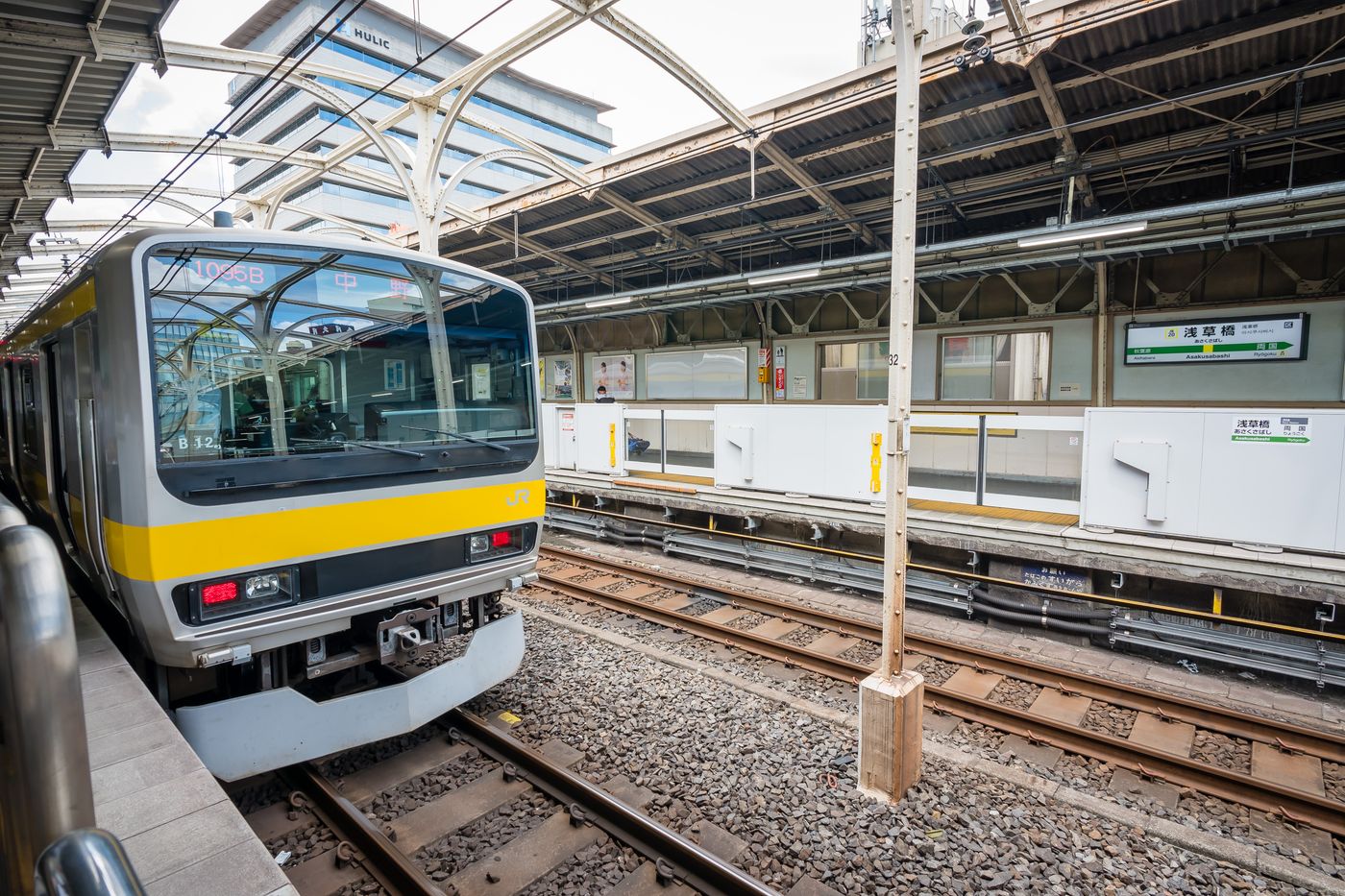
The Keio Line is the fastest and most affordable option.
🚃 From Shinjuku
Keio Line limited/semi-express direct to Takaosanguchi Station — approx. 48 minutes, fare around ¥400.
🚃 From Shibuya / Yokohama
JR Chuo Line to Takao Station, then one stop on the Keio Line to Takaosanguchi. Approximately 60–70 minutes total.
🚂 From Tokyo Station
JR Chuo Line special express to Takao Station, then Keio Line one stop. Approximately 55–65 minutes total.
✦ The moment you step off at Takaosanguchi, the air changes. Mountain cool, green smell, birdsong. 50 minutes from Shinjuku. It never stops feeling surprising.
Trail Guide: Which Route to Take
Trail 1 (Omotesando) — Best for First-Timers ★★☆☆☆
3.8km · ~100 min (ascent) · Paved throughout · Cable car available
The most-used route and the most forgiving. Paved all the way to the summit, with the option of taking a cable car or chairlift to the midpoint (Takaosan Station). The route passes through a cedar forest approach before reaching Yakuoin Temple — making this simultaneously a nature walk and a temple visit. Recommended for travelers who want to see the mountain without committing to difficult terrain.
✦ Cable car: Kiyotaki Station → Takaosan Station, ~6 min · Chairlift: ~12 min · Both available from the trailhead
Trail 4 (Suspension Bridge Route) ★★★☆☆
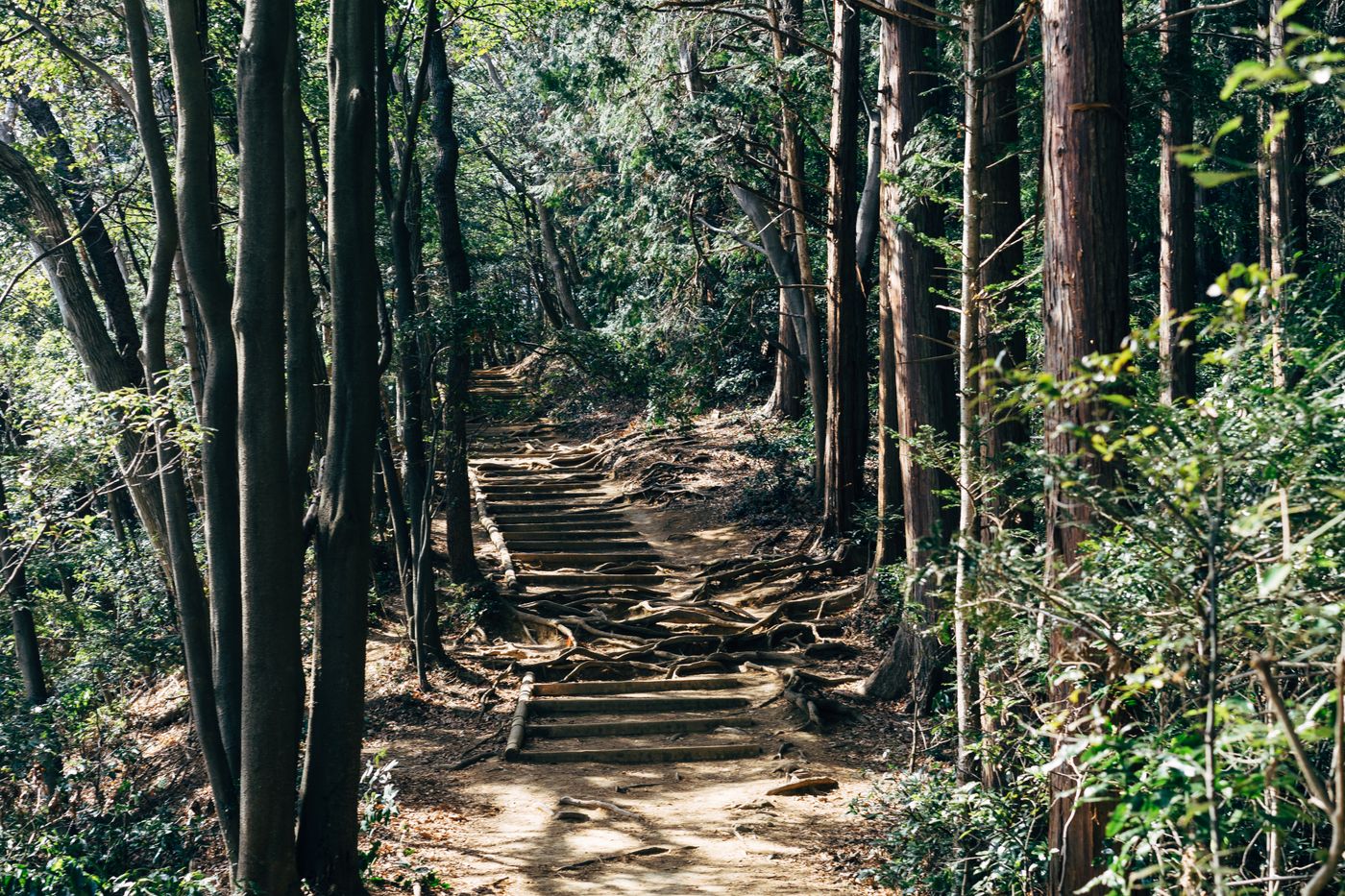
1.5km from cable car summit · ~40 min · Natural forest path
The highlight of Trail 4 is Miyama Bridge — a 37-meter suspension bridge crossing a deep valley. Views down into the gorge below are exhilarating. A higher proportion of the walk is through natural forest than Trail 1, and crowds are thinner. Good choice for travelers wanting more of a hiking feel without significant difficulty.
Trail 6 (Biwa Waterfall Route) ★★★☆☆
3.3km · ~90 min (ascent) · Follows a mountain stream
A route that follows a mountain stream through deep forest, passing Biwa Waterfall — a site historically used for ascetic water training by mountain monks. The coolness of the stream makes this particularly appealing in summer. Note: the final section requires walking directly in the streambed. Waterproof shoes are essential.
Inariyama Trail — For the Physically Confident ★★★★☆
3.1km · ~90 min (ascent) · Steepest gradients
The most demanding route, but rewarded with multiple viewpoints along the way — including views of the Tokyo skyline, Tokyo Skytree, and on clear days, Tokyo Bay. The summit view is the same as other routes, but the journey is more physically engaged.
Yakuoin Temple: Where Mountain Religion Lives
Halfway up Trail 1, Yakuoin Temple (Takaosan Yakuoin Yuki-ji) has stood since 744 AD — making it older than the city of Tokyo by over a millennium. It is one of Japan’s most important centers of Shugendo, the mountain ascetic practice that combines elements of Buddhism, Shinto, and indigenous animism.
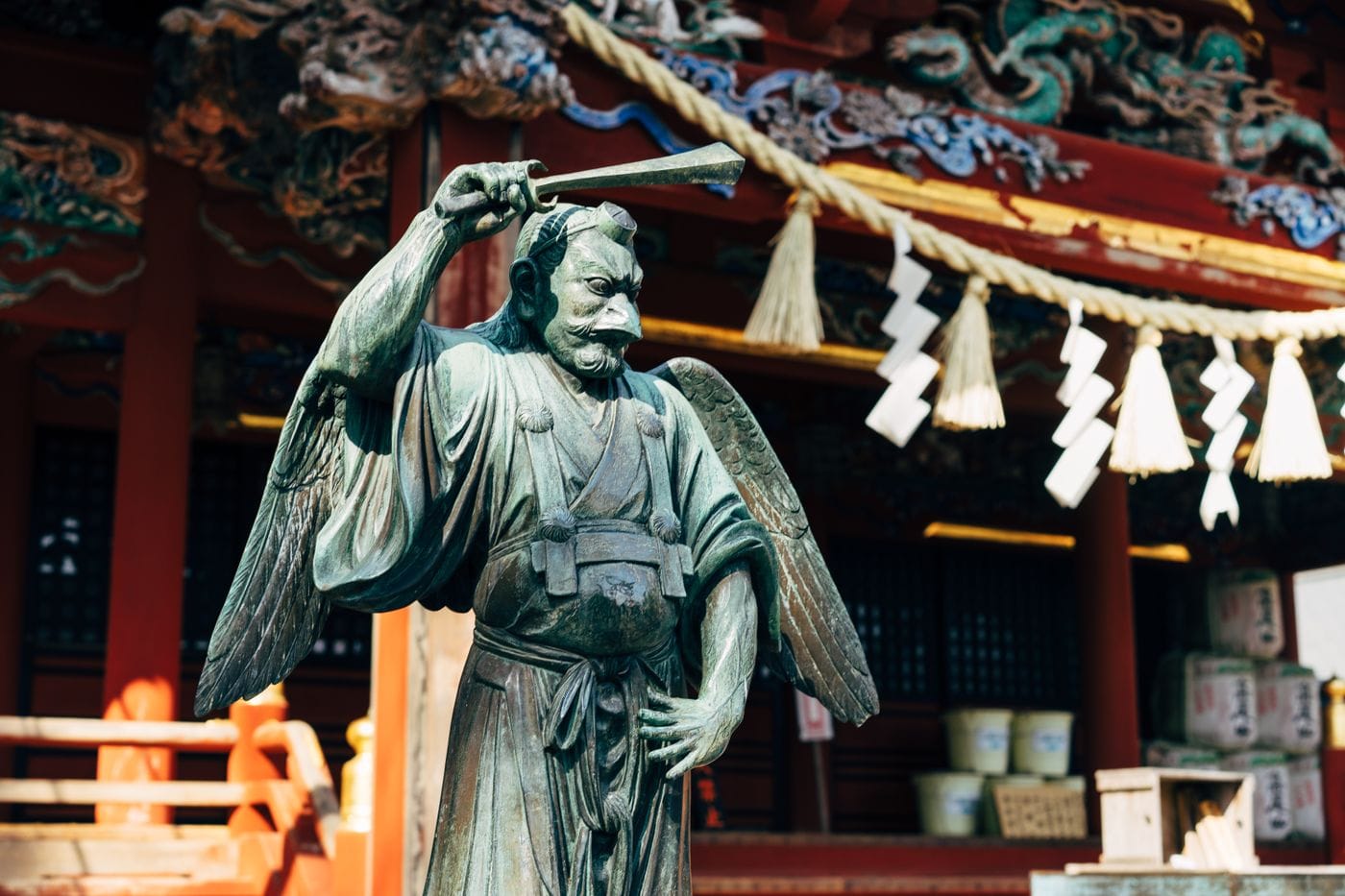
What surprises most foreign visitors is the tengu. These red-faced, long-nosed supernatural beings are the guardian figures of Takao, their images appearing on lanterns, statues, and temple carvings throughout the complex. In Japanese mountain religion, tengu are powerful protectors of the mountain — fierce, unpredictable, and deeply woven into the folklore of this place.
Hi-watari (Fire-Walking Ritual), second Sunday of March: Each spring, mountain monks walk barefoot across burning embers in a ceremony open to public observation — and public participation. One of the most dramatic religious events in the Tokyo region, and fully accessible to foreign visitors.
Summit Views & Seasonal Highlights
The 599-meter summit offers views in two directions that tell the story of Japan at a glance: behind you, the Tokyo skyline recedes into the distance; ahead of you, on clear days, Mount Fuji rises enormous and white above the horizon.
✦ Best Fuji views: December–February, morning, on clear days after cold fronts. The mountain appears at its largest and sharpest in winter light. Dress warmly.
By Season
| Season | Experience |
|---|---|
| Spring (late March–April) | Cherry blossoms on the lower slopes, followed by vivid new-growth green through May |
| Summer (July–August) | Deep green forest canopy; cool stream walking on Trail 6; avoid peak weekend crowds |
| Autumn (November–early December) | ~100,000 maple trees turning red and gold across the entire mountain; evening illumination events |
| Winter (December–February) | Clearest Mount Fuji views; thin crowds; snow possible on upper sections |
Food, Drink & Hot Springs
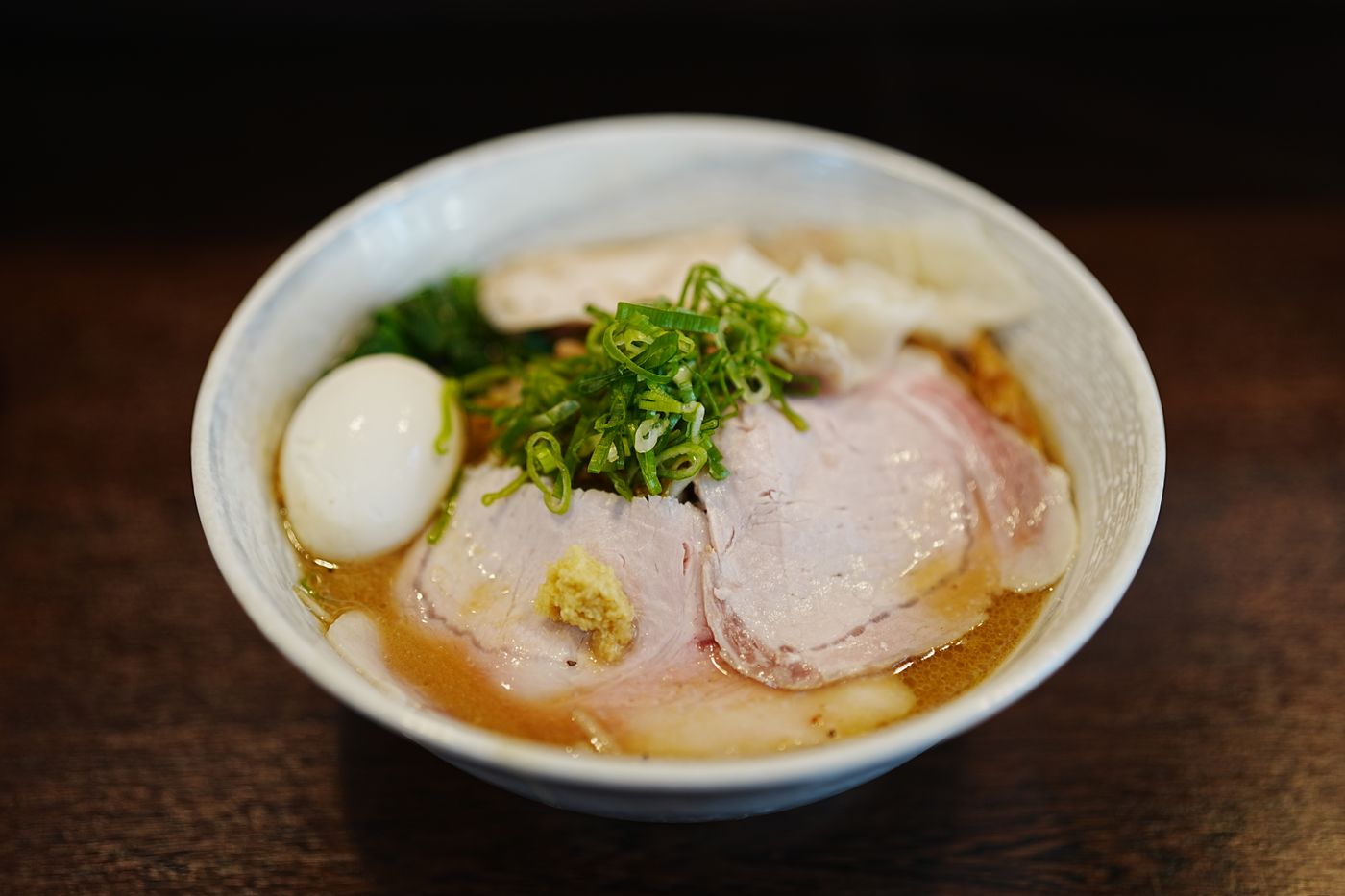
🍜 Tororo Soba (Mountain Yam Noodles)
Takao’s signature food is tororo soba — buckwheat noodles with grated mountain yam poured over them, served hot or cold. The tradition connects to Yakuoin Temple’s vegetarian cooking, where mountain yam was prized for its sustaining qualities. Multiple restaurants along the base approach serve it; eating a bowl after descending is one of those small pleasures that stays in the memory.
🍺 Takao Beer Mount (June–November)
From mid-June to mid-November, an open-air beer garden operates near the summit at 472 meters elevation. Unlimited food and drink for a fixed price, with the Tokyo night panorama spread below. Take the cable car up after 5pm. One of the most unexpectedly memorable evenings available within Tokyo’s city limits.
♨️ Takaosanmiyuki Natural Hot Spring (Gokurakuyu)
Opened in 2015 directly connected to Takaosanguchi Station, this natural hot spring facility is the ideal way to end a Takao day. Open-air baths with views of the mountain slopes, indoor pools, restaurant. Post-descent, the transition from tired legs to hot mineral water is deeply satisfying. Open until 11pm.
Who Should Visit Mount Takao?
✔ First-time Tokyo visitors wanting nature
✔ Families with children
✔ Mount Fuji view seekers (clear winter days)
✔ Autumn foliage travelers
✔ Anyone who needs to breathe
🏨 Planning where to stay?
Every area guide on this site pairs with honest, station-by-station hotel picks. Start here: Tokyo Hotel Guides →