
This article may contain affiliate links. If you book through them, we may earn a small commission at no extra cost to you.
On this page
Introduction: When a Car Opens Japan Up
Japan's public transport system is excellent for traveling between cities and within major urban areas — but approximately 60% of Japan's geography is significantly more accessible by car than by any combination of trains and buses. The rural onsen towns, the mountain driving routes, the Hokkaido summer roads, the Noto Peninsula villages, and the concentrated rural beauty of areas like Shirakawa-go and the Iya Valley are all technically accessible by public transport but dramatically more time-efficient, flexible, and rewarding by car.
Required Documentation
International Driving Permit (IDP): Most foreign licenses require an IDP to drive in Japan — obtain from your home country's automobile association before departure. The 1949 Geneva Convention IDP (not the 1968 Vienna Convention version) is specifically required for Japan.
Exception: Drivers licensed in Switzerland, Germany, France, Monaco, Belgium, and Taiwan can drive in Japan with their domestic license and an official Japanese translation (obtainable from JAF — the Japan Automobile Federation — or the country's embassy or consulate in Japan).
- Your domestic license: Must be presented alongside the IDP at rental pickup.
Driving on the Left
Driving on the left side of the road is the most significant adjustment for visitors from right-hand-traffic countries. The adaptation is manageable — most people find that after 30–60 minutes of driving on Japanese roads the laterality becomes intuitive. Key adjustment points:
The central divider is now on your right: Keep the center line to your right, the road edge to your left — the reverse of right-hand traffic countries.
Turns: Left turns are easy (the "tight" turn analogous to a right turn in left-hand traffic countries); right turns require crossing oncoming traffic.
Narrow roads: Japan's rural roads are frequently genuinely narrow — two-way roads with total width requiring both cars to pull partially onto verges to pass. This surprises visitors expecting road widths equivalent to international standards.
The Expressway (高速道路 / Kōsoku Dōro) System
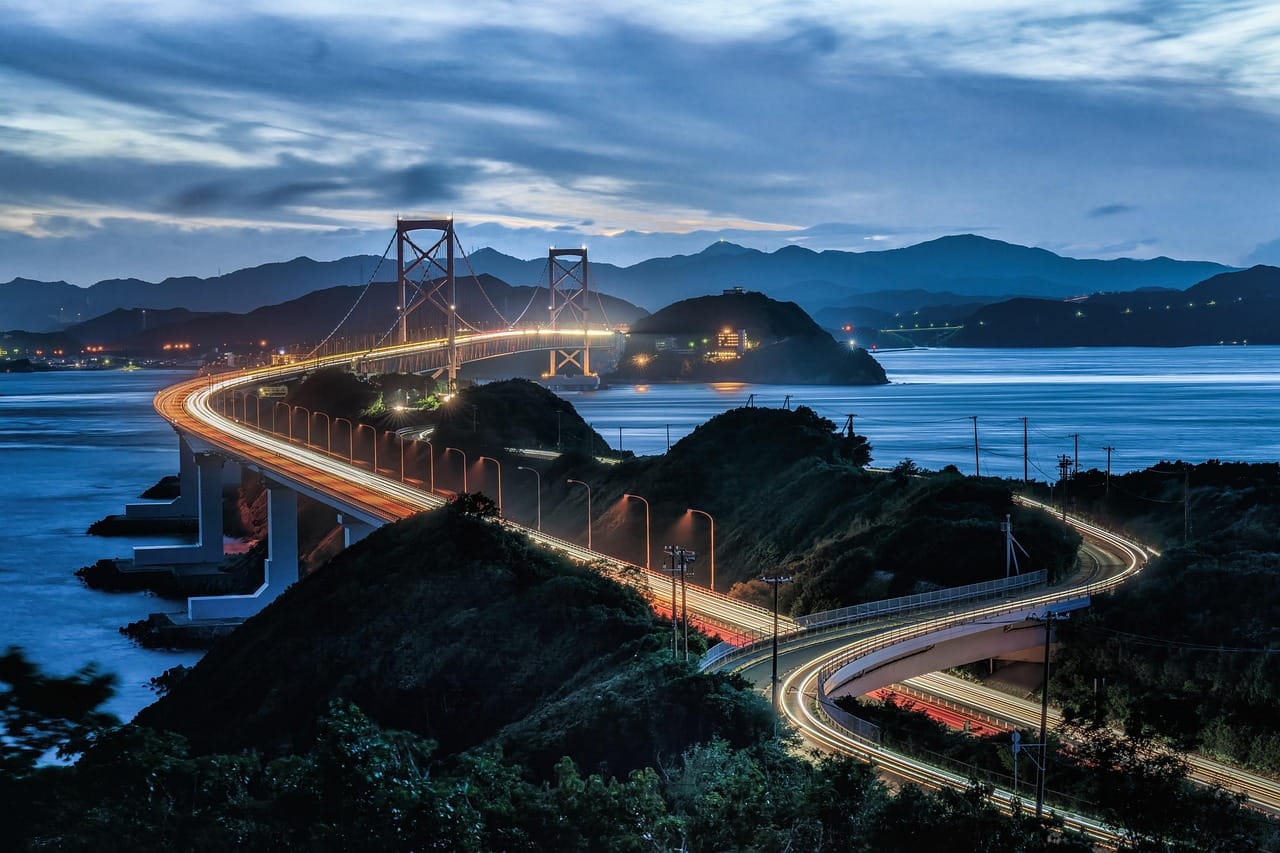
Japan's expressway network is extensive and well-maintained but expensive — tolls on major routes add up quickly:
Example tolls:
Tokyo → Osaka (approximately 550 km): ¥7,000–¥9,000 in tolls
Tokyo → Sapporo: ¥20,000+ in tolls if driving (flight is strongly preferable)
Kyoto → Hiroshima: ¥3,500–¥5,000
ETC (Electronic Toll Collection): The IC card-based toll system that allows passing through toll gates at reduced speed without stopping for cash. ETC cards are available from rental companies at a small daily surcharge — strongly recommended for any significant expressway driving, as cash toll gates have much longer waits and the expressway discount programs (timed driving discounts, package discount passes) are only available with ETC.
ETC Road Passes: Several regional expressway companies offer foreign visitor discount packages — NEXCO's "Japan Expressway Pass (JEP)" provides fixed-price unlimited expressway access for specified periods, significantly reducing toll costs for visitors covering large distances.
Parking
Urban parking: Metered parking is limited in Japanese cities — most visitors use coin-operated parking facilities (コインパーキング / koin pākingu) where a flat gate locks under your car until payment. The system is straightforward but requires cash in most cases.
- Konbini and supermarket parking: Free for customers during shopping; not appropriate for extended parking.
The Navigation System (カーナビ / kā nabi)
Japanese rental cars include GPS navigation systems, typically in Japanese. For English-language navigation:
Google Maps on your phone: Works excellently in Japan for driving navigation — download offline maps for your driving area before starting.
Rental car system with English mode: Most major rental company cars have an English language option in the navigation system — ask the rental staff to confirm.
Address input: Japanese address input on navigation systems typically uses postal codes (郵便番号 / yūbin bangō) rather than street addresses — having the postal code for your destination significantly simplifies navigation input.
🏨 Planning where to stay?
Every area guide on this site pairs with honest, station-by-station hotel picks. Start here: Hotel Guides by Station →