This article may contain affiliate links. If you book through them, we may earn a small commission at no extra cost to you.
On this page
- Introduction: The City That Opened Japan to the World — and Paid the Price
- The History of Nagasaki's Openness: Dejima and the Dutch Connection
- The Chinese Community: Glover Garden, Confucian Shrine, and Chinatown
- Glover Garden (グラバー園) and Meiji Modernization
- The Atomic Bomb: Nagasaki's Second History
- Champon (ちゃんぽん): The Multicultural Noodle
- The Hillside Views: Walking Nagasaki
- Recommended Base Hotels
Introduction: The City That Opened Japan to the World — and Paid the Price
Nagasaki (長崎) has two claims to world historical significance that could not be more different in character. The first: for over 200 years of Japan's closed-country period (1641–1853), Nagasaki was the only port in Japan open to foreign trade — the single aperture through which Western science, medicine, art, and ideas entered Japan when every other port was sealed. The second: on August 9, 1945 — three days after Hiroshima — the United States dropped the second atomic bomb on Nagasaki, killing an estimated 40,000 people instantly and 60,000–80,000 by the end of 1945.
These two facts — one of extraordinary openness, one of extraordinary destruction — are both woven into the physical fabric of a city that has been rebuilt and continues to carry its history with a dignity and complexity that, like Hiroshima, repays serious attention.
But Nagasaki is not only its history. It is a hillside city of considerable physical beauty, with views over its harbor that recall the Mediterranean more than most Japanese cities, a food culture that is the most distinctly multicultural in Japan, and a residential character — small, hilly, dense with personal scale — that makes it one of the most pleasant cities in the country to simply walk through.
The History of Nagasaki's Openness: Dejima and the Dutch Connection
In 1641, the Tokugawa shogunate completed its policy of sakoku (鎖国 / closed country) by expelling the Portuguese and confining the remaining Dutch traders to an artificial island in Nagasaki harbor called Dejima (出島). For the next 212 years, Dejima was the only point of official contact between Japan and the Western world.
The Dutch East India Company maintained a trading post on this small fan-shaped island (approximately 190 meters by 70 meters), and through this tiny aperture flowed the goods and knowledge that kept Japan connected — however tenuously — to the world it had otherwise sealed itself from. Rangaku (蘭学 / "Dutch learning") — the body of Western science, medicine, and technology absorbed through the Dutch connection — was transmitted from Dejima through Japanese scholars to the wider intellectual culture, influencing everything from anatomy to astronomy.
Dejima (出島): The reconstructed trading post — the island was absorbed into the surrounding land through later reclamation but has been partially recreated as a historical park — is one of Nagasaki's most important sites. The buildings (warehouse, trading house, officials' quarters) are meticulously reconstructed and furnished to the period, and the English-language explanations are among the best in Japan for international visitors.
The Chinese Community: Glover Garden, Confucian Shrine, and Chinatown
Nagasaki's multicultural heritage extends beyond the Dutch. The Chinese community in Nagasaki is among Japan's oldest and most significant — Chinese merchants arrived in Nagasaki during the same Edo period, living in a designated Tang People's Residence (唐人屋敷 / Tōjin Yashiki) near the harbor.
Nagasaki Chinatown (新地中華街): Japan's oldest Chinatown — smaller than Yokohama's but historically earlier, dating to the 17th century. The four-gate entrance arches and the concentration of Chinese restaurants in the central streets are the most visible expression of the Chinese presence.
Sofuku-ji (崇福寺): A Chinese Zen Buddhist temple built in 1629 by Chinese residents — the most architecturally pure example of Chinese Buddhist architecture in Japan, with the distinctive curved rooflines and gate structures of southern Chinese temple design entirely intact. Designated a National Treasure.
Kōfuku-ji (興福寺): Japan's oldest Obaku Zen temple, established in 1624 by a Chinese monk. The temple's main hall and gate are designated Important Cultural Properties.
Glover Garden (グラバー園) and Meiji Modernization
On the hillside above the harbor, Glover Garden preserves the Western-style residences built by foreign merchants during Nagasaki's Meiji-period international trading boom. The most famous is Glover House (グラバー邸) — the residence of Scottish merchant Thomas Blake Glover (1838–1911), who played an instrumental role in Japan's Meiji-period modernization: he imported Japan's first steam locomotive, established the first Western-style shipyard, and provided financial and logistical support to the Satsuma and Choshu domains that drove the Meiji Restoration.
Puccini Connection: Glover's story — a Western merchant in Nagasaki with a Japanese wife — is popularly linked to the opera "Madama Butterfly" (蝶々夫人), and the garden's hillside setting was used as a filming location for multiple productions of the opera. The Puccini connection is prominently featured in the garden's presentation.
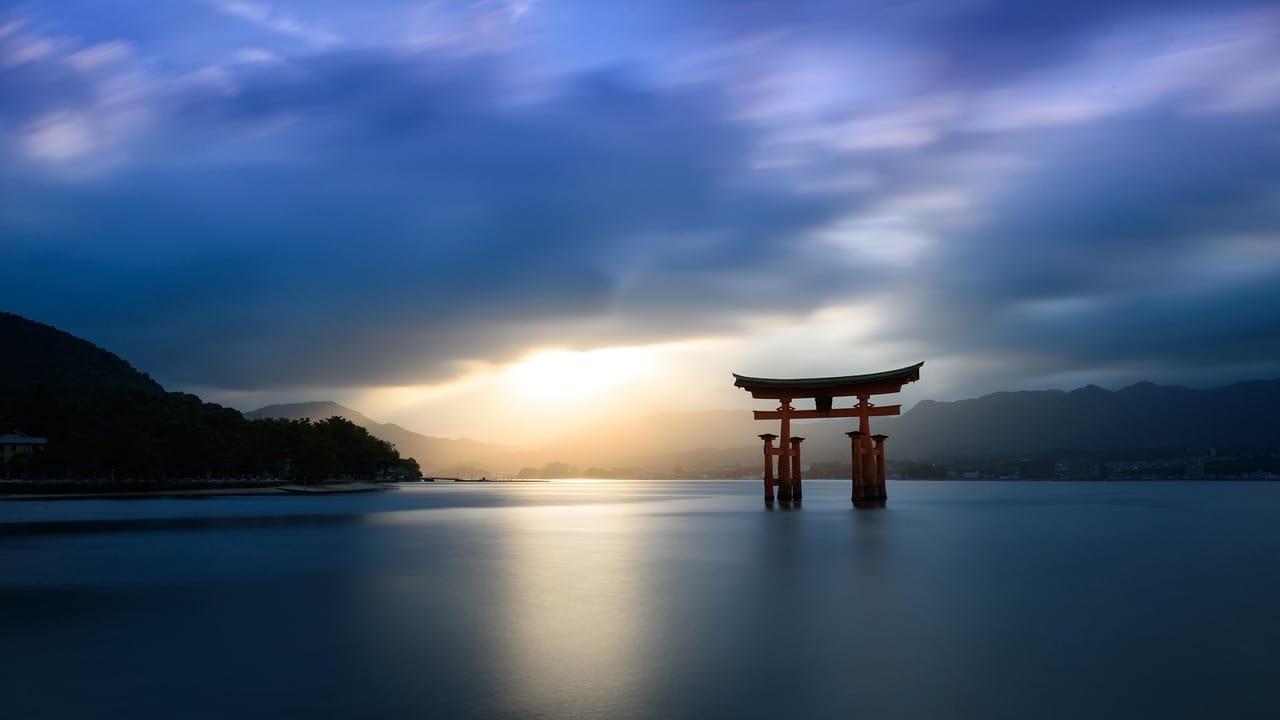
The view from Glover Garden: The garden's hillside position provides one of the finest harbor views in Japan — the harbor basin enclosed by hills on three sides, the Urakami River visible in the distance, and the constant movement of ships in one of Japan's most active ports. The view in the early morning, before tourist groups arrive, is extraordinary.
The Atomic Bomb: Nagasaki's Second History
The Nagasaki Atomic Bomb Museum (長崎原爆資料館) and the Nagasaki Peace Park (長崎平和公園) are approached with the same seriousness as Hiroshima's equivalent — and they deserve it. The circumstances of Nagasaki's bombing differ from Hiroshima's in ways that the museum addresses honestly: Nagasaki was not the primary target (Kokura was, but cloud cover diverted the mission), the bomb used was a different design (plutonium implosion rather than uranium gun-type), and the surrounding hills contained the blast in ways that simultaneously made the total destruction area smaller than Hiroshima and concentrated the damage more intensely.
The Hypocenter Park (爆心地公園): The precise point above which the bomb detonated (500 meters altitude) is marked by a simple black stone column in a small park — the most stripped-down and most powerful memorial in Nagasaki. Standing at this point, knowing what happened here, requires no elaborate presentation.
Urakami Cathedral (浦上天主堂): Rebuilt after the bombing on the site of the original, the cathedral — which had been the center of Nagasaki's long-persecuted Catholic community — was crowded with worshippers at confession ahead of the Feast of the Assumption at the moment of detonation — the two priests and dozens of parishioners inside died instantly. The rebuilt cathedral (1959) incorporates stones from the original building, and the juxtaposition of the rebuilt structure with the photographs of what stood here before is one of Nagasaki's most affecting memorial experiences.
Champon (ちゃんぽん): The Multicultural Noodle
Champon — Nagasaki's defining food — is a direct product of the city's multicultural history. Created in the late 19th century by Chen Pingshun (陳平順), the Fujianese Chinese founder of the restaurant Shikairou (四海楼), champon was designed as an affordable, nutritious meal for Chinese students in Nagasaki. The name derives from a Fujianese phrase meaning roughly "have you eaten?"
Champon is not ramen — it is its own category. The noodles are thicker and softer, the broth is a milky white pork-and-chicken combination seasoned with lard, and the toppings — stir-fried vegetables, seafood, and pork, cooked together with the broth in a process unique to champon — are piled generously over everything. The cooking method (ingredients are stir-fried, then broth is added, then noodles are cooked in the same pan) gives champon a unified flavor that bowl-assembled dishes cannot achieve.
Shikairou (四海楼): The restaurant that invented champon is still operating in Nagasaki — on the same hillside location above Nagasaki Harbor, in a modern building that replaced the original. The champon here is the original, and a visit carries the weight of being at the place where an entirely new food was created.
Sara Udon (皿うどん): Champon's companion dish — the same ingredients but served over crispy fried noodles (or soft champon noodles) rather than in broth. The crispy version, where the sauce from the stir-fried toppings softens the noodles gradually as you eat, is particularly satisfying.
The Hillside Views: Walking Nagasaki
Nagasaki's topography — built on steep hillsides around a harbor basin — creates urban walking that is more vertically dramatic than almost any other Japanese city. The Dutch Slopes (オランダ坂) — stone-paved hillside lanes in the Higashiyamate district — and the network of steps connecting the harbor to the residential hillsides above provide walking routes of considerable visual interest.
Inasayama (稲佐山): The most acclaimed night view in Nagasaki — from the summit (333 meters, accessible by ropeway), the city and harbor spread out below in a configuration that has been selected as one of Japan's three great night views. The enclosed harbor, the city lights reflected in the water, and the surrounding hills create a composition uniquely suited to night photography.
Recommended Base Hotels
- ANA Crowne Plaza Nagasaki Gloverhill (Mid-range / from ¥15,000): Adjacent to Glover Garden, harbor views.
- Hotel Monterey Nagasaki (Mid-range / from ¥13,000): Meiji-era European theme, central location.
- Nagasaki Marriott Hotel (Luxury / from ¥28,000): Newest luxury option, directly above Nagasaki Station.
Planning where to stay in Kyushu & Okinawa? Browse our honest hotel picks and area guides.
🏨 Planning where to stay?
Every area guide on this site pairs with honest, station-by-station hotel picks. Start here: Nagasaki Hotel Guides →