This article may contain affiliate links. If you book through them, we may earn a small commission at no extra cost to you.
Japan Pilgrimage Guide · Kumano Kodo
Kumano Kodo: Walk Japan’s Ancient
UNESCO World Heritage Forest Trail
The Only Pilgrimage Path Sharing UNESCO Status with the Camino de Santiago
🌲 1,000-year-old cedar forest trail
⛩️ Three grand shrines (Kumano Sanzan)
🌊 133m Nachi Waterfall — Japan’s tallest
🗺️ Kumano Passport for dual Camino certification
On this page
The Forest That Has Been Sacred for a Thousand Years
Deep in the Kii Peninsula, south of Osaka and Kyoto, a network of ancient pilgrimage trails winds through primeval cedar forests, past rushing rivers and moss-covered stone lanterns, toward three sacred shrines known collectively as the Kumano Sanzan (熊野三山). These trails are the Kumano Kodō (熊野古道) — “the ancient roads of Kumano” — and they have been walked by pilgrims for over 1,000 years.
In 2004, the Kumano Kodō became the only pilgrimage route in the world — alongside the Camino de Santiago in Spain — to be jointly recognized as a UNESCO World Heritage Site.
| Location | Wakayama, Mie & Nara Prefectures (Kii Peninsula) |
| Most popular trail | Nakahechi (中辺路) — recommended for first-time visitors |
| Nakahechi distance | ~70 km full route |
| Walking time | 4–6 days (Nakahechi) |
| Three sacred shrines | Kumano Hongū Taisha · Nachi Taisha · Hayatama Taisha |
| Best seasons | Spring (April–May) and Autumn (October–November) |
| Nearest city | Osaka (~2.5–3 hrs by bus/train) |
The Kumano Sanzan: Three Sacred Shrines
⛩️ Kumano Hongū Taisha
The most important of the three shrines. The enormous Ōyunohara torii gate (33.9m — the largest in Japan) marks the original site destroyed by flood in 1889. Walking through the forest to this gate, particularly in morning mist, is an experience of extraordinary atmospheric power.
🌊 Kumano Nachi Taisha
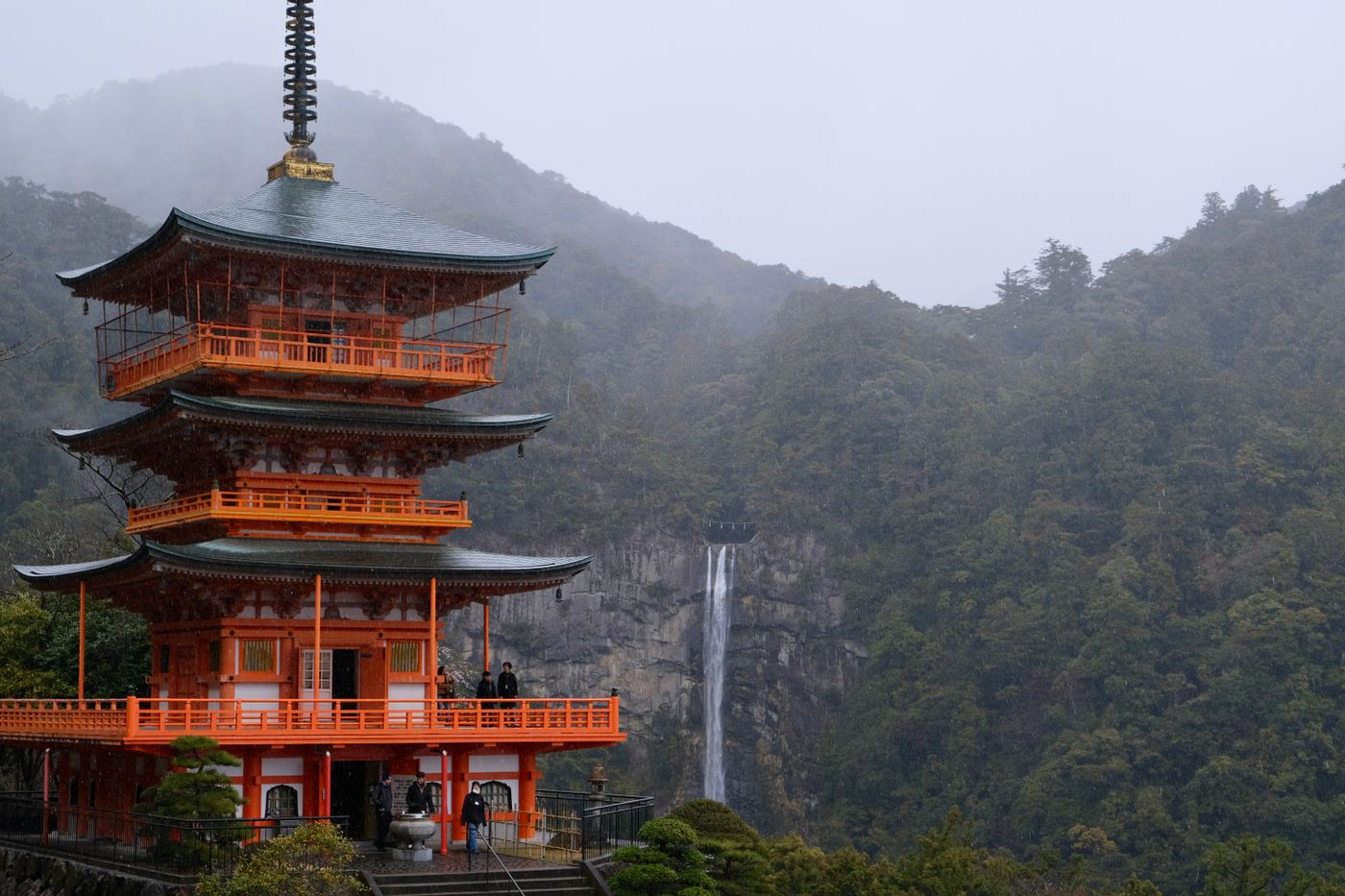
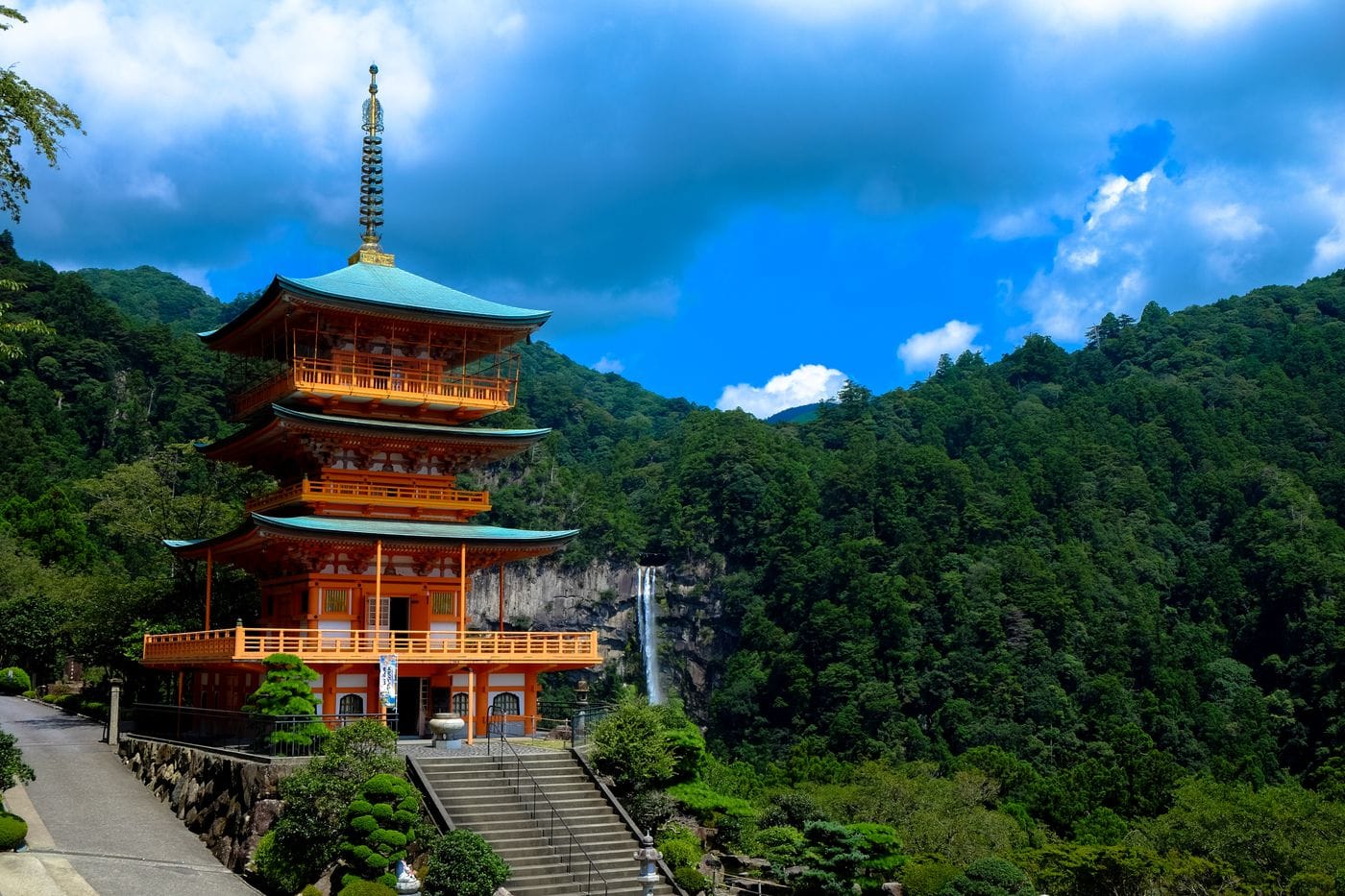
The most dramatically positioned shrine — above Nachi-no-Otaki, Japan’s tallest single-drop waterfall (133m). The view of the three-story pagoda with the waterfall behind it is one of the most iconic images in Japanese photography. The waterfall is itself considered a divine manifestation.
🌿 Kumano Hayatama Taisha
In the coastal city of Shingu at the Kumano River’s mouth — the most accessible of the three shrines. Contains some of the oldest sacred trees in Japan, including a nagi tree said to be 1,000 years old.
The Nakahechi Trail: Day-by-Day
Day 1: Takijiri-ōji → Chikatsuyu (~13km, 5–6 hrs)
Ancient stone paving begins almost immediately after the ritual entry point. The forest is extraordinary — ancient cedars draped in moss, shafts of light through the canopy. Carry 2L of water minimum; trekking poles strongly recommended for steep descents.
Day 2: Chikatsuyu → Tsugizakura-ōji (~11km, 4–5 hrs)
Ridge trail through the most atmospheric forest on the route. Long sections of original stone paving intact. The Tsugizakura-ōji cedar grove contains trees said to be 800+ years old.
Day 3: Tsugizakura-ōji → Kumano Hongū Taisha (~11km, 4–5 hrs)
The final approach descends through forest to the valley floor. The first view of the shrine’s torii gate through the trees carries an emotional weight that many pilgrims find difficult to describe.
Essential Kit
Footwear: Proper hiking boots — the stone-paved sections are treacherously slippery when wet. Rain gear: Non-negotiable — the Kii Peninsula receives some of Japan’s highest rainfall. Trekking poles: Strongly recommended for steep stone descents. Kumano Kodō Passport: Available at the Kumano Travel Visitor Center in Tanabe — those who’ve also walked the Camino de Santiago can complete a joint dual certification.
Getting There
From Osaka: JR Kuroshio express to Kii-Tanabe (~2 hrs), then local bus to Takijiri-ōji (~1 hr). Total ~3 hrs. The Kumano Travel Visitor Center in Tanabe has English-speaking staff and can assist with route planning and accommodation booking.
Hotels
Near trailhead (Tanabe/Shirahama): Hotel Seamore (Mid-Range / from approx. ¥15,000 ~$100 USD). For the Nachi Taisha end, base yourself in Kii-Katsuura — the onsen port town nearest the falls, with traditional hot-spring ryokan around the bay (from approx. ¥18,000 ~$120 USD).
Kōya-san: Shukubō Eko-in (from approx. ¥15,000 ~$100 USD) · Shukubō Fukuchi-in (from approx. ¥18,000 ~$120 USD) — renowned garden and outdoor stone hot spring bath.
All prices approximate; last checked July 17, 2026.
Who Should Walk the Kumano Kodo
✔ Camino de Santiago veterans (dual UNESCO certification)
✔ Forest & ancient landscape seekers
✔ Travelers wanting 4–6 days of dedicated walking
✔ Anyone who wants to feel 1,000 years of history underfoot
🏨 Planning where to stay?
Every area guide on this site pairs with honest, station-by-station hotel picks. Start here: Wakayama Hotel Guides →