This article may contain affiliate links. If you book through them, we may earn a small commission at no extra cost to you.
Souvenir Guide · Kitchenware & Ceramics
Japanese Pottery Souvenirs —
Which Style to Buy: Arita, Mashiko, Kutani, Mino or Bizen
Reading the Styles · Price Reality · Where the Kilns Are · Packing Ceramics
On this page
Five Styles, Five Personalities
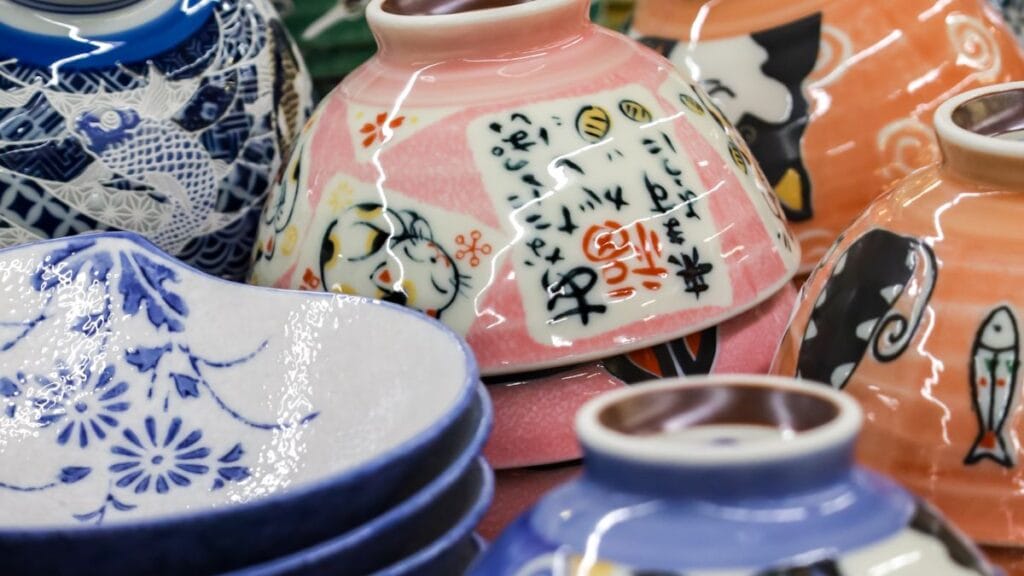
Japanese pottery isn’t one tradition but dozens — each kiln town with its own clay, glaze and temperament. You don’t need a ceramics degree to buy well; you need a feel for the big five and an honest sense of how you’ll actually use the piece.
🏺 Arita / Imari (Saga) — The Porcelain Aristocrat
Japan’s first porcelain (1616): white, fine, painted in cobalt and overglaze reds and golds. Formal, durable, dishwasher-brave in its modern lines. The style for people who want “beautiful plates,” full stop.
🌾 Mashiko (Tochigi) — The Folk-Craft Heart
Thick, warm, brown-and-persimmon glazed stoneware — the mingei (folk craft) aesthetic Hamada Shoji made world-famous. Mugs and plates that make weekday breakfasts feel intentional. The town is an easy trip from Utsunomiya.
🎨 Kutani (Ishikawa) — The Maximalist
Bold five-color overpainting — greens, purples, golds — from Kanazawa’s orbit. Statement pieces and sake sets with drama; our Kutani deep-dive covers the history.
🍵 Mino (Gifu) — The Everyday Genius
Half of Japan’s tableware comes from Mino — including the rustic white Shino and green Oribe glazes beloved by tea people. Superb value: real craft at daily-use prices.
🔥 Bizen (Okayama) — The Unglazed Ancient
No glaze, no paint — just clay, wood-fire and ash effects over 1,000 years of continuous tradition. Earthy, masculine, one-of-a-kind by nature. Beer tastes measurably better from a Bizen cup; this is settled science in Okayama.
Buying Reality
Prices: honest daily-use pieces run ¥1,000 (approx. $7)–3,000; named-artist work starts around ¥10,000 (approx. $67) and climbs. Where: kiln towns beat city galleries on price and story; department-store craft floors beat both on curation. Flea markets (Toji and Kitano Tenmangu in Kyoto) yield vintage bargains for early risers. Packing: shops bubble-wrap expertly — ask for omiyage-you packing — then center the box in your suitcase inside clothing. Or have larger purchases shipped: kiln-town shops do international EMS routinely.
Keep exploring
🏨 Planning where to stay?
Every area guide on this site pairs with honest, station-by-station hotel picks. Start here: Saga Hotel Guides →