This article may contain affiliate links. If you book through them, we may earn a small commission at no extra cost to you.
Shiga Hotel Guides · Kusatsu Station (Shiga)
Best Hotels Near Kusatsu Station: Where the Tokaido Met
the Nakasendo
JR Biwako/Kusatsu Lines · The Two Great Roads’ Junction · Kusatsu-juku Honjin · Kyoto ~20 min
🏘️ The grandest surviving honjin — daimyo lodgings, 268 tatami of Edo protocol
🚩 Tokaido × Nakasendo — the junction stone still marks the meeting
🚆 New rapid to Kyoto ~20 min, Osaka ~50 min — at Shiga rates
🌿 Lake Biwa Museum’s aquarium-of-the-lake on the Karasuma peninsula
On this page
What Kind of Area is Kusatsu? A Local’s Honest Take
First, the disambiguation this station endures daily: this is Shiga’s Kusatsu, not the Gunma onsen — and it needs no apology, because in Edo Japan this crossroads outranked most cities. Here the Tokaido and Nakasendo, the two great roads binding Edo to Kyoto, merged for their final run — the junction marker still stands — and every daimyo procession slept at Kusatsu-juku’s honjin, whose 1635 successor survives as Japan’s largest intact post inn: 268 tatami of ranked chambers, the lacquered daimyo bath, arrival boards naming Hikone lords and Dutch missions. It is the single best place in Japan to feel how the roads actually worked, and it is nearly empty.
Modern Kusatsu is Shiga’s boomtown — university crowds, station towers, an eating arcade with real energy — whose traveler math sings: new rapids reach Kyoto in ~20 minutes and Osaka in ~50, at hotel rates Kyoto abandoned years ago. Add the Lake Biwa Museum on the Karasuma peninsula — freshwater aquarium tunnels, giant catfish, the lake’s whole deep story — and the lotus-fringed Mizunomori garden beside it, and Kusatsu earns nights, not just transfers.
The strategist’s Kansai: sleep here, hit Kyoto’s temples at opening before the tour waves, return to honjin quiet and arcade izakaya at night. You save enough per night for one extra kaiseki — and the Edo roads throw in their greatest inn for ¥240 (approx. $1.6).
Getting Around from Kusatsu
🚆 Rail
Biwako line new rapids: Kyoto ~20 min, Osaka ~50 min; Kusatsu line branches toward Shigaraki (tanuki pottery) and Iga country.
🚌 Local
Buses reach the Lake Biwa Museum (~25 min); the honjin and old Tokaido lane are a 10-minute walk.
🚲 The lake
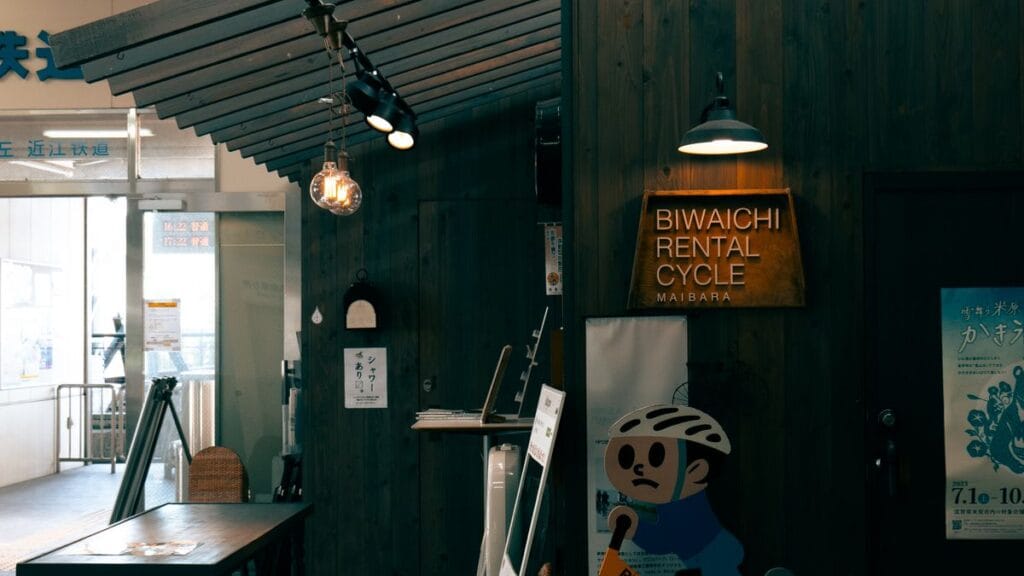
Biwako cycling road access and the Karasuma lotus shores — rentals at the station side.
What to See Around Kusatsu
🏘️ The honjin & the junction
Daimyo chambers, the meeting-stone, and the old road’s shop lanes — Edo logistics made walkable.
🐟 Lake Biwa Museum
The lake’s four-million-year biography — tunnels of endemic fish, reconstructed lakeside life, world-class and family-perfect.
🎺 Shigaraki, up the branch
The tanuki-statue pottery village and Miho Museum’s mountain sanctuary — Shiga’s craft day trip starts on Kusatsu’s platform 3.
Where Should You Actually Stay?
Boomtown stock — the deepest hotel bench on the lake’s south shore.
🏨 Station towers: Full-service and chain cluster at both exits.
🚆 Strategy: This is the Kyoto-commuter base — book ahead in foliage and blossom weeks.
Recommended hotels
- Kusatsu Estopia Hotel — the polished local full-service pick by the east exit.
- Boston Plaza Kusatsu — the station-front standby with generous rooms.
- Chain business hotels ringing both exits — deep, dependable Kyoto-commuter value.
Overall Rating: Kusatsu Area
| Category | Rating | Notes |
|---|---|---|
| Transport Access | ★★★★★ | Kyoto 20 min; two-line junction |
| Around the Station | ★★★★☆ | Lively arcades, tower malls |
| Food & Sights | ★★★★☆ | The honjin + lake museum anchor it |
| Hotel Choice | ★★★★☆ | South-shore’s deepest bench |
| Charm & Atmosphere | ★★★★☆ | Road-history bones, student energy |
Who Should Stay Here?
✔ Kyoto strategists banking the rate difference
✔ Edo-road and history walkers
✔ Families — the lake museum is a full joyous day
✔ Shigaraki and Miho day-trippers