This article may contain affiliate links. If you book through them, we may earn a small commission at no extra cost to you.
On this page
Introduction: Tokyo's Onsen Hinterland
Within 3 hours of Tokyo by train, a remarkable concentration of hot spring towns exists — the result of Japan's volcanic geology producing geothermal activity throughout the mountain chains of the Kantō hinterland. The Nikko, Nasu, Gunma, and Izu ranges collectively contain dozens of onsen towns, each with distinct spring chemistry, different accommodation character, and different landscape settings.
The three most significant within day-trip or easy overnight range:
Nikko Yumoto (日光湯元): Wilderness Onsen
Nikko Yumoto — at 1,478 meters elevation in the mountains above Chūzenji Lake, approximately 3.5 hours from Tokyo — is the remotest and most atmospheric of the major Tochigi onsen destinations. The small cluster of ryokan at the edge of the Senjogahara Wetlands (戦場ヶ原) operates as a genuine mountain hot spring village rather than a resort.
The spring: Strongly sulfurous — the smell of sulfur is immediately perceptible on arrival, the water milky white from dissolved minerals. The chemistry is considered particularly effective for skin conditions and muscle pain.
The landscape: The wetlands and the surrounding Nikko National Park mountains create a setting that shifts dramatically through the seasons. In autumn (October), the Senjogahara wetlands turn russet and gold — one of the finest wetland autumn landscapes in the Kantō region.
Access from Tokyo: Tobu or JR to Nikko (~2 hrs) + bus to Yumoto (~1.5 hrs): approximately 3.5 hours in total. Best combined with Tōshō-gū and Kegon Falls (see dedicated Nikko article).
Kusatsu Onsen (草津温泉): Japan's Most Famous Spring
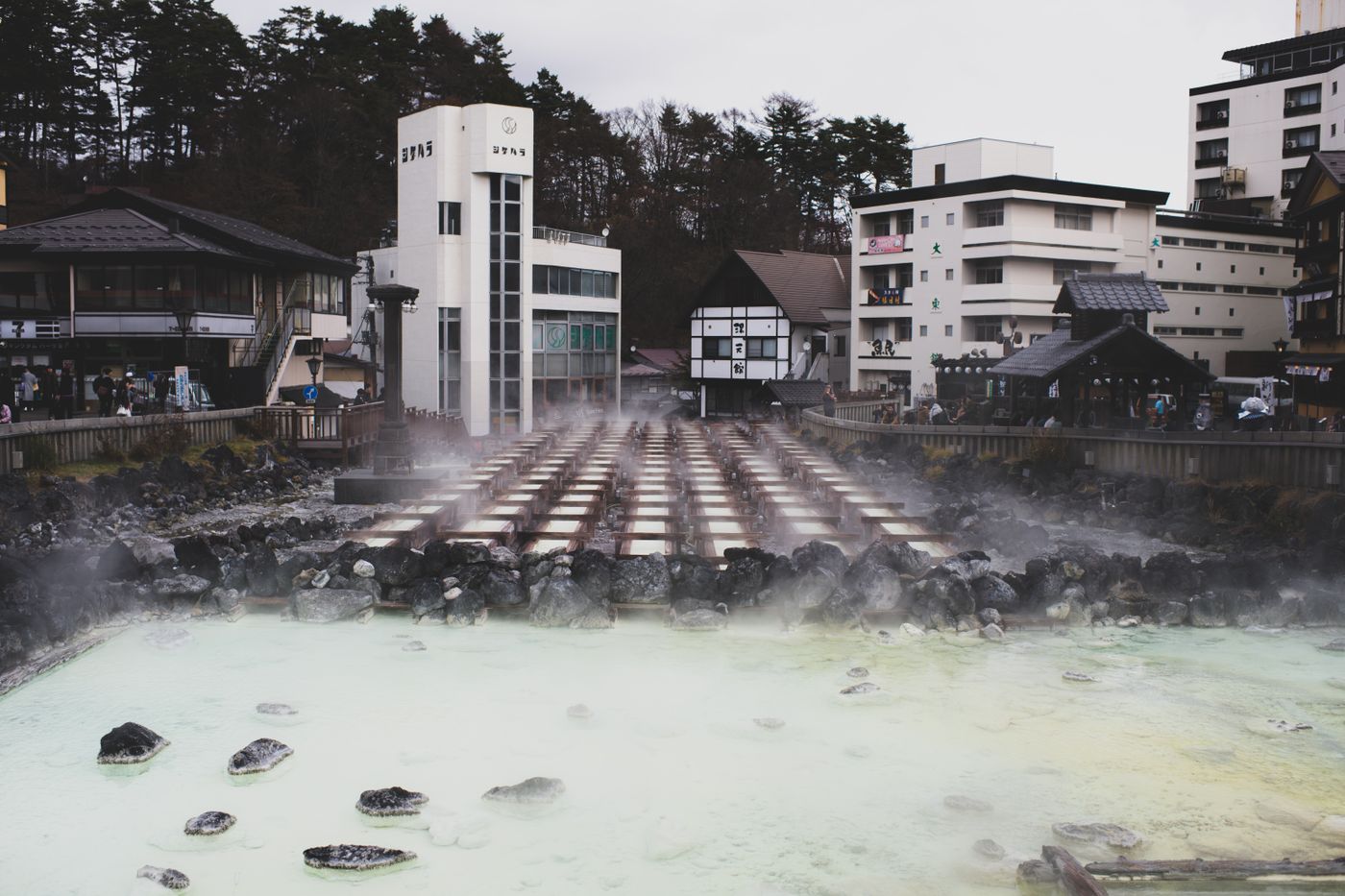
Kusatsu — in the mountains of Gunma Prefecture, approximately 3 hours from Tokyo by direct highway bus — is consistently rated Japan's No. 1 onsen in domestic surveys and has maintained this designation for multiple consecutive years. The claim is based on spring volume (over 32,000 liters per minute from the main Yubatake / 湯畑 source), spring quality (the specific pH of 2.1 makes Kusatsu one of Japan's most strongly acidic springs), and the town's physical character.
The Yubatake (湯畑): The hot spring flower field at the center of Kusatsu town — where steaming spring water flows through wooden channels across a broad public space — is the most visually distinctive single onsen infrastructure in Japan. The wooden channels reduce the temperature of the spring (which emerges at up to 95°C) to bathing temperature through natural cooling, and the steam rising from the wood-filtered water creates the central visual element of the town.
The Yumomi (湯もみ): Kusatsu's traditional cooling technique — long wooden boards used to paddle the hot spring water, reducing its temperature while maintaining chemical integrity — is performed as a demonstration at the Netsunoyu (熱の湯) public bath facility (¥600, including demonstration).
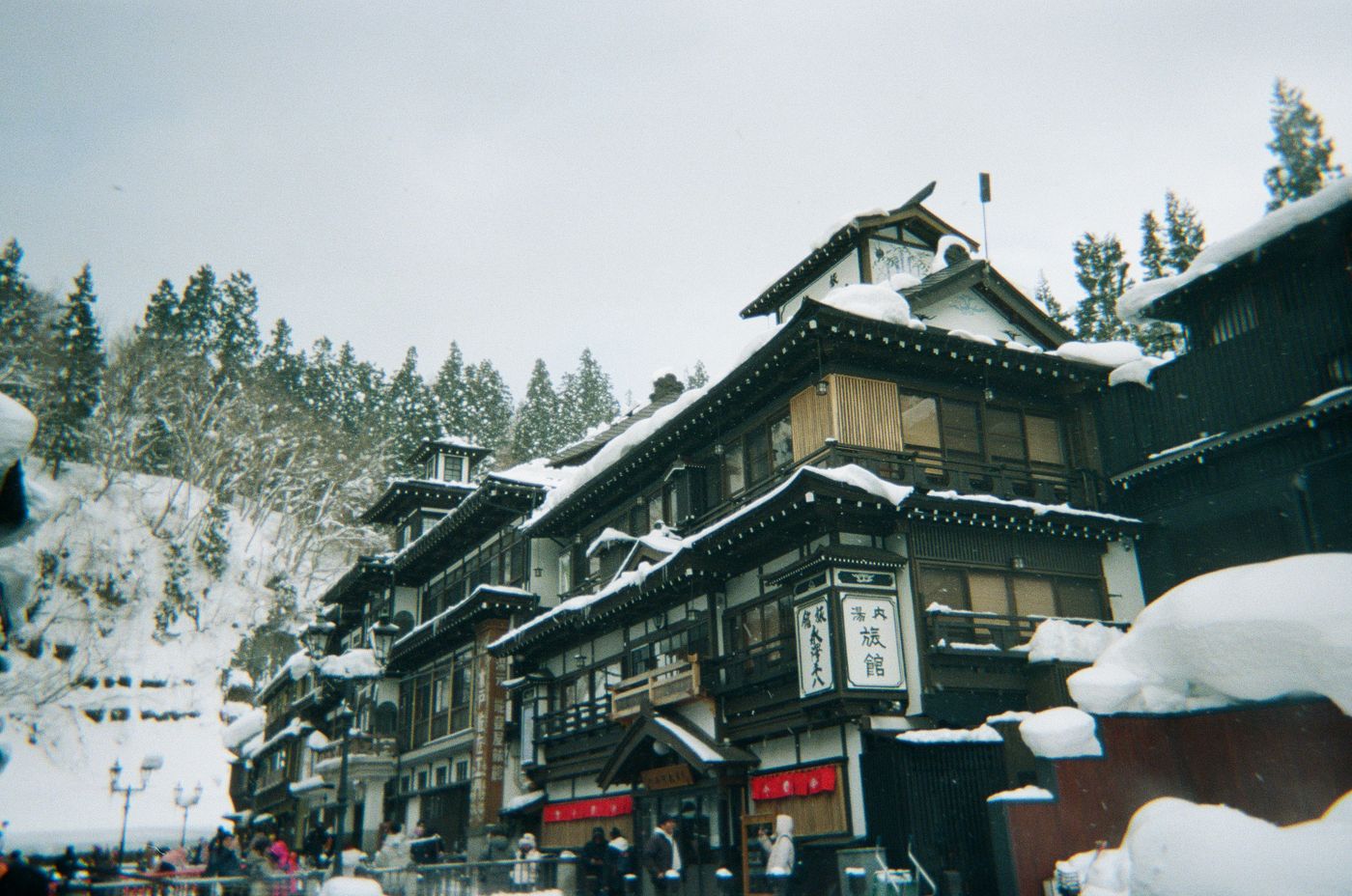
The spring chemistry: Kusatsu's pH 2.1 sulfurous spring is one of the most medicinally potent in Japan — historically considered capable of treating almost any condition except "lovesickness" (koi no yamai / 恋の病), which the local saying exempts from the spring's powers. The acidity means that copper, silver, and jewelry should not be worn in the bath — the spring will tarnish them quickly.
Access: Direct highway bus from Shinjuku: approximately 4 hours. Or JR Shinkansen to Karuizawa + connecting bus: approximately 2.5 hours.
Ikaho Onsen (伊香保温泉): The Stepped Town
Ikaho — a hot spring town in the hills above Shibukawa in Gunma Prefecture — is distinctive for its 365-step stone staircase (石段街 / Ishidan-gai) that forms the main commercial street of the town, ascending the hillside with small shops, inns, and traditional facilities on both sides. The step count (365, for the days of the year) is deliberate, and the physical experience of climbing from the base to the shrine at the top while the town unfolds on both sides is specific to Ikaho.
Two spring types: Ikaho unusually offers two distinct spring water types:
Golden spring (黄金の湯 / Kogane-no-yu): The original Ikaho spring — a brownish, iron-rich water that stains bathtubs and fabrics but is considered particularly effective for women's health conditions. The iron content produces the water's characteristic color.
White spring (白銀の湯 / Shirogane-no-yu): A more recently developed source — clear, simple alkaline water available at newer facilities.
The atmosphere: Ikaho has a Meiji-era resort character — the town developed as a popular getaway for Tokyo's intellectual and artistic community in the late 19th century, and several novelists and painters' connections to the town are memorialized. Tokutomi Roka (徳冨蘆花) and Tayama Katai (田山花袋) both wrote about Ikaho, giving the town a literary dimension supplementing its physical charm.
- Access from Tokyo: JR Joetsu Shinkansen to Takasaki + local bus: approximately 2 hours.
Comparison Table
Recommended Base Hotels
Nikko Yumoto
Yumori Kamaya (湯守釜屋) (Mid-range / from ¥18,000 per person): Historic sulfur-spring ryokan in the Yumoto village, genuine mountain character.
Kusatsu
Kusatsu Onsen Hotel Ichii (一井) (Mid-range / from ¥22,000 per person): Yubatake view, excellent spring facilities.
- Naraya (奈良屋) (Upscale / from ¥30,000 per person): Historic ryokan steps from the Yubatake, among Kusatsu's finest.
Ikaho
Ikaho Onsen Fukuichi (福一) (Mid-range / from ¥20,000 per person): Golden spring access, traditional atmosphere.
Planning where to stay in Tokyo? Browse our honest hotel picks and area guides.
🏨 Planning where to stay?
Every area guide on this site pairs with honest, station-by-station hotel picks. Start here: Tokyo Hotel Guides →