This article may contain affiliate links. If you book through them, we may earn a small commission at no extra cost to you.
On this page
Introduction: The Night the Gods Come to Your Door
On New Year's Eve (大晦日 / Ōmisoka) in the villages of the Oga Peninsula (男鹿半島) in Akita Prefecture, something has been happening for centuries that most of the world doesn't know about. Men wearing enormous, grotesque masks — wild-eyed demons with dramatic painted expressions — and traditional straw cloaks (蓑 / mino) visit every household in the village. They shout and demand to know if any lazy or disobedient children live there. The children, invariably terrified, are brought before them. The demons threaten to take the children away. The parents negotiate and promise that the children will behave better.
This is Namahage (なまはげ) — one of Japan's most ancient and most psychologically effective ritual traditions, registered as a UNESCO Intangible Cultural Heritage in 2018 as part of the "Raiho-shin" (来訪神) — the tradition of visiting deity rituals across Japan.
What Namahage Is: The Ritual Explained
Namahage are divine beings — not simply demons or monsters — who descend from the mountains to the human world on New Year's Eve to perform a specific social function: they punish laziness and disobedience and bless houses and families who are industrious and well-organized.
The name itself is debated etymologically, but the most cited theory connects it to "namomi wo hagu" — "to peel the sores of those who sit by the fire too long" — referring to the heat sores (fire spots / 火だこ) that people who sit lazily by the fire in winter develop.
The ritual procedure:
- Namahage arrive at the house shouting and banging
- The household’s parents formally welcome them
- Namahage ask if any lazy children or ungrateful people live in the house
- Parents assure the Namahage that their household is virtuous
- Children are brought forward — typically terrified
- After the dramatic confrontation, the parents offer food and sake to the Namahage
- The Namahage leave blessings on the house and depart
What the children experience: Namahage has been described by adults who experienced it as children as one of the most formative early childhood memories of anyone from the Oga area — the visceral fear produced by the mask, the noise, and the theatrical confrontation creates an impression that persists for decades. The ritual's effectiveness as behavioral enforcement is not subtle.
The Masks (なまはげ面): The Visual Object
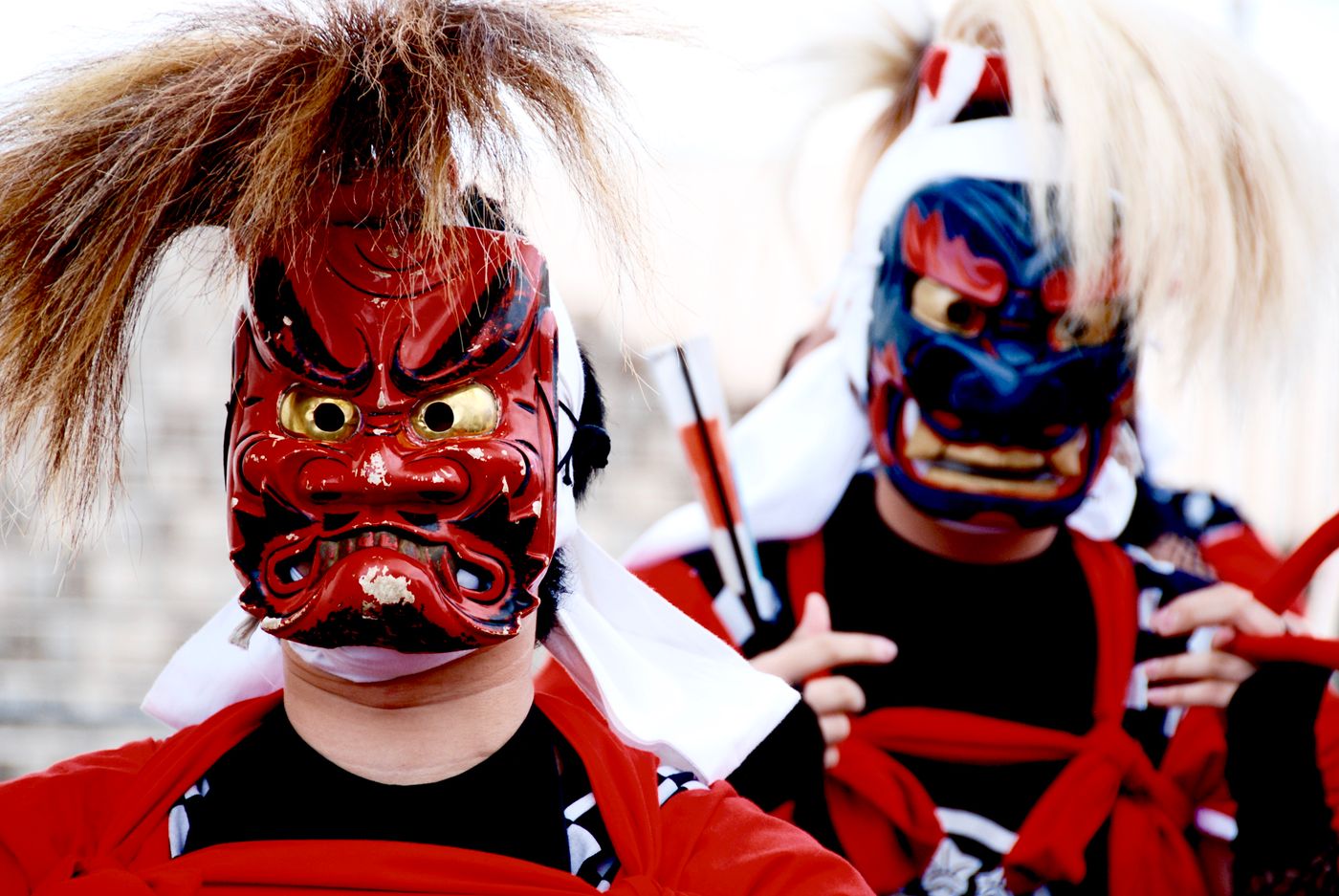
Namahage masks are the ritual's most visually distinctive element and some of the most powerful folk art objects in Japan.
The masks — carved from wood, with dramatically exaggerated expressions (bulging eyes, grimacing mouths, wild hair or horns) and painted in vivid colors — vary by village and by the carver's tradition. Each community has developed its own mask character over generations, and the masks are passed down or remade within families.
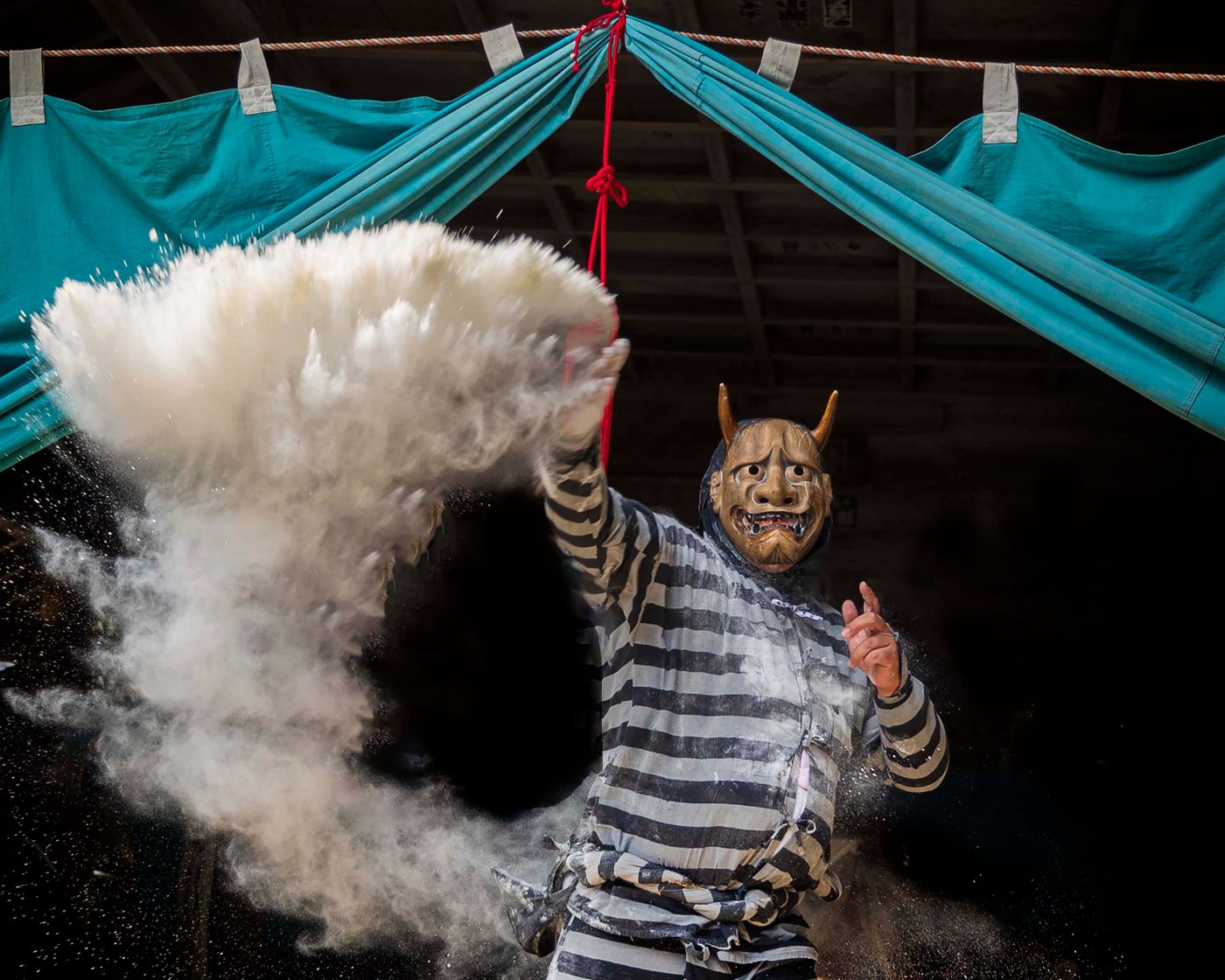
Two primary Namahage types:
- Red-faced Namahage (赤鬼): Associated with fire, anger, and punishment
- Blue-faced Namahage (青鬼): Associated with cold, severity, and judgment
In practice, many variations exist — green, brown, and multicolored masks appear in different villages, each with local explanations for the specific character.
Experiencing Namahage: Two Options
Option 1: The Traditional New Year's Eve Experience
The authentic Namahage ritual happens only on December 31st in the villages of the Oga Peninsula. This is a genuine household-to-household ritual by community members, not a performance for visitors. Limited opportunity to observe exists through arrangements made with specific villages or local tourism organizations — this requires advance planning and Japanese language support or a cultural travel agency.
Option 2: The Museum Complex (Year-Round)
The Namahage Museum (なまはげ館) and adjacent Oga Shinzan Denshoukan (男鹿真山伝承館) provide the most accessible year-round Namahage experience:
Namahage Museum: A comprehensive museum covering the cultural history, regional variations (masks from each village displayed together), and anthropological context of the ritual. The collection of approximately 150 different Namahage masks is extraordinary — the visual variety and the artistic quality of folk mask carving becomes apparent across the collection.
Oga Shinzan Denshoukan: A restored traditional farmhouse where daily theatrical performances of the Namahage ritual are held — actors in full Namahage costume and mask perform the household visit ritual in the farmhouse setting. The performance is in Japanese but visually and physically self-explanatory. Entry includes the farmhouse context and the performance.
The Oga Peninsula Beyond Namahage
The Oga Peninsula itself — a rocky protrusion into the Sea of Japan approximately 50 km west of Akita City — has considerable natural interest beyond the Namahage tradition:
Oga Aquarium (男鹿水族館): One of Japan's finest aquariums, particularly strong in cold-water marine species from the Sea of Japan. The polar bear section is unexpectedly accomplished.
The Cliffs (男鹿半島の海岸): The peninsula's western coast is formed by dramatic volcanic cliffs dropping directly to the Sea of Japan — particularly impressive in winter when the Sea of Japan's winter storms drive waves against the cliff faces.
Recommended Base Hotels
Hotel Oga Grand (ホテル男鹿グランド) (Mid-range / from ¥15,000 per person): On the peninsula with onsen, the standard Oga accommodation.
Akita City hotels: Akita City (1.5 hours by bus) has better accommodation options if combining Namahage with Akita city sightseeing.
Hotel Metropolitan Akita (Mid-range / from ¥13,000): Akita Station adjacent, convenient for the Oga Peninsula day trip.
Planning where to stay in Tohoku? Browse our honest hotel picks and area guides.
🏨 Planning where to stay?
Every area guide on this site pairs with honest, station-by-station hotel picks. Start here: Akita Hotel Guides →