This article may contain affiliate links. If you book through them, we may earn a small commission at no extra cost to you.
On this page
Introduction: The Question Every Visitor Asks
Most visitors to Japan encounter both Shinto shrines (神社 / jinja) and Buddhist temples (寺 / tera or ji) within the first day of sightseeing — often without realizing they are distinct religious traditions with different theologies, different architectural conventions, different ritual practices, and different historical origins. The confusion is understandable: the two traditions have coexisted in Japan for 1,500 years, frequently on the same physical site, and many Japanese people engage with both simultaneously without experiencing this as a contradiction.
Understanding the distinction matters not merely for academic reasons but for practical ones — the correct behavior at a shrine and at a temple differs, the symbolic elements you are seeing have different meanings in each context, and the experiences you are having have different cultural resonance.
The Fundamental Distinction
Shinto (神道) is Japan's indigenous spiritual tradition — a system of beliefs and practices centered on kami (神), the divine forces or spirits that inhabit natural phenomena (mountains, rivers, trees, specific animals), places, and ancestors. Shinto has no founder, no sacred text in the manner of the Bible or Quran, and no systematic theology in the Western sense — it is better understood as an evolved cultural relationship with the sacred that is specifically Japanese in character.
Buddhism (仏教) arrived in Japan from the Korean Peninsula in the 6th century CE (traditionally dated to 552 CE), bringing with it a fully developed theology, a body of sacred text (the sutras), a monastic tradition, and a specific set of artistic and architectural conventions that had already been refined across centuries of development in India, China, and Korea.
How to Tell Them Apart
At the Entrance
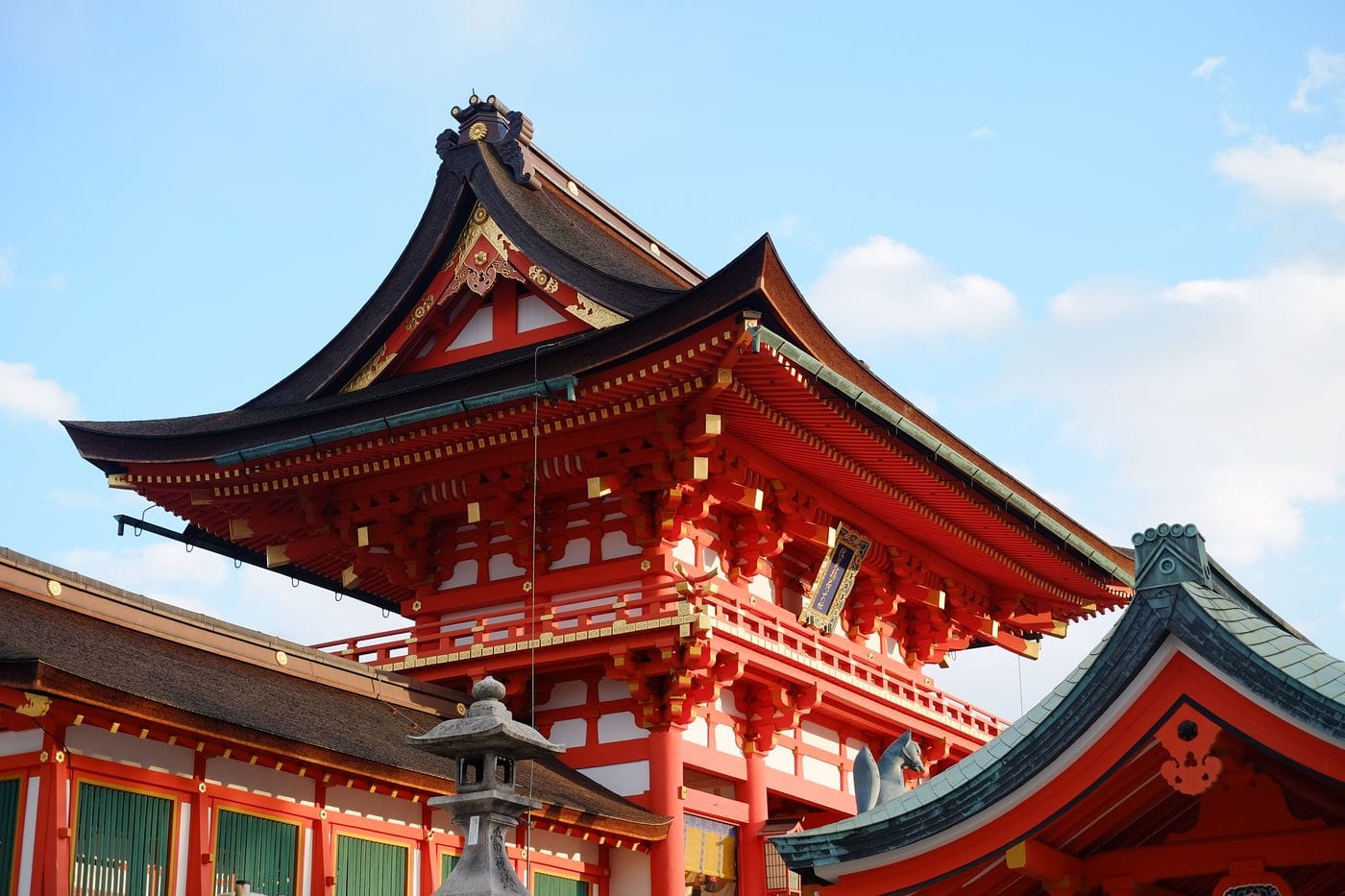
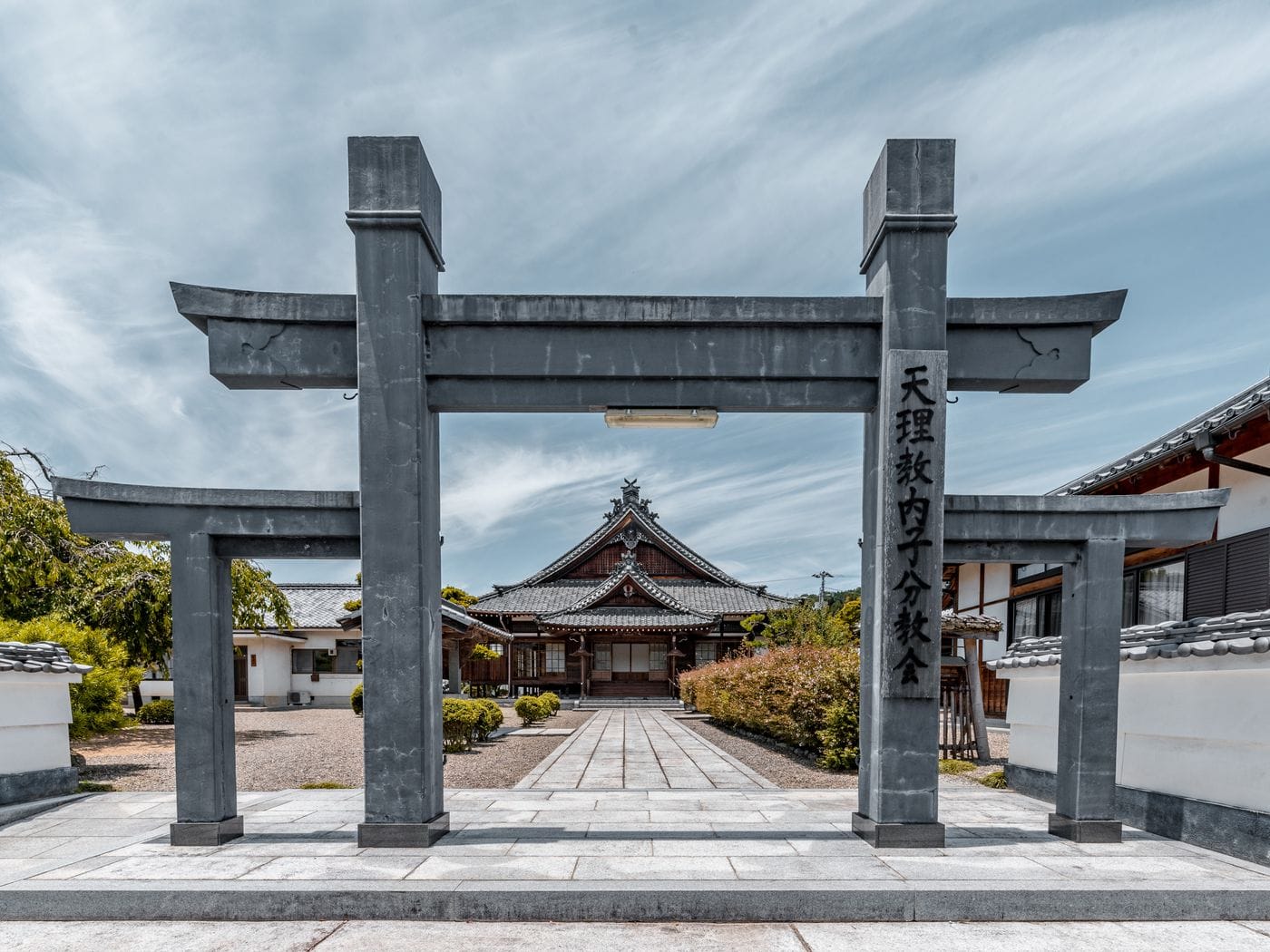
Shrine: Look for a torii gate (鳥居) — the distinctive structure of two vertical pillars connected by two horizontal beams, typically painted vermilion or unpainted wood. The torii marks the transition from the ordinary world into sacred space. Some shrines have a single torii; Fushimi Inari has approximately 10,000.
Temple: Look for a sanmon gate (山門) — a solid, roofed gate structure, often multi-story, with guardian figures (仁王 / niō — fierce protective deities) flanking the entrance. Buddhist temples typically have more elaborate and solid-feeling gate structures than shrines' more open torii form.
At the Ritual Water Purification Area
Shrine: A temizuya (手水舎) — a stone basin fed with flowing water, with a bamboo ladle for ritual hand washing (手水 / temizu) before approaching the main hall.
Temple: Buddhist temples may have similar water purification facilities, but the association is less consistently present than at shrines.
At the Main Hall
Shrine: The honden (本殿) — the main hall housing the kami's divine body (御神体 / goshintai, typically an object rather than an image) — is usually not open to the public, visible only from outside. The haiden (拝殿 / worship hall) in front is where worshippers approach and pray.
Temple: The hondō (本堂) or kondō (金堂) typically contains visible Buddhist icons — statues of the Buddha (仏像 / butsuzō) in various forms, sometimes large and elaborately decorated.
The Resident Figures
Shrine: Kitsune (fox) statues at Inari shrines, komainu (狛犬 / "lion dogs") as entrance guardians, and the distinctive straw rope (注連縄 / shimenawa) marking sacred space.
Temple: Jizō (地蔵) — small stone statues of the protective bodhisattva, often wearing red bibs, found along temple approaches and in graveyards. Fūdo Myō-ō and other fierce protective deities at esoteric Buddhist temples.
The Priests
Shrine: Kannagi (神職 / shinto priests), often with distinctive white robes and tall black hats. Shrine maidens (巫女 / miko) in white kimono and red hakama assist with ritual activities.
Temple: Monks (僧侶 / sōryo) in various robes according to sect — color and style differ significantly between Buddhist schools.
The Historical Entanglement
For most of Japanese history, Shinto and Buddhism were not merely coexistent but actively merged — a system called shinbutsu-shūgō (神仏習合 / "syncretism of gods and Buddhas") that interpreted Shinto kami as manifestations of Buddhist deities and vice versa. Many sites had both a shrine and a temple on the same grounds, and the religious authorities managing them overlapped.
This synthesis was forcibly separated during the Meiji period by government decree (shinbutsu bunri / 神仏分離 — "separation of gods and Buddhas") as part of the new state's attempt to elevate Shinto as a state religion distinct from Buddhism. Many sites that had been combined for centuries were separated, and some Buddhist elements on shrine grounds were destroyed. The scars of this separation are visible in the somewhat arbitrary-feeling boundaries between some shrine and temple complexes today.
Does the Distinction Matter for Visitors?
Practically: Yes, because the ritual behavior at each (covered in the dedicated shrine prayer article and the Koya-san/temple etiquette articles) differs enough that following shrine protocol at a temple, or vice versa, is a minor etiquette error.
Experientially: Yes, because the two traditions offer genuinely different atmospheres and different cultural content — a Shinto mountain shrine has a specific relationship with the natural world that a Buddhist temple complex does not, while a Buddhist temple's visual richness (the iconography, the incense, the chanting) represents a different mode of sacred engagement.
Theologically: The distinction matters considerably within Japanese religious scholarship and practice, less so for visitors approaching both in good faith with respectful attention.
🏨 Planning where to stay?
Every area guide on this site pairs with honest, station-by-station hotel picks. Start here: Hotel Guides by Station →