This article may contain affiliate links. If you book through them, we may earn a small commission at no extra cost to you.
On this page
Introduction: The Country Where Bicycles Are Normal
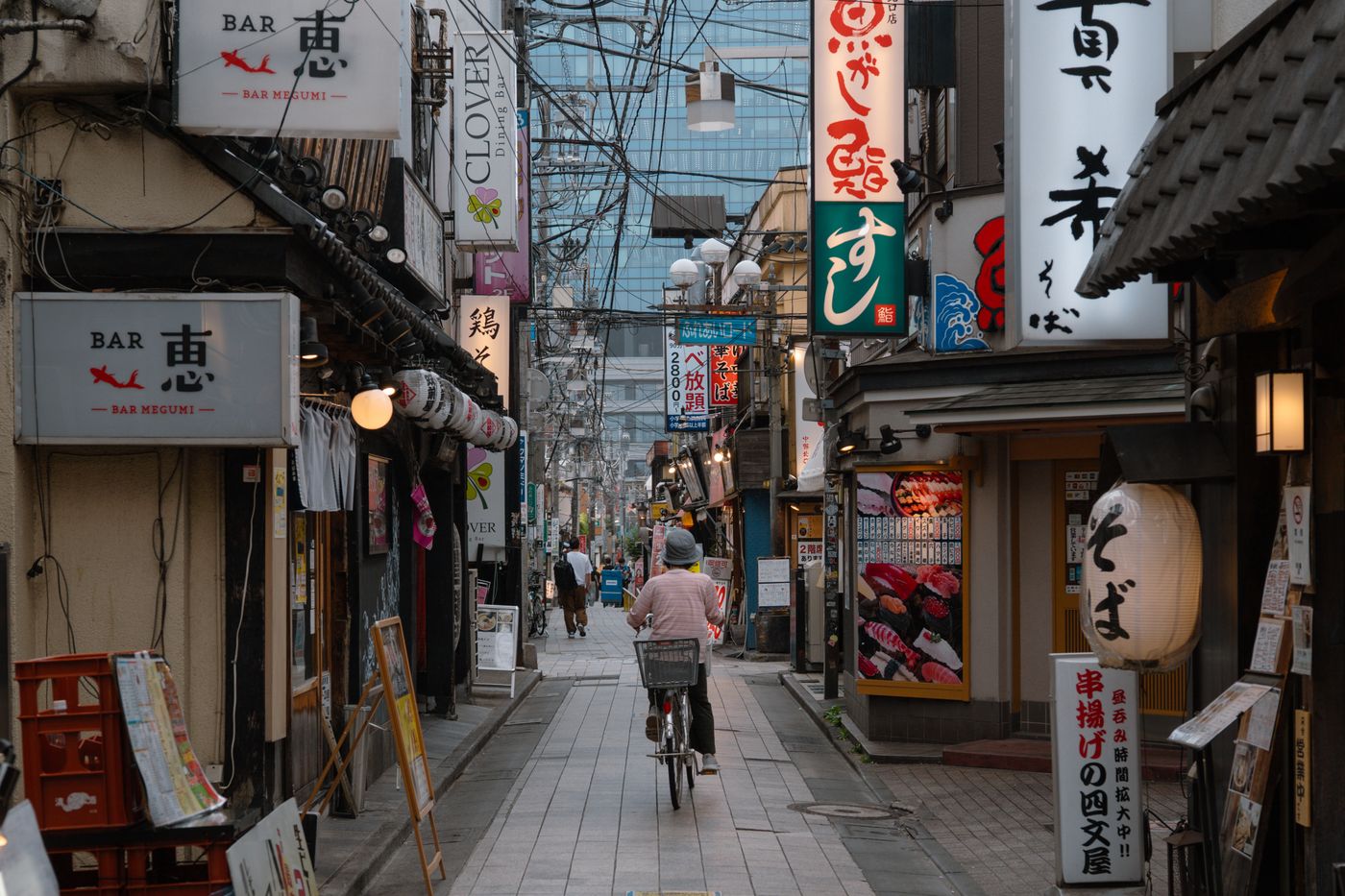
Japan has approximately 75 million bicycles — roughly one for every 1.7 people — and cycling is the primary mode of short-distance transportation for a significant portion of the population across all age groups. The specific character of Japanese bicycle culture distinguishes it sharply from both the competitive cycling cultures of Europe and the recreational cycling cultures of many Western countries: Japanese cycling is primarily ordinary, utility cycling — commuting, shopping, school runs, errand-running — conducted on practical, upright bicycles by people in work clothing or school uniforms.
The Japanese Mamachari (ママチャリ / "Mama Chariot")
The defining bicycle of Japanese cycling culture is the mamachari — a heavy, practical, upright bicycle typically equipped with a basket at the front, a carrier rack at the rear, a chain guard, fenders, built-in lighting, and increasingly an electric motor assist (電動アシスト自転車 / dendō ashisuto jitensha). The mamachari is designed for practical urban cycling rather than speed or athletic performance — the upright seating position allows cycling in normal clothing, the basket carries groceries, and the stability accommodates the attachment of a child seat (前乗り / maenori at the front; 後ろ乗り / ushironori at the rear) for the school run.
The ubiquity of mamachari in Japanese urban life — thousands lined outside any major train station, cluttering school parking areas, leaned against convenience store walls — is one of the most distinctive visual elements of ordinary Japanese daily life.
The Station Bicycle Parking Situation
Bicycle parking near train stations is one of Japan's most persistently challenging urban planning problems. The popularity of the bicycle-train combination (cycling to the station, leaving the bicycle, completing the commute by train) has created demand for station bicycle parking that exceeds provision at virtually every major station.
Designated parking areas (自転車駐輪場 / jitensha chūrinjō): Formal multi-story bicycle parking facilities, typically charging ¥100–¥200 per day or monthly rates, exist at major stations.
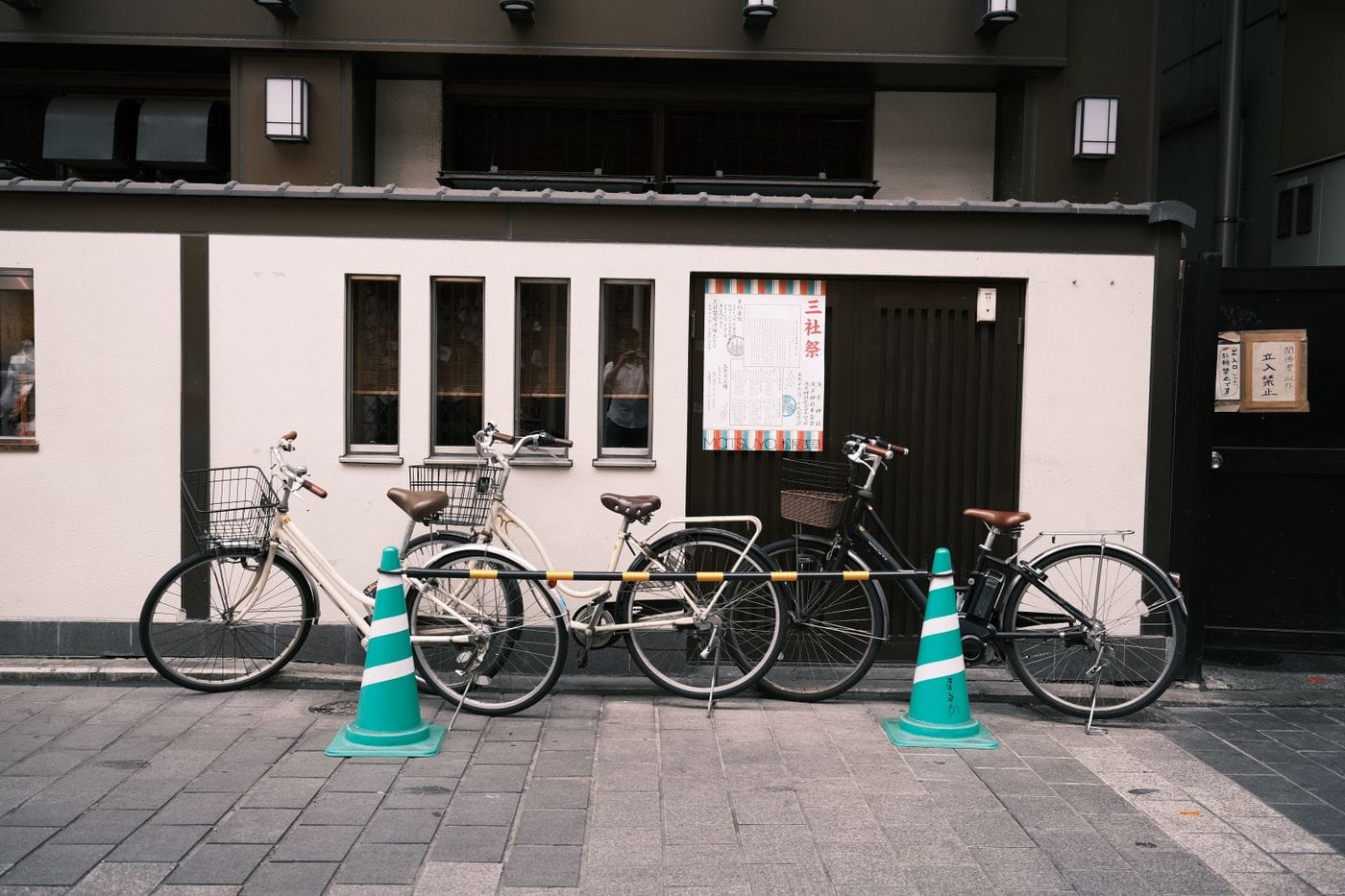
Illegal parking: Despite enforcement, a significant volume of bicycle parking occurs illegally outside these facilities — periodic enforcement campaigns involve municipal workers removing illegally parked bicycles to impound yards, requiring owners to pay a ¥2,000–¥3,000 fine to reclaim.
Underground bicycle parking: Several major stations (Sakae in Nagoya is the most famous example) have installed automated underground bicycle parking systems where bicycles are inserted into a ground-level receiver and mechanically stored underground.
Traffic Rules and the Reality Gap
The legal rules: Japanese traffic law requires cyclists to ride on roads (not footpaths), follow all traffic signals, and use lights after dark. Cyclists riding on roads are subject to the same regulations as motor vehicles in most respects.
The practical reality: The enforcement gap between cycling law and actual practice is significant — footpath cycling is extremely common throughout Japan despite being technically illegal in most circumstances (there are designated footpath cycling zones, but the practice extends well beyond them). The practical explanation is that most Japanese urban cycling happens at speeds and in contexts where footpath cycling poses minimal danger.
Helmets: Since April 2023, wearing a helmet has been an official “best-effort duty” (努力義務) for cyclists of all ages — there is no penalty for going without, and in practice adult helmet use remains low, but rental shops increasingly offer them.
Cycling Culture Varieties
School commuting by bicycle: A significant proportion of Japanese junior high and high school students commute by bicycle — the visual of uniformed students in large clusters riding to school is a distinctively Japanese morning scene.
Long-distance touring: Japan's long-distance cycling culture — including the Shimanami Kaidō (covered in the dedicated article), the Tohoku Pacific Coast route, and various prefectural cycling networks — is well-developed and growing.
Cycling as leisure: On weekends, Japan's roads and designated cycling paths see significant recreational cycling volume — particularly on the arterial paths along major rivers (the Tamagawa cycling path along the Tama River, the Arakawa cycling path through northern Tokyo) that have become fixtures of Tokyo's outdoor culture.
🏨 Planning where to stay?
Every area guide on this site pairs with honest, station-by-station hotel picks. Start here: Hotel Guides by Station →