This article may contain affiliate links. If you book through them, we may earn a small commission at no extra cost to you.
On this page
Introduction: The Region That Wins the Autumn Argument
Among Japanese koyo enthusiasts who have visited multiple regions across multiple years, Nikko consistently emerges as a leading contender for Japan's finest single autumn foliage destination — not merely accessible from Tokyo, but legitimately competitive with anywhere else in the country on pure visual merit.
The reasons are specific: Nikko combines high-elevation mountain color (Senjogahara wetlands, Lake Chūzenji area), a dramatic waterfall (Kegon Falls) framed by turning maples, the extraordinary architectural backdrop of Tosho-gu's UNESCO World Heritage shrine complex, and the famous Irohazaka switchback road — together producing a koyo experience of unusual completeness within a single, accessible day or weekend trip.
The Two-Stage Color Progression
Nikko's specific advantage over single-elevation koyo destinations is its elevation range — from the Tosho-gu shrine complex (approximately 600m) to Lake Chūzenji (1,269m), the autumn color progresses through the landscape over approximately 2–3 weeks, effectively extending the viewing season for visitors who can time a return trip or who understand which section to visit on which date.
Upper Nikko (Lake Chūzenji, Senjogahara): Peak mid-October
The wetland grasses of Senjogahara (戦場ヶ原) turn a specific golden-russet color in mid-October that, combined with the surrounding mountain forest's reds and oranges, creates one of Japan's most extensive single-frame autumn landscapes — the wetland's flatness allows unobstructed views across kilometers of color to the surrounding peaks.
Kegon Falls (華厳の滝) — covered in the dedicated Nikko article — is at its most photographed during this period, when the maple forest surrounding the 97-meter waterfall turns in synchronization with the falling water's white spray.
Lower Nikko (Tosho-gu, the cedar avenue): Peak late October to early November
The lower elevation around the Tosho-gu shrine complex peaks approximately two weeks after the upper lake area. The combination of the shrine's elaborate red-and-gold architecture with the maple's natural red creates a specific aesthetic resonance — the human-made and natural color schemes reinforcing each other.
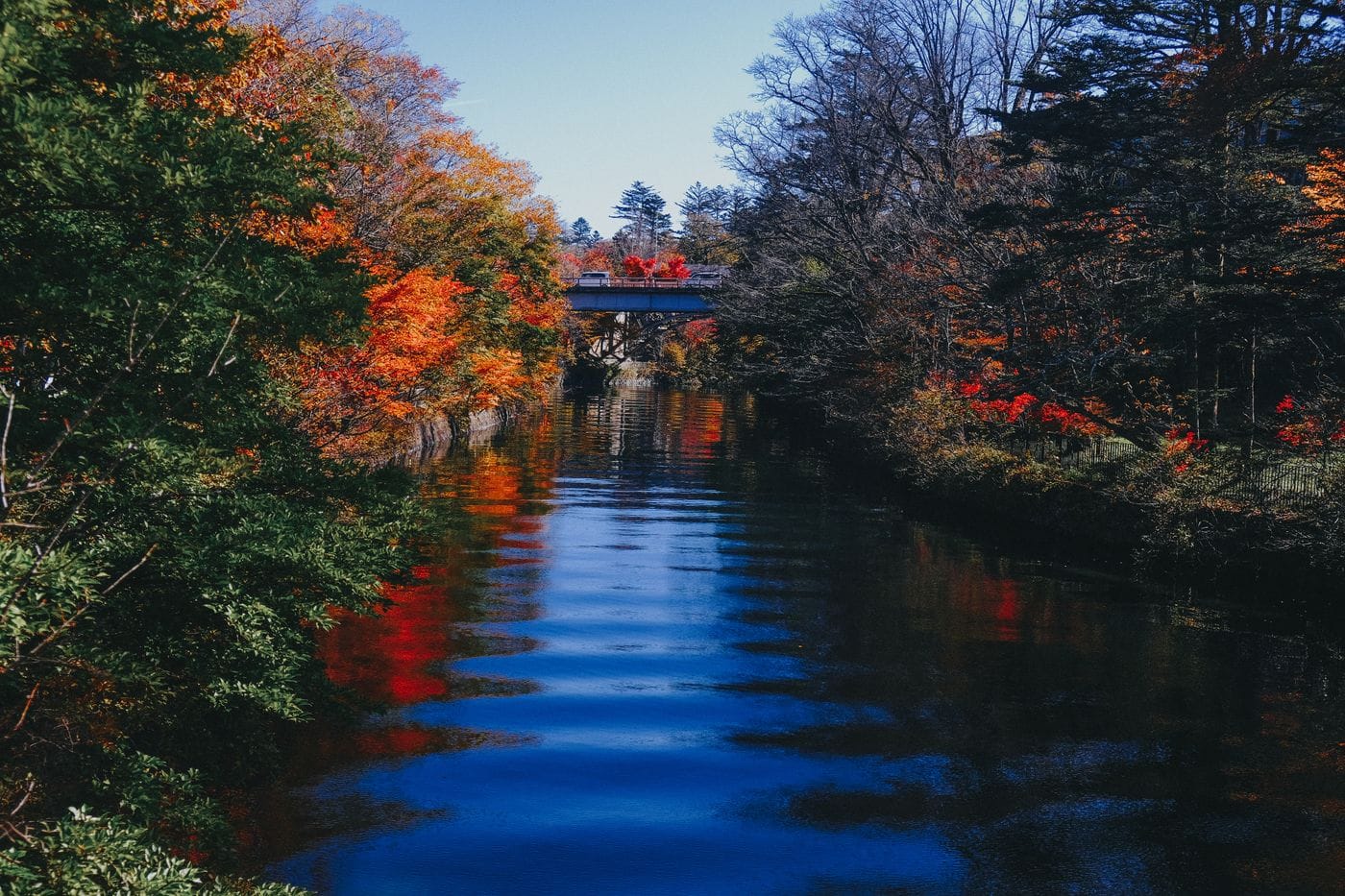
The Irohazaka Drive (いろは坂)
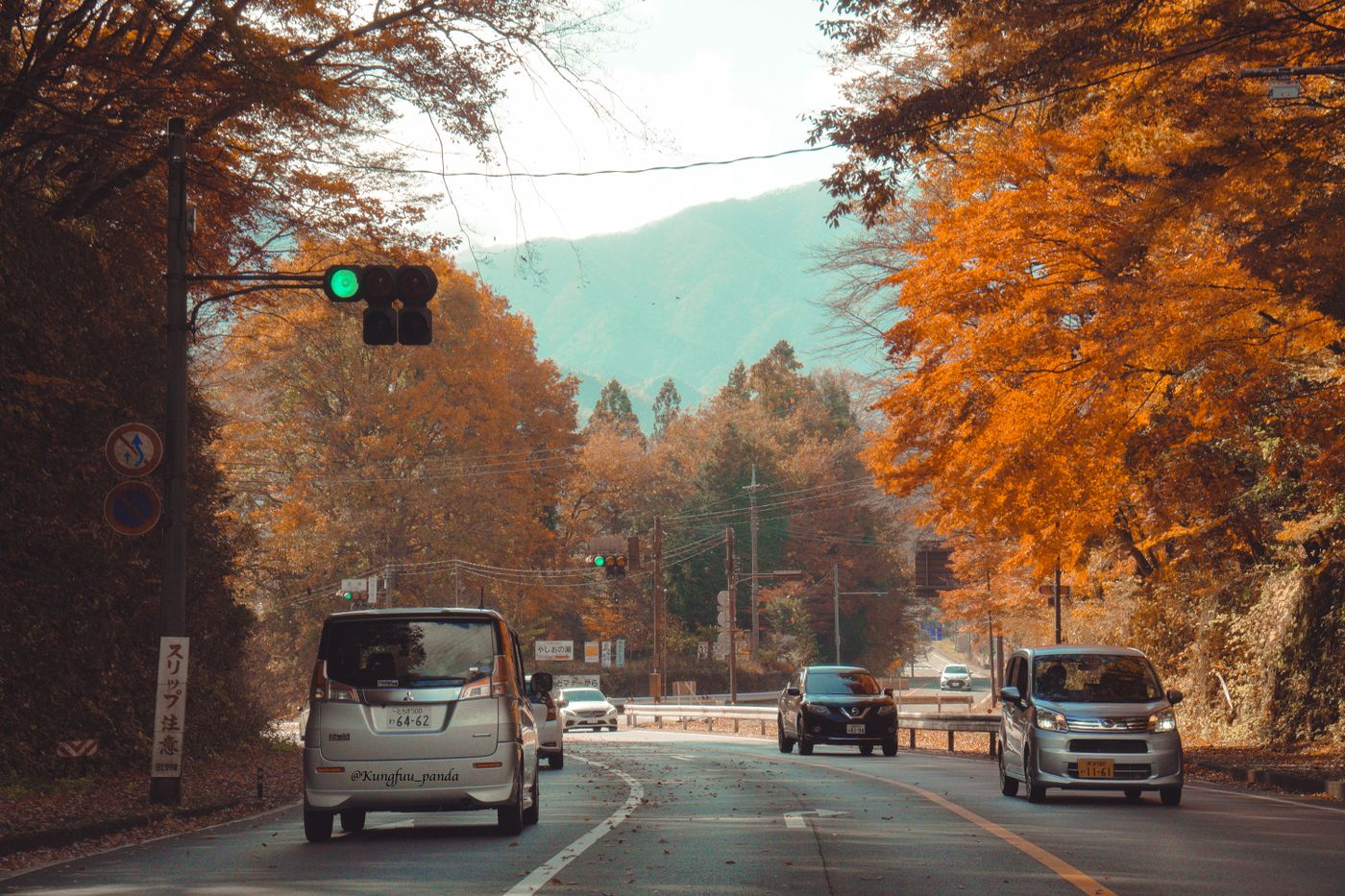
The Irohazaka switchback road — connecting lower Nikko to the Lake Chūzenji plateau via dozens of hairpin turns climbing some 440 meters — is one of Japan's most celebrated autumn drives. The road's name derives from the 48 characters of the old iroha syllabary, one assigned to each hairpin — and today’s paired one-way roads still total exactly 48: 20 curves on the ascending second road, 28 on the descending first road, each marked with its kana.
During peak color, both sides of the road are lined with turning maples, and the elevation gain means a single drive passes through multiple stages of the autumn color progression — greener at the base, fully turned partway up, and potentially past peak (toward bare branches) at the very top, depending on exact timing.
Practical note: The Irohazaka road experiences significant traffic congestion during peak weekends — weekday visits or very early departures (before 8:00 AM) are strongly recommended.
The Best Specific Viewpoints
Akechidaira Ropeway (明智平ロープウェイ): A short cable car ascending from the upper Irohazaka section to an observation platform with a panoramic view encompassing Kegon Falls, Lake Chūzenji, and the surrounding mountain color simultaneously — considered by many photographers the single best vantage point in Nikko.
Ryūzu Falls (竜頭の滝): A smaller, more intimate waterfall above Lake Chūzenji, framed by maples that turn slightly earlier than the Kegon Falls area — providing an earlier-season alternative for visitors arriving in early October.
The Cedar Avenue (日光杉並木): Covered in the dedicated forest bathing article — while the cedars themselves don't change color, the avenue's deciduous understory and the contrast between the ancient evergreen cedars and the surrounding autumn color provides a unique visual combination.
Recommended Base Hotels
Nikko Kanaya Hotel (Luxury / from ¥25,000): Historic hotel near Tosho-gu, excellent for lower Nikko koyo access.
- Chuzenji Kanaya Hotel (Mid-range / from ¥18,000): Lakeside, ideal for upper Nikko and Kegon Falls access.
Planning where to stay in Tokyo? Browse our honest hotel picks and area guides.
🏨 Planning where to stay?
Every area guide on this site pairs with honest, station-by-station hotel picks. Start here: Tokyo Hotel Guides →