This article may contain affiliate links. If you book through them, we may earn a small commission at no extra cost to you.
Kyoto Guide · Nishiki Market
Nishiki Market: Kyoto’s Kitchen
— What to Eat on Every Corner
400 Years · 130 Shops · 390 Meters · The Most Food-Dense Lane in Japan
🐙 Tako tamago — octopus + quail egg on skewer
🥒 Kyoto tsukemono — pickles from local masters
🍵 Matcha sweets · Fresh yuba · Obanzai
💴 Carry cash — most shops card-free
On this page
The Market That Has Fed Kyoto for 400 Years
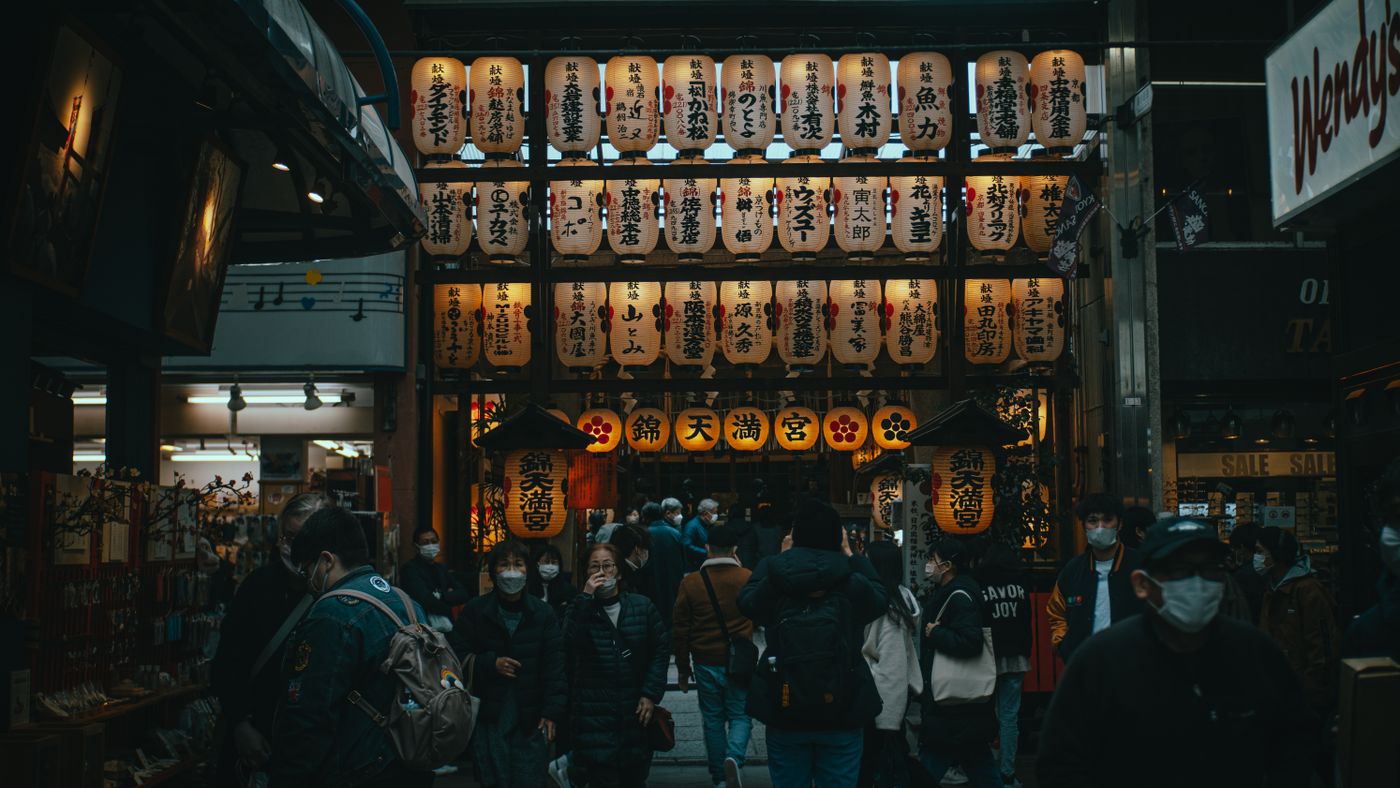
Nishiki Market (錦市場) — the five-block covered street running between Teramachi and Takakura, parallel to Shijō-dōri — has been feeding Kyoto since the Edo period. Its nickname, “Kyoto’s Kitchen” (京の台所), is not marketing copy. At 390 meters long and barely five meters wide, Nishiki is not large by world standards. What makes it extraordinary is density: approximately 130 shops in a space that feels smaller than it is, each specializing in a narrow category of Kyoto food culture with the accumulated expertise of generations.
| Location | Nakagyō-ku, parallel to Shijō-dōri, between Teramachi and Takakura |
| Access | 5 min walk from Shijō Station (Hankyu / Karasuma Subway) |
| Hours | Most shops 9:00 AM–6:00 PM (some close Wednesdays) |
| Best visiting time | 10:00 AM–12:00 PM (fresh stock, before lunch crowd) |
| Payment | Carry cash — most shops are family-run and card-free |
What to Eat: A Corner-by-Corner Guide
🥒 Kyoto Tsukemono (京漬物)
Kyoto’s pickled vegetable culture is one of the most refined in Japan. Most shops offer counter samples — take small pieces from toothpicked samples, taste carefully, purchase what appeals. The three classics:
- Shibazuke (柴漬け): Red shiso-pickled eggplant & cucumber — deep purple-red, lightly sour
- Suguki (すぐき): Turnip by natural lactic fermentation — tangy, complex, most sophisticated
- Senmai-zuke (千枚漬け): Thin-sliced turnip layered with kombu — delicate, sweet-salty, most elegant
🐙 Tako Tamago (たこたまご) · ~¥400
Nishiki’s most recognized street food: a whole baby octopus with a quail egg stuffed inside the head, grilled on a skewer. The octopus is tender and lightly sweet from the tare glaze; the egg provides soft richness. You’ll find it at the skewer stands partway along the arcade — just look for the queue.
🍽️ Obanzai (おばんざい)
Kyoto home-style side dishes — simmered vegetables, fish, tofu preparations sold from deli-style counters. Eating obanzai standing at the counter or at a small bench beside the stall is the most authentic Nishiki lunch experience.
🌿 Fu (麩) — Wheat Gluten
A Kyoto staple with no real Western equivalent. Fresh nama-fu (生麩) comes in seasonal colors: cherry blossom pink in spring, green in summer. A protein component in kaiseki cooking — purchasing a piece of colorful nama-fu is one of the most distinctively Kyoto food experiences available.
🍳 Tamago-yaki (玉子焼き)
The Kyoto version is distinctively sweeter than Tokyo’s. Many shops prepare it in front of you in the specialized tamagoyaki pan — fresh-from-the-pan pieces available as street food.
🍵 Matcha Sweets
Quality varies significantly between shops. The best use ceremonial grade matcha — vivid green, complex, slightly bitter. Pale or mildly flavored products use cheaper matcha powder. Matcha soft serve, warabi-mochi (わらびもち), and kuzukiri (くずきり) are the Nishiki classics.
Navigation Tips
Walk east to west (Teramachi → Takakura) — natural flow direction, traditional to contemporary. The Teramachi end has the oldest and most traditional shops. Carry cash. Many shops are small family operations without card readers. Bring sufficient yen for multiple small purchases. And note the market asks visitors not to eat while walking — enjoy each bite standing beside the shop that sold it, then move on.
Hotels
Mitsui Garden Hotel Kyoto Sanjo (Mid-Range / from approx. ¥18,000 ~$120 USD) — 5 minutes from Nishiki. ANA Crowne Plaza Kyoto (Mid-Range / from approx. ¥22,000 ~$147 USD) — beside Nijo Castle; a short subway ride on the Karasuma–Tozai lines rather than a walk. Prices approximate; checked July 17, 2026.
Who Should Visit Nishiki Market
✔ Food lovers wanting authentic Kyoto ingredients
✔ Travelers wanting to graze rather than sit for lunch
✔ Those buying food gifts to take home
✔ Anyone curious about Kyoto’s food culture beyond restaurants
🏨 Planning where to stay?
Every area guide on this site pairs with honest, station-by-station hotel picks. Start here: Kyoto Hotel Guides →