This article may contain affiliate links. If you book through them, we may earn a small commission at no extra cost to you.
Saga Hotel Guides · Karatsu Station
Best Hotels Near Karatsu Station: Castle Bay &
the Kunchi Floats
JR Chikuhi/Karatsu Lines · Karatsu Castle · Karatsu Kunchi · Niji-no-Matsubara Pines · Yobuko Squid · Karatsu Ware
🏯 Karatsu Castle rides its headland like a ship’s prow over the bay
🏮 Karatsu Kunchi (Nov 2–4) — giant lacquered floats thunder through the old town
🦑 Yobuko’s morning market and glass-clear “dancing” squid, up the coast
🌲 Niji-no-Matsubara — a million pines curving five kilometres along the beach
On this page
What Kind of Area is Karatsu? A Local’s Honest Take
Karatsu is what you get when a castle town, a fishing coast and a pottery tradition share one bay. The name means “port to Tang China,” and everything here faces seaward: Karatsu Castle stands on a headland with surf on three sides; the crescent beach east of town runs beneath Niji-no-Matsubara, a 17th-century windbreak of a million black pines you can walk or drive through in green twilight; and up the coast at Yobuko, the morning market sells squid so fresh it’s served still translucent, sashimi’d within minutes of the tank.
The town’s great explosion is Karatsu Kunchi (November 2–4), a UNESCO-listed festival when fourteen colossal lacquered floats — sea bream, dragons, samurai helmets — are hauled roaring through the streets and along the beach by thousands of chanting bearers. Beds sell out prefecture-wide; plan half a year ahead. Otherwise Karatsu is a mellow overnight: karatsu-yaki pottery kilns and galleries, handsome Meiji-era banks and merchant villas, and seafood dinners a fraction of city prices. Direct Chikuhi-line trains run through to Fukuoka’s subway — ~80 minutes from Hakata, all coastal.
Climb the castle at opening, walk back along the pine forest to town, and book a squid lunch in Yobuko before noon — the market boats sell out of the best ika by early afternoon.
Getting Around from Karatsu
🚆 Rail
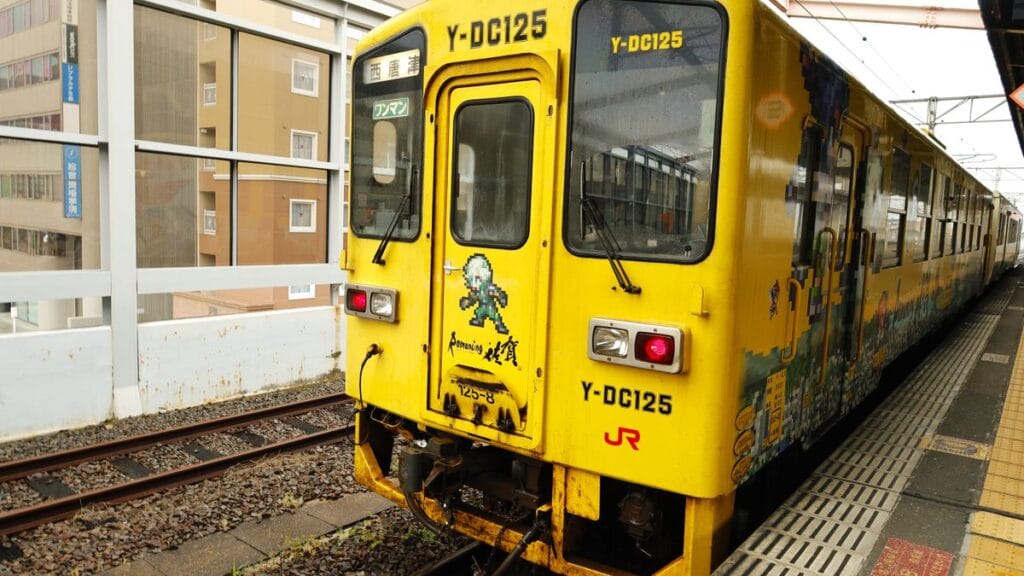
Through-trains to Fukuoka’s subway (~80 min to Hakata); the Karatsu line winds south toward Saga (~70 min).
🚌 Bus
Showa buses to Yobuko (~30 min) and around the Higashi-Matsuura peninsula’s capes.
🚗 Road
Coastal Route 204 strings Yobuko, Nagoya Castle ruins and terraced-rice-field viewpoints.
What to See Around Karatsu
🏯 The castle & old town
Bay-prow keep, Meiji banks, the Hikiyama float museum — compact and strollable.
🦑 Yobuko & the peninsula
Morning-market squid, sea-cave boat rides, and Hideyoshi’s vast Nagoya Castle earthworks.
🌲 Niji-no-Matsubara
Five kilometres of planted pines between road and surf — cycle it, then burger at the famous forest kiosk.
Where Should You Actually Stay?
Bay logic: town for walkers, beach for romantics.
🏨 Station/old town: Business hotels and classic ryokan within the float-route grid.
🌅 Beach side: Resort stays along the pines with bay-and-castle views.
Recommended hotels
- Yoyokaku — the storied wooden ryokan of Karatsu, gardens and karatsu-yaki at dinner.
- Karatsu Seaside Hotel — beachfront across the pines, castle views over the bay.
- Hotel & Resorts Saga-Karatsu — full-service high-rise on the waterfront.
Overall Rating: Karatsu Area
| Category | Rating | Notes |
|---|---|---|
| Transport Access | ★★★☆☆ | Direct to Fukuoka; Saga line slow |
| Around the Station | ★★★★☆ | Castle, floats, old town on foot |
| Food & Sights | ★★★★★ | Squid, pottery, pines, Kunchi |
| Hotel Choice | ★★★☆☆ | Characterful ryokan + resorts |
| Charm & Atmosphere | ★★★★★ | Salt air, lacquer and kiln smoke |
Who Should Stay Here?
✔ Festival travellers — Kunchi is top-tier Japan (book early)
✔ Seafood pilgrims bound for Yobuko’s market
✔ Pottery collectors on the karatsu-yaki trail
✔ Couples wanting castle-and-beach evenings