This article may contain affiliate links. If you book through them, we may earn a small commission at no extra cost to you.
Hokuriku Shinkansen Guide · Tsuruga Station
Best Hotels Near Tsuruga Station: The Port at the End of the Line —
Crab, History & the Change for Kyoto
The Current Terminus (Since 2024) · Kagayaki Service · A Historic Port, a Great Shrine & the Gateway to Wakasa Bay
🚄 Tokyo in ~3 hr 08 min on the Kagayaki
🚌 Change here for the Thunderbird to Kyoto & Osaka
🦀 A Sea-of-Japan port famous for winter crab and seafood
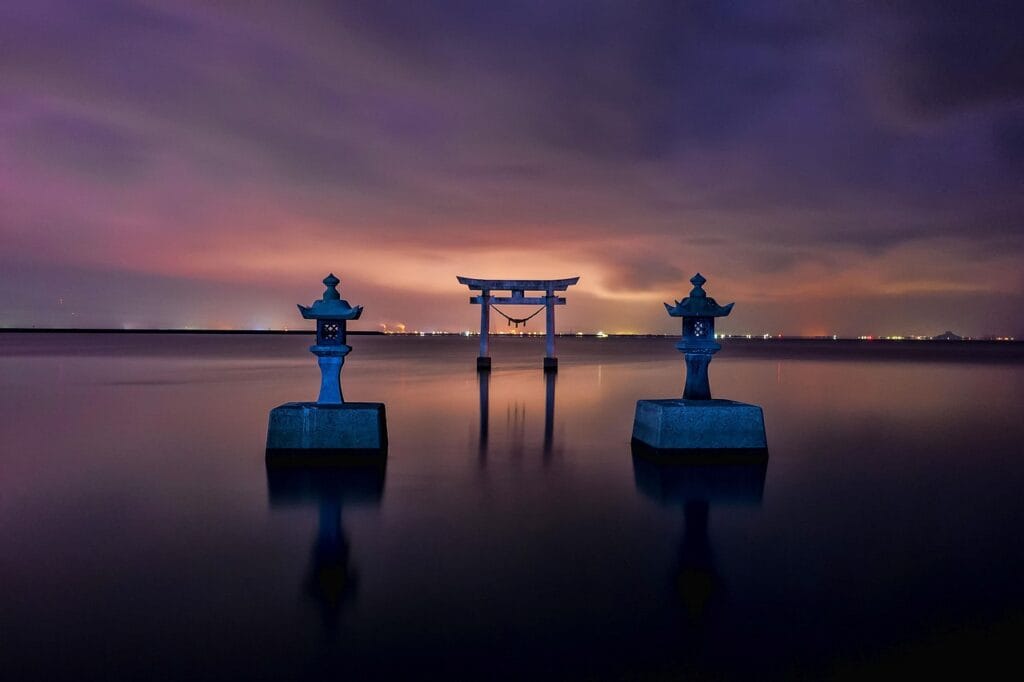
⛩️ Kehi Jingu’s great torii and the Kehi pine beach
On this page
What Kind of Area is Tsuruga? A Local’s Honest Take
Tsuruga is the current southern terminus of the Hokuriku Shinkansen — a historic port town on Wakasa Bay that suddenly matters to travelers again. For most, its first role is practical: this is where you change from the shinkansen to the Thunderbird limited express for Kyoto and Osaka, a quick, well-signposted cross-platform transfer that replaced the old direct trains in 2024. But Tsuruga rewards a stop in its own right. It was a great gateway port in the age of steamships — remembered as a “Port of Humanity” for the wartime refugees who arrived here — and today it offers a revered shrine, an atmospheric red-brick waterfront, and some of the finest seafood on the Sea of Japan.
The Kagayaki reaches Tsuruga in about 3 hr 8 min from Tokyo. The station is a striking modern interchange, and the town spreads toward the bay beyond it. It makes a characterful final stop, or a springboard into the quiet Wakasa coast.
In winter, Tsuruga is a crab town. Echizen and Wakasa snow crab come ashore nearby, and the Nihonkai Sakana-machi market by the port piles them high — a feast worth breaking your journey for.
Getting Around from Tsuruga
🚄 Shinkansen & the Kyoto change
Tokyo ~3 hr 08 min · Fukui ~15 min · Kanazawa ~40 min. For Kyoto (~50 min) and Osaka (~80 min), change to the Thunderbird across the platform.
🚃 To the Wakasa coast
The JR Obama line runs along the scenic Wakasa Bay toward Mihama, Obama and the temples of the “Wakasa” coast.
🚶 Around town
Kehi Jingu, the symbol-road of bronze statues and the red-brick warehouses are within walking distance or a short bus of the station.
What to See Around Tsuruga
⛩️ Kehi Jingu
An ancient and important shrine whose towering wooden torii is counted among Japan’s three greatest — a dignified centrepiece to the town.
🏰 Red Brick Warehouses & the Port of Humanity
Restored Meiji-era brick warehouses on the waterfront, and museums recalling Tsuruga’s role receiving Polish orphans and Jewish refugees — a moving, little-known history.
🌊 Kehi no Matsubara & the Coast
A long pine-lined beach near the town, and the beautiful indented Wakasa Bay coastline stretching west — fine for a coastal day trip.
Where Should You Actually Stay?
Tsuruga’s hotels are practical, handy for the interchange and the seafood.
🏨 Station-front: Business hotels by the station suit travelers breaking the Kyoto–Hokuriku journey or catching an early train.
🦀 Seafood stays: In crab season, inns near the port and along the Wakasa coast serve memorable crab dinners.
🏙️ City base nearby: Fukui, 15 minutes north, offers more choice if you prefer a larger city.
Overall Rating: Tsuruga Area
| Category | Rating | Notes |
|---|---|---|
| Shinkansen Access | ★★★★★ | Terminus; every service, change for Kyoto/Osaka |
| Around the Station | ★★★☆☆ | Shrine, brick warehouses, port nearby |
| Food & History | ★★★★☆ | Crab, seafood and Port-of-Humanity heritage |
| Hotel Choice | ★★★☆☆ | Practical; seafood inns on the coast |
| Charm & Atmosphere | ★★★☆☆ | Historic port with a poignant past |
Who Should Stay Here?
✔ Travelers breaking the Hokuriku–Kansai journey
✔ Winter crab and seafood lovers
✔ History travelers drawn to the Port of Humanity
✔ Explorers of the quiet Wakasa Bay coast