This article may contain affiliate links. If you book through them, we may earn a small commission at no extra cost to you.
Ghibli Real Locations · Spirited Away
Spirited Away: The Bathhouse Is Real —
And It’s Three Different Places
Dogo Onsen · Ginzan Onsen · Edo Tokyo Open Air Architectural Museum
⛩️ Dogo Onsen — Japan’s oldest bathhouse, 1894
🏮 Ginzan Onsen — the night scene in snow
🏛️ Edo Tokyo Museum — buildings Miyazaki studied directly
🎌 Academy Award winner · ¥31.6bn box office
On this page
A Bathhouse Built From Multiple Realities
Japan’s highest-grossing film of all time (until 2020), Spirited Away (2001) centers on a bathhouse called Yubaba’s — a multi-story wooden structure where gods and spirits come to soak, and where ten-year-old Chihiro finds herself trapped and working. Miyazaki has stated that no single real place is the model. What he described instead was an accumulation — of Japan’s onsen architecture, Showa-era bathing culture, and the specific visual vocabulary of traditional public bathing spaces.
Three locations in Japan contain distinct elements of Yubaba’s bathhouse, and each rewards a visit in its own right, independently of any Ghibli connection.
⛩️ Dogo Onsen, Matsuyama, Ehime Prefecture
STRONGEST CONNECTION
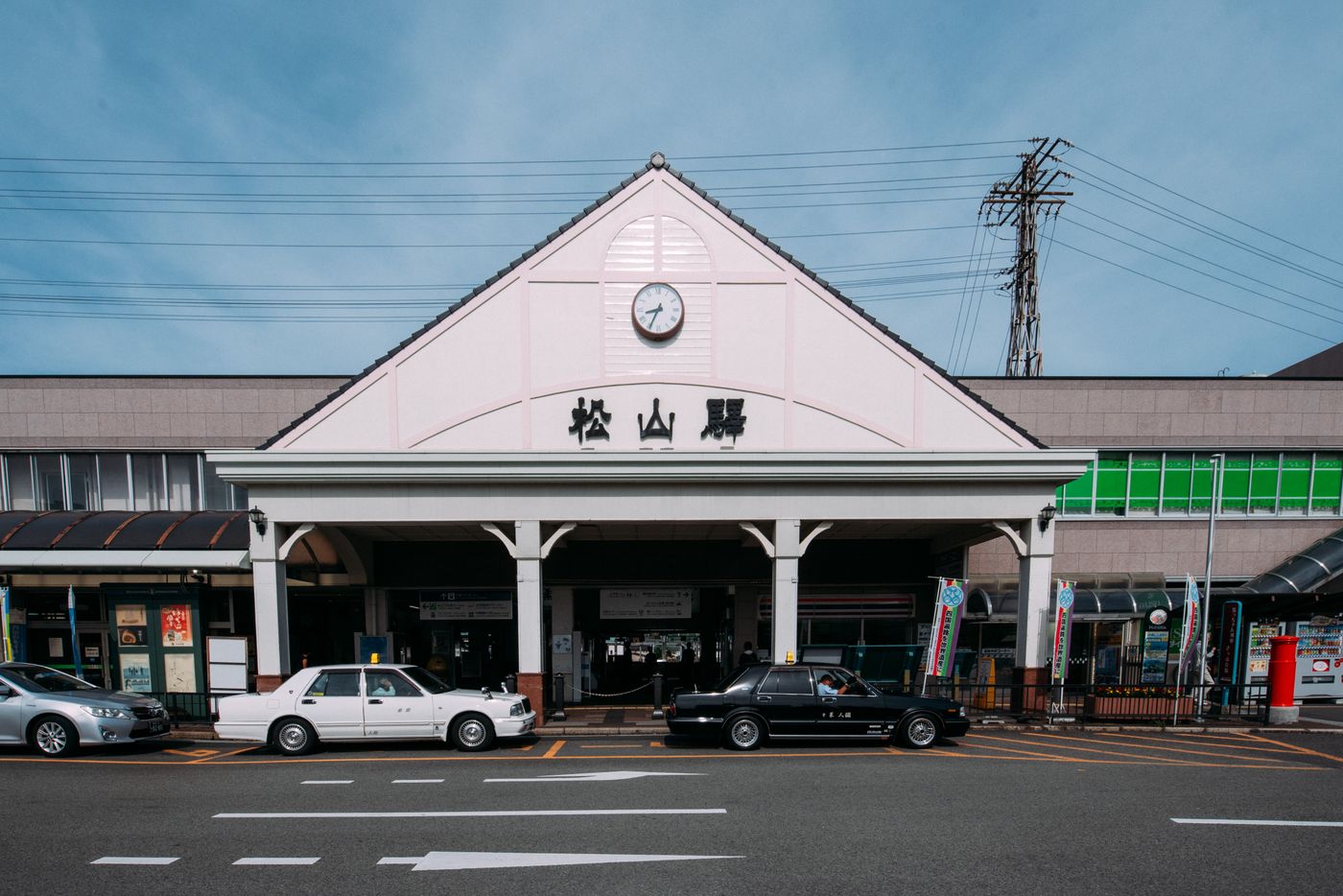
Access: ~40 min by limousine bus from Matsuyama Airport, or ~25 min by tram from JR Matsuyama Station to Dogo Onsen Station
Built in 1894, Dogo Onsen Honkan is Japan’s oldest continuously operating public bathhouse — a three-story wooden structure topped with a small tower crowned by a white heron figure, rising above the steaming town of Matsuyama. The building’s profile — tiered roofs, wooden galleries, steam — is the most cited real-world model for Yubaba’s bathhouse exterior.
The baths themselves are worth it independently: Kami no Yu (God’s Bath) and the more formal Tama no Yu (Spirit’s Bath) with changing rooms and yukata service. The water is a sodium bicarbonate spring — smooth and mineral. The experience of bathing in a 130-year-old wooden bathhouse carries a resonance that modern onsen facilities cannot produce.
✦ Note: the Honkan's 5½-year conservation work is complete — the whole building reopened on July 11, 2024 (checked July 2026). The surrounding bath town is fully active and beautiful at night.
🏮 Ginzan Onsen, Obanazawa, Yamagata Prefecture
NIGHT SCENE MODEL
Access: ~40 min by car or bus from JR Oishida Station (Yamagata Shinkansen)
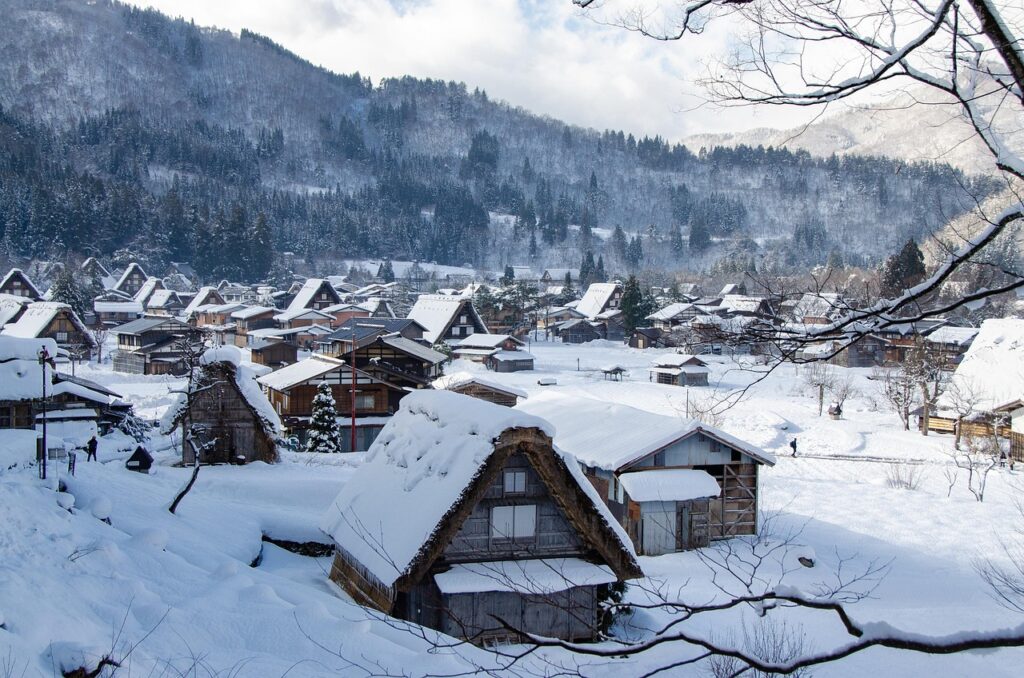
Where Dogo provides the daytime bathhouse image, Ginzan provides the night. Taisho and Showa-era multi-story wooden ryokan line both sides of the Ginzan River, lit in the evening by gas lamps, with hot spring steam drifting across the cobblestone paths. When snow falls — which in Yamagata it does substantially, from December through February — the scene approaches the uncanny.
Ginzan is a destination that requires staying overnight to experience properly. Day visitors see a beautiful old town; overnight guests experience the moment, beginning at dusk, when the gas lamps ignite and the inn windows glow and the steam thickens. That transition is what the film captures in its night sequences, and it happens here every evening.
✦ Best season: December–February for snow · Book 2–3 months ahead for winter weekends — this is one of Japan’s hardest-to-book destinations
🏛️ Edo Tokyo Open Air Architectural Museum, Koganei
BUILDINGS MIYAZAKI STUDIED
Access: ~5 min by bus from JR Musashi-Koganei Station · Open 9:30–17:30, closed Mondays · ¥400 entry
Miyazaki and art director Kazuo Oga are documented to have visited this outdoor architectural museum repeatedly during production. Approximately 30 historic buildings from the Edo to Showa periods have been relocated here and preserved — including the ones most directly connected to the film.
Kodakara-yu (public bathhouse, built 1929): The exterior — soaring chidori-style gabled roof, tiled façade, formal entrance — is considered the most direct architectural model for Yubaba’s bathhouse. The scale and composition are striking in person.
Musashino Bungu-ten (stationery shop): The interior arrangement of this late Meiji shop — rows upon rows of small drawers behind the counter — appears almost directly in the scene where Chihiro works at the bathhouse counter.
✦ The museum is excellent in its own right — one of Tokyo’s finest cultural sites — regardless of Ghibli connection. Budget 2–3 hours. The late afternoon light on old wooden buildings is exceptional.
What to Eat & Where to Stay
🐟 Dogo (Matsuyama)
Sea bream rice (tai meshi) and jakoten (pressed small fish) — Ehime seafood traditions. Botchan dango (three-colored sweet dumplings named for Natsume Soseki’s novel) are the town’s sweets.
🥩 Ginzan (Yamagata)
Yamagata beef (one of Japan’s finest regional wagyu), mountain vegetables, and the ryokan kaiseki dinner — the full seasonal tasting menu at a Ginzan inn is among the finest food experiences available in rural Japan.
🏛️ Edo Museum (Koganei)
The museum is in the western Tokyo suburbs. Kichijoji (15 min away) has some of Tokyo’s best cafes and restaurants for a meal before or after.
Hotels
Dogo Onsen: Chaharu (茶玻瑠) (Luxury / from approx. ¥35,000 ~$233 USD) — stylish ryokan right beside the historic bathhouse. Dogo Prince Hotel (Mid-Range / from approx. ¥20,000 ~$133 USD) — solid choice in the bath town center.
Ginzan Onsen: Kosekiya Bekkan (古勢起屋別館) (Luxury / from approx. ¥40,000 ~$267 USD) — Taisho-era riverside inn; the definitive Ginzan experience. Book months ahead.
Edo Tokyo Museum area: Hotel Emisia Tokyo Tachikawa (Mid-Range / from approx. ¥15,000 ~$100 USD) — good base for western Tokyo museums.
All prices approximate. Seasonal variation is significant — verify on booking sites.
Who Should Visit
✔ Spirited Away fans (any age)
✔ Japanese onsen & bathing culture enthusiasts
✔ Winter travelers (Ginzan in snow)
✔ Architecture & Meiji/Taisho history lovers
✔ Travelers wanting a ryokan night to remember
🏨 Planning where to stay?
Every area guide on this site pairs with honest, station-by-station hotel picks. Start here: Tokyo Hotel Guides →