This article may contain affiliate links. If you book through them, we may earn a small commission at no extra cost to you.
Tokyo Day Trip · Deep Nature
Okutama: Tokyo’s Deep Wilderness —
Gorge, Lake, Cave & Mountain Cuisine
2 Hours from Shinjuku. A Different Tokyo Entirely.
🏔️ Hatonosu Valley — Tokyo’s most beautiful gorge
🦇 Nippara Cave — Kanto’s largest limestone cave
💧 Okutama Lake & dam
🐟 Mountain river fish cuisine
On this page
Is Okutama Really Tokyo?
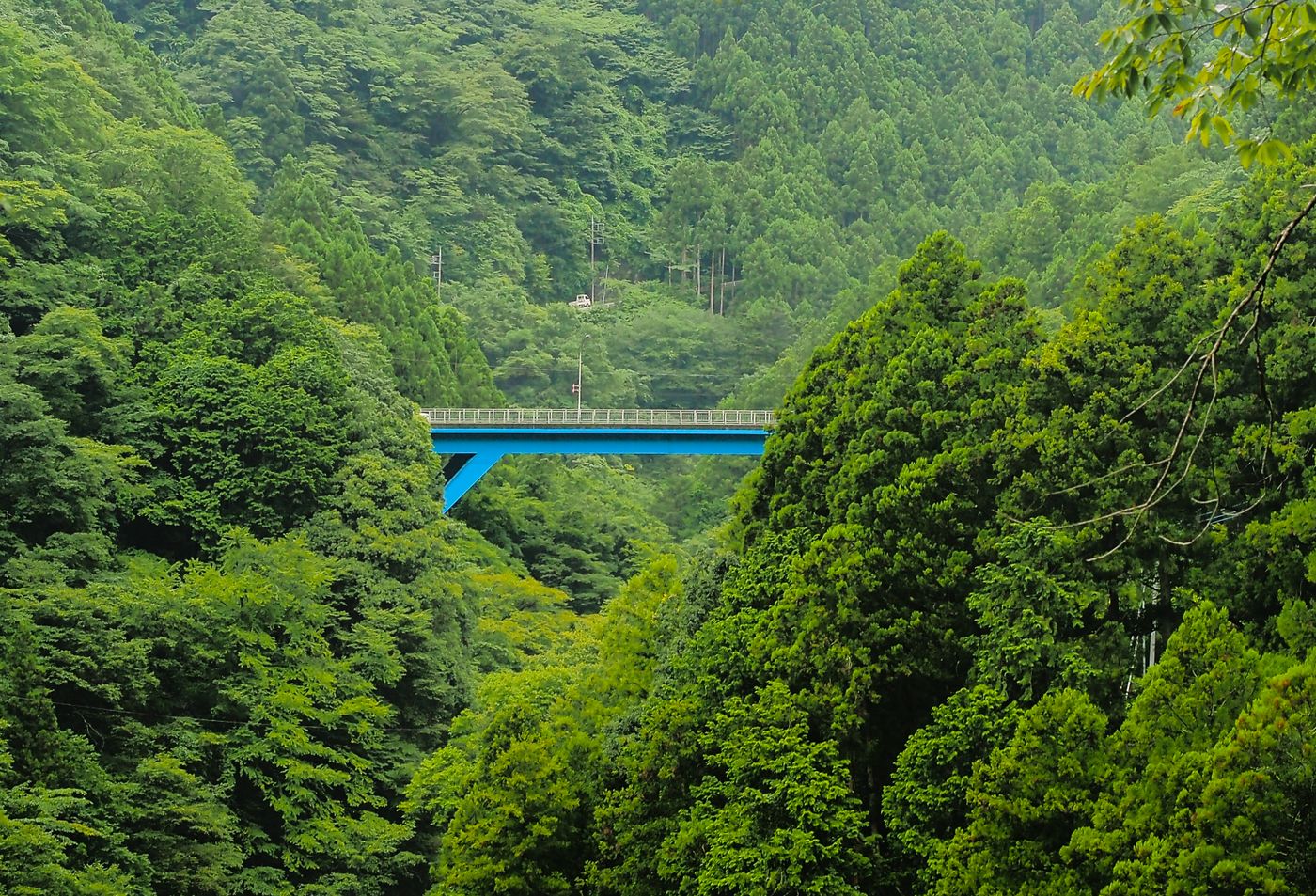
The first question people ask about Okutama is always some version of: “Is that really Tokyo?” Yes. Okutama occupies the far western corner of Tokyo Metropolis, bordering Yamanashi and Saitama prefectures. It accounts for roughly a tenth of Tokyo’s total land area — almost none of which looks anything like Shibuya.
What Okutama offers is something the rest of Tokyo cannot: wilderness that requires two hours to reach. That two-hour threshold matters. High-speed rail has made most of Japan’s famous nature destinations day-trippable from Tokyo, but Okutama’s distance still provides something rarer — the sense that you’ve actually left the city behind. The air is different. The silence is different. The food is different.
Think of it this way: Takao is the entry to Tokyo’s nature. Mitake and Akigawa are the middle distance. Okutama is the deep end.
Getting There
From Shinjuku: JR Chuo Line to Tachikawa (~30–40 min), JR Ome Line to Ome (~30 min), then onward on the same Ome Line to Okutama Station (~40 min). Total approx. 2 hours.
Three Highlights of Okutama
1. Hatonosu Valley — The Most Beautiful Gorge in Tokyo
Access: 5 min walk from Hatonosu Station (JR Ome Line)
The Tamagawa River cuts a deep V-shaped gorge through ancient granite at Hatonosu, creating the most visually dramatic river scenery available within Tokyo’s administrative boundaries. Two suspension bridges span the gorge — from either one, the view down into the clear current between rock walls is the definitive Okutama image. The hiking trail between the bridges is short and gentle; the scenery is not.
In late October and November, the gorge walls turn fully red and gold, and the reflections in the water below add another dimension to the colour. Okutama’s autumn foliage is rated among the finest in the Kanto region — and Hatonosu, being less visited than the main Okutama trailheads, offers it in relative quiet.
✦ Local tip: Hatonosu is quieter than the main Okutama area. The gorge in early morning, before most visitors arrive, is genuinely still.
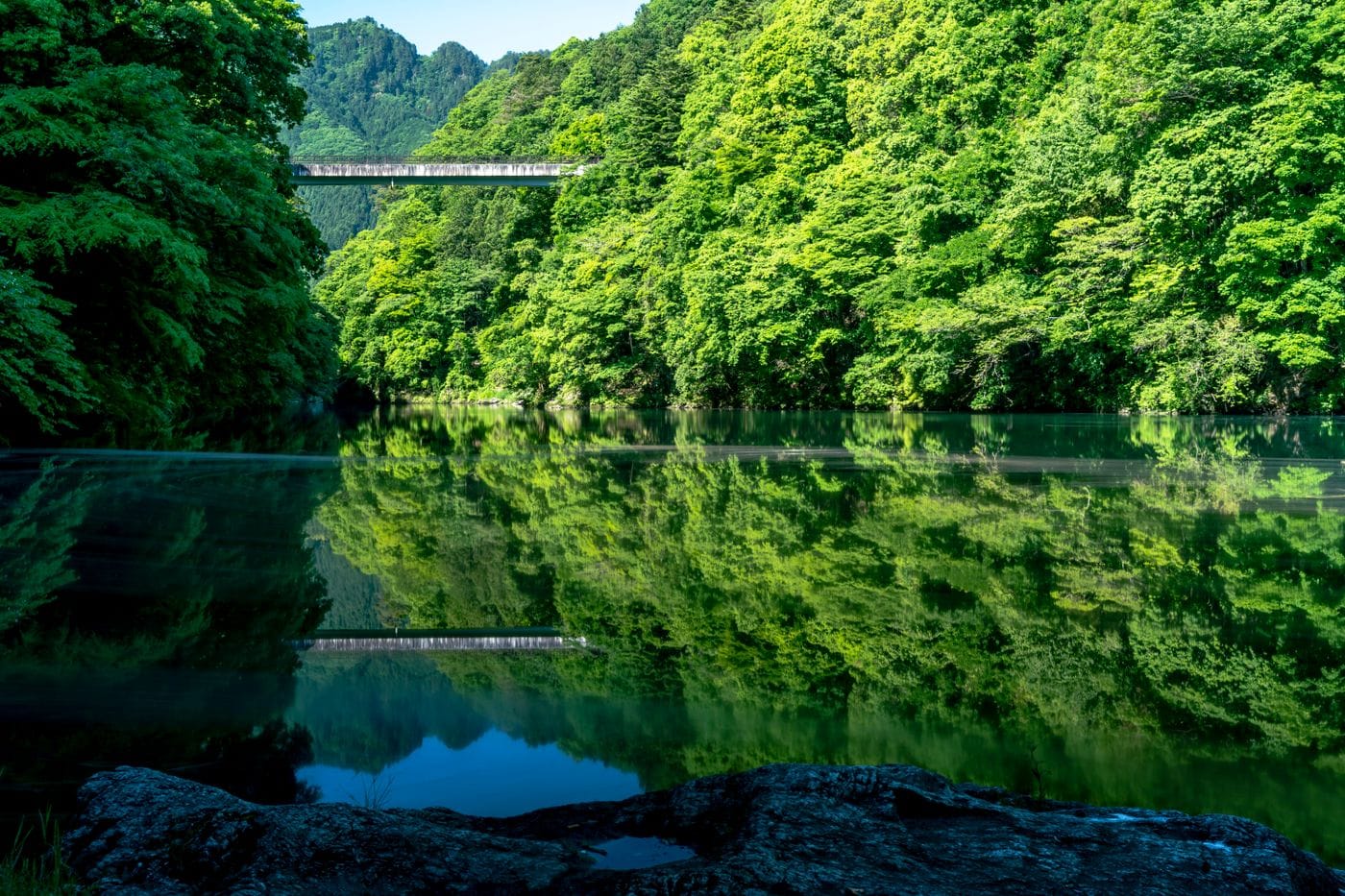
2. Okutama Lake & Ogouchi Dam
Access: Bus from Okutama Station, ~20 min
Completed in 1957, the Ogouchi Dam created a reservoir that now serves as one of Tokyo’s primary water sources. The lake formed by the dam — officially called Okutama Lake — covers 4.5 square kilometers and holds 180 million cubic meters of water. For a city of 14 million people, this context alone makes visiting meaningful.
The lake is encircled by mountains and forest that together create a landscape of such visual completeness that it’s difficult to believe it was engineered. The floating barrel bridge (ukibashi) — built from connected drums — is walkable and offers views directly across the water surface. A small observation point above the dam gives the full scale of both the structure and the valley it holds.
3. Nippara Limestone Cave
Access: Bus from Okutama Station, ~35 min
The only limestone cave in Tokyo Metropolis, and one of the largest in the Kanto region: 1,270 meters of passages, a height difference of 134 meters, temperature constant at 11°C year-round. The scale of the stalactite formations — some named individually for their shapes, including the “Dragon Palace” and “Twelve Yakushi” groupings — requires formations built over tens of thousands of years. The underground lake, where stalactites reflect in still water, is the cave’s most otherworldly room.
✦ The bus route to Nippara passes cliff roads with views that are themselves worth the journey.
Food: What to Eat in Okutama
Mountain river fish (ayu, yamame, iwana): Sweetfish grilled whole over charcoal at riverside restaurants — the cooking method traditional to this river for centuries. Available fresh May–October.
Mountain vegetable cuisine (sansai ryori): Spring mountain vegetables (tempura, simmered, pickled), matsutake mushroom rice in autumn, wild boar hotpot in winter. The mountain seasons dictate the menu in a way urban restaurants cannot replicate.
Local sake and craft beer: Available at restaurants and shops near Okutama Station. The water quality that makes Okutama important as a reservoir also makes it excellent for brewing.
Who Should Visit Okutama?
✔ Serious hikers & nature travelers
✔ Autumn foliage seekers
✔ Cave & geological interest visitors
✔ Those wanting overnight mountain stays
✔ Anyone who needs to truly leave the city
🏨 Planning where to stay?
Every area guide on this site pairs with honest, station-by-station hotel picks. Start here: Tokyo Hotel Guides →