This article may contain affiliate links. If you book through them, we may earn a small commission at no extra cost to you.
Tokyo Day Trip · Family Nature
Akigawa Valley: Tokyo’s Most Family-Friendly
Nature Escape — 70 Min from Shinjuku
Crystal-Clear River Swimming · Camping · Autumn Leaves · Seoto no Yu Hot Spring
🏊 River swimming (all ages)
⛺ Camping sites in the gorge
🌉 Ishibune Bridge — iconic red suspension bridge
♨️ Seoto no Yu riverside onsen
On this page
Akigawa Valley vs. Mitake Gorge: Understanding the Difference
Both Mitake Gorge and Akigawa Valley are Tokyo river destinations within 90 minutes of the city. But they serve different travelers. If Mitake is for adventurous adults — serious kayakers, sake drinkers, solo hikers — Akigawa is for families, first-timers, and anyone who wants nature without intimidation.
The Akigawa River runs clear over a wide, gentle bed through the Akiruno district of western Tokyo. The water is cold even in midsummer, transparent enough to see the pebble floor. Children wade safely in the shallows. Adults swim in the deeper pools. Campsites line the banks, and the day ends — traditionally — in the Seoto no Yu natural hot spring, with the sound of the river audible from the outdoor bath.
This is Tokyo in its most generous mode: a place that gives ordinary people an extraordinary day, close enough to come back whenever they need it.
Getting There
From Shinjuku: JR Chuo Line to Tachikawa (~30–40 min), then JR Itsukaichi Line to Musashi-Itsukaichi Station (~30 min). Total approx. 70 min.
From the station: Local buses serve key gorge stops. Rental bicycles are available at the station for independent exploration.
What to Do in Akigawa Valley
🌉 Ishibune Bridge — The Gorge’s Icon
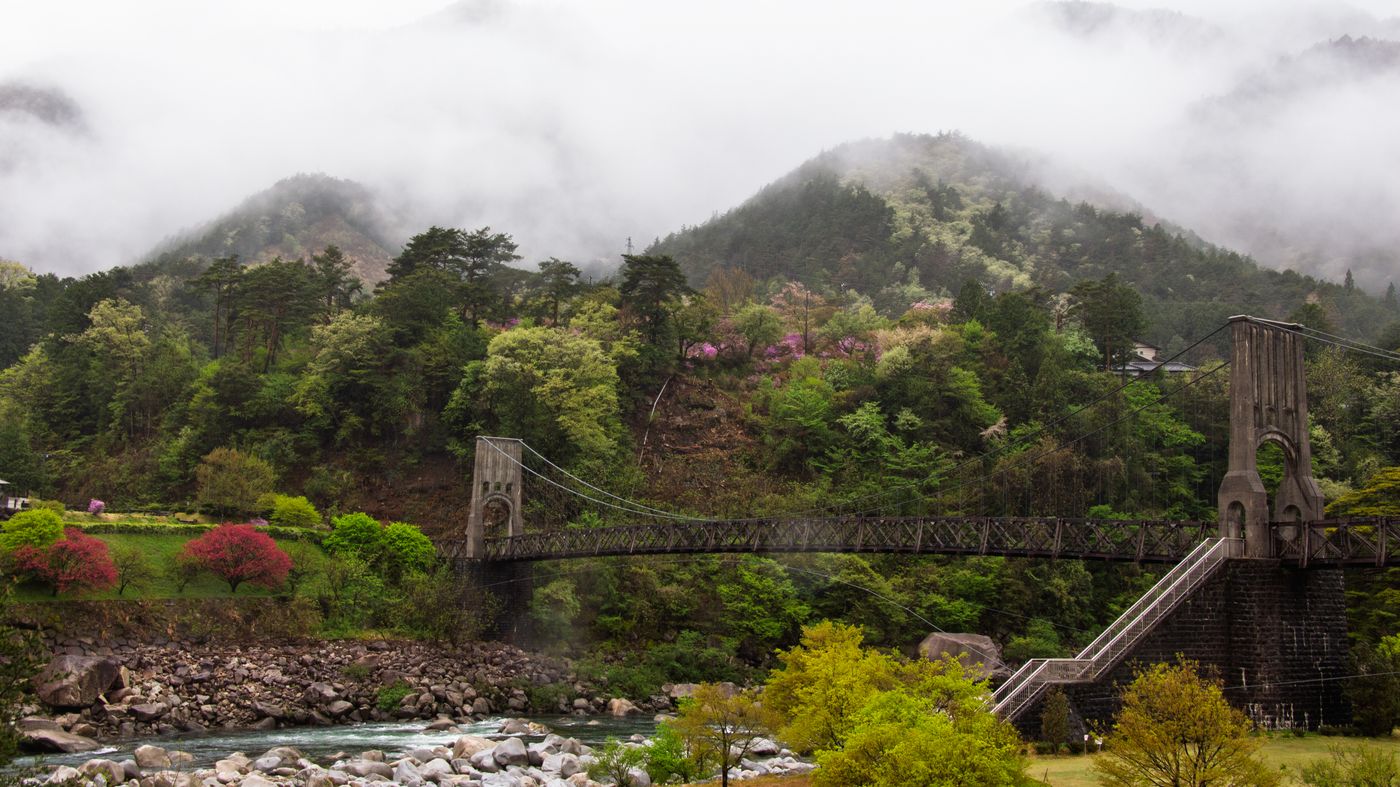
A 96-meter red suspension bridge over the Akigawa River, the most photographed spot in the valley. From its deck, the clear river and forest walls below create the image that defines Akigawa for most visitors. In autumn, the red of the bridge and the red-gold of the trees become inseparable — one of the Tokyo region’s finest foliage compositions.
🏊 River Swimming (Summer)
The Akigawa’s summer identity is river swimming. The water stays cold despite the heat — fed by mountain springs upstream — and the combination of transparency and depth variety means safe paddling for small children alongside real swimming for adults. Weekdays are noticeably quieter than weekends, when Tokyo families arrive in numbers.
✦ Local tip: Arrive on a weekday for the best experience — the river on a weekday morning feels almost private.
⛺ Camping
Multiple campgrounds operate along the Akigawa riverbank, ranging from fully equipped sites to more basic tent-only areas. The sound of the river at night, stars above (significantly more visible than from central Tokyo), and a morning fire beside the water — within 70 minutes of Shinjuku, this is as close to wilderness living as Tokyo permits.
♨️ Seoto no Yu Natural Hot Spring
About 10 minutes by bus from Musashi-Itsukaichi Station, Seoto no Yu (“Sound of the River Onsen”) is a natural hot spring facility with outdoor baths directly beside the Akigawa River. The sound of moving water is audible from the bath. After a day of river swimming or hiking, the combination of hot mineral water and cool river air is as restorative as anything Tokyo offers. Open until 10pm, allowing a full day and easy return to the city.
Who Should Visit Akigawa Valley?
✔ Families with children
✔ First-time Tokyo nature visitors
✔ Summer river swimmers
✔ Campers & outdoor beginners
✔ Hot spring seekers wanting nature setting
🏨 Planning where to stay?
Every area guide on this site pairs with honest, station-by-station hotel picks. Start here: Tokyo Hotel Guides →