This article may contain affiliate links. If you book through them, we may earn a small commission at no extra cost to you.
Tokyo Walking Route · Shitamachi Downtown
Walking from Ueno to Asakusa via Kappabashi:
The Ultimate 1-Hour Tokyo Downtown Guide
Skip the Train, Save Your Yen, and Experience the Real Tokyo on Foot
🚶 Non-stop walk: 25–30 mins
📸 With sightseeing: 1–1.5 hours
🗺️ Distance: Approx. 2.8 km (1.7 miles)
🏮 Shitamachi historic culture
On this page
- Introduction: The “Subway Map Trap” Exposed by a Tokyo Local
- Route Overview & Fast Facts
- STEP 1: Start at Ueno Station (Park Gate)
- STEP 2: Dive into the Energy of Ameyoko Market
- STEP 3: Kappabashi Kitchen Town — Tokyo’s Hidden Culinary Wonderland
- STEP 4: Cutting Through the Backstreets to Asakusa
- STEP 5: Senso-ji Temple & Kaminarimon — The Grand Finale
- Conclusion: Why This is Tokyo’s Finest Walk
- Where to Stay Nearby
- Practical Access & Travel Information
- Who Should Choose This Tokyo Walking Route?
- Keep exploring
Introduction: The “Subway Map Trap” Exposed by a Tokyo Local
There is a common “trap” that first-time international visitors to Tokyo almost always fall into: mistaking the Tokyo subway map for an actual geographic map. Looking at the tangled web of train lines, Ueno Station and Asakusa Station appear to belong to completely different worlds, requiring a tedious transfer. But as a Tokyo born-and-raised local, let me let you in on a secret: You can easily walk from Ueno to Asakusa.
Not only is it walkable, but nestled right between them is one of Tokyo’s most unique, hidden-gem cultural hubs: Kappabashi Kitchen Town.
[Ueno Park Museums] ➔ [Ameyoko Market Vibes] ➔ [Kappabashi Culinary Treasures] ➔ [Senso-ji Temple]
This walking route condenses the very essence of Tokyo’s Shitamachi (historic downtown culture) into a single, seamless stroll. If you want to connect the dots of Tokyo’s history rather than just hopping blindly from one subway station to another, this is the best walking route in the city.
The Theme: Skip the train, save your yen, and experience the real Tokyo on foot.
Route Overview & Fast Facts
| Item | Details |
|---|---|
| Starting Point | Ueno Station (Park Gate / Koen-guchi) |
| Ending Point | Asakusa Station (In front of Kaminarimon Gate) |
| Total Distance | Approx. 2.8 km (1.7 miles) |
| Duration | 25 mins (Walking only) / 1–1.5 hours (With sightseeing) |
| Difficulty | ★☆☆☆☆ (Flat, straightforward, easy to navigate) |
| Best Time to Visit | Late morning to early afternoon |
| Best Season | Year-round (Stunning during Spring Sakura and Autumn Foliage) |
The Route Flow at a Glance
Ueno Station (Park Gate)
↓ (5-min walk)
Ueno Park & Ameyoko Market (Exploration)
↓ (8-min walk)
Kappabashi Kitchen Town (Entrance)
↓ (10-min walk through the street)
Kappabashi Kitchen Town (Exit)
↓ (5-min walk)
Senso-ji Temple & Kaminarimon Gate
↓ (3-min walk)
Nakamise-dori Shopping Street ➔ Asakusa Station
STEP 1: Start at Ueno Station (Park Gate)
Ueno Station is massive, but for this route, you must exit through the Park Gate (Koen-guchi). The moment you step out of the ticket gates, the lush greenery of Ueno Park opens up right in front of you. Take a deep breath. The sheer scale and openness of this park, right in the middle of Tokyo’s concrete jungle, is the first beautiful surprise of this walk.
💡 Pro-Tip for Slow Travelers
If you have time, grab a coffee at the park’s iconic Starbucks (Ueno Onshi Park Store) and enjoy the morning breeze. If you plan to visit the Tokyo National Museum or the National Museum of Western Art here, budget an extra 2 to 3 hours just for STEP 1.
🏮 Local’s Insight
The “Fountain Square” in Ueno Park is the ultimate local meeting spot. During the spring cherry blossom season, it gets completely packed with locals enjoying Hanami (flower-viewing parties). If you arrive early in the morning, you can catch the stunning Sakura tunnels in absolute, serene silence before the crowds arrive.
STEP 2: Dive into the Energy of Ameyoko Market
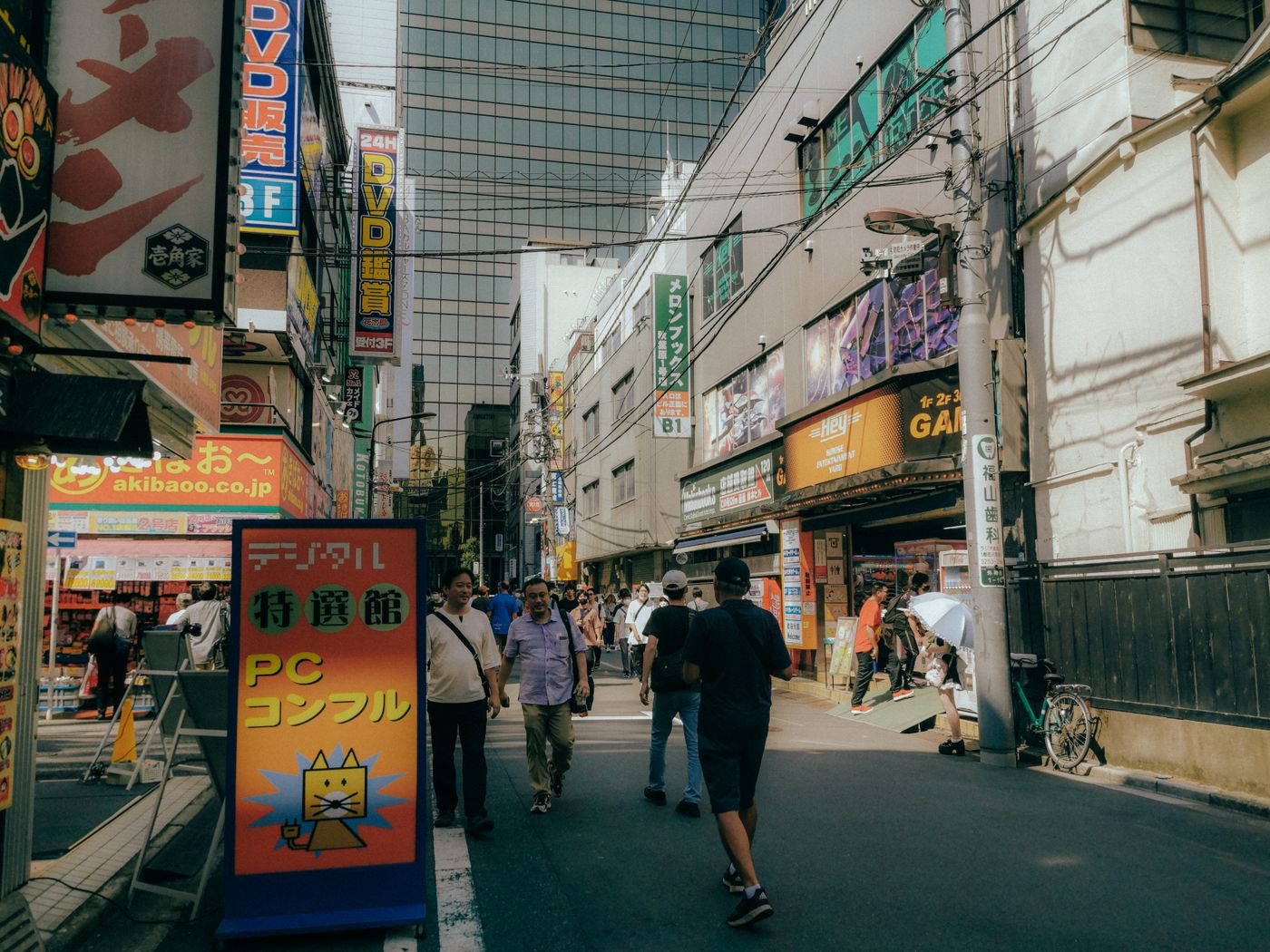
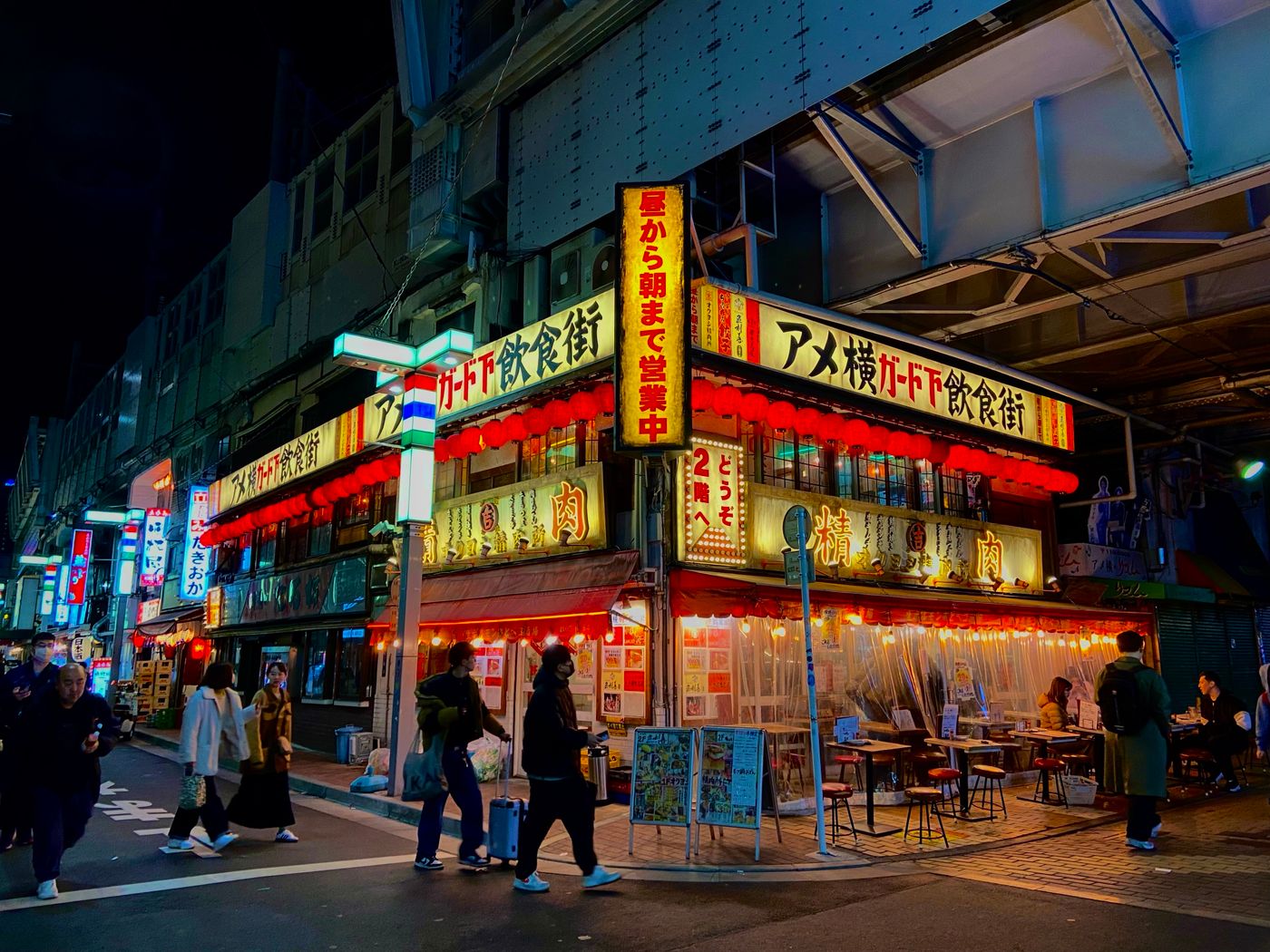
After a stroll through the park, head back down towards the tracks to find the entrance of Ameyoko Market (Ameya-Yokocho). Ameyoko is a bustling 500-meter open-air market street born from the black markets of the post-WWII era. As you walk through, you’ll be hit by a wave of pure local energy: shouting vendors selling fresh seafood, stalls piled high with cheap spices, clothing, and cosmetics. It’s loud, raw, and wonderfully unpolished.
🏮 Local’s Insight
Under the train tracks (Gado-shita), you’ll find open-air, standing-only bars (Tachinomi) operating even in the broad daylight. Grabbing a cold draft beer next to a local Tokyoite at 11:00 AM is a core Tokyo memory waiting to happen. If you’re feeling adventurous, pull up a plastic stool!
Once you reach the southern end of Ameyoko (near Okachimachi Station), head east — your journey to Kappabashi begins here.
STEP 3: Kappabashi Kitchen Town — Tokyo’s Hidden Culinary Wonderland
After roughly 15 minutes walking east toward Tawaramachi, look up as you reach Asakusa-dori. You will see a massive, multi-story statue of a chef wearing a giant white hat atop the Niimi Cookware building. Welcome to the entrance of Kappabashi Kitchen Town.
Spanning nearly 800 meters with over 170 specialized shops, Kappabashi is a world-renowned wholesale district for the restaurant industry. From Michelin-starred chefs to local home cooks, this is where Japan buys its kitchenware. For travelers, it has become a top destination to witness the sheer depth of Japanese food culture.
Three Must-Visit Highlights in Kappabashi
1. Plastic Food Samples
You’ve likely seen the ultra-realistic plastic food displays outside Japanese restaurants. Kappabashi is the birthplace of these models. Shops like Maizuru or Ganso Shokuhin Sample-ya sell everything from life-sized sushi keychains to replica bowls of ramen.
2. Legendary Chef Knives
Japanese knives are globally revered for their sharpness and craftsmanship. Kappabashi features multi-generational knife shops (like Kama-Asa or Tsubaya) where you can buy authentic, hand-forged blades and even get your name engraved on the blade for free.
3. Traditional Ceramics
Looking for authentic matcha bowls, ramen bowls, or elegant sake sets? Kappabashi gathers traditional pottery from all over Japan—including Arita-yaki, Kutani-yaki, and Mashiko-yaki—at wholesale prices you won’t find anywhere else.
🏮 Local’s Insight
Timing is everything. Kappabashi is a wholesale district for businesses, meaning many shops are closed on Sundays, and some on Mondays. The absolute best time to visit is Tuesday through Saturday, between 10:00 AM and 5:00 PM.
STEP 4: Cutting Through the Backstreets to Asakusa
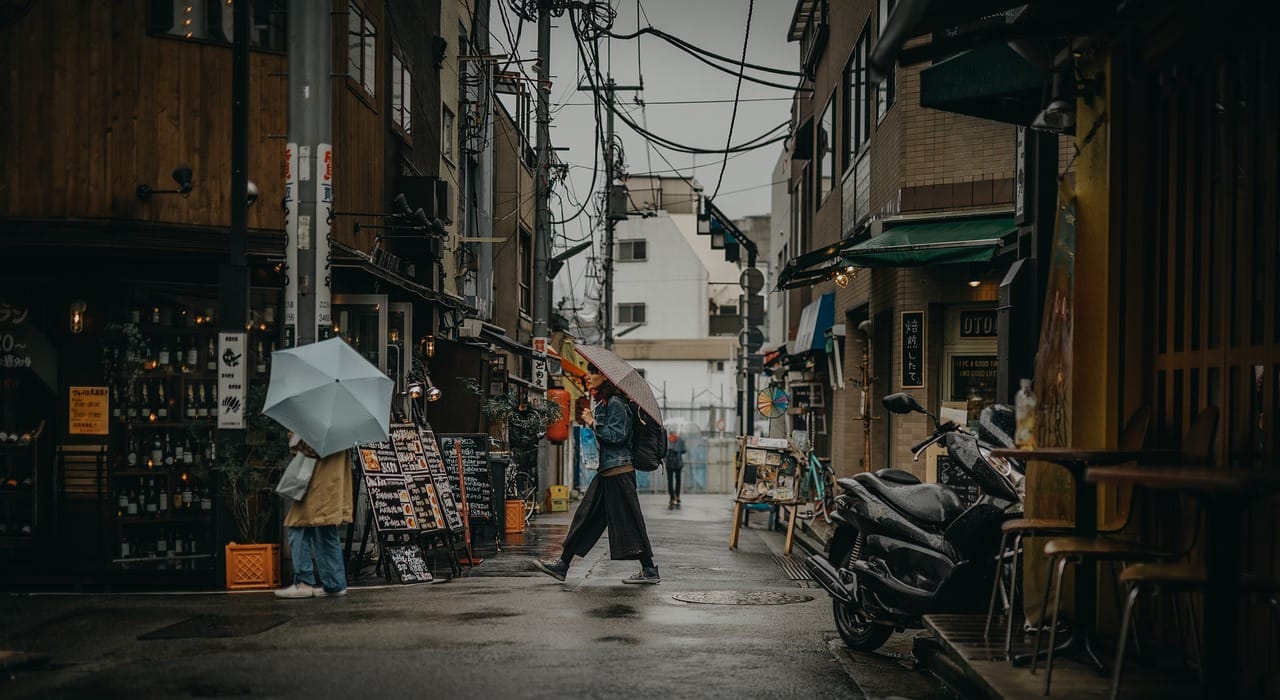
Once you reach the northern end of Kappabashi, cross Kokusai-dori Street and head east. From here, it’s a gentle 5 to 7-minute walk to Senso-ji Temple. This specific stretch is wonderful because it takes you through an un-touristed, authentic residential neighborhood. You’ll pass old wooden houses, tiny local diners (Shokudo), and residents riding their bicycles. This is the quiet, everyday face of Tokyo.
🏮 Local’s Insight
Wondering where the name “Kappabashi” comes from? There are two layers to it. Officially, it honors Kappaya Kihachi, an 19th-century merchant who poured his own fortune into building a drainage system to save this flood-prone district. However, because “Kappa” sounds exactly like the mythical Japanese water sprite (Kappa), the district embraced the creature as its mascot. Keep your eyes peeled—you’ll spot golden Kappa statues hidden all along the street!
STEP 5: Senso-ji Temple & Kaminarimon — The Grand Finale
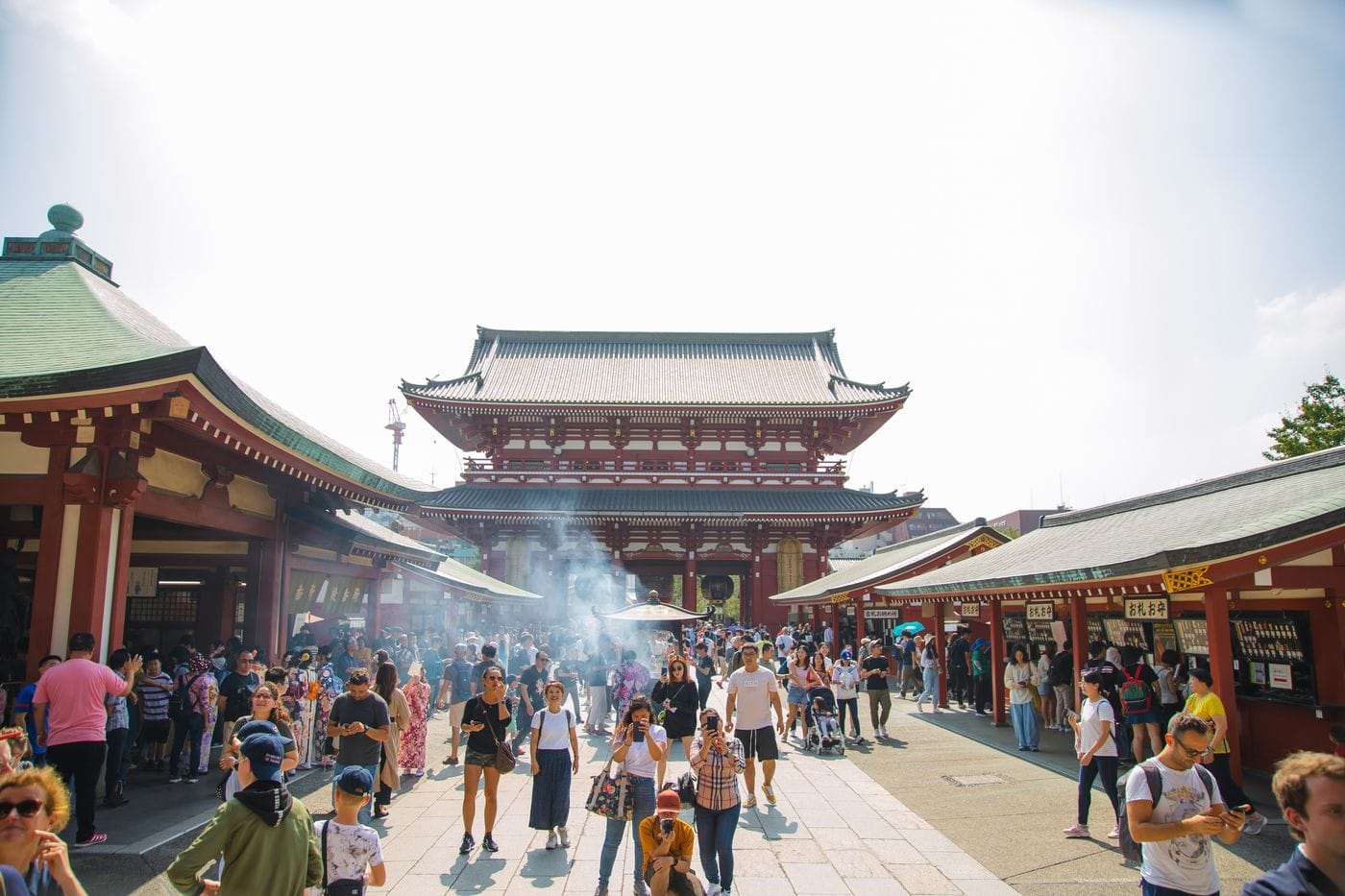
As you emerge from the quiet backstreets, the atmosphere suddenly shifts. The air fills with incense, and boom—the iconic Kaminarimon (Thunder Gate) with its massive red lantern appears before your eyes. Built originally in 942 AD, Kaminarimon is the grand entrance to Senso-ji, Tokyo’s oldest and most sacred Buddhist temple. The sheer contrast of stepping out from the quiet, practical streets of Kappabashi straight into the vibrant, spiritual energy of Asakusa is the ultimate climax of this walking tour.
🛍️ Nakamise-dori Shopping Street
This 250-meter approach from the gate to the main hall is one of Japan’s oldest shopping streets. It’s lined with vibrant stalls selling traditional snacks like Ningyo-yaki (small red-bean cakes) and unique souvenirs.
🔮 Try Your Luck with Omikuji (Fortune Telling)
Shake the silver canister until a bamboo stick falls out, match the Japanese number to the wooden drawer, and read your fortune. If you get a “Good Luck” (Daikichi), keep it! If you get “Bad Luck” (Kyo), tie it to the designated metal racks on the temple grounds to leave the bad luck behind.
🛺 Ride a Traditional Rickshaw (Jinrikisha)
You’ll see energetic drivers (Shafu) pulling traditional two-wheeled carts around the temple. Taking a ride is a fantastic way to learn about Asakusa’s history while feeling like you’ve slipped back into the Meiji era.
Conclusion: Why This is Tokyo’s Finest Walk
If I had to explain why this specific walk from Ueno to Asakusa is so special, it’s because it lets you walk through Tokyo’s timeline. On this single 2.8 km path, you experience the ancient roots of the Edo period at Senso-ji, the Meiji-era commercial spirit of Kappabashi, the post-war Showa-era grit of Ameyoko, and the ultra-modern cultural spaces of Ueno Park.
Tokyo is often marketed as a futuristic city of neon lights. But by connecting these dots with your own feet, the rich, multi-layered history of the city reveals itself to you. Skip the subway, take the walk, and see the real Tokyo.
Where to Stay Nearby
Both the Ueno and Asakusa areas offer some of the best value accommodations in Tokyo, perfect for exploring downtown.
🏨 Nest Hotel Tokyo Ueno
MID-RANGE
From approx. ¥11,000 / night
Covering the Nishi-Nippori / Nippori corridor, this hotel offers a consistent and reliable mid-range experience with strong transport connectivity — Narita Skyliner access, Ueno museums on foot, and both Yamanote and Chiyoda line connectivity. The Nest Hotel brand delivers clean rooms and functional service across its portfolio; the location here is the headline asset, giving travelers easy access to the Yanaka district, Ueno, and Narita in a quieter-than-Ueno residential setting.
✦ Best for: Narita users, Yanaka explorers, Ueno sightseers
🏩 Hotel MyStays Nippori
MID-RANGE
From approx. ¥12,000 / night
One Yamanote stop from Nishi-Nippori at Nippori Station — the Skyliner departure point itself. MyStays properties consistently offer more spacious rooms than comparably priced business hotels, which makes this particularly suitable for travelers with larger luggage, extended stays, or simply a preference for room to move around. Nippori’s Skyliner access and Yanaka walking routes are equally available.
✦ Best for: Extended stays, spacious-room seekers, Skyliner travelers
💴 Hotel Sunroute Nippori
ECONOMY–MID
From approx. ¥9,000 / night
The Sunroute brand’s characteristic cleanliness and reliable service at an economy-to-mid price point — positioned to serve travelers prioritizing the Nippori-area transport advantages at lower cost. For travelers whose budget is a meaningful consideration and whose priority is Narita access combined with Ueno and northern Tokyo sightseeing, this delivers on every practical requirement without excess.
✦ Best for: Budget-conscious Narita users, northern Tokyo explorers
Practical Access & Travel Information
| Station / Direction | Available Lines & Connectivity |
|---|---|
| Getting to the Start (Ueno) |
JR Lines: Yamanote Line, Keihin-Tohoku Line, Ueno-Tokyo Line Tokyo Metro: Ginza Line (G16), Hibiya Line (H18) |
| Getting Home from the Finish (Asakusa) |
Tokyo Metro: Ginza Line (G19) Toei Subway: Asakusa Line (A18) Tobu Railway: Skytree Line |
Who Should Choose This Tokyo Walking Route?
✔ Travelers looking to save on subway fares
✔ Foodies & chefs wanting to explore Kappabashi
✔ Anyone wishing to escape the packed trains
✔ Photographers seeking authentic backstreet vibes
✔ History lovers connecting Edo, Showa, and modern Tokyo
🏨 Planning where to stay?
Every area guide on this site pairs with honest, station-by-station hotel picks. Start here: Tokyo Hotel Guides →